Dolby Digital 2.0 (German)

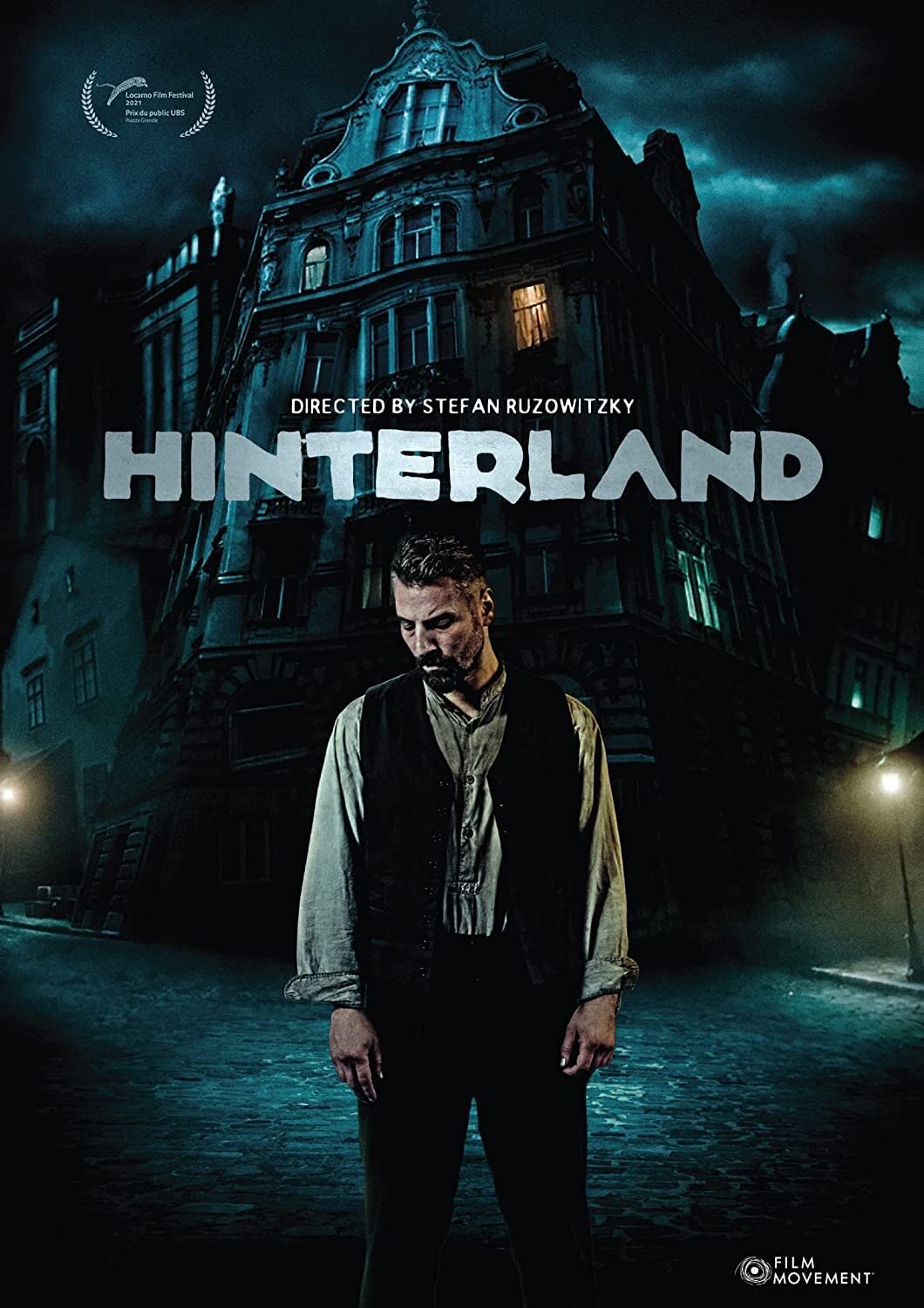
One of my favorite movies of all time is Se7en.  Morgan Freeman, Brad Pitt, and Kevin Spacey star in this amazing film about a senior and rookie pair of cops on the hunt for a serial killer who is murdering victims depicting the seven deadly sins.  It's so breathtaking, and so long overdue for a 4K release, it's ridiculous.  It has also led me when I receive packages to blurt out, "What's in the box?" in the deadpan tone that Brad Pitt uses in the movie.  So naturally, whenever I hear of a film that draws comparisons to this fine film, my head certainly does a double take.  Enter Hinterland. In this film, Peter Perg who just came home after World War I, is searching for a serial killer who is taking out former soldiers in a very ritualistic pattern.  Let's check it out.

The film opens with some background.  World War (I) is lost.  Austria, once a proud major power, is turning into a small and insignificant state.  The emperor has stepped down, and now Austria is regarded as a republic.  The soldiers who have come home realize that nothing is as it was before.  What's worse is that some of those soldiers did not return until years later (prisoners of war).

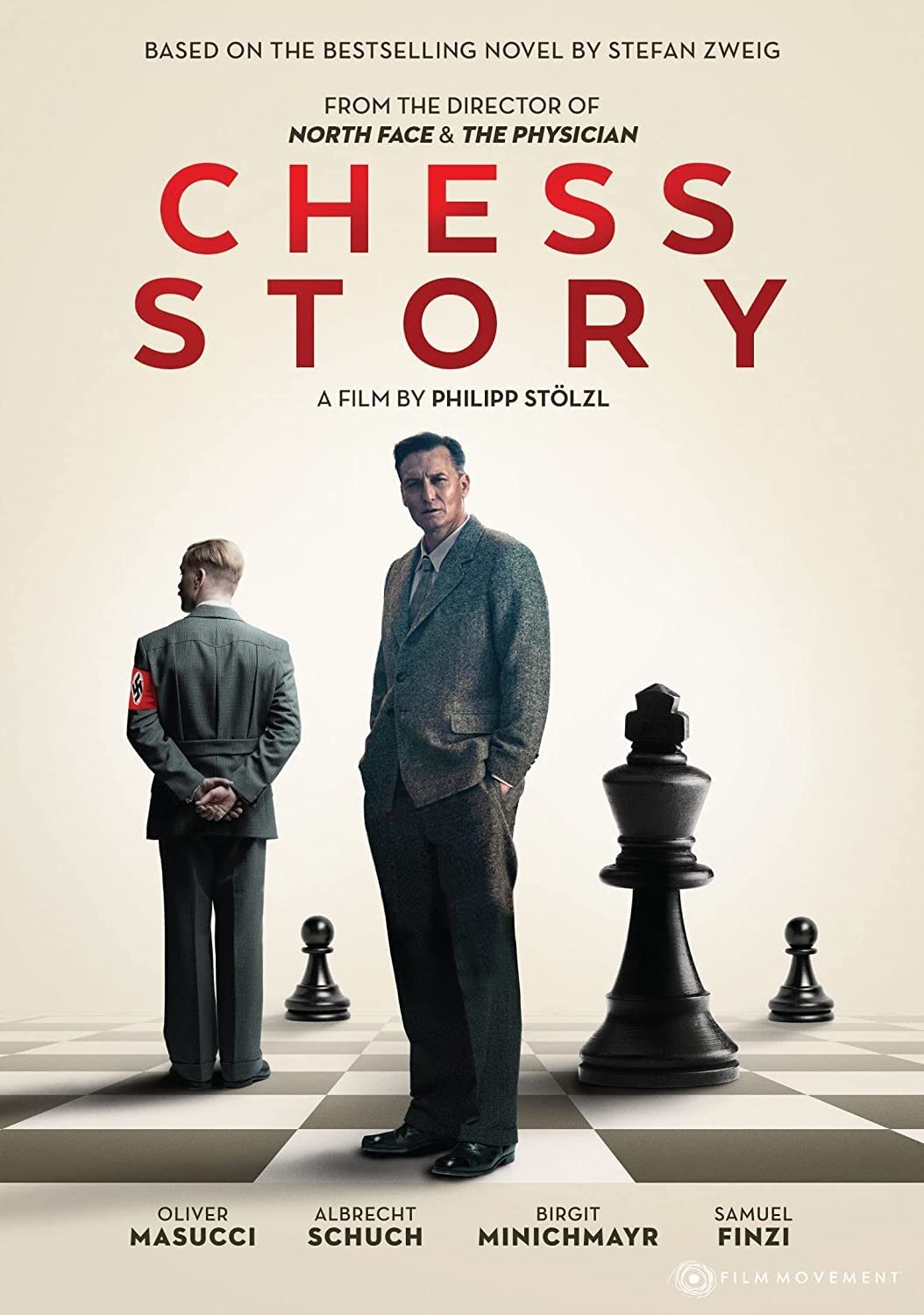
Films about World War II and Nazism are hard for me to watch.  No matter how well-intentioned they may be, I can barely make it through Schindler's List or Dunkirk or even something like Inglorious Bastards (I do, however, find The Producers to be hilarious).  Most of the time, it hits a little too close to home.  For you see, my Polish grandfather (may he rest in peace), his parents were taken away to a concentration camp.  So anytime I watch a film set in that time period, I think, well, what if he had been taken away.  It's not like those horrible people showed any sort of restraint on children, and then where would my grandfather be?  Or my mother?  Or myself?  Anyway, I got lured into Chess Story by the promise of a thriller with the game of chess as the backdrop.  Unfortunately, by the end I was reminded of the horror, but also that there is still great modern moviemaking even with Nazis.  Let's take a look.

We hear whispers all around from every direction, and there is a light crackling overheard.  It continues until it fades to black.

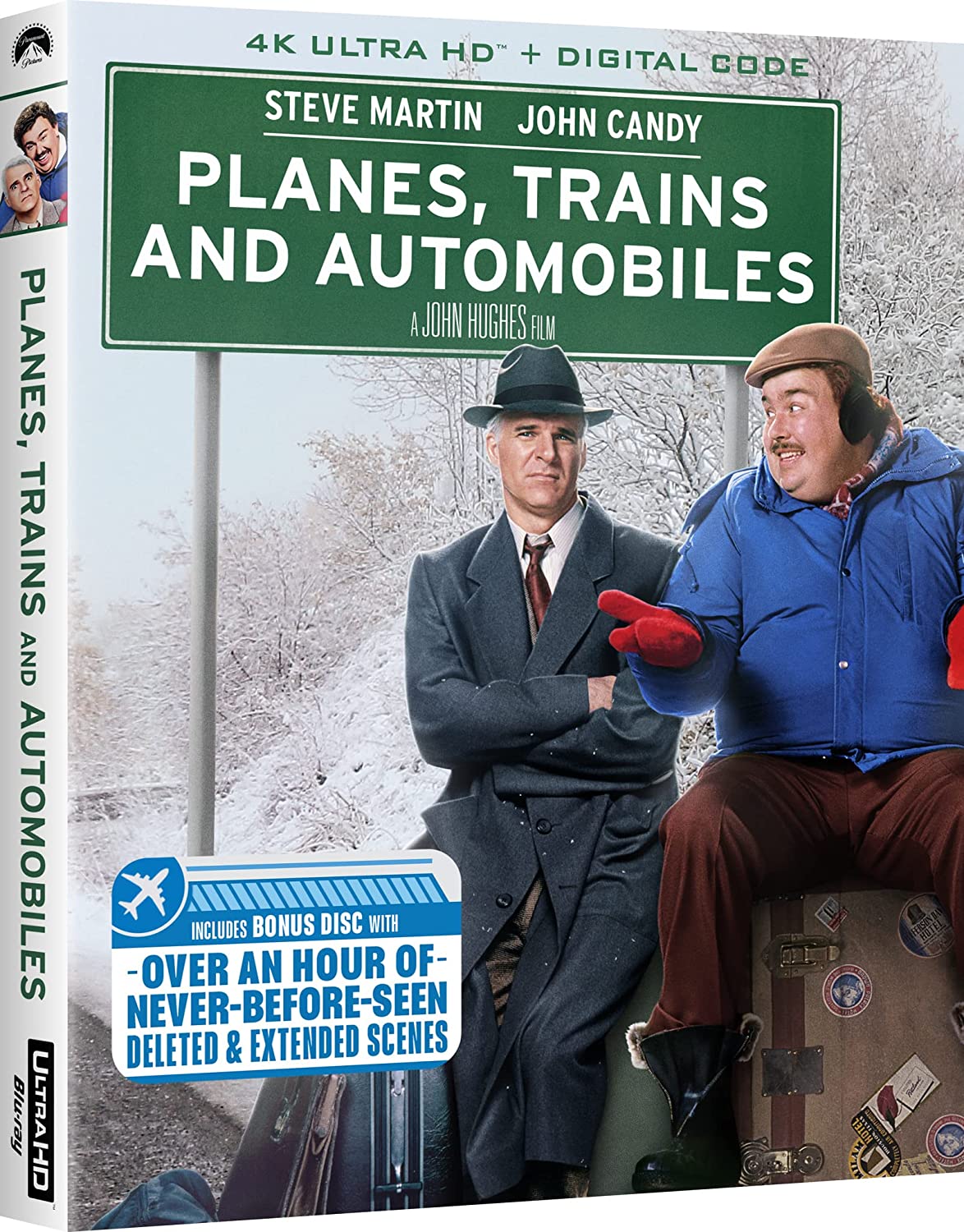
Favorite movies are usually easy to come back to.  It's a familiar song, stars you feel at home with, and even if you recite all the lines by heart, you can find something new to come back to.  In the case of Planes, Trains, and Automobiles, even though I had seen the movie probably around a dozen times or more, I was lured by the promise of new deleted and extended scenes but also a 4K-quality picture.  But as with life, you don't always get everything you want.  Let's take a look.

Please note that portions of this review came from my 2011 article on the Blu-ray, and I have improved on it where possible (and it makes sense to).  

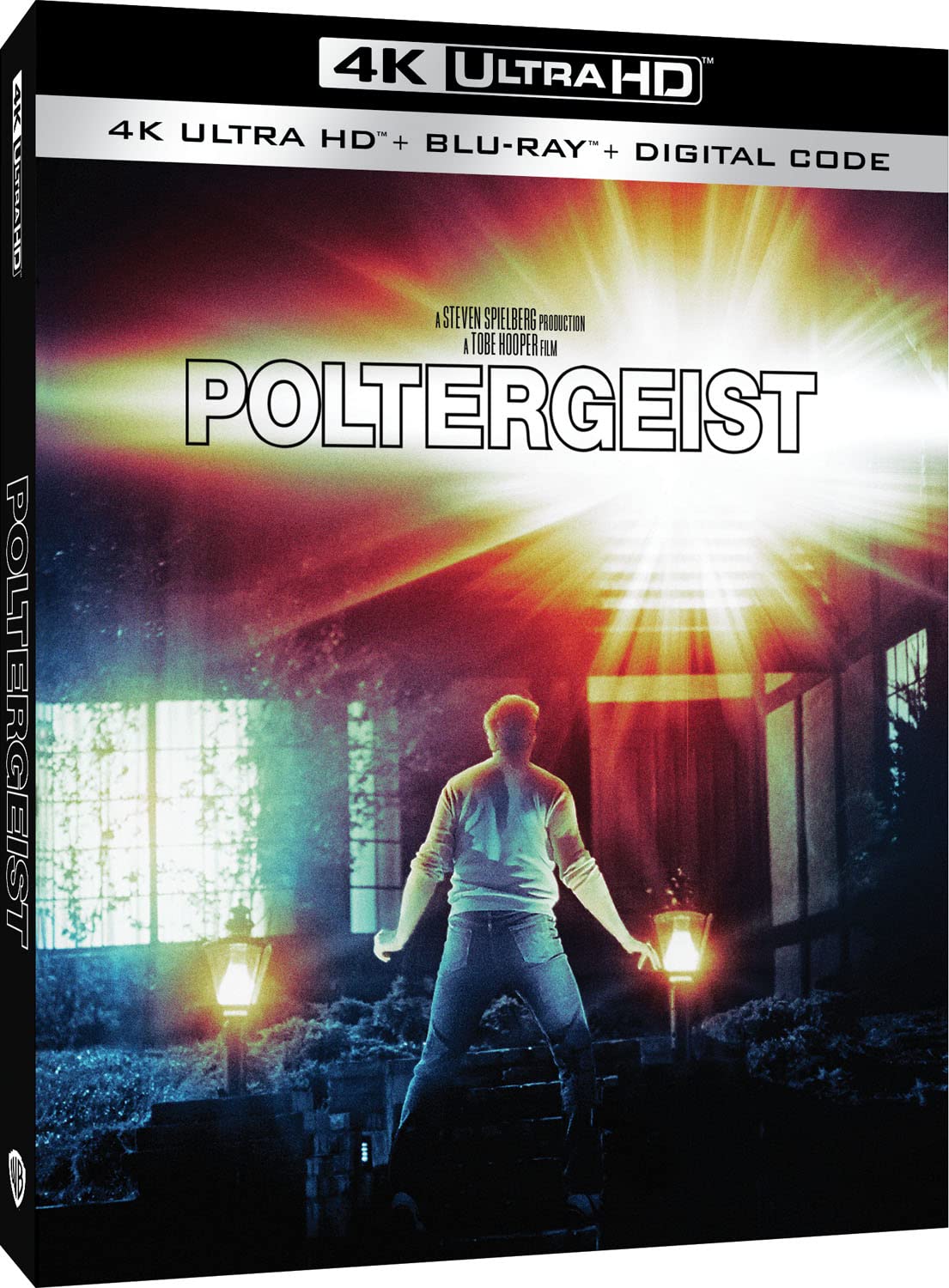
1982.  I was seven years old, and my mother, who loved horror movies, wanted to take me to see Poltergeist.  Unfortunately, around this time, my dad was usually on the road, and so there was no one really there to say maybe we shouldn't.  Honestly, even if my father was there and did say no, I doubt my mom would have listened.  It was PG; how bad could it be? In the next two hours, I was treated to something that resonates with me to this very day. From the moment I heard "They're Here", I knew I would never see static on televisions the same way.

Please note that parts of this review are borrowed (story, critique, special features) from the 2007 DVD review I did 15 years ago.  However, where possible I am enhancing what I wrote, as I think I write better these days. Maybe I have lost a touch of my creativity, but that's a story for another day. 

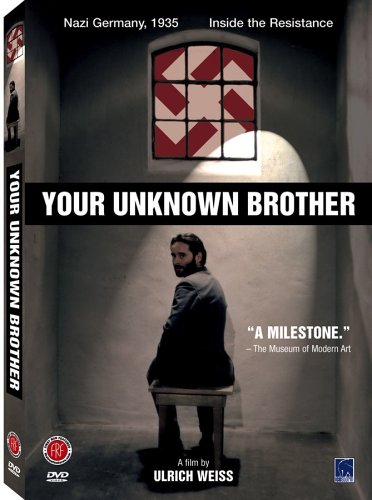
Arnold Clasen reenters society after time away in a Nazi prison camp, and returns to Hamburg and a life of quiet solitary resistance, in the 1981 war-time drama Your Unknown Brother. Clasen immediately reconnects with his old love Renate, and embarks on a turbulent, dangerous friendship with resistance leader Walter, a man of ulterior motives, who is also in bed with the Nazi regime. Clasen starts to suspect Walter when many of his old comrades are seized by authorities. It seems everyone in the resistance, wh... comes into contact with Walter soon become property of the State, yet he remains suspiciously unscathed.

The film deals with themes of stark isolation and hopelessness, as well as an individual’s efforts in facing widespread fascism. It’s always at the top of its craft, but the action lacks that extra something to make it all seem interesting. On paper, the film will have foreign drama buffs salivating, but in execution, it fails to make its premise as intriguing as it sounds. With that said, I am hard-pressed to find any fault in the performances, and Director Ulrich Weiss really does know how to use camera, lighting, and sound effects, to his advantage. It just seems like the intangibles are missing – those unexplainable qualities, which pack all the emotional power, and allow a movie to transcend the average film within its genre.

I am sure that many consumers have noticed the disturbing trend taking place in DVD land with regard to the same movie being released in multiple versions. This practice, commonly referred to in the industry as “multiple bites at the apple”, is a cheap way for studios to persuade consumers to buy movies that they already own over and over again, since each new release offers some sort of extra upgrade from the previous versions. Even those of us in the DVD community sometimes get burned on this type of thing, as ther... is not always a way to tell if we should purchase a product when it is new, or wait for a few years, in the hopes that a better version will come along. Adding to the frustration is the fact that on some occasions, versions are so different that consumers actually want to own multiple versions of a film. This is the case with the Lord of the Rings films, as the extended editions are quite different from their theatrical counterparts. Arguably, the upcoming Kill Bill releases will merit this kind of double purchasing as well.

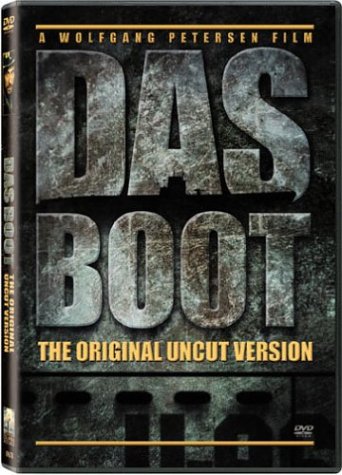
Das Boot is also one of those films that has fallen victim to the practice of multiple releases. Originally, the film was released in a standard American theatrical version. It became such a hit with movie buffs, however, that an extended Director’s Cut was issued as well. Following this release, a separate Superbit edition of the Director’s Cut hit the shelves. All versions sold well, and the legend of Wolfgang Peterson’s epic film about a German submarine crew during World War II continued to grow. As more and more people saw this film, word started to circulate about the existence of a massive five-hour version of the film. Being a town that never misses a chance to make a buck, Hollywood listened to the ramblings, and in 2004, the complete epic was finally released on DVD.

I often wonder what would make a good actor star in a bad film. Of course, the true answer almost always involves money, but I still hold out the hope that there is a greater purpose behind these little thespian mysteries. Did the actor know ahead of time that it was going to be a bad film? Was it a risk that just didn’t pay off? Did he owe someone a favor? Just what exactly would cause an actor to put his career at risk for a paycheck?

Shadow Fury boasts Karate Kid’s Pat Morita on it’s front-...f-box list of stars. Granted, Pat Morita hasn’t exactly been Hollywood’s favorite leading man since teaching Ralph Macchio to wax on and wax of, but I was still surprised to see his name prominently listed on the front of the box for this film. “Maybe this is a hidden gem”, I thought; “a kung-fu diamond in the rough”. The ploy worked, my interest was peaked, and I watched the film.

This is closer to a being a tone poem than a narrative, so there is hardly any plot as such. We move through Berlin in the company of angels. They can hear our thoughts, but they cannot interfere or feel the physical world. Two of the angels -- Damiel (Bruno Ganz) and Cassiel (Otto Sander) are increasingly disenchanted with their existence, and Damiel, falling in love with a trapeze artist, wants to become mortal. This simple story is built on very gradually, and most of the film consists in our hearing the innermost thoughts of various characters, and all these thoughts are presented in poetic (often elliptical) words. The cinematography is quite extraordinarily beautiful.

Audio