Dolby Digital 2.0 (Italian)

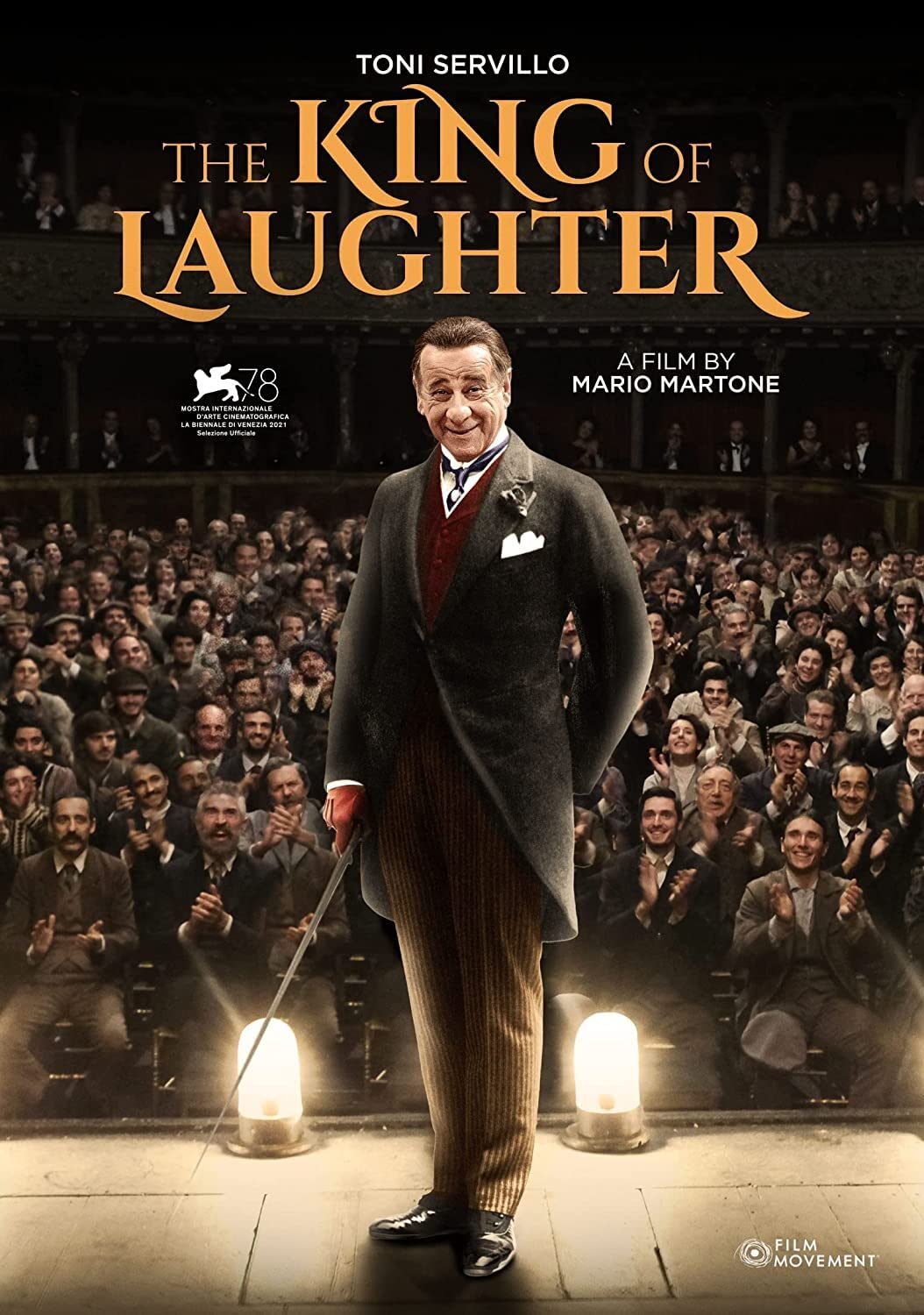
I think all of us want to be on stage, at least in theory.  For me, it started with some plays in high school.  But from there, those aspirations were cut short due to my father telling me that I needed a real job (which was his favorite thing to tell me in high school and college).  I don't think the decade I spent in karaoke bars (and actually singing) really counts for anything either.  So I've always been fascinated with theater, particularly when it comes to comedy.  When I saw King of Laughter as a possible review title, I took a peek at the trailer and decided to give it a shot.  After all, what's not to like about a story featuring the famous actor/playwright Eduardo Scarpetta in a battle with the courts over the concept of parody?  Let's take a look.

We are at a showing of the play Poverty and Nobility.  At the backstage area, we see actors eating pizza.  Then we move across to the box office area where everyone seems to be trying to get a ticket, only to be told that it is sold out.  Eduardo Scarpetta (played by Toni Servillo)  puts on his makeup while members of his family watch.  Nearby, a table has two men seated.  The proceeds from tonight's play are counted over and over again while they try to figure out the payout for each crew member.  Finally, we reach the point in the play where Eduardo Scarpetta makes his appearance to a sea of thunderous applause.

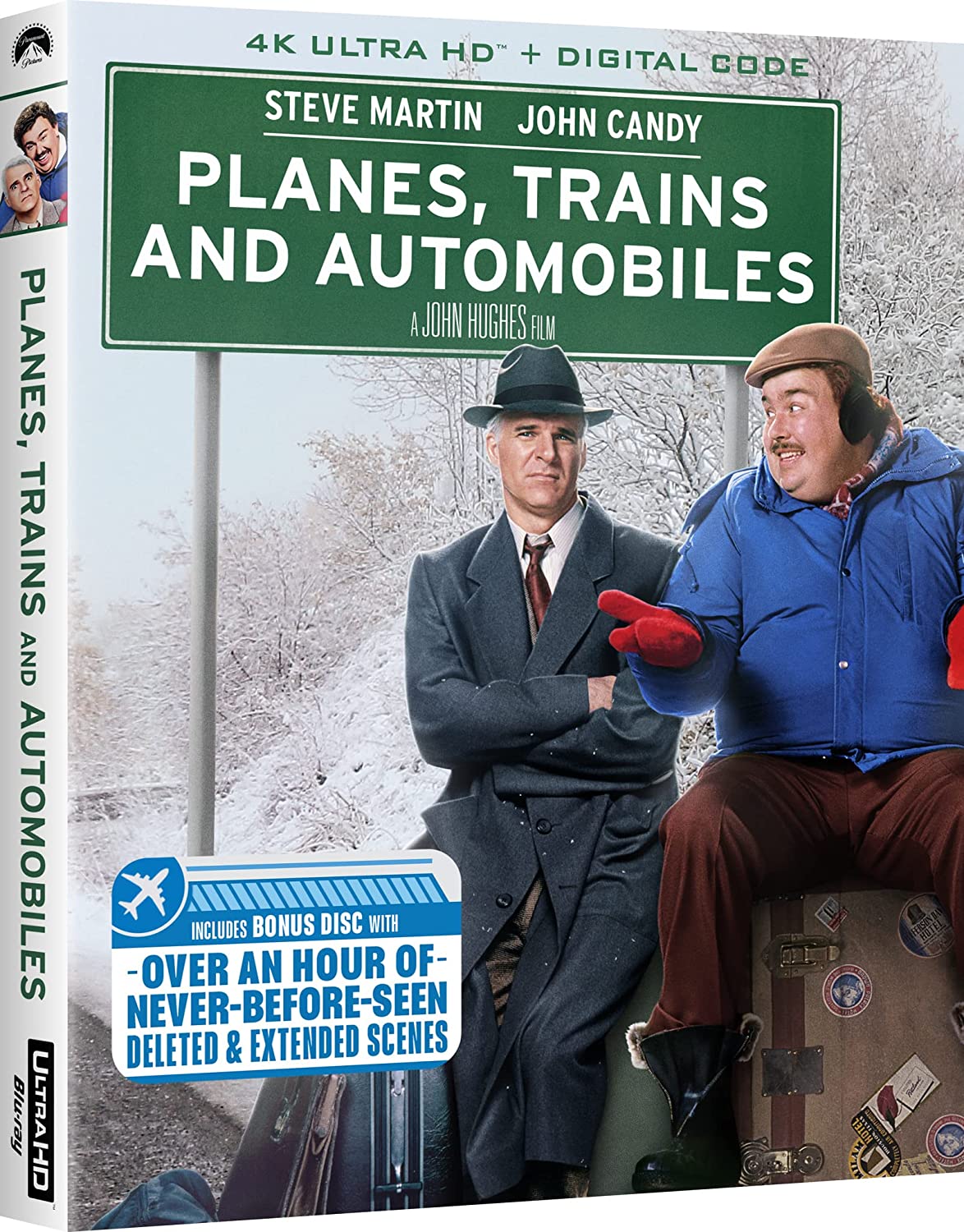
Favorite movies are usually easy to come back to.  It's a familiar song, stars you feel at home with, and even if you recite all the lines by heart, you can find something new to come back to.  In the case of Planes, Trains, and Automobiles, even though I had seen the movie probably around a dozen times or more, I was lured by the promise of new deleted and extended scenes but also a 4K-quality picture.  But as with life, you don't always get everything you want.  Let's take a look.

Please note that portions of this review came from my 2011 article on the Blu-ray, and I have improved on it where possible (and it makes sense to).  

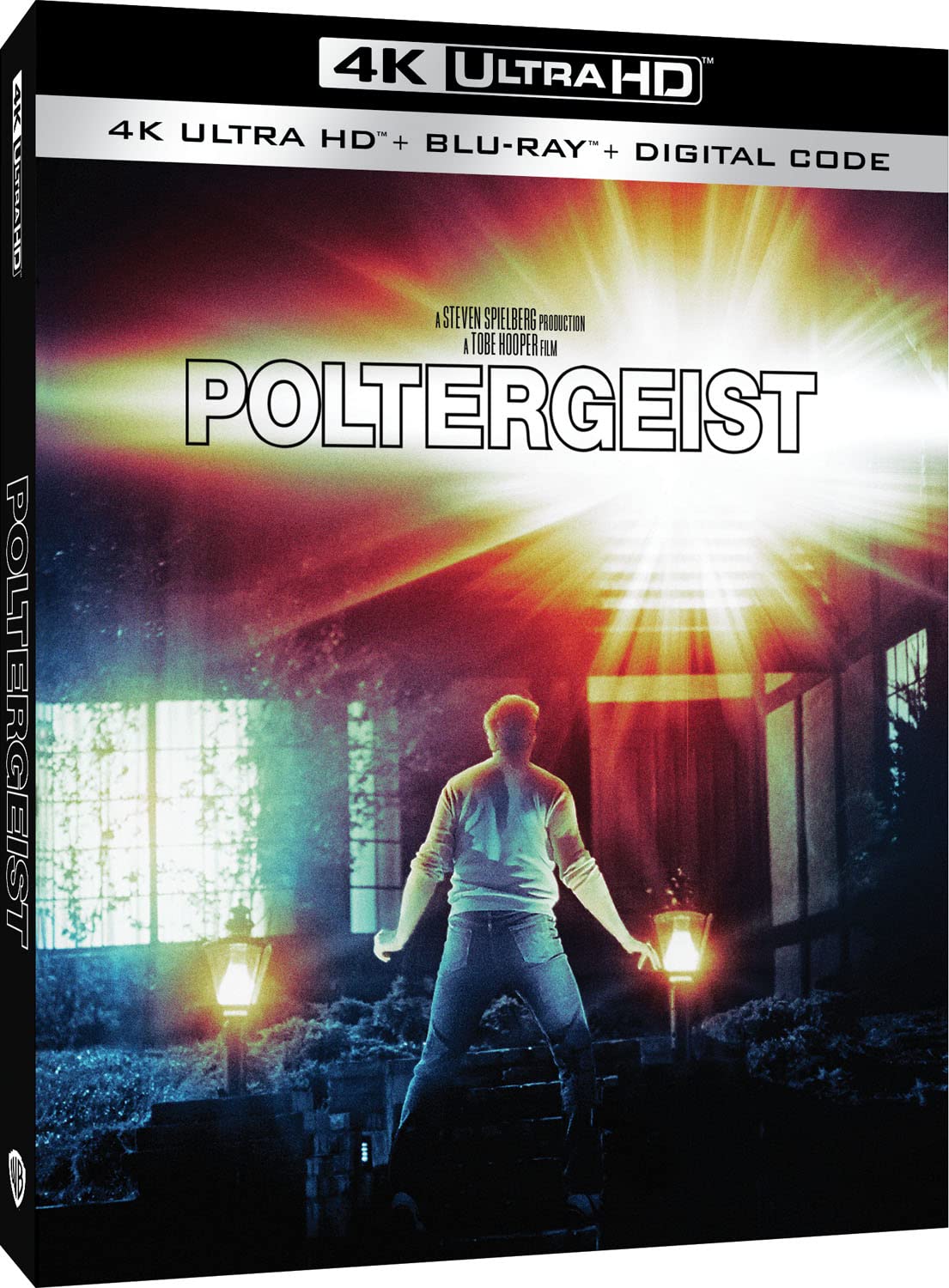
1982.  I was seven years old, and my mother, who loved horror movies, wanted to take me to see Poltergeist.  Unfortunately, around this time, my dad was usually on the road, and so there was no one really there to say maybe we shouldn't.  Honestly, even if my father was there and did say no, I doubt my mom would have listened.  It was PG; how bad could it be? In the next two hours, I was treated to something that resonates with me to this very day. From the moment I heard "They're Here", I knew I would never see static on televisions the same way.

Please note that parts of this review are borrowed (story, critique, special features) from the 2007 DVD review I did 15 years ago.  However, where possible I am enhancing what I wrote, as I think I write better these days. Maybe I have lost a touch of my creativity, but that's a story for another day. 

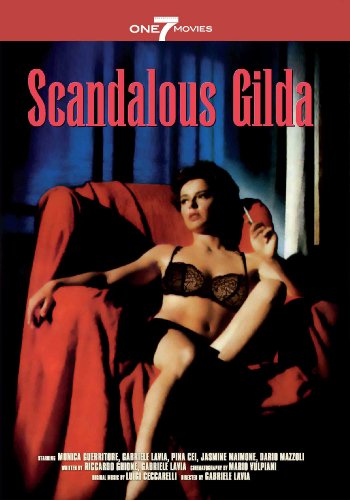
Monica Guerritore is an unnamed wealthy socialite (all of the characters in the film are unnamed) who catches her husband in flagrante with another woman. To add insult to injury this woman is a TV personality of a sort unknown in North America, but common in France and Italy – an attractive woman whose only job is to let you know what's coming up next – and, rightly or wrongly, can represent, as is the case here, a certain form of empty glamour.

At any rate, Guerritore, sexually humiliated, heads off on the road with no particular destination in mind. She encounters exuberant cartoonist Gabriele Lavia (also the director of the film, but best known on these shores for his roles in Beyond the Door and Dario Argento's Deep Red and Inferno). The two begin an affair that rapidly spirals out of control, crossing all the boundaries of passion (that's the idea anyway) and veering rapidly towards self-destruction. All in about twelve hours!

Bernardo Bertolucci is no stranger to controversy. His Last Tango In Paris caused quite a bit of noise when it was released. Novecento, as 1900 is known in its original Italian, has been a subject of controversy for decades. Since its 1976 original Italian release, American studios have been cautious about releasing the film in the states, at least as it was originally intended. First there is the running time. The film clocks in at over 5 hours. Theaters in the US face fierce competition for movie goers’ dollars. The economics of the industry make such a long film simply impracticable even in 1976. There were other problems. A short version was eventually brought to the United States, but the unprecedented violence and sexual images required the then dreaded X rating. Even with today’s more forgiving mores, 1900 would certainly have received an NC-17 rating. The political subjects are also problematic. Americans need good guys and bad guys. This film blurs those lines. The competing forces here are Fascist and Socialist. Neither group is embraced here by anyone other than the far left wing of the Democratic Party. Finally, foreign language films serve a very small niche even with today’s public. Mel Gibson broke down some of those barriers recently, but the hardship remains. I must confess, I am not drawn to films requiring subtitles. I find relying on reading the dialogue a distraction. I watch films with a careful eye toward detail. Reading subtitles simply doesn’t allow me the luxury to observe the subtle nuances of a film. It is these minute details that more often than not create a great film. Enter 2006, and the DVD has removed each of these problems. Sitting in the comfort of my own theater, I can pause when I wish and take multiple breaks. The DVD offers me an English dubbed version which allows me to see those magical details that a film like this requires. The dubbed version also has the added bonus of allowing me to hear Robert DeNiro’s and Donald Sutherland’s voices. Like many film connoisseurs, I had only heard of this film. Now I had the chance to enjoy it in comfort and style.

1900 benefits from an extraordinary cast. American staples Robert DeNiro, Donald Sutherland, and Burt Lancaster lead a mostly Italian supporting cast. Sutherland is absolutely evil as the Fascist enforcer, Attila. His mutilation of a cat is quite an infamous scene. Although it wasn’t quite as graphic as legend had proclaimed, it is disturbing just the same, made more so by the gleeful way Sutherland revels in the act. Robert DeNiro shows flashes of the brilliance that would become his trademark. The character is often moody and perhaps not written with as much passion as DeNiro provides. Burt Lancaster has a small but potent role as Alfred’s grandfather. It helps to establish some historic place mark for the film. Finally, French actor Gerard Depardieu provides an uneven portrayal of Olmo. At times he provides incredible passion and depth in the role. Still, there are moments he seems almost uninterested. The chemistry with DeNiro is a little awkward and never really clicks. This is a huge shame, as this relationship is vital to the story.

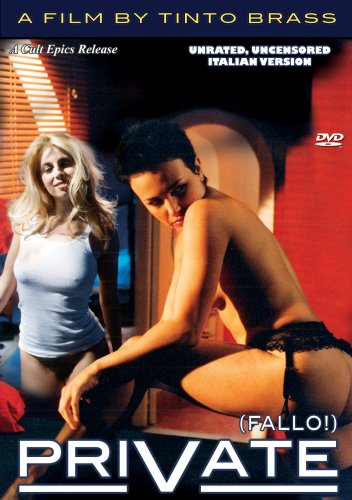
Tinto Brass, reigning high priest of the handsomely mounted skin flick, returns with this portmanteau feature. Six couples spice up their sex lives as the women have sex with other people and their menfolk watch/hear about it/join in too.This is the most explicit film from Brass to come out on the Cult Epics label, in that a fair bit of the sex here is not simulated. The tone is consistently cheerful, and there are some quite funny moments. The performers look more like real people than one might expect, and so, all in all, this ain't deep, but it's better than most efforts of its kind.

Audio

Sometimes, I get a bit of an impulse buying urge. And a while back, I went and got a spiffy Philips 727 DVD player (which I've since replaced with a Toshiba upconverting unit). Sure, it's not a higher end player or anything, but for $80 and a hack using the remote control, it's now become a decent multi-region player. So after testing out a friends borrowed Region 2 disc to see if the hack worked, I picked up a couple of movies from eBay and Amazon.UK, so I'll do the occasional Region 2 review.

For whatever reason, there are instances where the US gets yanked by the shorthairs with the occasional DVD release. If you were going to buy this movie, would you want the release that just has an anamorphic transfer and 5.1 soundtrack? Or would you want the one that has the anamorphic transfer and 5.1, along with two commentaries, as well as a 2nd disc of short films, deleted scenes and documentaries? So that's what I did. And my wife, bless her heart, is patient with me through all of this. She even watched this with me over the weekend and liked it. I've still got the bruises on my arm from where she squeezed hard.

Carla (Yuliya Myarchuk) is a Venetian in London, looking for a flat in which she and her boyfriend Matteo can live once he actually arrives there. In the meantime, she has been in London for a month, and he is in Rome, pining for her. Both of them are getting a bit sexually frustrated, but Carla works that issue out with a series of affairs, and for some reason, Matteo seems to have a problem with this.We are once again in the of Tinto Brass' ass-worship and cheerful infedelity. The tone is established by Carla's opening credit stroll through Hyde Park (a walk which Matteo will recreate later to transformative effect), which is depicted as a carnal wonderland. It seems that the Italians see the English as sexually uninhibited. Anyway the sexcapades dance up to the border of, but do not quite cross into, hardcore, and the tone is cheery. It ain't art, exactly, but it is one of Brass' more engaging films.

Audio

Synopsis

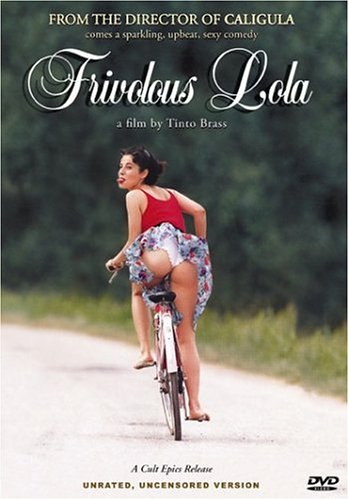
Lola (Anna Ammirati) delights in turning heads in her village, engaging in such antics as riding her bike with her skirt billowing up behind her. The men all think she's great, while the women aren't so fond of her (though the woman working on her wedding dress would clearly like to get to know her better, if you catch my drift). Her main problem is her fiance, who, much to her frustration, refuses to have sex before their marriage. Then there's her stepfather, who seems more than appro...riately interested in Lola, too.

Synopsis

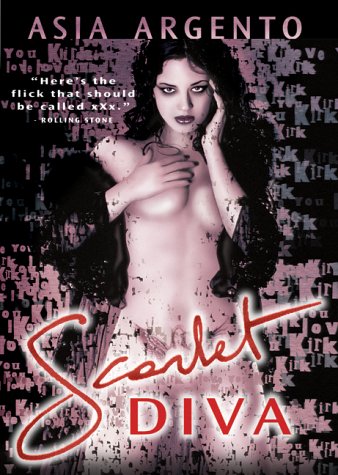
Asia Argento plays Anna Battista, who, when you get down to it, is really Asia Argento inthis intensely autobiographical film. Anna, a popular film star in Italy, stumbles from one bizarreencounter to another, pining for one-night-stand Kirk, in this picaresque tale. There isn’t much ofa plot, as such. Instead, we witness her descent into hell and ultimate redemption. The sex ispretty graphic, which is what caused all the fuss upon the film’s release, but what hasn’t beencommented ...n is the fact that many sequences (particularly the LA episode) are extremely funny.Argento, daughter of horror film maestro Dario Argento, appears to have inherited his strongvisual sense (this is a striking film, all the more impressive for its tiny budget), but has a voice allher own. The film is not perfect, but is raw, brutally honest, and a very promising debut. Argentois a filmmaker to keep an eye on.