Dolby Digital 5.1 (English)

Synopsis

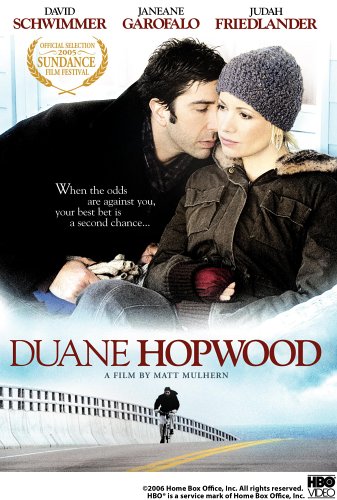
Duane Hopwood (David Schwimmer) works as a casino pit boss in Atlantic City, and is an alcoholic. His drinking has already cost him his marriage, and now ex-wife Janeane Garofalo is having to face the possibility of curtailing his visitation rights after he drives drunk with his young daughter in the back seat. After he makes a bad call at work, his job is in jeopardy as well. But there is hope for redemption still.

Before we get into it, just a quick recommendation to check out "Making Movies" by Sidney Lumet, the director of Network, Dog Day Afternoon and 12 Angry Men. While it's a quick read at 220 pages, it talks about dealing with the actors, rehearsal, a day on the set, and other various forms of a production, and includes stories that happened on his sets also. It's an intriguing book, worth checking out at your local bookstore. A "Ryan's Book Club" pick, if you will.

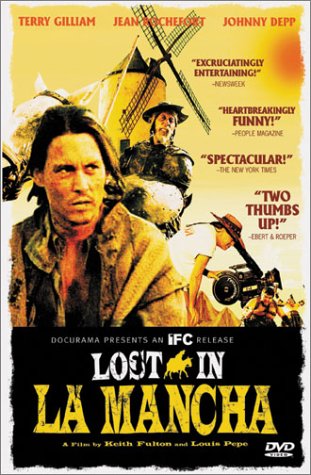
Then there's Lost in La Mancha, Terry Gilliam's documented efforts to make a film called The Man Who Killed Don Quixote. Keith Fulton and Louis Pepe had worked with Gilliam previously to film a documentary for Gilliam's 12 Monkeys, entitled "The Hamster Factor and Other Tales of 12 Monkeys", and whose help was enlisted to film a behind the scenes documentary here. The movie was Gilliam's vision of Cervantes "Man of La Mancha", and something he'd tossed around since 1991. He even came close to starting a production in 1999 before financing fell through. However this time, he had solid financing, and a cast that included Johnny Depp (Fear and Loathing in Las Vegas) and French actors Jean Rochefort (playing Quixote) and Vanessa Paradis. The film notes the problems that previous directors had in shooting a film on Quixote, and features footage of a film shot by Orson Welles that saw a theatrical release, helping to bring life to the aptly named "Curse of Quixote." Gilliam's Hollywood reputation is discussed as well, including the struggles surrounding the making of Brazil and The Adventures of Baron Munchausen. Gilliam is quick to point out on Munchausen there was a producer who promised the stars and the moon, but simply didn't have the budget for what he wanted to do, and Gilliam's name was tarnished from the experience. Being a veteran of such battles almost gives Gilliam a foresight into how his productions will turn out, as 7 weeks before the production starts, he says that there's "a lot of potential for chaos." 3 weeks later, Rochefort arrives, with a newly learned English accent he is eager to show off. As the production is due to start, Rochefort has some "phantom" back pains, so he does not board the plane from Paris to Madrid (where the production is housed). During the weeklong delay, Deep and Paradis arrive and start with screen tests and other work. Rochefort does arrive, and the production starts. Here's where the curse kicks in.

Synopsis

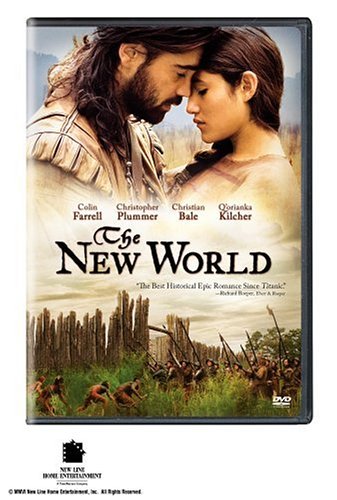
Virginia, 1607. English ships arrive and a colony is set up, but with considerable difficulty. Famine and disease take their toll. Captain John Smith (Colin Farrell) heads off to seek help from the Powhatan. He is captured, sentenced to death, but saved by Pocahontas (Q’orianka Kilcher, whose character is never actually given that name). So begins a fateful relationship.

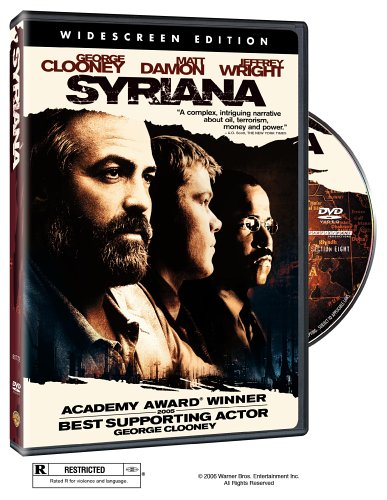
The world of politically charged films has certainly grown in the past few years. Films like Farhenheit 911 have seen big success, while other films like Rupert Murdoch’s OutFoxed have seen more of a critical success. Both of these films had extreme media attention, one obviously more than the other, prior and after their releases. Both asked questions and demanded answers to topics and issues we, as people, wondered about but never really asked about as a simple person can’t really enact a high success...rate in terms of results. However, if you have a name like Michael Moore or Rupert Murdoch attached to the bill, people will probably pay attention. A similar note is given to the recent political thriller Syriana starring George Clooney. Even though Syriana had actors like Matt Damon and George Clooney attached to the bill, would this be enough to make the film’s questions seem important enough to make an impact?

Syriana, to sum up the film in three words, is about oil and money. The film begins with one of the Gulf States agreeing to supply the up and coming China with some of its oil. Texas based company Connex, views this deal as a huge defeat. At the exact same time as this deal is happening with Connex, another company, Killen, has signed a deal to drill for oil in Kazakhstan. Connex, obviously, announces an immediate merger with Killen, thus giving them the oil. Wait one second. This sounds pretty familiar doesn’t it? Naturally the Justice Department intervenes and the movie starts to accelerate.

Synopsis

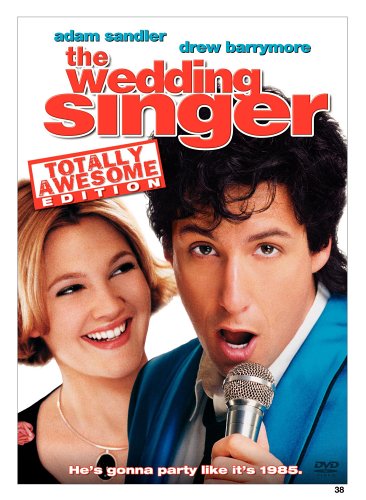
Adam Sandler plays Robbie Hart, wedding singer in 1985, making a living covering other people’s songs, but happy with his life, until he is dumped at the altar. Total professional meltdown then ensues (in the big money scene that everyone saw in the trailers). Hope for romance still exists, however, in the person of Drew Barrymore, a waitress about to be married to a total jerk.

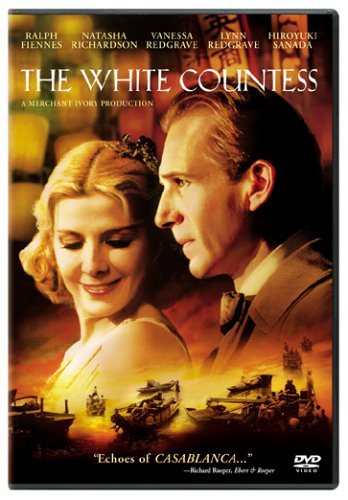
One reviewer accurately described The White Countess as having "echoes of Casablanca." More than that, this last production from Merchant-Ivory seems like it lifted its premise entirely from the classic Bogart film. But at the same time, there is enough different about this colorful and mesmerizing piece to distinguish it as something original - or original enough. With murmurings about that Hollywood may one day remake Casablanca (as it seems they have everything else), I hope and pray the gods ...f better judgment will win out, and let Countess stand as the sole benefactor of such a superior motion picture. At its core, this Ralph Fiennes vehicle is about two people, fallen from glory, who realize the only chance they have in a world quickly going to Hell is the love and respect they share for each other. The film keeps such potentially boring material - and for those that scoff at such an idea, let it be known Merchant-Ivory didn't always knock their films out of the park - fresh and interesting through deep characterization and beautiful imagery. The world the production designers and director of photography Christopher Doyle create is enchanting beyond belief. Once you start watching, it's nearly impossible to remove your eyes from it. In short, these folks make Director James Ivory's job too easy; but it's the audience that reaps the benefits.

Of course, whether the production crew does their job or not, Fiennes always gives a performance worthy of an Oscar - and is subsequently always shunned for his contributions. I would be amiss if I didn't point out just how much his presence adds to the enjoyability - and the credibility - of the film as a whole. He is one of few actors today with that old-time Hollywood quality represented in actors such as Jimmy Stewart or Cary Grant. Let me just say I realize those two men have a world of difference between them, but their best qualities speak much on the kind of incredible actor Fiennes is. Whether he's playing tyrannical Nazi (Schindler's List), vengeful husband (The Constant Gardener), hopeless junkie (Strange Days), or meek blind hero with a sacrificial heart (The White Countess), he always turns in performances worthy of Oscar gold. As you can guess, his rendering of Countess's Todd Jackson is nothing short of amazing. He idolizes, looks out for, and loves the Countess Sofia (Natasha Richardson, with her usual solid performance), and seeks to pick her up from her fallen status in 1930's Shanghai. Pursuing his dreams, he starts a nightclub (shades of Casablanca), where Sofia takes center stage as the object of the club's affections - as well as his own. As the final act begins with the Japanese invasion of Shanghai, we see more shades of Bogart's film in the sacrifices Jackson makes to insure the well-being of the woman he has grown to love. He is content to die, so long as he knows he's done all he could for Sofia and her child (who reminds him of his own daughter, now deceased from the same bombing which claimed his eyesight). But The White Countess is a more optimistic picture than its subject matter will lead many to believe, and it manages to leave viewers with a few surprises and a bit more warmth than they may have expected going in. This film should have been Oscar material, at least for the acting and production value; it is, in my opinion, the fourth best film of 2005.

The Producers has taken an almost cinematic storyline of its own. In 1967 Mel Brooks filmed this tale with one of his mainstays, Gene Wilder. The film was a modest success. It was as a Broadway production that this material reached a wide audience. The play has been a hit for decades now. It only seems inevitable that a new film would surface. This 2005 version of the story is closer to the stage production than the original film. There are quite a few more musical numbers, and that’s essentially where this film goes wrong. What works as a stage production will not necessarily work as a feature film. Everything about this movie is over the top except its heart. Nathan Lane and Matthew Broderick reprise their stage roles of Bialystock and Bloom with different results. Broderick appears to have gotten so comfortable with the role that he seems to be sleepwalking through it for the film. Lane, on the other hand, carries the film on his very broad shoulders. His mannerisms recall Lou Costello. His voice is actually quite remarkable and is the highlight of any of the numbers he’s in. The addition of Uma Thurman as a Swedish bombshell feels forced on so many levels, from her horrible accent to her mismatched chemistry with Broderick’s Bloom.

The 40 year old story still has potential that falls short in this film. Bialystock and Bloom are attempting to produce a Broadway flop. Why? Because if you can pull in enough investor cash and close after one day, you can walk away with millions of dollars. They set out to find the worst play and hire the bottom of the heap. What can go wrong? How can a pro-Nazi production called “Springtime For Hitler” not crash and burn on opening day? If it’s a Mel Brooks written plot, you can count on everything going wrong, and of course, the play becomes a hit. The film picks up a bit when the “Springtime For Hitler” show is finally underway. Still, the film is overlong at 2 hours and 15 minutes. Some of the numbers drag on pointlessly. The film was intended to bring the Broadway experience to the film’s audience, but it fails at almost every turn.

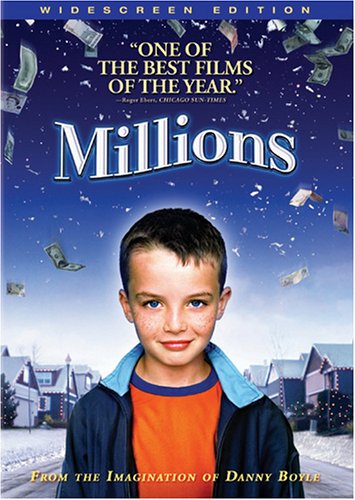
To say that director Danny Boyle has quite an eclectic resume for his directing filmography may be a bit of an understatement. After an impressive first feature in Shallow Grave, he moved on to the cult classic film about heroin addiction called Trainspotting. From there he took an interesting part for a film called A Life Less Ordinary, followed by directing a hot commodity named Leonardo DiCaprio in The Beach. He took on an interesting zombie film called 28 Days Later, and that brings him up to the children's film(?) called Millions.

Written by Frank Cottrell Boyce (Code 46), Millions tells the story of Damian and Anthony, who live with their father Ronnie, who is a recent widower. Damian and Anthony are both kids (7 and 9, respectively), and are even more isolated when Ronnie moves into a new suburb in England. Damian finds solace is his knowledge of saints, specifically their lives and what they did to qualify for sainthood. He takes some of the moving boxes and sets up a makeshift playhouse in the backyard away from the house, near some train tracks.

Synopsis

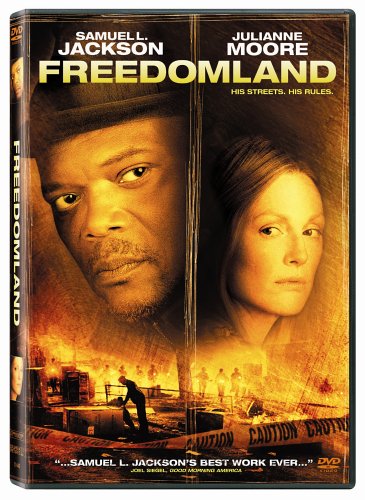
Her hands covered in blood, a distraught-beyond-coherence Julianne Moore wanders into a hospital with a story of being carjacked in a predominantly black housing project area. Detective Samuel L. Jackson, assigned to the case, learns from her that her young son is apparently still in the car. Given that her brother is a cop in the adjoining white area, all hell breaks loose and racial tensions threaten to send an explosive situation into terminal meltdown. But the question is whether there i... more to Moore’s story than there at first seems.

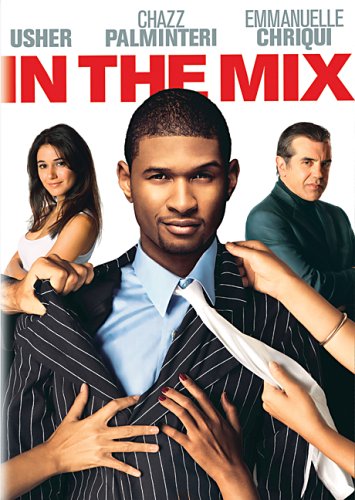
Here's the dilemma with these kinds of movies; it's hard to successfully fit a hard R story into a PG-13 package. Usher is a big draw in the under-18 market, so the challenge is to take a strong dramatic story and mold it to hit that balance between Hard Eight and Raise Your Voice. However, I have said it before, and here we go yet again... movies that try to appeal to everybody will successfully appeal to nobody. This is a movie that is a bit too racy and violent for your average 12-year-old girl, but way too soft for adults.

The plot is the same kind of thing you have seen time and time again. Usher plays a Hip-Hop DJ trying to break into the music business on a national scale. One night at a party, he saves the life of his friend's father, who is a Mafia boss. As a result of his heroism, he is made to be the bodyguard of the boss' daughter (despite the fact that he has no experience in such a role). Naturally, he soon falls in love with the bosses' daughter, and a conflict of interest ensues.