Dolby Digital 5.1 (English)

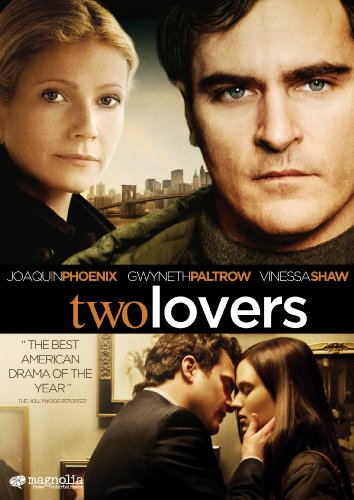
James Gray’s Two Lovers revolves around the troubled Leonard Kraditor (Joaquin Phoenix).  Leonard has moved back into his childhood home to recover from his recent break up. In quick succession, two women enter Leonard’s life: Michelle (Gwyneth Paltrow), an entertaining and peculiar neighbor who transcends Leonard’s world and Sandra (Vinessa Shaw) a classy, traditional woman who is the daughter of a businessman attempting to purchase Leonard’s family business.  Leonard becomes confused between desire and love and the story unfolds from there.

The performances in this film are what resonate with the audience the most.  Joaquin Phoenix crafts his character from a dark place and displays great emotion in this role.  His complicated past slowly unravels throughout the film and audiences become more and more aware of his emotional instability. Phoenix is truly a great performer; it is unfortunate that he has taken a recent ‘break’ from acting.  Both of the female leads are strong as well.  Vinessa Shaw’s performance is passionate and powerful.  Her scenes with Phoenix are both romantic and realistic as well. Viewers can definitely identify with the dialogue between the two of them.  Gwyneth Paltrow is not breaking new ground with her performance.  However, her scenes are all remarkably interesting.  Her character is deeply conflicted by her current relationship and the growing relationship with Leonard.

We are in the late 1920s, and to the family manor comes Ben Barnes, in the company of new wife, Jessica Biel. That this woman is both American and a race car champion does not sit well with the very conservative mother Kristin Scott Thomas. That her nose is out of joint delights husband Colin Firth, a veteran of the Great War who, thoroughly world-weary and disillusioned with just about everything, wants nothing to do with the petty concerns and squabbles of his family. What follows is a clash of cultures and generations, veering between slapstick comedy and something rather darker.


I know you've all been waiting to see Jessica Biel finally star in a film whose script is based on a Noel Coward play, which was first adapted in 1928 by Alfred Hitchcock. All kidding aside, Biel acquits herself well, despite occasionally displaying some rather anachronistically defined pecs. The other cast members aren't having to strain themselves too much -- Scott Thomas has played repressed ice queens before, and Firth pretty much phones in his trademarked display of amused contempt -- but they are never less than efficient in their portrayals. That said, Scott Thomas and the performers playing her daughters have a tendency to project to the back of the hall, and otherwise remind us a bit too forcefully that this material was originally a play. The film is far from the jaunty comedy of mores that the case suggests -- it is rather too dark for that, by the end. It is an enjoyable, though finally slight, bit of entertainment.

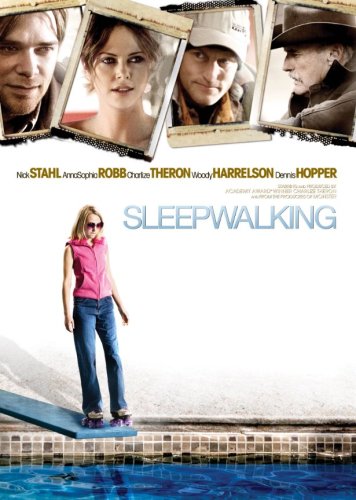
This is the story of an unfortunate underachiever who is left with his niece after his even less fortunate sister abandons them. Unhappy with social services and the places they are forced to live, they take what little money they have to fund an aimless trip across the country until arriving at the home of his abusive father.

This film relies on the performances since the story is so utterly bleak at times that all the audience has to cling to sometimes  is the recognition of the stars within it. Filling up the smaller roles are the likes of Woody Harrelson, playing  the goofy friend, Dennis Hopper, who is devouring the scenery as the aforementioned abusive father, and Charlize Theron, who is greatly missed during most of the film for she delivers probably the most solid and engrossing performance as the troubled mother. Theron controls the first fifteen minutes then becomes nothing more than a reference for the better part of the proceeding film.

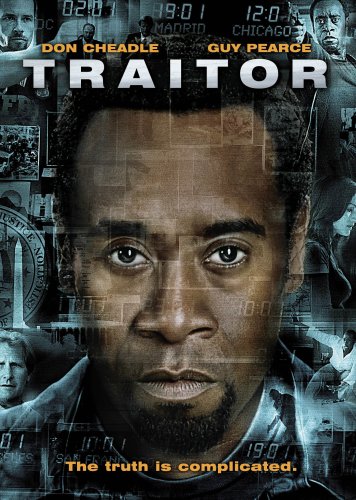
Some thirty years after seeing his father killed by a car bomb, Samir Horn (Don Cheadle) is a dealer in explosives. When he is imprisoned in Yemen along with members of a militant group he was about to make a sale to, he is drawn in and becomes an integral part of the group's terrorist activities. But wait – is he in fact an intelligence agent who has infiltrated the group in order to bring down their leader? Meanwhile, FBI agent Guy Pearce is hot on Samir's trail, but if he catches up, will that be a good thing or a bad one?

Given that we are, after all, talking about the lead in a mainstream Hollywood release, it should come as no surprise that the answer to the question of Samir's ultimate loyalty comes as no surprise. Fortunately, the question mark is dispensed with about an hour into the film, and the real suspense shifts to more urgent concerns, such as whether a ghastly bombing plot can be averted. Without venturing into spoiler territory, I must say that the climax leads to as clever a bit of cinematic prestidigitation as I have seen in quite some time, so kudos. Though the film is, first and last, a suspense thriller, and quite the effective one at that, it also makes a few telling points. Though the villains are suitably dastardly, a number of the characters on that side are also humanized – Sarmir's best friend (Saïd Taghmaoui) may be a terrorist, but he is also a man whose motivations are entirely understandable, and he is clearly acting out of genuine conviction. By contrast, intelligence operative Jeff Daniels is willing to go to such lengths to stop the terrorists that he becomes morally indistinguishable from them. And when was the last time that Hollywood had a devout Muslim as the protagonist of an action film? Rank this, then, with The International and The Kingdom as another satisfying exercise in suspense that leaves its audience with plenty to talk about after the closing credits roll.

The title pretty much speaks for itself. Here are four episodes of the sequel that surpassed its inspiration in television longevity. They are as follows: “Relics” (which sees Scotty revived in this brave new world, and finding himself redundant), “The Inner Light” (an amnesiac Picard lives out an entire lifetime on a strange planet), “Cause and Effect” (the Enterprise and crew wind up stuck in a time loop, and must struggle to escape their repeated collisions with another ship) and “Tapestry” (where Picard winds up in the afterlife, which is certainly more than Kirk could say). It's a bit trickier yanking episodes of ST:TNG out of their season contexts than with the original show, given the former's greater emphasis on continuity, but these stories here are all good standalone adventures.

An odd thing is happening here. Because the original show has been so thoroughly remastered, ST:TNG is now the one that looks dated. The CGI is prone to aliasing and a lack of definition, and the image is rather soft. The colours are decent, but though I know there aren't many opportunities to get a tan in space, the flesh tones are sometimes a bit too far on the pale side of things. All of this said, the transfer is still perfectly watchable. The aspect ratio is the original 1.33:1 -- the show is still old enough that widescreen wasn't the standard yet.

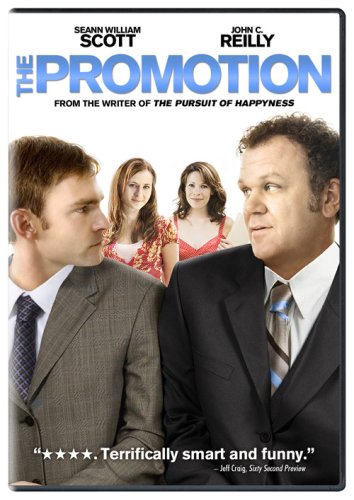
This is the comedic tale of a grocery store's young assistant manager (Seann William Scott) who believes he is the prime candidate to take over the soon-to-be built addition to the chain. This leads him to buying a house before the job is secured and lo and behold a hotshot Canadian (John C. Reilly) shows up in town from their sister company and begins campaigning for the job himself.

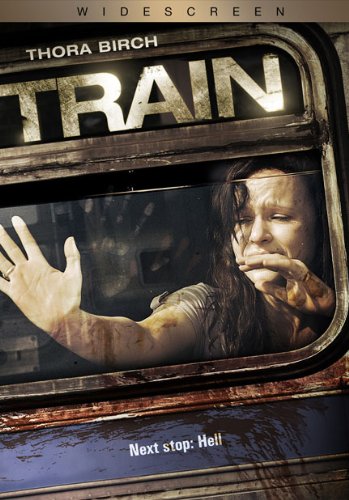
All aboard. The midnight train bound for Hell and parts unknown is now boarding, with brief stops in Hostel, Saw, and Turistas by way of the Terror Train line, we welcome you aboard. For your riding pleasure you’ll be entertained along the way by a group of college wrestlers who have just become unofficial organ donors, if you know what I mean. They’re just dying to make this ride as enjoyable as possible. There’s plenty of blood and gore for your riding comfort. Sit back and enjoy the fine Bulgarian countryside. Out of courtesy for your fellow travelers please turn off all cell phones for the duration of your voyage. There’s a pause button located conveniently on your remote control should you require an unscheduled stop. Please place food trays and any additional spare body parts you’ve brought with you securely under your seats. Should your film stop suddenly or begin to act in an erratic manner, try pushing buttons on your remote in a furious and random fashion. It won’t actually help, but studies have shown it will limit your discomfort and feeling of helplessness. Our estimated travel time is 94 minutes. Finally, please remember not to cover the ventilation slots of your equipment with the empty DVD case while the film is in motion.

The Indiana wrestling team is on an Eastern Europe tournament tour. Unfortunately, they’re not doing so well on the mats. When five of the players decide to break curfew and spend the night partying and brawling, they miss the train out to the next stop on the tour. The rest of the team has gone on ahead, and the coach has to buy tickets on an independent railway to get the five tardy players to the next stop. It looks like the five party animals weren’t the only ones making bad choices. Coach has booked his stragglers on a train ride to Hell. You know immediately that these aren’t the sharpest tools in the shed when they willingly give up their passports on the train to two pretty gnarly looking guys who claim they’ll keep them safe from thieves. Looks like another case of college co-eds with an average IQ somewhere south of Beavis and Butthead. Now they’re going to be taken on the ride of their lives … a very short ride at that. Nothing like a little clickety clack to go along with those screams and gurgles. This train has everything: food, booze, gambling, and fun with sharp objects as Dr. Velislava (Ruseva) runs a black market organ shop on rails.

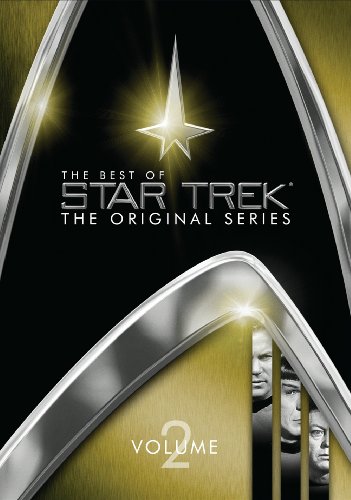
For those Star Trek fans who can't afford the complete season box sets, here's an economical alternative: a single-disc collection of four popular episodes from various seasons. Present here are “Where No Man Has Gone Before” (a propulsion expert's change to the Enterprise's engines propels the crew to the edge of the universe), “Space Seed” (the episode, it need hardly be said, that brought us Khan), “A Piece of the Action” (wherein our gang gets to dress up like 20s gangsters) and “Journey to Babel” (a diplomatic mission turns into a disaster when, among other things, Kirk is stabbed and Spock's father has a heart attack). Strong episodes from a strong series.

The show looks terrific. In fact – purists take note – it looks better than it should. Yes, these are the same remastered prints as the last set of complete season releases, complete with enhanced special effects. So the show not only looks better than it did when first broadcast, it is sharper and has better FX than its Next Generation counterpart. The viewing pleasure is high, then, just not historically accurate.

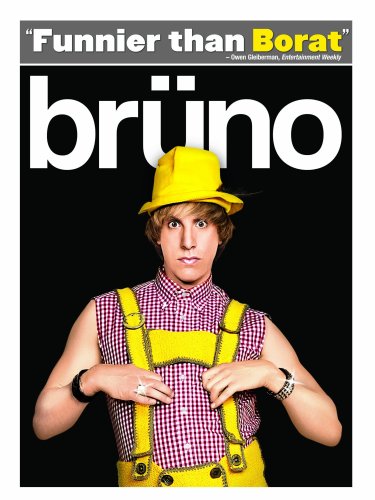
Sacha Baron Cohen is no stranger to controversy. He premiered his wankster-rapper character Ali G on Britain’s satirical late night series The ll O’Clock Show in 1998. When he earned his own program on HBO in 2000, Da Ali G Show, he ticked off public figures like Donald Trump and Andy Rooney and duped numerous celebrities and athletes into falling for his comedic antics. He even appeared in the music video for Madonna’s Music. But it wasn’t until 2006’s surprise hit Borat: Cultural Learnings of America for Make Benefit Glorious Nation of Kazakhstan that Cohen broke the U.S in a big way. Grossing over $260 million worldwide made Borat a cultural phenomenon and an instantly recognizable character.

Cohen has since retired Borat, but gave U.S audiences someone else to laugh with—or at, depending on your opinion 2009. Bruno was also repeatedly featured on Da Ali G Show, but he’s the main star here.

Jeff Daniels plays Arlen Faber, author of the mega-bestselling Me and God, a book of self-help spirituality that comes across as an aphoristic mix of Zen and the Art of Motorcycle Maintenance and The Purpose-Driven Life. The book is coming up for its twentieth anniversary, and Arlen hasn't written anything since. He is now a cynical recluse, but begins crawling out of his shell when he encounters a struggling single-mother chiropractor (Lauren Graham) and an alcoholic used bookstore owner (Lou Taylor Pucci). They are looking to him for wisdom, though he doesn't really believe he has any to give. In turn, they are teaching him how to live again.