Dolby Digital 5.1 (English)

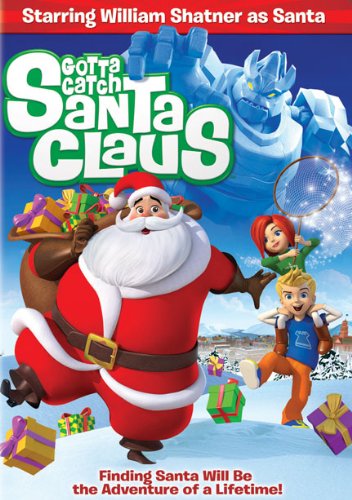
"Hello, there. I bet you're already saying to yourself, 'Oh, I've already seen this one. Another holiday special narrated by some new teen star between takes on their oh-so-popular new sitcom series. Well, I'm here to tell you, not this time, because I'm not a star. Well, not yet at least. And, this ain't about how so and so saved Christmas for all the good boys and girls..."

I would have loved to have been in this meeting. Someone walks into a studio executive's office to pitch his idea. After describing his new Christmas special concept, he pauses, just for a second, just for the right amount of anticipation. "Here's the clincher", he says manically. "William Shatner will be the voice of Santa Claus."

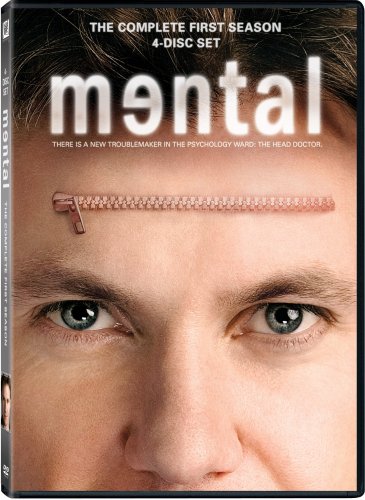
Things are tough all over. It seems that even the television networks aren't immune to the growing trend of cutting back. Fox decided that the answer was Bogota, Colombia. No, they didn't turn to the cocaine market. They all tried that in the 70's and we ended up with Joannie Loves Chachi. This time Bogota is an option for producing new television shows. The idea is that you can take an American cast, with a token Brit in this case, and ship them off to Columbia to do the show on the cheap. The good news is that you can hire crew for six bucks a day. The bad news is that the show ends up looking like it cost about six bucks to shoot. I suspect that the hombre who came up with this wonderful idea for Mental had a better understanding of mental illness than the average bear.

Dr. Jack Gallagher (Vance) has been hired by his ex-lover Nora Skoff (Sciorra) to run the mental health department at Wharton Memorial Hospital, where she is the hospital administrator. Gallagher might be bright, but he has some rather unorthodox methodology. He tends to put himself in the place of the patient. To see what they see. Attempt to feel what they feel. It's the kind of practice that ends up having him introduce himself to his new staff by stripping buck naked when an intake patient is seeing alien reptiles and has stripped down himself to prove he is human. The tactic might have calmed the patient and defused a volatile situation, but it didn't endear himself to his new colleagues.

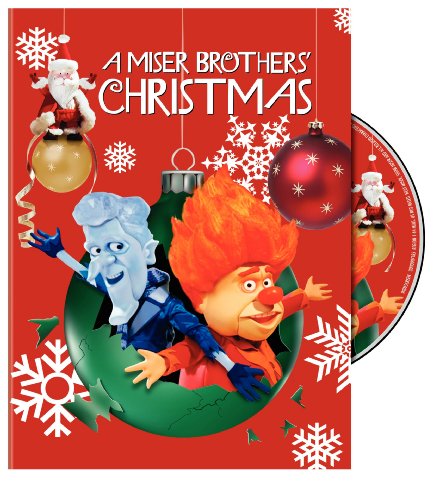
"Have you ever been told of that fateful year when Christmas almost didn't happen? It was everyone's worst fear. There was no one to take Santa's big sack of toys and deliver the presents to the world's good girls and boys. But this Christmas season didn't begin with any trouble or fuss. It began with some singing, as all Christmases must."

The 1960's and 1970's saw an entire genre of holiday specials produced by the prolific studio of Rankin and Bass. The most popular of these specials is probably Rudolph The Red Nosed Reindeer. But there were many others that were released in a 10-15 year period. They all had a few things in common. They used stop motion puppets and sets to achieve their animation. Yes, the same magic that sent King Kong up the Empire State Building drove Rudolph on that foggy night to lead Santa's sleigh. There was a decidedly plastic appearance to the characters, and they were certainly distinctive. Within seconds of watching one of these specials you were able to identify it as a Rankin and Bass production. In the years since, stop motion has almost gone the way of the dinosaurs with very few practitioners working in the art form today. Tim Burton has been the most successful of late. And we can't help but owe a huge debt of thanks to Willis O’Brien and Ray Harryhausen for perfecting the craft. And so our childhood was amused by these annual favorites only surviving in chopped up syndicated reruns today.

I went to my player, the one that’s on top. I turned on the TV I bought at the shop. Then I opened my Blu-ray, took it right from its case, and then there on the tray I put it in place. I pushed one or two buttons to bring it up fast. Soon an FBI warning, then my feature at last. I sat the whole time crouched alone in my chair, watching fanciful images that came to me there. I was certain at once that I’d seen this before, but something was different; it was brighter, I’m sure. The Grinch was the same, he hadn’t changed, not a bit. But the image was clearer now, I had to admit. So, I puzzled and puzzled alone in my seat. Why these colors much finer for such a repeat? Then at last I was certain, yes it had to be so. This must be high definition, what a wonderful show. I know when it ended I felt somewhat sad, but these discs last forever, and so I was glad. So, if you’re a fan of the Grinch and his kin, you must hurry now quickly and watch it again. I promise it will be like nothing you’ve known. It’s for kids of all ages, both little and grown.

Boris Karloff was famous for monsters and ghouls, who’d have thought he’d be perfect for books read in schools? He tells quite a story, a marvelous voice. To play the Grinch and reader he was the most perfect choice. The songs are all there, you know them by heart. Nothing is missing, not one little part. Everyone’s back, Cindy Lou Who and Max. But the Grinch is the star. The facts are the facts. You can sing along joyfully. You know every word. You know every scene even before it occurred. Chuck Jones was the talent behind all the art, as he carefully directed each wonderful part. It was made in 1966. It’s been shown every year, from Tampa to London, Paris, Rome, and Tangier. Kids laugh and they snicker. Some kids even wince; for 44 years now we’ve been watching The Grinch.

I grew up on the Peanuts creations of Charles M. Schulz. Most of us have, in some way or another. His newspaper comic strip is one of the longest running and most successful strips of all time. The work has been translated into every language currently spoken on the planet. The images of Charlie Brown, Snoopy, Linus, and the rest of the Peanuts gang have appeared on just about any kind of product imaginable. Our pop culture contains too many references to the strip to mention briefly. For me, it was the television specials starting in the mid 1960’s that brought the gang into my life. The classics are running annually, still after nearly 50 years. A Charlie Brown Christmas and It’s The Great Pumpkin, Charlie Brown are the most mentioned and certainly beloved by generations of children and adults. I thought I never missed an airing.

This is one of the most endearing and enduring of the franchise. It’s loaded with memories too many to mention them all here. Charlie Brown tries to direct the school nativity play. He finds it hard to get the gang’s cooperation. In his own despair he discovers the true meaning of Christmas. Some of those memorable moments that I will never forget include: The scrawny little tree that Charlie Brown picks out, held up by Linus’s blanket. Snoopy wins first prize in a house light decoration competition. Of course the best of the best comes in the end when Linus recites the story of the birth of Christ. Today most people would be shocked to see a public school putting on a nativity play. Watching this one is a sad reminder of how much these basic principles have been swept away by intolerance and misrepresentation of “Jefferson’s Wall”, that First Amendment separation of church and state. This short, more than the others, is truly a product of its time. It depicts an America that no longer exists.

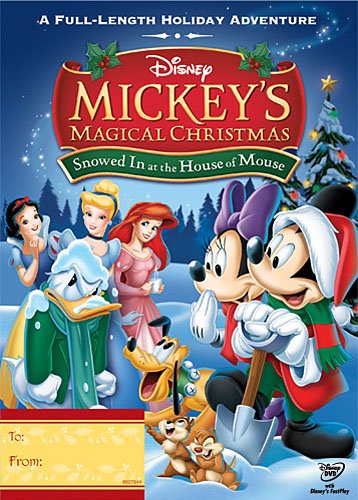
The House Of Mouse first appeared on television in January of 2001. It took advantage of pretty much every Disney character from nearly every Disney property. Mickey was the host of a nightclub called The House Of Mouse, I guess a riff on The House Of Blues. The standard bearing characters ran the club. In the audience was where you’ll find all of those lovable characters from films like The Lion King, Aladdin, Snow White And The Seven Dwarfs, The Little Mermaid, Peter Pan, Winnie The Pooh, and so many more. The shows were both performances by the characters and the showing of Disney shorts. The series was very much like the Warner 70’s show The Bugs Bunny And Road Runner Show. There too you had an audience and staff of Warner’s entire Loony Tunes library. There was also a rivalry there between Bugs and Daffy Duck. The same kind of relationship exists here between Mickey and Donald. The series only lasted a couple of years and was soon gone from the airwaves.

Mickey’s Magical Christmas: Snowed In At The House Of Mouse aired November of 2001. The characters are all snowed in on Christmas Eve and can’t get home to celebrate the holiday. Mickey decides they should all throw a Christmas bash at the club. For the most part they’re all trying to cheer up Donald, who has a case of the humbugs. In between these antics a few shorts are shown. The most notable are a Disney version of The Nutcracker with ultra modern music and a telling of Dickens’ famous A Christmas Carol. Many of the vast cast get at least a couple of lines.

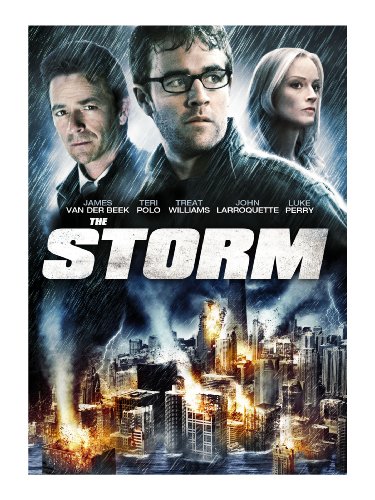
It’s really hard to explain but I feel like I have shared a small lifetime with a director named Bradford May. At first, it was a couple of Darkman sequels that were simply good doses of cult sequel fare. I didn’t expect much and I received back exactly that, so I was satisfied. But then as I continued to review more and more movies, as his films started to pop up in my queue. First there was Ring of Death & then Mask of the Ninja. Both could be described as typical action beat-em up movies. Then Bradford decided to take on direction for The Storm, a mini-series that was shown on NBC and somehow it ended up in my review pile. I’m starting to think that this is no mere coincidence anymore.

Dr. Jonathon Kirk (played by James Van Der Beek) is a renowned scientist working at the Atmospheric Research Institute. He is aided by his fellow scientist, Dr. Jack Hoffman (played by Rich Sommer) and newcomer Carly Meyers (played by Erin Chambers). They are being funded by the U.S. government to manipulate technology that will allow them to control the weather.

“On the 15th of May, in the jungle of Nool, in the heat of the day, in the cool of the pool. He was splashing enjoying the jungle’s great joys, when Horton, the Elephant, heard a small noise. Then he heard it again, just a very faint yelp, as if some tiny person were calling for help…”

If you’re like me, you remember the Dr. Seuss specials from the 1960’s. At this time of the year, The Grinch comes first to mind. In that wonderful span of cartoon specials was the story of the elephant Horton, who hears voices coming from a speck he carries around on a flower. The story revolves around Horton’s attempts to protect the very tiny town of Whoville which exists on that speck. None of his friends believe him, just as none of the Whoville scientist’s friends believe that he has spoken to a giant elephant in the sky. Before long the story plays out, and we all remember the moral that a person’s a person, no matter how small. That Chuck Jones effort is a dear memory for most of us from that generation.

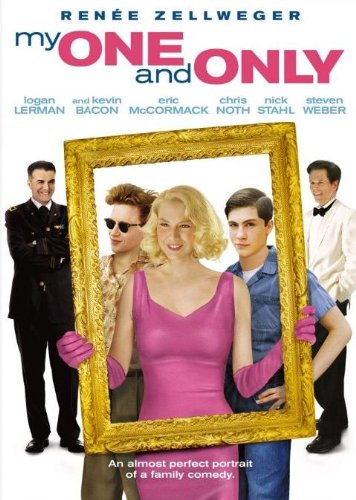
My One And Only is based on a George Hamilton autobiographical story. It’s probably a tale that his fans know well. It wasn’t one I was at all aware of. The screenplay was written by Charlie Peters. Hamilton himself is a producer on the film, so we can assume that the story unfolds in much the same way he intended. Like most autobiographical pieces, it has a limited audience. Fans of the subject are certainly going to be quite interested. Others who consider the subject of some note might also have an interest in the material. Unfortunately, it’s like watching vacation or baby slides. After some time you can get lost and bored watching the high or low points in someone else’s life. This is just that kind of experience.

Anne (Zellweger) comes back early from a trip to find her husband, big band leader Dan (Bacon) in bed with another woman. She immediately decides to leave him and take their sons George (Lerman) and Robbie (Rendall) on the road to find herself a new husband. Anne is the typical southern aristocrat and believes she needs to find someone to give her the good life she has become accustomed to. Their first stop is Boston where she runs into old flame Wallace (Weber) who just wants to borrow money because his business is failing. Next she gets engaged to military man Harlan (Noth) who just wants a family so that he can be a “top dog”. Next it’s on to Pittsburg, and it’s Oliver and Charlie. Next stop St. Louis and a paint store magnate who’s crazy as a loon. Finally, it’s California to give Robbie a chance to be an actor. Along the way the family learns about themselves and the man they left behind. They finally settle in California where it’s George who ends up with the acting career.

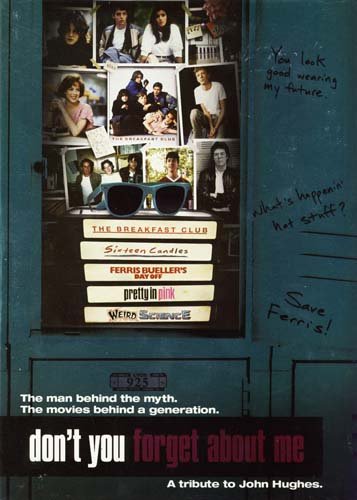
Don’t You Forget about Me is a documentary/tribute to the late John Hughes.  Four amateur filmmakers set out to find answers to the questions, why did you leave? How did you capture adolescence so perfectly in your films? Why do your films remain a fixture in popular culture?  After obtaining interviews with many of the John Hughes alumni such as Ally Sheedy, Judd Nelson, Alan Ruck and Andrew McCarthy, the filmmakers came to the realization that they required an interview with John Hughes to complete the film. The documentary combines the interview footage as well as covers the filmmaker’s road trip from Toronto to Illinois to acquire an interview with the reclusive director. 

The marketing potential of this film rose greatly upon John Hughes’ unfortunate passing.  These filmmakers are deeply interested and moved by the works of Hughes and audiences can see that.  However, there is nothing compelling about the filmmakers.  They are not interesting or provocative. I found myself bored with their stories and opinions. What is problematic about this documentary is the forced fusion of two stories; One being the story of John Hughes and the other being the group of filmmakers. In my opinion, the latter should have been jettisoned altogether. Audiences are engaged in these interviews and suddenly the flow is disrupted with the tiresome antics of these four filmmakers.