Dolby Digital 5.1 (English)

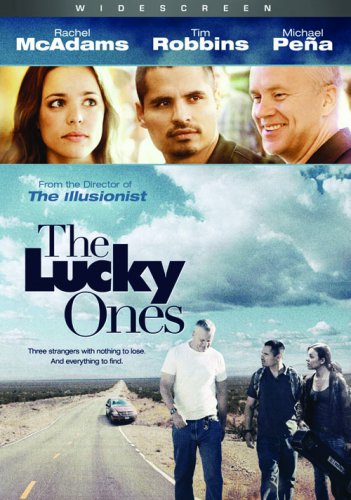
Three soldiers are on their way home from Iraq. They have each suffered injuries. Fred Cheaver (Robbins) is on his way home for good. He’s retired and looks forward to getting back to St. Louis and his wife and son. Colee Dunn (McAdams) is a young woman who was injured in her leg and now has a month leave. She’s planning on going to Las Vegas to return a guitar to the family of her boyfriend, who died in Iraq. T.K. Poole was injured in the groin and is also on his way to Las Vegas for a one month leave. He’s afraid that his fiancée won’t want him back because his injury appears to have left him impotent. He’s heard tell of sex experts in Vegas that might be able to “get him working again”. The three are strangers until a blackout cancels their flights once in the United States. They decide to carpool to St. Louis with Fred and get flights out of there for Vegas. During the trip they bond somewhat which turns out to be fortuitous for Fred. When he gets home he finds that things are not going to be the way he planned. His two new friends join him in extending the road trip, ultimately to Vegas. There no one finds what they expected.

If you’re looking for a film about the war, one side or another, you are most likely going to be disappointed. There is very little discussion on that front, and what is there is what you would expect from someone like Tim Robbins who wears his politics on his sleeve. Fortunately it is a limited scope and not really the point of the movie. What looks like a soldier film is really a very typical and unoriginal road trip film about bonding. They meet the typical odd characters and weird circumstances along the way. The acting and characters are charming to some degree. All three performers do a good job of bringing some chemistry to the film, but it all appears so pointless. The problem is that the film is ultimately claustrophobic, and while there’s tons of driving, it doesn’t end up going anywhere at all. In the end the characters are little changed by their experience, and we’re led to believe will go on with their lives. In the end it’s an innocent enough diversion, nothing more.

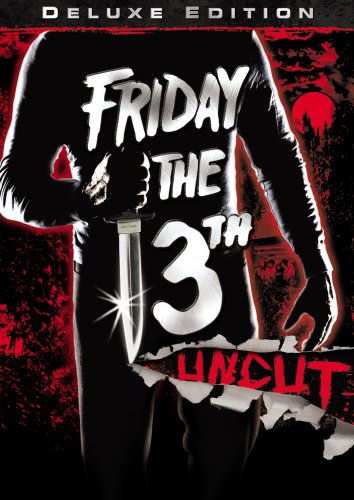
It’s 1980. The Reagan Years are upon you. The country is hopeful it will soon come out of the toilet bowl it was in for the last four years, and while things may seem bleak, you’re one of the lucky ones that still have a job, a girl, and a reason to live. As April becomes May and the days grow considerably hotter a little at a time, what better way to take a break from it all than driving you and your sweetie down to the local movie house for opening night of a new horror film you really haven’t heard all that much about entitled Friday the 13th?


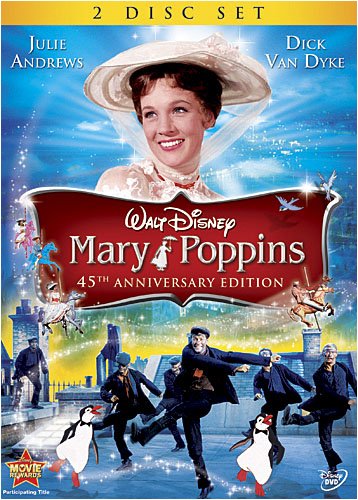
Mary Poppins was the subject of a series of books by P.L. Travers. Long before Harry Potter came on the scene, Mary was delighting children all over the world with her spectacular magical abilities. At the time Walt Disney was making a name for himself and his studio by bringing many of the children’s classics to the big screen. From fairy tales to Winnie The Pooh, the studio was providing the look and the soundtrack to the imaginative worlds already known and beloved by millions. It was a magnificent strategy, and it would pay off huge for the company. The problem with Mary Poppins was that it needed to be a live action film. Mary and her pals needed to appear as real people. The worlds themselves could be animated, of course, but Mary and Bert and the children had to be real. Walt insisted upon it. And so a painstaking effort was begun to bring the story to life on screen in a way no film had yet done before. The results were as magical as Mary herself and have captivated children of all ages ever since.

In the 1960’s Walt Disney was the center of some of the most groundbreaking f/x technology in Hollywood. Disney was that era’s Industrial Light & Magic. Even films not produced by the Mouse Factory went to their f/x wizards for their high end work. Films like Forbidden Planet made use of the Disney magic for a few of their trickier sequences. Mary Poppins is a wonderful example of the magic that Disney was capable of at the time. The film is a wonderful blend of live action and hand drawn animation work. The two worlds interface seamlessly even by today’s standards.

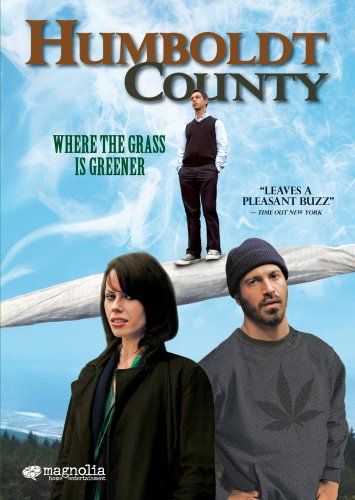
Humboldt County, the new independent comedy-drama from writers/directors Darren Grodsky and Danny Jacobs, sneaks on to shelves this month with a quietude as serene as its iZLER-composed musical score. Despite apt writing and direction, this slice-of-life piece simply fails to assert itself and leaves viewers with an indifference to the material.That’s not to say Humboldt County lacks competence. There isn’t a bad performance in the film. Two performances, in fact, are absolute dynamite. The always dependable Brad Dourif does what he does best, playing the crazy eccentric type, but this time he has a very human twist that endears him to the audience like never before. And Madison Davenport, a stunningly talented child actress, marks her debut with a strong performance that captures every scene she’s in.


Imagine waking up in the morning and opening your eyes only to be greeted by more darkness. You feel your way out of bed. Scoot your feet slowly across the floor to make sure you’re not bumping in to anything. You make it to the kitchen and feel around for cabinets. Based on the shape of the objects you find inside them, the sounds those objects make (if any), the texture of their contents, you manage to make breakfast. The rest of the day consists of listening to the TV or radio and more feeling and sensing your way through life. Now imagine having such an affliction while living in abject poverty and being looked upon by the dominant culture as demon-possessed and deserving of your state.


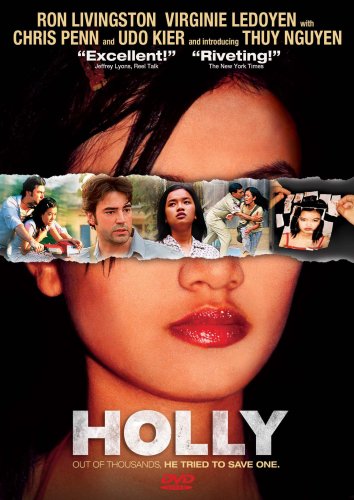
The Cambodia’s K11 red light district might sound to some like a good time. The fact is that the K11 district is home to such horrific acts such as child slavery & prostitution. It’s sleazy, filthy and about as immoral as you could imagine. Guy Moshe decided to tackle this subject when he directed the 2006 movie: Holly. Guy had to make sure that he brought the harsh reality to screen in a proper fashion. In doing so, he made quite possibly the most uncomfortable film this reviewer has seen in a long time.

Patrick (played by Ron Livingston) lives in Cambodia playing cards and getting rid of stolen goods for his pal Freddy (played by Chris Penn). He’s become immune to the effects of the world in chaos around him. Crime is rampant and the Cambodian world is oozing with underage women who are sold in slavery. Then they are forced to work in brothels catering to everybody from locals to the government to travelers who come to the area just for the immoral delights.

“They’re longtime friends on separate life paths, but they share a horrific destination, where a seemingly innocent incident from their school days comes back to terrify them. Something, someone wants payback.”

If there was an award for cramming the most horror movie conventions into one film, Amusement should win it hands down. You’ve seen it all before: young couple stranded on a trip, that pesky rural shortcut, psycho truck driver, isolated house in the woods, spooky gothic looking hotel, ingenious little torture contraptions, a maze of traps and filthy bloody rooms, a demented clown, escaped psycho returning to the scene of his childhood to kill, and the usual assortment of sundry death scenes. In just a little under an hour and a half you get to see parts of Saw, Nightmare On Elm Street, Friday The 13th, Hostel, Texas Chainsaw Massacre, Halloween, and even Killer Clowns From Outer Space. A pretty solid collection of hits, but ultimately Amusement is a jack of all trades and the master of none.

“It’s not about monsters, or zombies, or vampires. It’s about kids.”

One of the horror trends going around involves the isolation of a young couple who find themselves suddenly terrified. The pursuer can be a creature or undead vengeful spirit, but more often than not the attacker is very much human. The location can be a desert or even a hotel room as it was in one of the better examples of the subgenre, Vacancy with Kate Beckinsale and Luke Fox. Many of these kinds of films have become far too predictable and, dare we say, boring. They rely totally on jump scene scares and a few gallons of gore. So, when Britain got into the act, I admit I was bracing myself for more of the same. Happily, Eden Lake is a standout film. Its quality took me totally by surprise, but everything about this film was pretty well done. Of course all of the cliché moments are there, but if you check out Eden Lake you’re in for an entertaining, if not disturbing, ride.

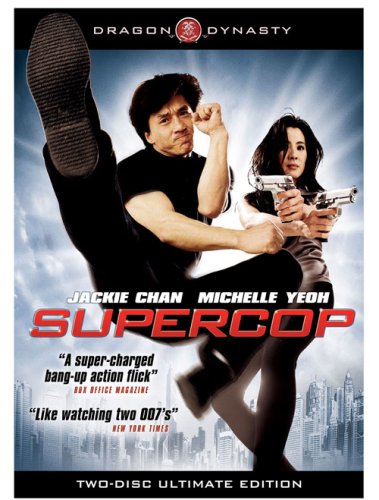
Supercop is really just the American title for the third entry in Jackie Chan’s very popular Police Story series in Hong Kong. For the first time in the franchise, Chan decided to go with an outside director, and he made a wise choice with newcomer Stanley Tong. Tong might have been a green director, but he had a natural feel for the abilities and strengths of his mega-star. The two would go on to collaborate on several more films after this rather remarkable first time pairing. It didn’t hurt that Tong not only had Jackie Chan to draw upon for the film, but he also had Chan’s Hong Kong film female equivalent with the talented Michelle Yeoh. Both stars are accomplished martial artists and perform nearly all of their stunts without the use of doubles. Tong’s task here was to allow his stars to “do their thing”, yet bring something new and fresh to the formula of Police Story, and to a certain degree all of the Jackie Chan films. He succeeded on all accounts, and Supercop is easily the best of the Chan Police Story films. The two would also team up for one of Chan’s most popular films, Rumble In The Bronx. While I’ve not seen anywhere near all of Chan’s Hong Kong outings, this is high and away the best that I’ve seen from that market.

Jackie Chan once again stars as police inspector Chan. When he overhears his superiors talking about a dangerous mission in need of a “supercop”, Chan volunteers for the task. Of course, he has to convince his girl that the month long job is going to be easy and safe, all the while giving her his life insurance policy and bank book records. Chan’s job is to pretend to break the infamous Panther (Wah) out of State custody and infiltrate the organization. He is briefed and trained by INTERPOL Inspector Jessica Yang (Yeoh). Once he’s ready the breakout commences, but the military guarding the prisoner aren’t in on the gag. After dodging bullets and missiles, Chan gets Panther safely away. Now the gang wants to meet with their contact in a local town that just so happens to be Chan’s cover story hometown. This is where his family is supposed to be. The only trouble is that Chan’s never been there before. INTERPOL sets up a fake group of family and friends, and it’s amusing to watch Chan try and fake his way about knowing these people when he’s not even sure who they are each even playing. Chan has a particular problem when he’s introduced to his “sister” played by Yang. The two follow the gang through various government operations to recapture him. Finally they’re in it for the meet and payoff, but Chan’s cover gets blown by a chance meeting with his girl, May (Cheung). Now it’s as much a matter of survival as of bringing down the bad guys.

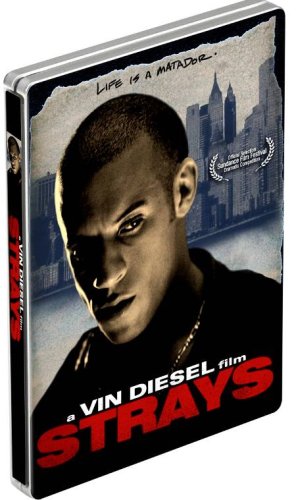
In the review business, we often get films that we find to be distasteful or just plain rubbish. This is especially true when we receive a popular star’s directorial debut. Usually it is an egotistical pompous piece with no merit outside to try to drive the idea home that the actor is a well-rounded individual. However, once in a while we get a film that was directed by an established star that actually gave birth to his career. This is a self-promotional piece that got the world to know the person’s name. The name of this person I speak of? That would be Vin Diesel. The movie is called Strays.

Rick (played by Vin Diesel) is trying to change. He is a drug dealer by day and by night he is finding his next female conquest. However, he knows that there is more out there in the world and would like to have a healthy and real relationship with a woman. He has three friends: Fred (played by Joey Dedio), Mike (played by Mike Epps), and Tony (played by F. Valentino Morales). They call themselves: ‘Strays’. They are strays because they didn’t have a father growing up and were lacking in a traditional family structure.