Posted in: Disc Reviews by Gino Sassani on January 15th, 2009
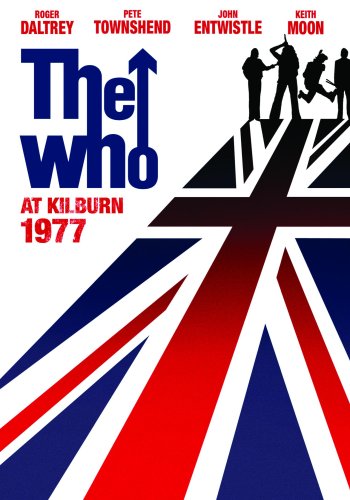
“On 15 December, 1977, after a hiatus of over a year, The Who assembled at Gaumont State Theater in Kilburn, North London, to record a concert for Jeff Stein’s documentary film, The Kids Are Alright. Shot before a select invited audience it would turn out to be Keith Moon’s last, but one live performance. Unusual for live rock at the time, it was shot on 35mm film by six cameras and professionally recorded on a 16 track recorder. Never seen before, the film rested in The Who’s vault for 30 years.”
What young 1970’s pup, learning to play a guitar for the first time, didn’t, at one time or another, attempt to imitate Pete Townsend’s windmill power chord strum? I count myself in that group. While I was not a very dedicated Who fan, I had an appreciation for the musicianship. There were still songs like Pinball Wizard and Behind Blue Eyes that I would embrace as if they were my own anthems in those days. It would be hard to deny that The Who is one of the most successful rock bands in history. Part of the original British Invasion of the 1960’s, there are few such acts that are even still around, let alone able to fill the huge stadiums and halls of Rock’s yesteryears. Their songs have become anthems, and their antics have become legend. The band wrote the soundtrack for an entire generation, and proudly touted the fact in aptly named song, My Generation. Banned from all Holiday Inns at one time for their well publicized trashing of rooms, they weren’t any easier on their own instruments. Smashing their instruments and amps on stage became a staple, for a while, of the whole Who experience. They’ve inspired a legion of superstars, and now after more than 40 years of rocking, they soldier on. Their influence goes beyond just rock music. All three of the CSI franchise shows sport Who songs for their opening credit sequences. They’ve been lampooned on South Park and The Simpsons. They were once referred to as The Band That Wouldn’t Go Away, and that was more than 30 years ago.

Posted in: Disc Reviews by Archive Authors on January 14th, 2009
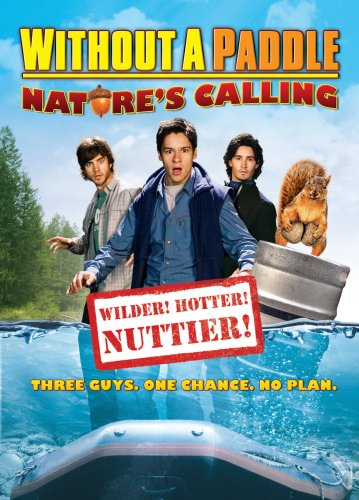
Male bonding deep in the heart of the Oregon wilderness is the order of the day in Without a Paddle: Nature’s Calling, a direct-to-video sequel to the Seth Green-Dax Shepard-Matthew Lillard comedy of 2004. Unfortunately, it’s more of a training ground for actors and crew than an actual film. Before I move in to the heart of this catastrophe, I should first forbid myself from attacking the practice of dressing up a cheap, low-budget remake and calling it a sequel. It’s too easy of a criticism, so nothing will be said of it, except to point out the fact that’s exactly what this is.
A flawed movie from the opening frame, WAP: NC has the production qualities of a bad Nickelodeon TV show with acting and script to match. It borrows heavily from the first film with two young friends growing up and growing apart, only to rejuvenate their friendship with a wild outdoor adventure that is partly gross, partly outlandish, and 100 percent ridiculous. What separates the two is the original had three solid performers and a talented supporting cast to convince viewers it was a better film than it actually was. Its “sequel” has none of this, and thus, fails miserably.
Posted in: Disc Reviews by Archive Authors on January 14th, 2009
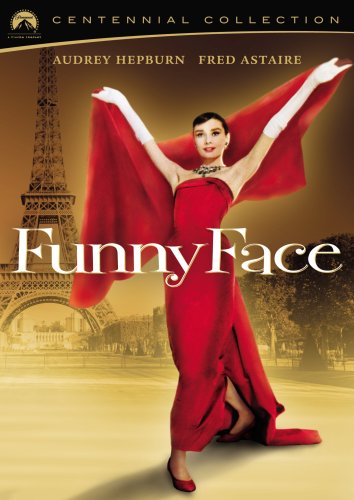
It’s hard being the bad guy, but sometimes you just don’t like a film that seemingly everyone else does. Such is the case for me with Funny Face, the classic Audrey Hepburn-Fred Astaire teaming that sees a bookish young lady go from the obscurity of her lonely library to the glitzy Paris lights as a high-profile fashion model. A little bit Cinderella and a whole lot of singing-and-dancing, Funny Face fails to engage with characters and story, relying solely on its lavish spectacle to do the trick. For legions of fans, it worked. For me, it didn’t. But like comedy, it’s all subjective, and if you’re in to fancy costumes, skilled choreography, arguably catchy music numbers, and healthy doses of nostalgia, then this one’s a no-brainer. But if story and deeply written characters are your things, sorry they don’t live here.
Astaire and Hepburn are a good pairing, and they work well together for each song-and-dance piece, but their love story gets very little chance to shine in between, and their normally solid acting abilities are buried in a heap of lifeless Broadway mini-productions that result, ultimately, in a showcase for all the wrong skills. When I watch a movie, I’ve got to be at the very least emotionally invested. If a film can engage my intelligence as well, that’s icing on the cake. Funny Face did neither. And as a fan of Ms. Hepburn’s work in Breakfast at Tiffany’s, believe me: no one’s more disappointed at that statement than me. The best thing about it is the overpowering, show-stealing performance of Kay Thompson as pushy magazine editor Maggie Preston. She dominates the camera whenever it’s on her. It’s just too bad our stars didn’t get that same chance to shine.
Posted in: Disc Reviews by Archive Authors on January 9th, 2009
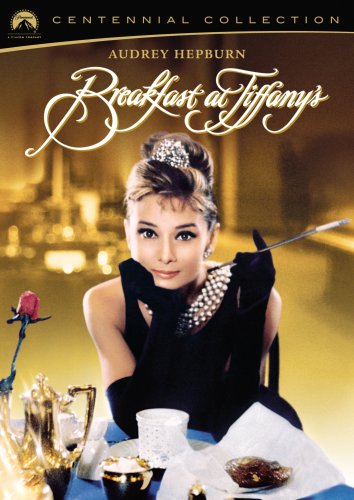
Holly Golightly is perhaps the most tragic, depressing character in all of literature and film, especially to those of us who know (or have known) people just like her. As an example to aspire to, Golightly fails miserably. She is internally and externally destructive, intentionally so. Truman Capote, author of Breakfast at Tiffany’s, the novella in which she was formed, has created in her a realistic portrait of people that fear happiness, and so imprison themselves to lives of restless and reckless abandon. She is just charming enough to make us pull for her, but equally cruel and uncaring once we’re suckered in. It’s hard to like Holly, and it’s almost impossible not to love her, if that makes any sense whatsoever. I’m sure it doesn’t. But neither does she, and so goes life.
On the other hand, the film version of Capote’s iconic work gets bogged down in insulting ethnic portrayals (Mickey Rooney as Mr. Yunioshi); studio sanitization (after all, Golightly is a call girl, but we get very little indication of that from the film); and a tacked-on happy ending that in no way fits with what’s come before it. Feel-good entertainment? Not when the audience knows better than to think things could turn out so neatly, so quickly. Still, Audrey Hepburn was a perfect choice for Golightly, and she heaps additional charm atop what was already on the page. George Peppard has very little to do as her does-she-love-him-does-she-not play-toy, but his final indictment of Holly is a stirring piece of writing, effectively delivered, that would have been a great place to end. It would have at least rung emotionally true. Unfortunately, the exchange is quickly swept under the rug by an ending that comes as close to Deus Ex Machina as one can get without actually achieving it.
Posted in: Disc Reviews by Michael Durr on January 7th, 2009
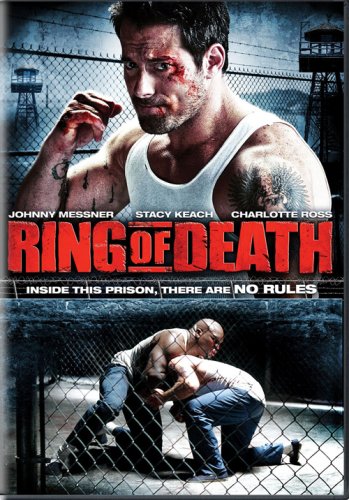
Every director has a style. Sometimes it can be a deliberate style, sometimes it can be more subtle. I received the movie Ring of Death and was a little worried since I had my fill of bad prison movies. After watching the movie, it seemed familiar but I couldn’t place why. The director’s name on the back was Bradford May. To most people, that probably does not ring a bell. To me, it was a different story: he was the director of Darkman 2 and Darkman 3. Then everything from that point became clear.
Burke Wyatt (played by Johnny Messner) is your average out of work cop. He has a loving but somewhat distrustful wife in Mary Wyatt (played by Charlotte Ross) and a son that he doesn’t get to hang out with enough in Tommy Wyatt (played by Uriah Shelton). However, Burke’s life is about to change when his former partner Steve James (played by Derek Webster) offers him an undercover gig to investigate a string of prison murders at the Cainesville State prison. The reward is simple: a large trust fund for his son and a full time job for Burke at the FBI.
Posted in: Disc Reviews by Gino Sassani on January 6th, 2009
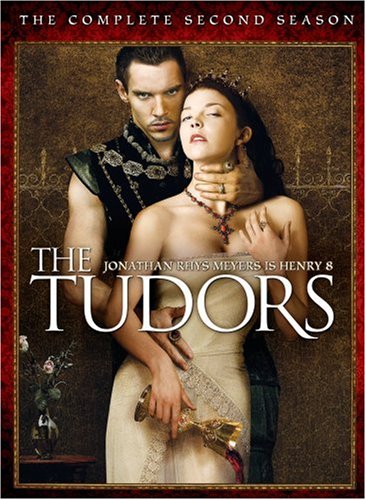
The Tudors returns for a rather triumphant second season. The series attempts to modernize the story more than a little. Henry’s attire is more akin to a rock star than a 16th century ruler. The language is also more updated, often filled with modern colloquialisms and the like. The story of Henry VIII is well known, but this is not the Henry your history teachers told you about. This Henry is a slim, energetic man. There are only hints in regard to his famous lust for food. His appetites for women are not so subtly portrayed. The series follows Henry’s alliances and break-ups with France and his growing disfavor of members of his own court. If the series is to be believed, Anne Boleyn was placed in his path by her scheming father. In any case, by the third episode his growing infatuation with Boleyn takes center stage in the series. Henry grows weary of the Church after he is constantly blocked from divorcing his Queen Catherine to marry Boleyn. This is also the story of his own rise and fall along with the Church’s influence on England’s culture. There is an almost soap opera aspect to the storytelling, which is admitted by the show’s writer, who credits shows like Dallas and Dynasty as well as Rome and The Sopranos as inspiration. Side stories like a gay musician’s coming of age populate the background, but serve merely as distractions. When The Tudors works best is when we are with Henry and his court engaging in matters of global importance.
Let’s talk about the cast. At first I must say I completely hated Jonathan Rhys Meyers as Henry. But that was last year, and by the third episode I absolutely loved his performance. He commands the screen whenever he is on it. Natalie Dormer is a relative newcomer, and she has wonderful skills. When we first meet her as Anne, she appears the naïve, lazy daughter of privilege. As her seduction of Henry takes its course, she develops many faces and emotions along the way. Now she is the doomed Queen, and she is extremely hard to read, and then all at once an open book. While she might not possess the beauty her character is said to inhabit, she more than makes up for it in a single stare. She acts wonderfully with her eyes, as so many of the great ones do. You will be seeing more from Dormer, I suspect, over the years. Nick Dunning is quite a surprise as Sir Thomas Boleyn. It is Sir Thomas who masterminds his daughter’s seduction of the King in order to destroy the influence of Cardinal Wolsey. His quiet yet assertive manner works perfectly for the character. Wolsey had his downfall in the first season, and Boleyn will show his true character in the end as well. Jeremy Northam was also a very bright spot in the second season. His character of Sir Thomas Moore has far more to do this time. Moore must consider the path of martyrdom as he finds himself in disagreement over his friend and King’s alienation of the Roman Church. His was a character I hardly noticed in the first year, but he really pops from the television screen this time around.
Posted in: Disc Reviews by Gino Sassani on January 6th, 2009
“Every story has a beginning. Every life has meaning and potential…”
Kyle doesn’t really know his story, and he’s beginning to understand his potential. But that was last year. This year things are about to change for our adolescent boy without a belly button. The series Kyle XY returned first to ABC Family and now returns to DVD.
Posted in: Disc Reviews by Gino Sassani on January 6th, 2009
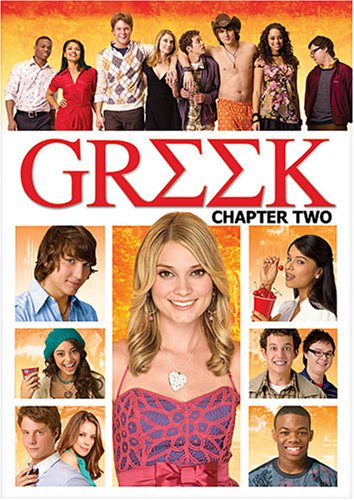
If there is a highlight of this second release, it’s the flashback episode, Freshman Daze. It’s absolutely great. We get to meet all of these characters back in high school and see how the dynamics developed. Now we know why they are the way they are to each other. I particularly enjoyed seeing how the Cappy and Evan characters were once pretty tight friends. There’s also some wonderful back story to Casey and Frannie. It’s likely the single best reason to buy the set. The only real story line that runs through this collection is the houses trying to come back from last year’s scandal. The dean has imposed some harsh restrictions. This brings us our only new major character. Lizzie (Moses), who is about as irritating for us as she is for the girls at ZBZ. She’s there from the ZBZ Nationals to bring the house back in line.
Posted in: Disc Reviews by Archive Authors on December 31st, 2008
“I fear I’ve done some things in life too late… and others too early.”
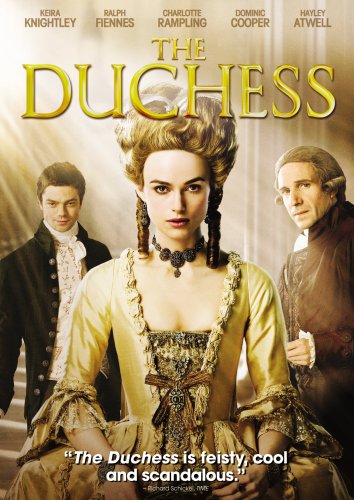
Not a creed for the growing minions of our divorced population (though it probably should be), but a remarkably summative line from the new film The Duchess starring Keira Knightley and Ralph Fiennes. Knightley is Georgiana, a spirited young girl, who starts with a fairy tale ideal of how her life as a married woman will be, but soon learns the world (and especially her husband, Fiennes) isn’t ready for her brand of feminism. Knightley does an admirable job of charming the peripheral characters, as well as viewers, but she cannot seem to win the affections of her husband. As time passes, she no longer cares, and instead seeks solace in the arms of Charles Grey (Dominic Cooper), a promising young politician.
Posted in: Disc Reviews by Gino Sassani on December 31st, 2008
“Gaze too long into the abyss and the abyss gazes back at you…”
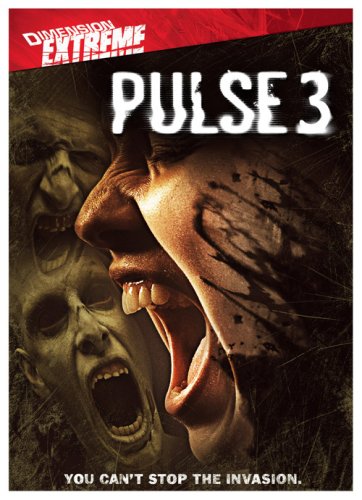
The original Pulse film was a remake of an Asian horror film, part of the recent trend of converting many of these titles into American retellings. That trend appears to also include strong warnings against technology and linking ghostly apparitions with some form of technology, from video tapes to cell phones. I’m pretty sure they’re right about the cell phones. In Pulse it was pretty much all technology that could act as a conduit for the restless dead to come to the world of the living. The internet and such access ports as laptops became the real killers. The second film brought us the complete breakdown of society, and now 7 years from that point we have Pulse 3. By now what remains of humanity lives in scattered rural areas. The cities have been abandoned, left to the dead. Technology is now the stuff of evil in the almost religious culture that has developed in the remaining people. If you haven’t seen either of the earlier films you might be a little lost, but not so much that you can’t get into this film. The problem is that this film, like its previous incarnations, isn’t good enough for you to want to get into. In case you need to know here are some basics: Ghosts can’t pass red barriers. Something in that wavelength traps them. They are all restless and drain the life force from anyone they encounter. They travel through electronic equipment. Mostly they appear to inhabit the internet.