Dolby Digital 5.1 (French)

Mel Brooks has often been called the Master of Comedy. The moniker might be a bit too grandiose, but he was certainly the master of the parody. In recent years that has become more evident than ever. Too often I've been forced to sit through something called a comedy. Not only can I do so without ever actually laughing, but there are far too many titles of late that don't even give me the chance to crack a smile. It's not that I've seen so much that it's hard to find anything original. I can still laugh like crazy when I watch a Sanford and Son episode I've seen at least 50 times or an Abbott & Costello routine that was old before they even got their hands on the material. There is a famous quote that states, "Dying is easy. Comedy is hard." Then why does Mel Brooks make it look so dang easy?

While we're on the subject of masters, you really can't avoid the Master of Suspense, Alfred Hitchcock. Perhaps no one understood his audience more than Hitch did. He's influenced a great many of today's filmmaking geniuses. He's been admired by almost anyone who has ever really studied film. Mel Brooks can be counted among his students. On more than one occasion I have seen an interview where Brooks can't say enough flattering things about Alfred Hitchcock. It would have only been a matter of time before Brooks turned his creative mind to one of his own idols. The result is enough to give anyone High Anxiety.

"Even in the most primitive man, the need to create was part of his nature. This need, this talent, clearly separated early man from animals who would never know this gift. And here, in a cave somewhere in the North American Continent, about two million years ago, the first artist was born. And, of course, with the birth of the artist came the inevitable afterbirth ... the critic."

That's me. Afterbirth here. Brooks always did love to poke fun at the critics. And why not? Unfortunately, this was not one of his better films and likely received a lot of poking from the brethren. It was one of his worst films at the box office, pulling in only $31 million. Compared to many of his hits, it must have been a disappointing take for Mel at the time. Now out, along with some other of his films, on Blu-ray, this rather forgettable film looks even more dated and overindulgent than ever. Certainly, there are some classic moments. Mel, is, after all, Mel. But he never could string enough of them together to meet expectations. Too bad, really. It was a grand idea.

"You, sir, are guilty of disseminating disbelief. Killing dreams. Committing first-degree murder of fantasy, which by Fairy Law, in order to pay your debt to humanity, you are hereby ordered to serve time as a Tooth Fairy. The normal sentence is one week, but because you have the nerve, the unmitigated gall, to actually call yourself a Tooth Fairy, thus making a mockery of everything we stand for, I'm sentencing you to two weeks Tooth Fairy duty."

Dwayne (once The Rock) Johnson has made a bit of a new career move over the last few years. When he left the wrestling ring to "go Hollywood" the expectation was always that he would become an action hero. It's what his fans expected. It's what Johnson wanted, at the time. Movies like The Scorpion King were created completely as vehicles for Johnson to show off his physique and join the ranks of the big strong action heroes. It didn't exactly work out as well as everyone involved expected. He wasn't a flop, but he wasn't setting the movie industry on fire either. But with movies like The Game Plan and Race To Witch Mountain, Johnson appears to have a knack for working with kids in films targeted primarily at kids. He's become a big teddy bear, and it's paying off quite handsomely. While he still hasn't given up the wrestling gigs and an action role here and there, his biggest success so far in Hollywood has been with the kids.

For most of this last decade Mel Gibson might as well have vanished from the face of the planet. The once extremely popular actor had charmed the world. Women found his childish grin to be irresistibly sexy, and men bought into the “kick ass and crack a joke” style that made the Lethal Weapon films such a romp of fun. But lately, you expect him to be the subject of a “Where Are They Now” segment from a late show on television. It's no secret why Gibson climbed so quickly out of the public eye. I'm sure everyone still remembers the drunk-driving arrest where Gibson compounded his already serious case of bad judgment with even worse judgment. He tussles with the police officers who stop him and lets loose one of the worst anti-Jewish rants since Pharaoh unloaded on Moses. He apologized, of course, but some things just can never be put back into the box. There's an old Latin phrase that roughly translates to "In wine there is truth". The idea is that Gibson's true feelings were revealed by the reduced inhibitions of alcohol. Whatever his real feelings might be, none of us will ever know, and I don't really have an opinion, or care for that matter, except for the fact that it has removed Mel Gibson from the front of the camera pretty much ever since. His only projects have been as director, producer, and even writer. Even those efforts have been controversial. It's hard to watch The Passion Of The Christ without a visceral reaction to what you've seen. It's been a rough decade for Mel Gibson.

For those who have seen the British mini-series, and I reviewed it in these pages some time ago, you'll find that while the story doesn't really change, the dynamics of the story certainly change, and for the better. This wasn't a good story to drag out over six hours. The British version went into some fantasy elements that this version absolutely avoids. While Craven still appears to be seeing the "ghost" of his dead daughter, it appears to be more in his mind and a product of the grief. In the British series it got rather silly with her teaching him how to do laundry. It was quite absurd, after a time. The basic story elements do remain:

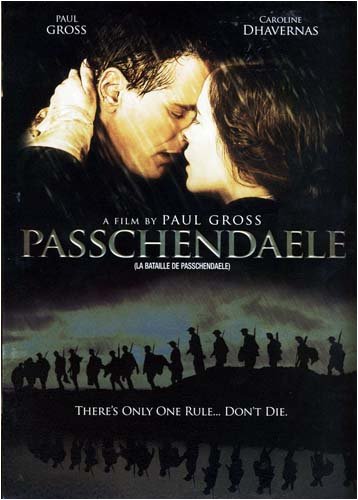
We are in the midst of the Great War. Michael Dunne (Paul Gross) is a Canadian solider recovering from physical and psychological wounds. He falls in love with his nurse (Carline Dhavernas), and when her asthmatic brother enlists, Dunne heads back to the trenches to protect him, and the two men wind up at the gigantic, murderous battle that gives the film its name.

Writer/director/star Gross has an almost messianic commitment to Canadian film and Canadian history, and here he combines his obsessions in a 20-million-dollar effort that is, by the standards of the Canadian film industry, nothing short of gargantuan. And to his credit, the battle scenes are impressive. The editing is frequently startling and brutal, in keeping with the events themselves. On the other hand, the romance is painfully hackneyed, and the naked appeals to national pride can be rather wince-inducing.

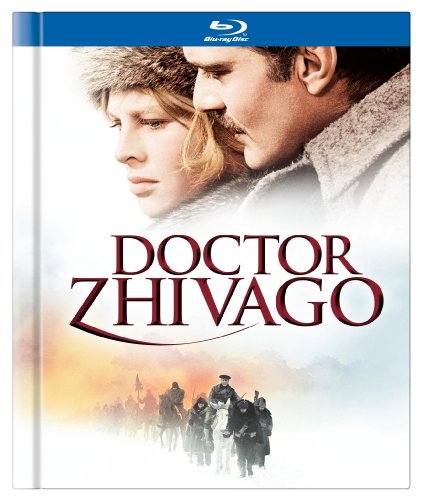
In many ways the epic story and film Doctor Zhivago echoes the real-life story of Boris Pasternak, who penned the original novel. Pasternak was a firsthand witness to the events that led to and became the Russian Revolution. He collected 50 years of memories that began with the early days before the revolution and ended with his own confrontations with the USSR government. Like Zhivago in the story, Pasternak's work was banned in his own country. The manuscript had to be smuggled out of Russia and found its way first to Italy, where it was finally published for the first time. But it didn't stop there. The book quickly found its way to countries all over the globe. It was translated into several languages in a very short time. In 1957 Pasternak was honored with the Nobel Peace Prize for literature. Alas, that was not meant to be. He was confronted with the Party Government and warned he would not be permitted to return home should he go to Sweden to accept the prestigious award. And while that might not have appeared to have been much of a threat when you consider Pasternak's harsh observations, this was his homeland, and he did have family there who would have most assuredly paid a price for his actions. He declined the award, begging the committee to not "judge him too harshly". It would be Pasternak's last stand. He would never see the complete success of the novel or the impact it made on the world stage. He died just three years after turning down the award. He was never to see David Lean's epic interpretation of his work. He never saw the film Doctor Zhivago.

I must confess that I too had never seen the movie. I had certainly seen many clips of the film. It was impossible to follow films, in general and not be aware of the film and its impact. Of course, I had heard much of the music. The Love Theme, also called Lara's Theme, has become one of the most recognizable movie themes in the history of the industry. The movie was quite popular, but circumstances just never presented themselves for me to have the opportunity to see this movie, at least in a manner worthy of its reputation. Certainly, there were television showings, but I could never bring myself to experience such an iconic film in a cut-up fashion with likely an inferior print. Even DVD kept me at a distance. Did I really want to watch this movie with a 3-4 mbps bit rate? Certainly not. I suspect there is perhaps an entire generation of film fans out there that found themselves in the same situation. We've been asking ourselves: will there ever be any chance of seeing the movie in a format that preserves its splendor? I guess I was holding out for a nostalgic screening at a local at house theatre. And then came Blu-ray, with its limitless possibilities, and finally a copy of Doctor Zhivago would arrive on my doorstop. My dog barked ceaselessly at the UPS man who delivers these goodies on an almost daily basis. This time there was an extra snarl in that growl, I was sure of it. Could she have known that this particular delivery was going to find me and my wife locked away for nearly 4 hours (in my case more like 6) in our, closed to dogs, little theater? She knew. She knew.

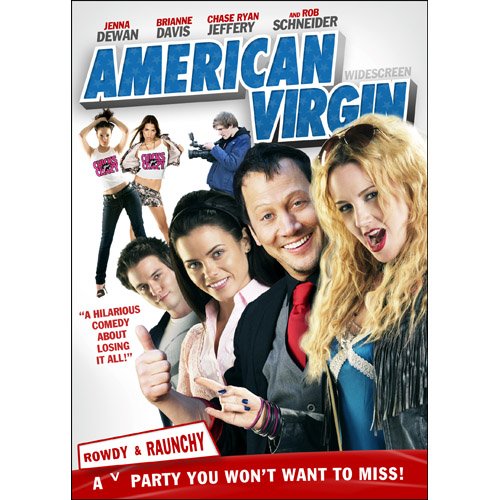
A young girl, who is obsessed with purity, appears on a “Chicks Go Crazy” video (a parody of Girls Gone Wild) and gets a group of rowdy (by comparison to her) friends to go on a road trip to track down the dvd and its maker (played by an easy paycheck receiving Rob Schneider), all the while resisting the temptations of drinking and sex.

An extremely talented young break-dancer from New York, who goes by “Angel,” and her best friend are attacked in an alley. Both are stabbed and only Angel survives. She moves with her mother to Los Angeles and begins a quest to return to Brooklyn on her own. In the meantime, she is rehabilitating from her stabbing injury and is prompted to rekindle her love of dance. Before long she finds a crew and is set to find a new life in LA and display her talents once more.

"You're not in Kansas any more. You're on Pandora, ladies and gentlemen. Respect that fact every second of every day. If there is a Hell, you might want to go there for some R&R after a tour on Pandora. Out there beyond that fence, every living thing that crawls, flies, or squats in the mud wants to kill you and eat your eyes for Jujubes..."

I don't really have to tell you what Avatar is. If you haven't heard of it by now, I have only one question to ask of you: How was that coma? Ever since he cleaned up at the box office with Titanic, James Cameron has been planning this movie. The only trouble was that the technology to make it did not exist. Most filmmakers would have either tried anyway, or simply waited until the hardware caught up with their imaginations. Not James Cameron. He decided to invent the equipment himself. The result is a new 3D filming process that allows for the most realistic images you likely have ever seen on a movie screen. He combined the new process and equipment with new state-of-the-art computer-generated technology. The result is a movie that is truly the first of its kind. It was a huge risk for Cameron. A lot of money went into not only making the film but the technology development. In many ways Avatar was really an audition film. Cameron wants to make his equipment the stuff other filmmakers use to create their own silver screen dreams. It was a gamble. Judging by the box office take, it paid off big time. With a box office return of nearly $3 billion worldwide, James Cameron now has the number one and number two top-grossing movies in the history of the industry. If you're keeping count, it's a total box office take of just under $5 billion for two movies.

A first-year film student named Yannick crosses paths with a black cat (literally) and crashes his bicycle, then knocks on the door of a family home in a nice neighborhood looking for assistance. A few minutes later he is held captive by a psychotic family, led by a patriarch who is convinced it is his life's duty to rid the world of those who are “not righteous.” As our hero Yannick slips between clawing desperation and clever tact in his attempts to escape he is offered a chance at freedom. Jacques, the head of the household, is an undefeated, nation-wide renowned Chess champion, and if Yannick can beat him once, he will be released.

This French-Canadian thriller grips you immediately and holds your attention captive throughout its duration. This film relies heavily on the performances of its leads and they deliver splendidly. Jacques does not appear strange in his psychosis, but calm for his character is convinced of his self-righteousness and his mission. His daughter, whom he is grooming to take over his work, acts out violently when her family is threatened but cannot bring herself to kill in the name of God. The mother has a soft-spot for their prisoner for he displayed great kindness to the youngest child, a small mute girl who quietly loathes her father.