Dolby Digital 5.1 (French)

“1941: Germany occupies Belorussia. SS death squads and local police round up Jews. Within weeks 50,000 are murdered. 1,000,000 more await deportation and death.”

Tuvia (Craig) and Zus (Schreiber) Bielski are brothers hiding in the forest surrounding after the abovementioned invasion. They are Russian Jews, which means concentration camps or immediate execution if they are caught. They are foraging and surviving on their intimate knowledge of these surroundings they have known since they were children. Before long other Jewish refugees make their way to the Bielski camp. Unable to turn away the suffering hordes, they welcome each arrival, stretching their already limited resources to the limit. The camp eventually becomes a force of freedom fighters. They are looked down upon by the Red Army because Jews weren’t expected to fight. For several seasons the growing number of refugees makes a stand for survival and even answers a call to arms in an ultimate act of defiance. The brothers split. Zus joins the organized army while Tuvia remains to lead the camp.

Back in the 1960’s the Beatles were telling, preaching, “Can’t Buy Me Love”. Of course this wasn’t a novel concept even then, and Lennon and McCartney certainly didn’t invent the phrase. In 1993 Indecent Proposal came along to question the age old expression. The film sparked one of those cultural philosophical debates that Hollywood loves to start. It meant that people would be talking about the film, and talk about it they did. Television and radio talk shows would spend a great deal of time talking about the morality or ethical questions involved. Experts in morality and psychology would earn a living talking about the subject. It caused quite a stir, but in the end Indecent Proposal was a one trick pony. After the debate got old, the film aged quickly. Watching it again now, it seems almost impossible that it’s really only 16 years old. It seems like decades ago that like a frightening tsunami, it made its splash and disappeared almost as quickly as it had arrived.

David (Harrelson) and Diane (Moore) are a young couple very much in love. It’s the kind of ultra-sweet relationship that could send you into insulin shock if you had to watch too much of it. Thankfully the plan here is to put a serious kink into the relationship. David is budding architect, while Diane is a successful real estate broker. Both run into hard times when recession hits and they lose their jobs. Their dreams appear on the brink of disaster. Down to their final cents, David takes a loan of $5000 from his father. As he admits in the film’s narration, it wasn’t nearly enough. They needed 10 times that to get back on their feet. So what do they do? These supposedly educated smart people decide to take the 5 grand to Vegas and turn it into the 50 grand they need. (Why didn’t I think of that?) Bad luck at the tables isn’t the most dangerous thing the couple faces. They meet John Gage (Redford), international billionaire and playboy. Sort of a Bill Gates, if Bill Gates looked like… well… Robert Redford instead of Alfred E. Neuman. Gage notices Diane and is quite taken with her. He befriends the couple to get close to her. After a part one night in his suite, Gage and David are shooting some pool. The conversation turns to wealth and what it can or cannot buy. Diane makes the statement that money can’t buy people or love. Gage proposes to test the concept. He offers the couple one million dollars for one night with Diane. They immediately refuse, but their situation eats at them and they eventually agree. What it does to their lives is predictable and inevitable.

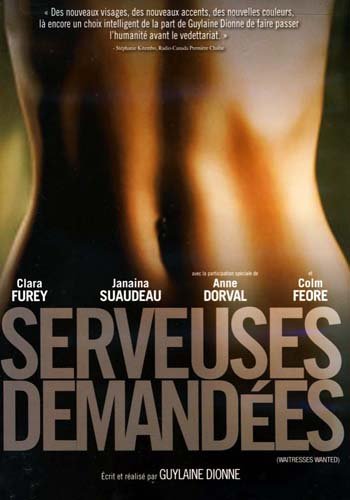
The main plot of the film is that of a young woman from Brazil named Priscilla, whose student Visa expires and is lead into working as an exotic dancer. The title of the film comes from the ad posted by the pimps and promoters of exotic dancers “Waitresses Wanted.” The film is bookended by the profiles of all the dancers featured in the film, all of whom are from a different nation, all beautiful, and all arrived in Canada with different careers in mind than to get involved with Columbian pimps or Russian mob lords.

Priscilla is taken under the wing of Milagro, a fellow stripper who is known for recruiting new girls and the two start up a romance that leads them away from their shady work. I don't exactly buy the immediate seduction of Priscilla by Milagro. It seems to occur simply because the writer wants it to occur. Priscilla is not as strong as she claims to be and cannot get into or out of the stripper life without someone leading her, and she is very easily lead. There is a recurrence of memories and images of Brazil, obviously meant to be Priscilla's. These find a way of attaching themselves to Milagro as she continuously brings up her desire to escape to Brazil, which may explain her attachment and excitement for Priscilla. To Milagro, Priscilla is a part of what she really wants in the end, and as the twists start arriving at the climax of the film, we find out just how significant all of these ties really are.

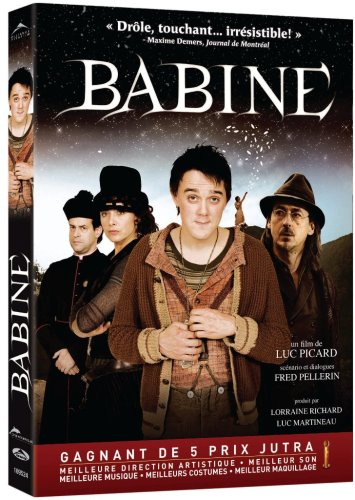
In a village where there is a great deal of time (there are months whose days are numbered in the 40s), the local witch gives birth to the title character. Twenty years later, Babine is the Village Idiot. Though he is a thoroughly gentle soul, he also becomes the scapegoat for every ill, real or imagined, that befalls the villagers. Fortunately, he has some champions, including Toussaint Brodeur (played by director Luc Picard), the local fly-raiser. But then the church burns down, and terrible trouble looms for Babine in the person of the new, fanatical village priest.


Obviously, as the above synopsis suggests, we are in the realm of the utterly fantastic here. Narrated by storyteller Fred Pellerin, whose tales form the basis of the script, Babine is endlessly inventive, at the cost of being a bit too episodic for its own good (something that Picard, during his commentary track, admits he struggled with) and giving short shrift to some of its striking characters. There is no denying, however, that its world-creation is very successful. The film is a visual feast, one very much on par with the likes of Tim Burton, and this achieved with a fraction of the budget of its Hollywood equivalent.

For most of us, we thought it was a crime when Eddie Murphy hijacked the Dr. Dolittle brand back in 1998. He turned a classic into yet another assembly line crude humor product. The original material was carelessly sacrificed for the sake of another Eddie Murphy romp. Well, it was harmless enough, I suppose. But then the sequel and direct to video follow ups began. Eddie was out, and so were the fart jokes and other bodily function staples. Now after a couple of direct to video attempts we get Dr. Dolittle: Million Dollar Mutts, and suddenly we actually miss Eddie Murphy.

The series of direct to video films has focused on Dolittle’s young daughter, Maya (Pratt). She also has her dad’s ability to talk to the animals. With each film we hear that the Doc is off around the world somewhere helping out some animals. In the latest outing, Maya wants to follow in her father’s footsteps and be able to help the animals she can speak to. She’s a couple of weeks from entering college with the ultimate goal of becoming a veterinarian. But she’s really not too happy with the 7 years of study she has before her. So, when she gets an opportunity to help out some animals now, she follows the dream. Enter reality star Tiffany (Moss). She’s a Paris Hilton clone complete with her pampered little dog. It appears that her pooch is feeling a little depressed of late. She comes to Maya to ask her to talk to her dog and see if she can help. So Maya flies to Hollywood where she instantly discovers two things: Tiffany’s princess is actually a prince, and there are a lot of temptations in the hip world of stars and lights. That includes star Brandon Turner (McLaren) who she immediately falls head over heels for. It turns out that Tiffany’s agent has been trying to get a Dolittle in his fold for years. So, he tempts Maya with a reality show where she can “help” celebrity animals. Of course, she has to learn that she can’t really help anybody just yet. Just being able to talk to them doesn’t mean she can help them.

“It’s time to wake up and get a life. We live in a three-dimensional world. Until now, the world of computing has been a flat world consisting of two-dimensional imagery. Now through the use of exclusive breakthrough technology, ARC has made it possible for you to get a life. A-Life, where we can work and play in a lifelike world of three-dimensional reality. A-Life… the living monitor. Impressed?”

You should be. From the mind, or more accurately the pen or typewriter, of science fiction legend Philip K. Dick comes another big budget Hollywood film, Paycheck. The works of Dick have become impressive films in the past. From Do Androids Dream Of Electric Sheep we get Ridley Scott’s masterpiece, Blade Runner. Dick also penned the Steven Spielberg budget buster, Minority Report. But Paycheck is actually much more like the Arnold Schwarzenegger blockbuster Total Recall. Once again, Dick deals with his popular subject of downloading, or in this case removing memories. Combine that element with the seeing into the future concept of Minority Report and you have what should be a Philip K. Dick greatest hits film, with the added adrenaline rush of John Woo in the director’s chair.

Some weeks back, I wrote about Splinter, and opined that director Toby Wilkins showed real skill. I also expressed worry over the fact that this follow-up was this, the third entry in a franchise that began with a remake in the first place. So here we are. Was I right to worry? Sadly, yes.

The Grudge 3 picks up in the aftermath of its predecessor, with the death of the last survivor of that film's massacre. The setting remains the same Chicago apartment building where evil ghosts Kayako and Toshio in the last thrilling episode (apparently have grown bored with Tokyo). The focus now is on the caretaker and his two sisters, the younger of the two being chronically ill. Meanwhile, Kayako's sister arrives in town, determined to put an end to the curse.

“Life is a tightrope. You’ve got to learn to dance.”

We’ve all had bad days. Everyone can relate to that. We’ve all had moments when we weren’t at our best, when we’ve said or done something in the heat of the moment that wasn’t exactly our most shining moment. We can only hope that these momentary lapses of reason don’t cause permanent harm to ourselves or to others. We can only plead our case that we aren’t ultimately defined by these brief acts of frustration brought about by mitigating circumstances. Most of the time we get lucky. Sometimes that fleeting moment isn’t so fleeting. Some times you have a bad day, all of it. That’s the premise behind this Samuel L. Jackson and Ben Affleck vehicle.

Director Brad Anderson and writer Scott Kosar were unable to find backing or support from any of the American studios when they were shopping this movie. Apparently there were worries that it wasn’t very commercially viable. It turns out they were correct. The film made just over $1 million in domestic box office. That’s not a mistake. I meant $1 million. Even the foreign market came up short, coughing up only an additional $7 million total. Because of the lack of interest here in the States, the duo went to the Spanish government and received a grant. The grant required the film to be made in Spain and include Spanish cast members. But the movie kept its California setting and shot Barcelona for California, and not very effectively either. The truth is, there’s a lot more wrong with this film than just the lack of studio interest and its forced European locations. The team missed a grand opportunity here. They got to shoot in a rather exotic location but never took advantage of the wonderful surroundings. Instead they insisted on keeping the film urban, and in the end rather generic. The only solid set piece is the machine shop, which was filmed in a working plant.

Trevor Reznik (Bale) is a very odd man. We find him a year into a rather dramatic and steady decline. He hasn’t slept in over a year. He is losing weight to the point of emaciation. He works as a machinist for National Machine, where his bosses think he’s taking drugs and his coworkers don’t like him either. None of that is helped when his inability to focus causes another man, Miller (Ironside) to lose his arm in a machine. The only companionship he has is a hooker, Stevie (Leigh) who he pays a hundred bucks a pop and his café waitress, Marie (Sanchez-Gijon) who serves him coffee and pie. His decline appears to accelerate when he meets an apparent new employee at National. Ivan (Sharian) is a monster of a man with whom Trevor becomes obsessed. He leaves little post-it notes to remind him to do everyday things, but these notes usually disappear, replaced instead with cryptic messages and a hangman game. As his mind and body deteriorate, he becomes increasingly paranoid. His mind is pushing him to accept a reality that is not going to be pleasant.

It’s hard to imagine that this was only Pixar’s second ever feature length CG animated release. While Toy Story was the first, this was actually Pixar’s first film as an independent company. So, for many of us it feels like their first film. There must have been a tremendous amount of pressure on the young team. Toy Story was a break out smash hit that captured the hearts of audiences of all ages. Now on their own the team led by John Lasseter was determined to prove that Toy Story was no fluke and that they could stand on their own feet and continue the tradition of excellence they established from the first frame of their first picture. The film never approached the status of Toy Story, but it would prove that these guys were for real. The film broke new ground with its realistic environments, expressive characters, and solid writing. No one was going to be surprised as the company cranked out exceptional movie after exceptional movie. A Bugs Life fit the Pixar mold perfectly.

Flik (Foley) is a rather inventive ant. He’s always coming up with new and improved ways of doing things. Unfortunately, many of these ideas just miss the mark and end up causing more harm than good. His efforts aren’t helped by the fact that he has the hots for the Princess Atta (Louis-Dreyfus). Mr. Soil (McDowall) has the ants very busy gathering food to offer up to the grasshoppers, who depend on the ants for food to keep them through the winter. Failure to deliver is not an option, at least if the ants don’t want some serious beat downs from the grasshopper gang, led by Hopper (Spacey). The last bit of food is finally gathered just as the gang is about to arrive. But at the last minute Flik inadvertently dumps the cache into the water. When Hopper’s gang arrives, there’s no food. Hopper gives the ants until the last leaf falls from the trees to deliver their winter food or he will kill the Queen (Diller). Of course, everybody blames Flik, so when he comes up with an idea that he should go out into the world in search of warrior bugs to help them defeat the Hopper gang, Princess Atta goes for the idea. She doesn’t expect him to succeed, but at least he’ll be out of the way while the ants try and gather enough food for Hopper and themselves. But Flik does succeed …almost. He encounters a troupe of circus performer bugs, and through a series of misunderstandings sets off back home with his new friends in tow. He believes they are great warriors. They think he’s taking them home to play a circus gig. The warrior/circus bugs include: Slim (Hyde Pierce) a walking stick, Heimlich (Ranft) a German caterpillar, Francis (Leary) a sexually confused “lady”bug, Manny (Harris) a preying mantis with a flair for Shakespeare, Gypsy (Kahn) a moth, Rosie (Hunt) a black widow spider, and the two identical pill bugs Tuck and Roll. When they arrive home, the ants are overjoyed with Flik’s unexpected success. That is, until they discover that the “warriors” are merely performers when their boss Mr. Flea (Ratzenberger) rolls into town looking for them. When the Hopper gang arrives, they have no choice but to put up a fight, led by baby Dot (Panettiere) and her scouts.