Posted in: Disc Reviews by Archive Authors on November 10th, 2009
The names of the characters are hardly consequential, as they are used to further storylines more than develop character. But Pacino plays a cop who is tracking a group of robbers, among them Val Kilmer (Wonderland) and Tom Sizemore (Saving Private Ryan), a group headed by DeNiro. The group receives offers for work from Jon Voight (Runaway Train), and they rob anything from gold, to coins, to bearer bonds. They are all ex-cons, and know all the ropes. They are a highly professional crew, which you see in the opening moments of the movie, despite the addition of a new man to the crew. What also helps to differentiate this from a usual cops and robbers movie are the secondary plotlines of the families involved. Pacino’s is clearly distant and breaking (played by Diane Venora and Natalie Portman), while DeNiro doesn’t have one to speak of, despite an emerging romance with Edy (Amy Brenneman, Judging Amy). At 3 hours, there are some unnecessary scenes involving a banker (played by William Fichtner), but the underlying message is that almost all of the actions in the movie do not involve just the primary characters, but also friends and loved ones of those characters. Kilmer’s wife in the film, played by Ashley Judd, desperately wants to get him out of his line of work, as she wants to start a new life for her family. An ex-con (Dennis Haysbert, 24) is stumbled upon working in a greasy spoon, and offered a chance to work by DeNiro. Haysbert’s character wants to be right, but runs into so many obstacles from it that he takes the job, only to wind up perishing in what results in a massive gunfight in the heart of Los Angeles while a bank robbery is being pulled.
With other solid supporting performances by Ted Levine (Monk), Mykelti Williamson (Forrest Gump), and appearances by Bud Cort (Harold and Maude), Jeremy Piven (PCU), Hank Azaria (The Simpsons) and Henry Rollins (The Chase), the movie is certainly not without its star power. The director behind this work is Michael Mann, who also wrote a much better than expected story. The man responsible for such striking visuals in films such as Manhunter, Ali and The Insider contributes more outstanding work here, and while it’s been out for awhile now, Warner Brothers finally gives it a high definition Blu-ray release
Posted in: Disc Reviews by Gino Sassani on August 11th, 2009
Billy Bob Thornton got himself a well deserved Oscar for the film Sling Blade. If you’ve ever seen the film, or anything else by the man, there’s no surprise that he took home one of the coveted statues. What is a bit surprising is that he took the Oscar home for the screenplay for Sling Blade and not for the masterful performance. Now don’t get me wrong. The screenplay is a brilliant one. He certainly deserved that award, but there hasn’t been a performance as riveting as his portrayal of Karl Childers in a decade or more. It was this performance that made Thornton the household name he became. It’s doubtful many of the other opportunities he did get would have come his way without such a landmark role. The character has become an icon in American pop culture and is imitated frequently in films, television shows, and skits. There have been plenty of imitations, but there’s only one Sling Blade.
It’s almost hard to imagine that this baby is almost singlehandedly the product of Billy Bob Thornton. He wrote the story, directed the film, and played the lead character. It just doesn’t happen this way very often. You’ve seen enough of my reviews here to know what I tend to think of these, often egotistical, one man shows. Most of the time they are self serving crap that passes for high art or entertainment. This is certainly one of those exceptions that, as they say, proves the rule. Of course I never did understand that phrase all that much. Still, it fits about as perfectly as you please here. Every aspect of this film is near perfect. The story is a compelling one to be sure, but I don’t think it would have been nearly as good without such sweet direction and acting. The award might have been deserved; probably was, as Karl would say. But it was the other two elements that really made this film.
Posted in: Disc Reviews by Gino Sassani on July 6th, 2009
“If you look closely, you’ll find that everything has a weak spot, where it can break….”
The same can be said for Fracture. There are plenty of flaws, and if you look hard enough you can find a lot of problems with everything from the story to the performances. Thankfully these flaws are quite minor and require the kind of scrutiny that would likely ruin almost any movie experience. I taught law for about 7 years and make it a bit of a (bad?) habit to look for the errors in court and legal procedures. I found plenty here, but they aren’t all that obvious or that detrimental to the plot. You’ll find errors in such trifles as chain of custody for evidence and the admissibility of certain types of testimony. If you’re a student of the law you’ll take note, as I did, and then hopefully move on. There’s too much compelling stuff here to allow yourself to miss out because of some rather common legal mistakes.
Posted in: Disc Reviews by Gino Sassani on June 29th, 2009
“A long time ago in a land far, far away, way East of Chicago, in a place called Brooklyn, actually, a great man named Mel Brooks was born. And, that man begat this and that, and then some, and then he did this…”
This, was Spaceballs. Brooks had tackled pretty much every genre of film before Spaceballs. He took on horror films with Young Frankenstein. He tore up the old West and the Western with Blazing Saddles. He was bold enough to offer us a take up on the Silent Movie. On television he took on James Bond by giving us Agent 86 in Get Smart. With the success of Star Wars and the consistent top box office performance of the science fiction films, it was only a matter of time before he turned his trademark Jewish wit towards the space opera. While Spaceballs aims primarily at the first Star Wars franchise, there is plenty of fun poked at everything from Star Trek to Alien. Certainly there have been quite a few such spoofs since then, but most of them have been the standard dry slapstick in the Airplane mold. With Brooks there’s always a certain amount of class to go with your comedy. He always gives you a little meat to go with all of that cheese.

Posted in: Disc Reviews by Gino Sassani on April 17th, 2009
The Last Kiss is based on the internationally acclaimed Italian movie L’ultimo bacio which was written by Gabriele Muccino and adapted for this American version by screenwriter Paul Haggis. From all reports the movie is remarkably similar to the Italian classic with only the ending modified. Haggis tells us in the extras of this release that he attempted to merely translate the original work and performed little in the way of modifications. From the looks of things, the ending was a bit of a struggle for these filmmakers, as there are three different versions available on the release. I think it’s safe to say that the more open-ended version which was ultimately used was probably the best of the choices I’ve seen.
The plot of the film is a rather difficult one to summarize. The movie is less about plot points or beats and is more about the emotional journey of many of the characters. The main story is about Michael (Braff). He’s 29 and fast approaching 30, a time when many people begin that introspective examination of their lives. He’s been with his girlfriend, Jenna (Barrett) for some time but has avoided the ultimate commitment of marriage. We quickly learn it’s a four letter word in their relationship. Now she’s pregnant, and Michael is facing fatherhood. He’s worried that his life is now set out before him with no more “surprises” or diversions left to him. While at the wedding of one of their friends, Michael meets Kim. She’s much younger and is attracted to Michael. Of course, this gives his ego a boost, and he begins to spend inappropriate time with the girl. While he resists actually having an affair until after his secret is out, it damages his relationship with Jenna. Suddenly faced with the loss of his “safe” and “predictable” life, he realizes he had it pretty good and wants it back. All of this doesn’t happen in a vacuum. Around him, Michael’s friends are also going through major life crises. One friend is married with a young child and but wants out. Another friend appears to be happy. He’s on his own and sleeps with a different chick every day. But even he’s beginning to tire of his “carefree” life. Even Jenna’s parents are struggling with the ins and outs of their own “routine” life. Strangely, each character sees another’s life as far better. It’s a perfect example of the old “grass is greener” axiom.
Posted in: Disc Reviews by Gino Sassani on March 11th, 2009
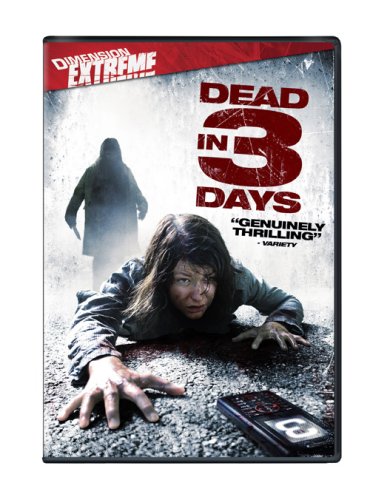
The international horror market is becoming quite the money maker. It started with the Asian Invasion. We started seeing American remakes of these mostly Japanese or Korean ghost stories. They usually had a common thread that featured some type of technology. It started with Ring, the American version of Ringu. Here it’s a videotape that demands to be reproduced or you’re dead in 7 days. Eventually we’ve seen films where ghosts inhabit everything from computers to video games to cell phones and digital cameras. It seems the dead just can’t let go of their hi-tech toys. If you want to go ghost hunting today, stay away from the creepy mansions and ancient cemeteries. I’d try Best Buy. Those guys must have a hell of a ghost problem. Who you gonna call?
The latest country to get in on the fad is Austria. Dead In 3 Days is an Austrian, German language film, which hasn’t been remade for American audiences. Instead the film, originally titled, In 3 Tagen bist du tot, provides an English dub.
Posted in: Disc Reviews by Archive Authors on September 22nd, 2008
When I was a kid, I loved Archie comics. Before every family road trip (at least once a year), my mom would head to the grocery store and buy up all of the latest issues of everything from Jughead to Little Archie. We amassed quite the collection, and I read those things over and over for years. Recently, in a moment of nostalgia, I bought a new issue. I was excited to see what my old pals the Riverdale gang were up to — boy, was I disappointed. I knew nearly all of the stories! They barely did anything to hide the fact that they were reruns, simply transplanting plots from summer to winter, or changing from basketball to volleyball. What a crock.
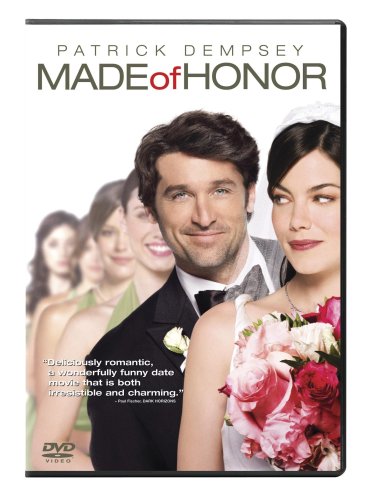
Speaking of reruns, you'll recognize Made of Honor as My Best Friend's Wedding with a dash of When Harry Met Sally. I know it's a well-established Hollywood tradition to rehash plots from past successes, but this chick flick was marketed as something fresh. Right. It's a good thing fans of rom-coms don't mind watching the same story over and over. And over.
Posted in: Disc Reviews by Archive Authors on January 18th, 2008
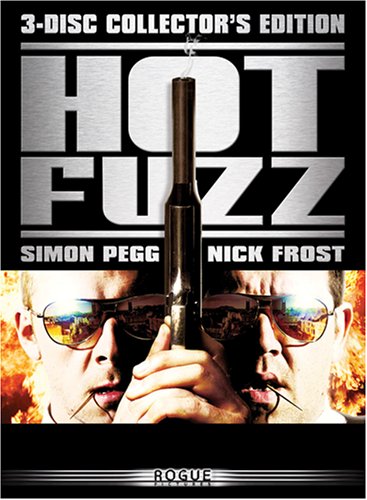
It's not often that a review starts with the final score, but I'm going to break that rule. Go out and buy this DVD set. Stop reading this review, leave your residence, and go directly to your nearest DVD retailer for a copy of the 3-disc version of Hot Fuzz. When I first watched Shaun of the Dead, I was absolutely blown away at how deftly creators Simon Pegg and Edgar Wright were able to mix the comedy, spoof and horror genres into one of the most entertaining and original films of the decade. While I had high hopes for the follow up project, deep down I was expecting to find a case of the sophomore slump; a good film that manages to fall short of the success of the debut. Not only was my gut feeling dead wrong, but I am of the opinion that the two have actually been able to surpass their previous success. Shaun of the Dead was not a fluke, but merely a warm-up to the amazing success of Hot Fuzz.
This time around, the pair (along with hilarious stalwart Nick Frost) cover the action film genre. Pegg plays a London cop so outstanding that he makes the rest of the department look bad, so he is shipped off to a sleepy countryside hamlet to hand out tickets to speeders and the occasional noisy pub patron. What he finds, however, is something more sinister than anything he had ever come in contact with on the streets of London.
Posted in: Disc Reviews by David Annandale on March 14th, 2007
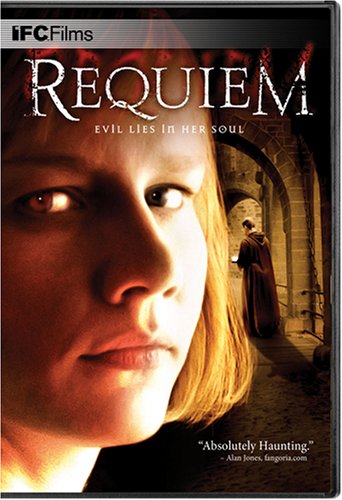
A young woman leaves her small town and intensely religious family to study at University. Even as she experiences the new freedom of campus life, her epileptic seizures become much worse, and she gradually comes to the conclusion that she is possessed. Her friends try to help her as her suffering becomes intolerable, but she eventually turns to a priest who wants to perform an exorcism.
If the above synopsis sounds familiar, that’s because this film is based on the same case that inspired The Exorcism of Emily Rose. Requiem makes that other effort look utterly ridiculous. The case misleadingly promotes the film as a gothic horror flick, which it is not, though its story is undeniably horrific. There are no special effects, and the presentation of the symptoms comes down to Sandra Hüller’s remarkable performance as the unfortunate Michaela. By the time her symptoms are at their peak, we don’t need any CGI or tricked-up sound design to recoil in horror and pity from the tortured woman. Director Hans-Christian Schmid and writer Bernd Lange shy away from a supernatural explanation (while maintaining a certain degree of ambiguity), but this in no way lessens the horror of the proceedings. In fact, the cause of Michaela’s suffering is almost beside the point – the reality of that suffering is the true focus of the film. Though it must be said that the possibility lurks that religious belief is a contributing factor to the unfolding tragedy. Despite all the movies dealing with demonic possession, The Exorcist has really been the only one definitive exorcism film. Now, at last, there is a second, and Requiem succeeds so harrowingly because of its restraint, its utterly believable portrayal of characters and events, and its refusal to imitate William Friedkin’s film. It charts is own path, and does so with enormous assurance.
Posted in: Disc Reviews by Archive Authors on January 11th, 2006
The Academy Awards ceremony continues to devalue itself by giving honors to films, which are mediocre at best, or films that try desperately to force a political agenda down the American people’s throats, while gems such as 2004’s Downfall linger in relative obscurity, and certainly do not receive the recognition they deserve. Director Oliver Hirschbiegel’s study of Hitler’s final days transcends the triviality of being considered a film and instead functions as a window into the past. And for a little more th...n two hours, it feels like we’re actually watching Hitler’s (and a country’s) downfall instead of a movie portraying the events. Part of this authenticity is due to the meticulous recreation of war-torn Berlin in the last ten days of the German dictator’s life. The filmmakers’ painstaking research, which consisted of hours-upon-hours interviewing several of the still-living participants, as well as taking a healthy dose of its story from the memoirs of Traudl Junge, Hitler’s secretary, succeeds in placing us right in the middle of the drama. But the proceedings would be nothing without the criminally overlooked performance of Bruno Ganz, who doesn’t just play Hitler; he becomes him. If Ganz cannot win a Best Actor Academy Award for what he does here, then the whole system no longer contains merit, and the little gold statue means nothing.
Of course, whenever Hitler’s involved in anything, there will always be a lot of controversy that surrounds him. It doesn’t help the film’s global acceptance that Ganz plays Hitler not as a two-dimensional dictator, but as a flesh-and-blood man with his own feelings of pride, uncertainty, and even warmth. But make no mistake. Any critic or viewer that tries to tell you Hitler is shown in a positive light did not even begin to watch the film closely enough. Thus, the only real controversy lay in the fact that Downfall de-poofs stereotypes of what a German under the Reich was… and more importantly, of what Hitler himself was. He is first and foremost a mentally unstable villain. But like all predators, he is not without his share of humanity which does invoke sympathy at times. All the while, the film never tries to justify Hitler. It just tries to understand him, and it is enormously successful in doing so.