Dolby Digital 5.1 (Italian)

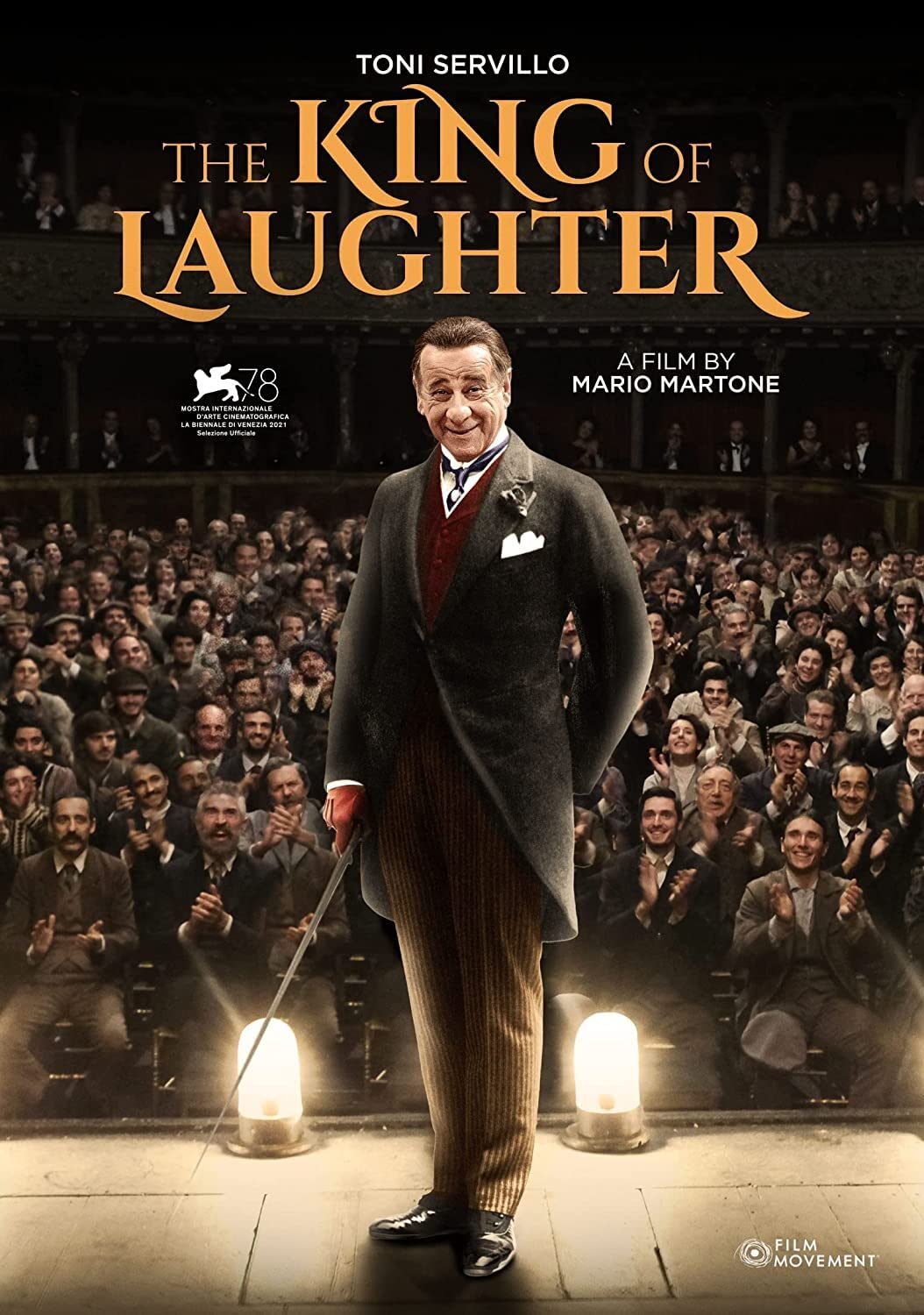
I think all of us want to be on stage, at least in theory.  For me, it started with some plays in high school.  But from there, those aspirations were cut short due to my father telling me that I needed a real job (which was his favorite thing to tell me in high school and college).  I don't think the decade I spent in karaoke bars (and actually singing) really counts for anything either.  So I've always been fascinated with theater, particularly when it comes to comedy.  When I saw King of Laughter as a possible review title, I took a peek at the trailer and decided to give it a shot.  After all, what's not to like about a story featuring the famous actor/playwright Eduardo Scarpetta in a battle with the courts over the concept of parody?  Let's take a look.

We are at a showing of the play Poverty and Nobility.  At the backstage area, we see actors eating pizza.  Then we move across to the box office area where everyone seems to be trying to get a ticket, only to be told that it is sold out.  Eduardo Scarpetta (played by Toni Servillo)  puts on his makeup while members of his family watch.  Nearby, a table has two men seated.  The proceeds from tonight's play are counted over and over again while they try to figure out the payout for each crew member.  Finally, we reach the point in the play where Eduardo Scarpetta makes his appearance to a sea of thunderous applause.

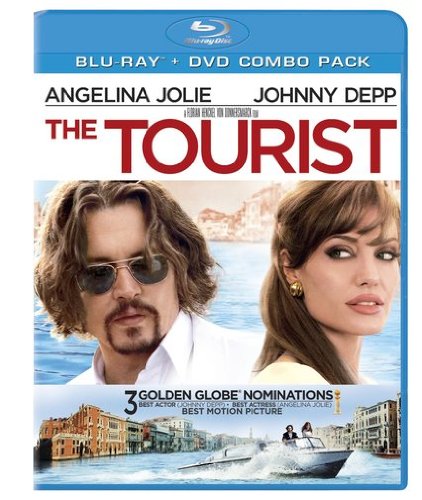
All eyes are on Angelina Jolie; okay, so that's not much of a surprise, is it? But, I'm talking about the opening scenes of Jolie's partnership with Johnny Depp in the remake of the French spy thriller Anthony Zimmer, retitled for the American audience, The Tourist. Her character Elise is attracting a lot of attention from men hidden away in vans with surveillance equipment trained on her every move and from every angle. No, it's not the paparazzi this time. Elise is being followed because the intelligence community believes she will lead them to their real target, an elusive master criminal named Alex. Instead Elise merely receives a letter which she proceeds to burn and walk away. The agents swarm on the smoldering paper, convinced it's a message from Alex and a clue to his whereabouts. It seems he's gotten away with a ton of money, and sources say he has used some of those riches to alter his appearance, and Elise is the only clue they have left.

The note has instructed her to take a specific train and locate a random person that approximates his size. The idea is to convince the agents that the rube is Alex, thus distracting them from their true quarry whom she is to meet in Venice. On the train, Elise chooses math teacher Frank Tupelo (Depp) for the ruse. She develops an odd attraction for the man and invites him to stay with her in her lavish hotel suite. A series of mistaken identity gags gives Depp a chance to shine in the role, while Jolie offers the window dressing and emotional attachment for the team. Expect plenty of misdirection and red herrings.

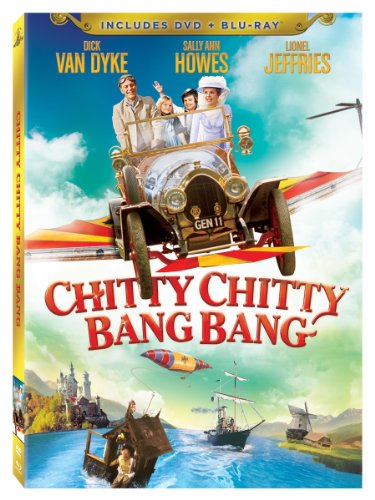
His name was Fleming, Ian Fleming, and he would go on to create the most famous spy in literary history. James Bond would actually be based on Fleming's own experience in Her Majesty's Secret Service. But Fleming had another side. It's hard to believe that the man who gave us such ubervillians as Dr. No and Goldfinger brought us one of the most enchanting children's stories of our time. Chitty Chitty Bang Bang's bond association doesn't end with its celebrated author. Albert "Cubby" Broccoli might have been just as instrumental for the success of Bond as Fleming himself. It was Broccoli who saw the potential and snapped up the rights to the spy series. He turned it into the famous Bond film series that still carries on the same traditions today, only at the hands of his daughter Barbara Broccoli. So it is only fitting somehow that Cubby would be the one to bring Fleming's children's story to life in movies, as well. The Bond associations don't end there. Director Ken Hughes brought us Casino Royale. The comic villain of the movie would be almost unrecognizably played by Gert Frobe, none other than Auric Goldfinger himself.

MGM has long been known for its epic musicals. The studio had a reputation for sparing no expense while delivering some of the most sweeping musical films known to mankind. Complete with complicated dance numbers and casts of thousands, the MGM grand-style musical was once something to behold. But Chitty Chitty Bang Bang wasn't really the model for these impressive spectacles at all. In fact, this movie follows more closely the Walt Disney model that it is one of the most misidentified films in the popular conscience. In a survey taken in the 1980's, only 1 out of 4 respondents correctly identified the film as an MGM production. The rest were confident that Uncle Walt and his Mouse House had given us the popular children's musical.

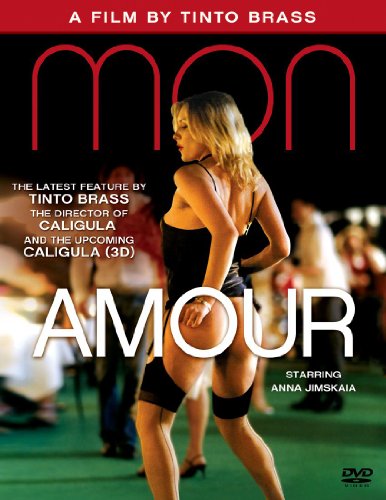
After a series of releases from erotic cinema specialist Tinto Brass's early career, Cult Epics now gives us one of his latest works. Marta (Anna Jimskaia) loves her husband Dario (Max Parodi), but he has become inattentive and selfish in bad, when he shows any interest in sex at all. Feeling lonely and unappreciated, Marta takes in the sights of Mantua, and in a museum she encounters Leon (Riccardo Marino, who is no more French than I am Martian), a sexually aggressive alpha male with whom she begins a passionate affair, with an eye (of course) to re-igniting Dario through jealousy.

As one would expect of a Tinto Brass film, this is a very handsome, lush affair, with some striking compositions and sets. There are moments at a swanky outdoor party that bring to mind the likes of Peter Greenaway. At this party, various characters (including Brass himself) get into a brief philosophical discussion on pornography and sex, and this moment encapsulates the Achilles' Heel of Brass's oeuvre. He has always struck me as a filmmaker who is nowhere near as clever as he thinks he is. His early work, especially Deadly Sweet, is, I think, the most interesting, because its self-indulgence is married to an insanely excessive cinematic frenzy. Bored with what's on screen? Wait five seconds. Here, though, the more disciplined technique is accompanied by a deeply pedestrian story. Revive your marriage through an affair? Ye godz, that's a storyline that dates back to the Triassic period. Meanwhile, Brass gives his obsession with rear ends free rein. He's certainly a filmmaker who is true to his passion, but the drooling male fantasy can get a bit embarrassing.

"I remember once going on a school trip to the top of the Empire State Building. When I looked down at the crowds of people on the street, they looked like ants. I pulled out a penny and some of us started talking about what would happen if I dropped it from up there and it landed on somebody's head. Of course, I never crossed that line and actually dropped the penny. I don't think Early Grayce even knew there was a line to cross."

Remakes are a fact of life. It might seem now more than ever that we are plagued with this reality, but it's been true for a very long time. It's not so new, as you might expect. Even the lauded Cecil B. Demille The Ten Commandments was a remake of his own silent 1923 film. They've existed almost as long as the movies themselves and will continue to exist for the foreseeable future. So, the question should be: Why should a particular film be remade? Often technology catches up with the content in a film. The ability to create on the screen something that was simply impossible originally is a legitimate reason to tackle an older film. Sometimes the movie is so powerful that it bears retelling for a new generation.

But then there are the reasons why a film should not be remade. There are some classics that simply should be off limits forever. Would anyone even dare attempt to remake The Godfather? There are those films that are just not worth being remade. How many versions of Piranha do we really need? Then there are the films that are remade in title only, like the 1999 version of The Thomas Crown Affair.

"Perseus and Andromeda will be happy together. Have fine sons... rule wisely... And to perpetuate the story of his courage, I command that from henceforth, he will be set among the stars and constellations. He, Perseus, the lovely Andromeda, the noble Pegasus, and even the vain Cassiopeia. Let the stars be named after then forever. As long as man shall walk the Earth and search the night sky in wonder, they will remember the courage of Perseus forever. Even if we, the gods, are abandoned or forgotten, the stars will never fade. Never. They will burn till the end of the time."

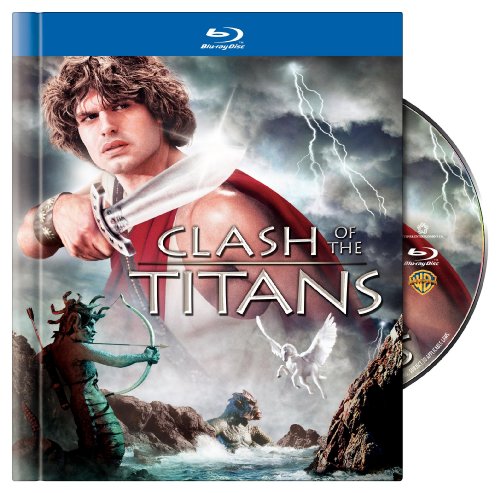
Talk about your perfect storm. You take the master of stop motion technology, Ray Harryhausen, and you combine those creature animation talents with one of the oldest stories surviving today in Perseus and Andromeda. How can the combination not be magical? The story has always been a favorite of mine, likely because I was born on the Summer Solstice, the critical moment of this story. I was preordained to love this film. The truth is that this film never got quite the recognition it so richly deserved. Now, on the cusp of a computer generated remake, it was my unmitigated privilege and joy to watch the original 1981 film in the glory of high definition.

"There are stories a river can tell. And truths it cannot hide. There are ways it brings us together that we may never see, connecting us with places never suspected. Places like fear, like betrayal, like murder."

One thing you have to say for Clint Eastwood. In his later years as a director and producer of films, maybe from Unforgiven onward, he has selected some of the most compelling stories for his film projects. You get the sense that he hasn't been in this for the money in a long time. You easily believe that he doesn't make a film unless it reaches him completely and deeply. Think about his most recent films: Letters From Iwo Jima, Flags Of Our Fathers, Gran Torino, Unforgiven, and yes, Mystic River. He's turning 80 now, and so he's not what you would call prolific anymore. It's as if he understands there are only a finite number of films left that will bear his name, so he has decided to make every last one of them count. Someone once joked that when Clint Eastwood asked him to be in a movie, the actor asked how much money for the part. When Clint said, "Only $100,000." The actor quickly replied, "Who do I make the check out to?" There's a level of respect and reverence that goes beyond his steely look and terse one-liners. Getting a part in a Clint Eastwood movie seems to make everyone "feel lucky", and it always "makes their day". I'll never get to play a part in an Eastwood film, of course, but those same remarks apply to me or anyone who is about to sit down to an Eastwood film, whether he's actually in the movie or not. Mystic River is no exception.

“The perpetrator is an expert marksman. He’s an expert in explosives and tactics. Gentlemen, play this one by the numbers. Maintain your fields of fire… We’re blind and he’s seeing in 20/20… We have not contained him. He’s contained himself.”

“He” is Samuel L Jackson in the 1998 action thriller The Negotiator. Jackson stars as Danny Roman. He’s a Chicago Metro hostage negotiator. As the film opens we get to see him in action saving a little girl from a tight hostage situation. He’s obviously good at his job and he has the respect and admiration of his fellow officers and commanders. Roman’s partner Nathan Roenick (Guilfoyle) has gotten a hot tip from an informant. Someone inside the department has been skimming money from the union’s retirement fund. He’s about to blow the case wide open when he’s killed. Roman discovers his friend and partner just as other cops arrive to see him leaning over the dead body. He becomes the prime suspect not only in his partner’s death but the missing money as well. Someone has gone to great lengths to frame him for the crimes. When evidence of his guilt is found at his house, not even Roman’s friends believe he’s innocent. With everyone turning their backs on him, Roman goes to Inspector Niebaum (Walsh), an internal affairs cop that Roenick mentioned as a part of the embezzlement scam. The confrontation quickly gets out of control, and before anyone knows what’s happened, Roman has taken the internal affairs department hostage. He demands that Lt. Chris Sabian (Spacey), another hostage negotiator that Roman trusts, be put in charge of the operation. Sabian takes over, but he’s dealing with a perp who knows all of the rules of engagement. To make matters worse, the book doesn’t cover this kind of negotiation. Roman isn’t asking for money and a plane full of fuel at the airport. He wants someone to get to the bottom of the frame job, or else.

“A long time ago in a land far, far away, way East of Chicago, in a place called Brooklyn, actually, a great man named Mel Brooks was born. And, that man begat this and that, and then some, and then he did this…”

This, was Spaceballs. Brooks had tackled pretty much every genre of film before Spaceballs. He took on horror films with Young Frankenstein. He tore up the old West and the Western with Blazing Saddles. He was bold enough to offer us a take up on the Silent Movie. On television he took on James Bond by giving us Agent 86 in Get Smart. With the success of Star Wars and the consistent top box office performance of the science fiction films, it was only a matter of time before he turned his trademark Jewish wit towards the space opera. While Spaceballs aims primarily at the first Star Wars franchise, there is plenty of fun poked at everything from Star Trek to Alien. Certainly there have been quite a few such spoofs since then, but most of them have been the standard dry slapstick in the Airplane mold. With Brooks there’s always a certain amount of class to go with your comedy. He always gives you a little meat to go with all of that cheese.