Posted in: Disc Reviews by David Annandale on April 10th, 2011
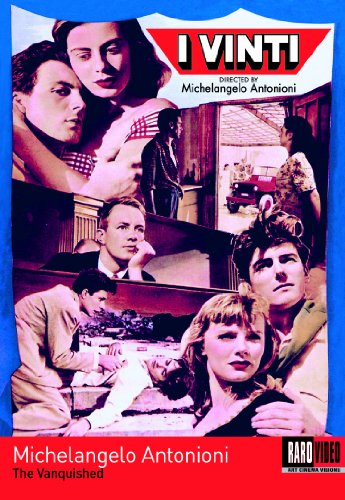
A stern, hectoring narrator laments the state of the Young People of Today's Modern World, and ascribes their terminal amorality to their having come of age during the World War Two. Having set the stage, he then withdraws until the end, that we might draw the proper moral conclusions from a trio of tales (inspired, loosely, by actual cases) that show the terrible depths to which the Young People of Today's Modern World have plunged.
The first is set in France, where a group of teens head off for a day in the countryside. Their goal is to murder one of their own, believing that a) he is about to betray them by taking off to Canada; and b) that all his fanciful tales are true, and that he is fabulously rich. In the second story, a young man from a good home in Rome is involved, for no very good reason beyond selfishness, with cigarette smugglers. Barely escaping from a police raid, he guns one man down and is badly injured himself. We then follow him through the day as he slowly stumbles toward his destiny. The last story takes us to England, where a fellow, utterly convinced of his own superiority, courts a newspaper's interest first by letting a reporter know about a body he has found, and later by boasting he killed the woman himself, believing that his crime is so perfect that he can confess to the police and then recant without suffering any particular inconvenience.
Posted in: Disc Reviews by David Annandale on April 5th, 2011
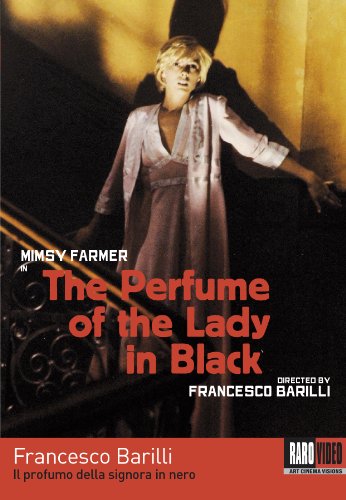
Three years after her unsettling turn in Dario Argento's Four Flies on Grey Velvet (1971), Mimsy Farmer headlined this giallo-related effort by director/co-writer Francesco Barilli. She plays a successful chemist on the verge of a psychotic break. She has been haunted since her childhood by the death of her father, and she has recurring memories (or are they fantasies?) of her mother in the arms of a sinister man. Her sense of reality crumbles as objects and people from her past appear and vanish. She retreats deeper and deeper into a paranoid shell. But just because you're paranoid doesn't mean they aren't out to get you, and there are signs that she may be the victim of a sinister conspiracy.
By the time Barilli's film reaches its admittedly chilling finale, it has ceased to make a lick of sense. This isn't necessarily a bad thing: many gialli (and related Italian horror films) follow a logic that belongs to dreams rather than the real world. But even as Barilli adopts a stately pace (all of the violence in the film is reserved for the last fifteen minutes), he also tries to do too much, as if he were trying to fuse Repulsion with The Wicker Man. The film's head-scratching aspects get in the way of the fist-in-the-gut denouement, or at least prevent it from having quite the impact it deserves. However, the film is handsomely shot, and the ending is sufficiently powerful that it will linger in the mind.
Posted in: Disc Reviews by David Annandale on February 25th, 2011
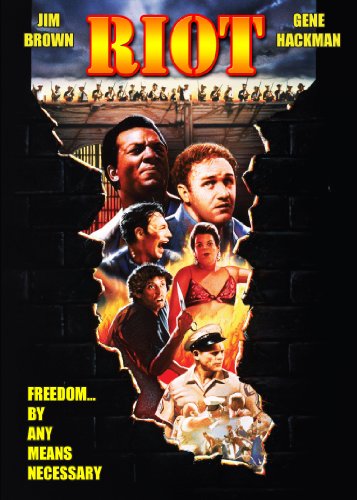
While the warden is away, the inmates of the isolation block break out out of their cells and seize a group of guards and administrators as hostages. Caught, by pure chance, in the wrong place at the wrong time, is Jim Brown, whose sentence is short enough that he wouldn't choose to become involved. However, before he knows it, he is, along with Gene Hackman, leading the riot. The ruckus is, in fact, a cover for an escape attempt: the inmates are digging a tunnel while, as a stalling tactic, Hackman presents a list of grievances to the authorities. But even as Brown becomes more and more enmeshed in the running of the operation, Hackman becomes more and more engaged with the protest, forgetting that it is supposed to be a charade.

Nice, gritty jailhouse piece, shot entirely at the Arizona State Penitentiary, and featuring not only plenty of real inmates, but the actual warden playing the warden of fictional prison. As one would expect of a film starring both Brown and Hackman, the characters are a tough lot, and the action is brutal. Characterizations are strong, with even the minor figures clearly defined. The only false note is sounded by the clumsy pseudo-Johnny Cash prison song that thuds against the ears several times over the course of the film. Otherwise, this is a bone-crunching good time, and is another example (along with Rosemary's Baby) of how different films merely produced by William Castle were from the films he actually directed himself.
Posted in: Disc Reviews by Gino Sassani on February 7th, 2011
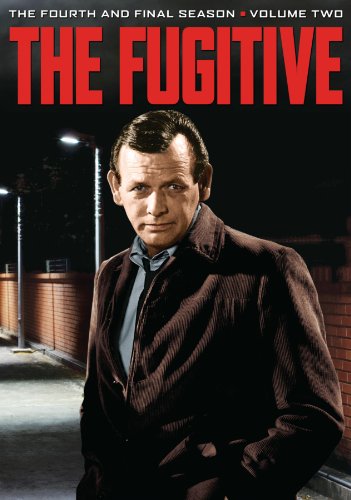
“The man is Richard Kimble, and, not surprisingly, the man is tired. Tired of looking over his shoulder, the ready lie of the buses and freight trains. Richard Kimble is tired of running…”
The elusive “one-armed man” is one of the best-known television icons of all time. The plight of Dr. Richard Kimball has been the subject of numerous imitations and even a feature film staring Harrison Ford as Kimball and Tommy Lee Jones as his pursuer. Tim Daly left the ranks of comedy to fill the shoes of Kimball in a very short-lived revival series. While some of these efforts managed to capture the essence of The Fugitive, none can truly compare to the real thing.
Posted in: Disc Reviews by Archive Authors on January 19th, 2011
“’Have gun, will travel’ reads the card of a man. A knight without armor in a savage land…”
Those words ended every episode of Have Gun Will Travel, sung by Johnny Western in a time that such words could be sung without irony. Outside of Richard Boone’s black-clad, craggy Rhett Butler gone-to-seed gunfighter, that song was all I could really recall about this venerable Western from television’s golden age. Would it, like so many revisited shows from my youth, ultimately disappoint? Or would it hold up fifty years after it was originally broadcast, viewed as it would be by the far more jaded, cynical man I’ve grown into?
Posted in: Disc Reviews by Gino Sassani on December 27th, 2010
Three-time widower Ben Cartwright (Greene) runs his famous Ponderosa Ranch with the aid of his three grown sons from three different mothers. There’s Little Joe (Landon), Adam (Roberts) and Hoss (Blocker). Set some time in the mid 1800’s, this long-running series followed the family’s many exploits. In the late 1950’s westerns accounted for six of the top ten programs on TV. Only Gunsmoke had a longer run than Bonanza. From 1959 to 1973, Ben Cartwright and his boys rode across the small screen. Years later in syndication the series re-emerged as Ponderosa, and a handful of TV movies continued the tale into the 90’s.We never have grown tired of the genre that gave us such heroes as John Wayne and Clint Eastwood.
You get the first half of the second season in this 5-disc release complete with 18 episodes. The set is highlighted by some great guest appearances. Jack Lambert, Ben Cooper, The Werewolf Of London himself Henry Hull, James Hong, Dan Duryea, Claude Atkins, Khan himself Ricardo Montalban, Bob Hopkins, Star Trek's Spock Leonard Nimoy, The Creature's favorite babe Julie Adams, and even Holy Guest Star Batman Adam West.
Posted in: Disc Reviews by David Annandale on December 21st, 2010
Monte Walsh and Chet Rollins (Lee Marvin and Jack Palance) are two cowboys in an era where their kind is becoming extinct. After a hard winter in the mountains, they discover that most of the ranches they knew have vanished, the land being bought up by Eastern corporations. They find work on the ranch once owned by Jim Davis, though he now answers to accountants back East. And though life, at first, seems all right, bit by bit they witness the end of their era, as a way of life dies, and the men who lived it are pushed to suicide, desperation, robbery and worse.
There were numerous “death of the west” movies in the late 1960s and early 1970s, films whose subjects also reflected the fact that the Western itself, as a genre, was entering a near-terminal decline from which it has never fully recovered (these days, if one Western per year comes out, that's doing pretty well, and yet there was a time when there were more Westerns pumped out than any other genre). Unlike the blaze of glory tales of Sam Peckinpah (The Wild Bunch being the best example), Monte Walsh is more of a tone poem. There is very little plot. We watch a few seasons in Monte's life, see him at work and play, see the tentative romance between him and prostitute Jeanne Moreau, see his sadness over a vanishing world and disappearing friends. Then, an almost subterranean thread involving the increasingly desperate straights of Mitch Ryan rises to the foreground in the final act as tragedy descends.
Posted in: Disc Reviews by Gino Sassani on December 20th, 2010
The setting for Gunsmoke was the by-now-famous Dodge City, circa 1870’s. Phrases like “get out of Dodge” would enter the popular lexicon as a result of this resilient series. Marshall Dillon (Arness) was charged with keeping the peace in Dodge City. The only other character to see the entire 20-year run was kindly Doc Adams (Stone). Star Trek’s own Doc, Leonard McCoy, took many of his traits from Doc Adams. He was the humanitarian of the city, always looking to help someone. Like McCoy, he had a taste for bourbon and a soft heart underneath a rather gruff exterior and was always ready with free advice. Dillon’s love interest throughout most of the series was Miss Kitty Russell (Blake). While there were certainly a few romantic undercurrents, the romance never came to fruition. Miss Kitty was a prostitute on the radio and was likely one here as well, but CBS chose to underplay that aspect of her character as a “saloon girl”. Finally Dillon’s faithful sidekick deputy was Chester (Weaver). Chester often found himself in trouble and was the naïve son figure to Dillon.
Gunsmoke is the longest running scripted live action television show in history. The series ran from 1955 to 1975. At first it was a half-hour black-and-white show that evolved into a color hour by 1967. It actually started before the days of television, premiering on radio in 1952. Then it was William Conrad as the tough-as-nails Marshall Matt Dillon. When television came into its own, Gunsmoke made the jump to the bright living room box and made history. Westerns would ride across our small square screens for the next three decades, making it the most successful genre of that time, and it was Gunsmoke that started it all. The television version of Gunsmoke was originally conceived as a vehicle for John Wayne, who opted to remain in movies. Yet it was Wayne himself who suggested James Arness, and it turned out to be a career for the one-time “carrot” monster from The Thing. Gunsmoke started before all of the big westerns and was around when most of them had departed.
Posted in: Disc Reviews by David Annandale on December 20th, 2010
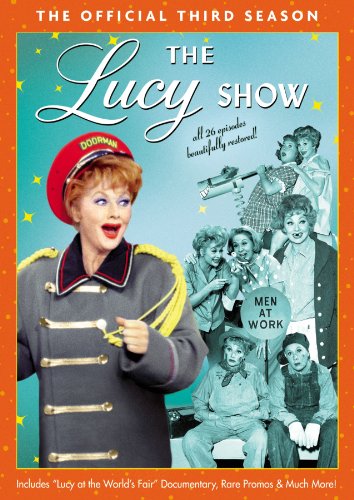
This was Lucille Ball’s follow-up to I Love Lucy. Here Ball is a widowed mother of two, sharing her home with best friend Vivian Vance, who is a divorced mother of one. All the other members of household are, of course, faced with the disasters triggered by Lucy. I screened this set immediately after viewing its close contemporary, Petticoat Junction, and the difference between the two was instructive. There are plenty of hokey gags and situations on The Lucy Show, but there is an enormous difference between the shows, thanks to the comic genius of Lucille Ball. Her energy fills each episode, her timing is spot-on, but there is also her commitment to a type of physical comedy that to this day remains pretty much the exclusive domain of male performers. Not only does she make this style her own, she grounds it in a female reality. There is a reason she was so beloved a performer, and why her work still stands up today.
The third season offers up even more laughs. Some highlights of the season include:
Posted in: Disc Reviews by Gino Sassani on December 20th, 2010
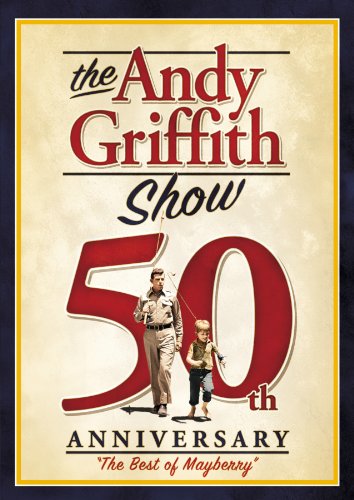
Who doesn’t have a soft spot in their heart, if not their DVD collection, for The Andy Griffith Show? The denizens of Mayberry have been with many of us our entire lives. For most of America, The Andy Griffith Show has become the template for any small rural town. The characters stand as prerequisite citizens in any said town. The town drunk, the local barber, the motherly little old lady, and the corner mechanic all look like Otis, Floyd, Aunt Bee, and Goober to most of us now. Griffith himself brought fine qualities to his role of Sheriff Andy Taylor, but it was Don Knotts as the incompetent but lovable deputy Barney Fife who stole the show. And who was that sweet little boy? He grew up to be a first class filmmaker with plenty of Oscars on the shelf. No question that The Andy Griffith Show started something back in 1960.
Sheriff Taylor (Griffith) is a widower with a young son, Opie (Howard). His extended family includes lovable doting Aunt Bee (Bavier). His deputy, Barney (Knotts) appears to be a few trout short of a stocked creek. They live in the small southern town of Mayberry.