Dolby Digital Mono (English)

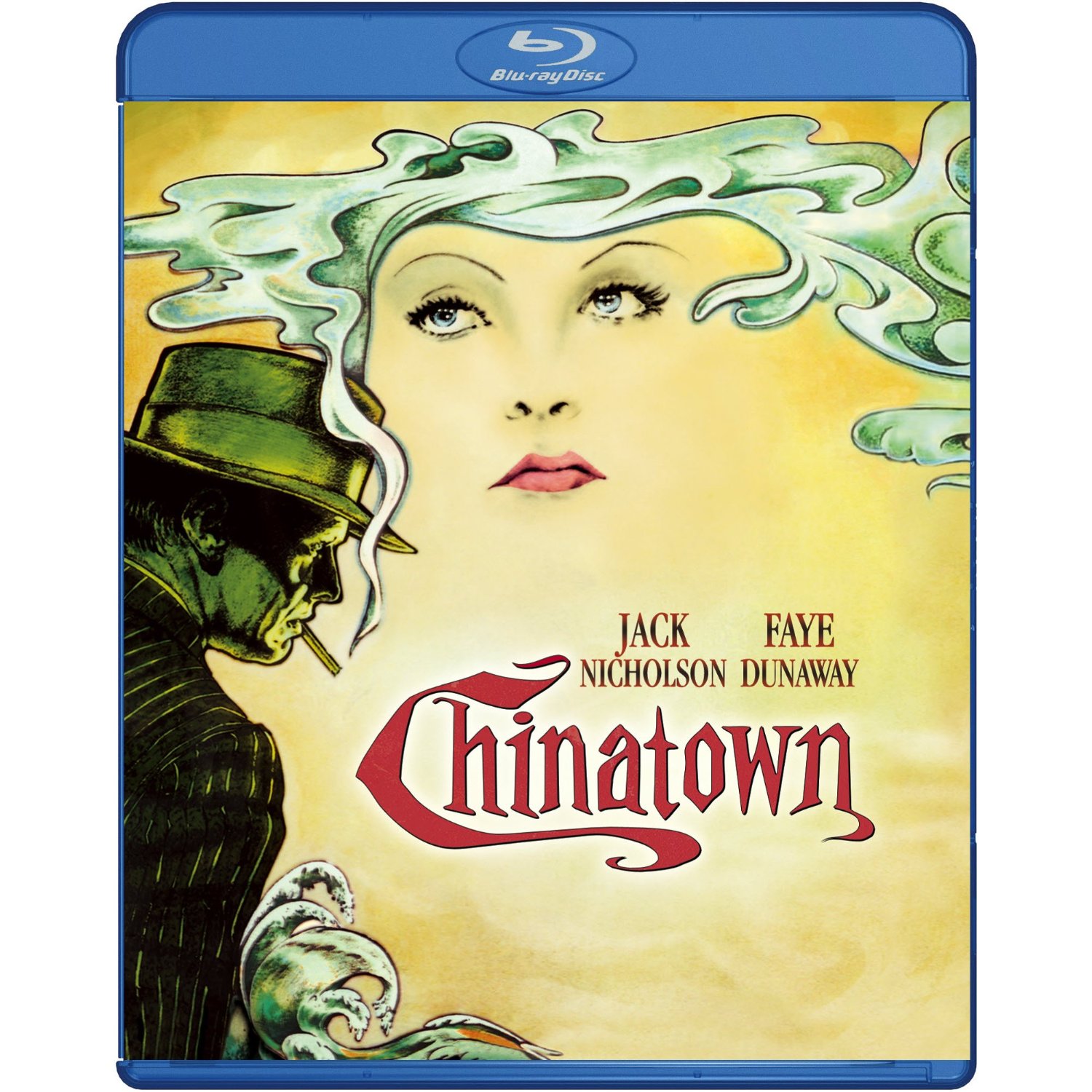
Roman Polanski's seminal neo-noir finally makes it to Blu-ray. Gino has already handled the previous DVD release, so I'm going to turn the reins over to him for a while, then jump back in.

"Jake Gittes is a Chandler style detective with all of the trappings. From the office to the secretary and the cop friend, Gittes is a cliché. He appears to specialize in tracking down extramarital affairs. When he’s hired to keep an eye on a rich millionaire, the subject turns up dead, and maybe it wasn’t his wife at all who hired him. Gittes now must investigate to save his own hide. His investigation leads him to a corrupt water department taking advantage of a manufactured drought. His client has a dark secret that only complicates Gittes’ efforts.

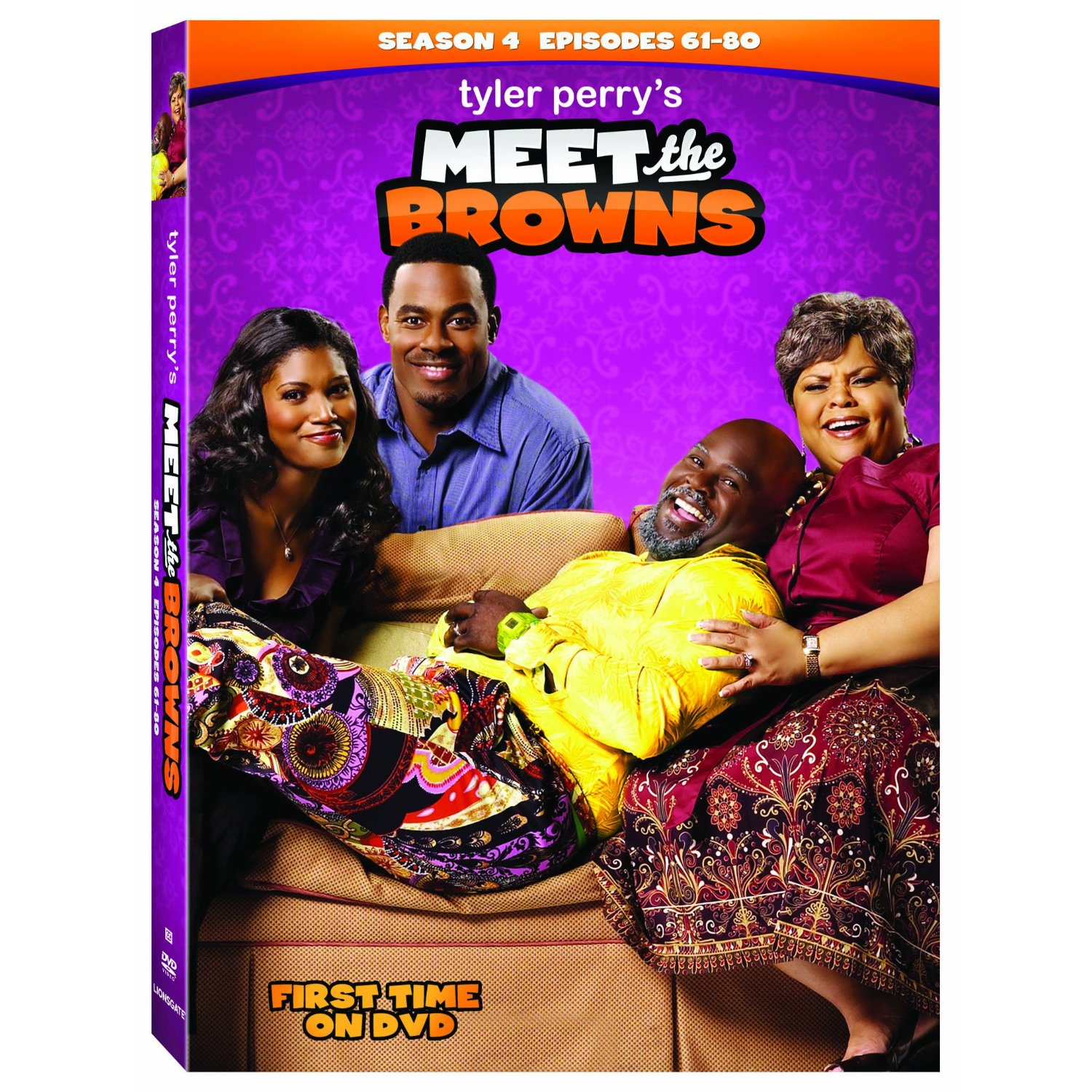
First was the play, then came the film, and now we're 140 episodes deep in Meet The Browns sitcom. Like a lot of Tyler Perry projects, the family dynamic can be a bit bamboozling at times. So...it's an elderly man living with his daughter and his niece and her husband and their adopted kids, with regular appearances by his neighbour who is also Aunt to...oh heck, let's just get on with the review...

My mind immediately wanted to draw comparisons between this and another Tyler Perry sitcom, House of Payne (a volume of which I have panned on this very site: https://upcomingdiscs.com/2011/07/23/house-of-payne-volume-8/). To my relief, this show is nowhere near as stereotype ridden nor aggravating as “Payne.” That being said, this is, by no means, a great comedy. The stories are rehashed (the season opener even uses the heavily treaded Flintstones gimmick of having someone become a new man after being bashed on the head), the character dynamics confusing (one of the adopted children looks nothing like his “family” and is interacted with so little at times that I thought his character might have been a ghost living in the house), and the laughter often only comes when they resort to some sort of slapstick when a punchline couldn't be conjured up.

"'Twas the night before Christmas and all through the house, not a creature was stirring...not even a mouse..."

The poem is a popular one. It was originally titled A Visit From St. Nick and has been a holiday staple since the 1820's. No one knows for sure who wrote it, and there are several schools of thought on its authorship. What is not in doubt is that the lines are about as familiar as Christmas itself. Over the years it has been lampooned and used as an inspiration for many films, plays and songs. In 1974 Rankin & Bass tackled the title, and it has since become a holiday staple. While not quite as popular as The Grinch Who Stole Christmas or A Charlie Brown Christmas, it remains one of those fond memories, particularly with those of us who were children in the 70's.

At one point or another, most all family friendly television programs air some sort of holiday special. Just one special you say? Well smurf that! How about two?! Taken from their TV show, that ran for nine seasons, we are offered two Christmas (not Holiday) specials starring those tiny blue...whatever they are. The animation quality signifies that one special comes from the earliest seasons, while the other come from somewhere later in the nine year run.

The simply titled The Smurfs Christmas Special is the older offering. It is a tale of two lost children whom the Smurfs attempt to save from a mysterious, magical stranger. Meanwhile, Gargamel uses a spell from this same stranger to try and destroy the Smurf village once and for all. The tale is simple and once again, love is used to conquer all (expressed in song).

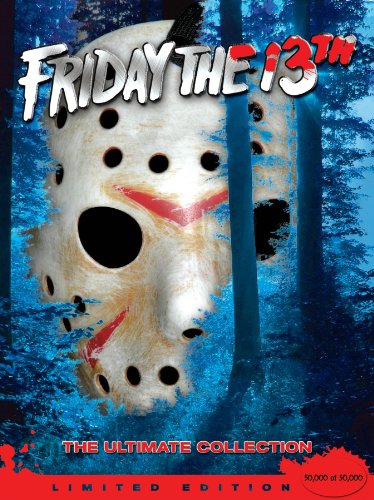
A few years back, Paramount released all eight of the studio’s Friday the 13th films in a so-called “Ultimate Edition.” With cut versions of the films and no 3D, it wasn’t really that ultimate. So here we are again, with another Ultimate Edition (also Limited!) and this time, the package is much more worthy of the name, bringing together all the deluxe versions of the series.

As those deluxe editions have previously been reviewed on this site, I am now going to surrender the floor for a while. The comments below on Part 1 are by Aric Mitchell, and on Parts 2-6 are by Gino Sassani. I’ll come back for 7 and 8.

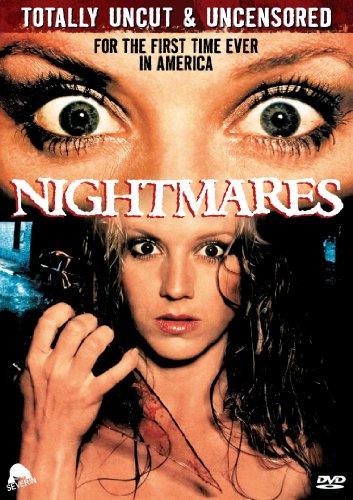
Having accidentally caused the death of her mother, Helen (Jenny Neumann) develops an unhealthy fixation with broken glass. Now an adult and an aspiring actress, she auditions for a role in an absurdist play. She gets the part, and also the attention of her handsome co-star. But then someone starts killing off the cast and crew of the play. Is it Helen?

It isn’t really venturing into spoiler territory to reveal that the answer to that question is “yes.” It is just one of the many odd aspects of this Australian slasher flick that the murders are staged in such a way (often, though not always, in first person) as to conceal the identity of the murderer, while the story makes it clear that there is only one person who could be responsible for the deaths. It then has the nerve to reveal Helen as the killer, right at the end of the film, as if this is some kind of surprise. Imagine if Halloween had concluded with the statement that “The murderer is... Michael Meyers!” and you have the idea. Meanwhile, the editing is frequently disorienting, with the 180-degree rule being violated on a number of occasions, and any sense of geography going right out the window (unless we really are supposed to believe that the critic’s home is an annex of the theatre itself). The storytelling is extremely choppy, with the film being broken up into short, barely developed scenes that have very little connective tissue between them. And as far as the plot itself goes, it’s a typical 1980 slasher in every way, just with Australian accents.
Now having said all that, the theatrical setting does add a measure of interest, and there are moments that call to mind Michele Soavi’s later Stagefright (1986). While the latter is by far the better movie, Nightmares (which was also, by coincidence, known as Stagefright) really comes alive in the rehearsal and performance scenes, with some genuinely witty barbs thrown out at the theatrical world, and some striking camera compositions tossed into the mix. So while this film will remain of interest primarily to fans of the 80s slasher movie, said fans will find just enough different here to make the film worth checking out.

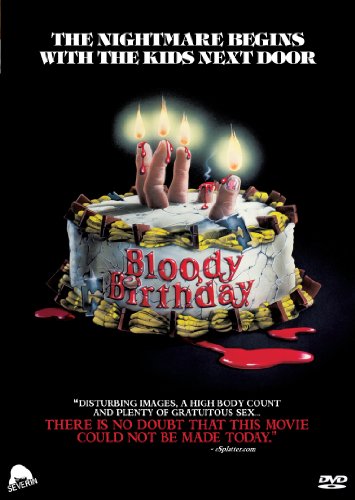
Three children are born at the moment of a total solar eclipse. On the even of their tenth birthday party, we discover that these kids, for astrological reasons, are complete sociopaths, and are having a merry time offing anyone in the community who even vaguely annoys them. The only ones who even gradually suspect that something is going on are high school senior Joyce (Lori Lethen) and her little brother Timmy (K. C. Martel). They soon become the target of the psycho kids’ wrath.

As slasher films flooded the screens in the early eighties, every conceivable minor variation was tried, while the rigid narrative formula was religiously observed. So if the variation wasn’t in the date (Halloween, Friday the 13th, New Year’s Evil, My Bloody Valentine, etc., etc., etc.), the change-up was in the the killer. And so here we have kids, though the elements remain otherwise familiar: prologue opening, young couples get naked and die, the Good Girl is the Final Girl, and so on. Though there is a bit of a nasty little punch in having the kids be murderous, this was hardly new in 1981 (The Bad Seed anyone?). The world of the film is a very difficult one to buy: the rash of murders has very little effect on the community, the junkyard features gassed-up and fully functional cars, astrology is apparently a for-credit subject at the high school, and everyone is very, very, very stupid. And while there is a certain demented pleasure in seeing tiny, WTF turns by the likes of Jose Ferrer (on-screen for maybe 30 seconds) and Susan Strasberg, this is a film that, in the final analysis, is nowhere as sick as it should be, unable to follow through on its own premise, as demonstrated by the singularly anti-climactic finale. Had this been an Italian or Spanish movie from the same era, I venture to think things would be a bit different.

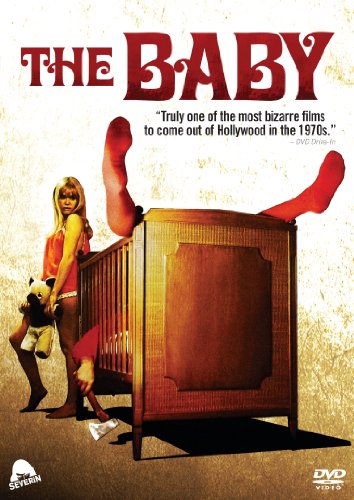
Ann Gentry (Anjanette Comer) is a social worker with a new case, one that she specifically sought. She has been assigned to the Wadsworth family. It consists of a terrifying matriarch (Ruth Roman), sexpot daughters Germaine (Marianna Hill) and Alba (Suzanne Zenor), and Baby (David Mooney, credited as David Manzy), a grown man with, apparently, the mental development of an infant. But Ann suspects Baby is capable of more, and that there is something fundamentally wrong going on at the Wadsworth residence. The Wadsworths, meanwhile, do not take kindly to Ann’s prying, and will stop at nothing to preserve their way of life.


Viewers lured by the promise of the film’s poster (Baby in crib, hatchet in hand) will no doubt be disappointed. This is not a body-count film, and there is very little that is overtly horrific for most of the movie. But make no mistake: this is a horror film. The horror is primarily conceptual, and the more we see of Baby’s life, the more we squirm. The performances are universally strong, and we buy into the characters, no matter how grotesque they are, and believe me, they are grotesque. The climax is exquisitely sick, as only the denouement of a movie made in 1972 can be, and is meticulously set up by everything that came before. This is a screwed-up movie, and I mean that as a term of extremely high praise. Absolutely not to be missed.

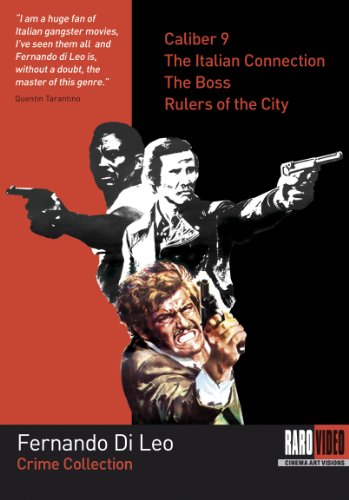
Looking for a something a bit different for you gangster flick fix? Then look no further than this box set of gritty, thematically linked Italian crime pictures from director Fernando Di Leo. Things don't get much more delightfully 70s than this.

Caliber 9 headlines Gastone Moschin as Ugo Piazza, a mob tough guy just out of prison. Everyone believes he stole 300 grand from the the mafia, which leads to no end of beatings and threats of worse. The old gang forces Ugo to work for them again, in order to keep an eye on him, and he tells girlfriend Barbara Bouchet that his plan is to find out who really took the money.

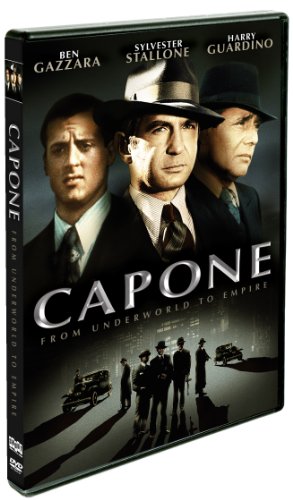
Roger Corman has never let an exploitable opportunity slip by. A case in point is what we have here. In the wake of the first two Godfather films came this rise-and-fall tale. And because the Godfather movies were handsome, expensive and classy, then this Corman-produced effort is also a nice-looking piece of cinema, even if the budget-conscious element shows through with the use of leftover footage from The St. Valentine's Day Massacre.

Ben Gazzara plays Al Capone, moving up from street-smart hood to mob kingpin through cunning and violence. His mentor is Johnn Torrio (Harry Guardino), who works to unite the various ethnic Chicago gangs, but lacks the bloodthirstiness necessary to impose his will. Capone has the right ruthlessness, and betrays Torrio, taking his place. But Capone has his own right-hand man with high ambitions: Frank Nitti (Sylvester Stallone).