Dolby Digital Mono (Spanish)

Synopsis

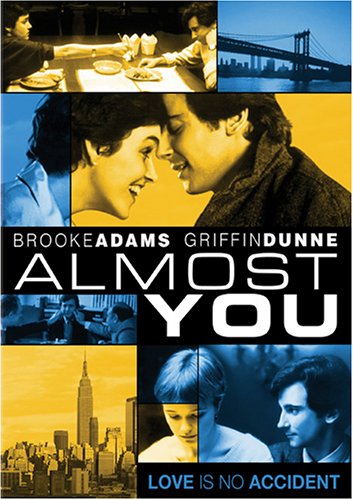
On its surface, Almost You is potentially interesting. Considering the mid-‘80s production, you have Griffin Dunne, about to appear in Scorsese’s After Hours, but had already appeared in An American Werewolf in London. In this film, he is married to Brooke Adams, a.k.a. Mrs. Tony Shalhoub (Monk), but before that, had appeared in Terrence Malick’s Days of Heaven, and had her own experiences in horror, appearing in The Dead Zone. As husband and wife, Dunne’s ...haracter Alex feels rapidly disenchanted with their marriage, and says so just before they are about to leave on a trip to Erica’s (Adams) parents.

Synopsis

Peter Sellers turns in a performance that opens at high do and never looks back as a lunatic psychiatrist. He is treating Peter O’Toole, a man who wants to be faithful to his girlfriend (Romy Schneider) but cannot say no to the innumerable women who throw themselves at him. Into the mix comes Woody Allen, who, unsurprisingly, plays a sexual loser.

Synopsis

After the death of a popular commander, the stern and inflexible Richard Widmark steps in to take charge of a group of a Navy underwater demolition team. His command gets off to a rocky start, as he is seen as heartless and unwilling to take risks himself. But he eventually proves himself to his men (and old hand Dana Andrews), just in time for a particularly dangerous mission.

Synopsis

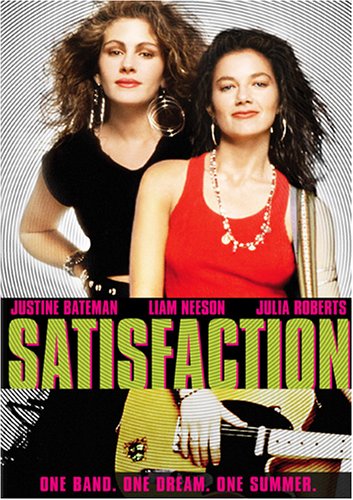
Satisfaction is a transitional project in so many ways. This was one of the first American films of Liam Neeson, who would go on to mildly excite the world as Henry Ducard in Batman Begins. Before Mystic Pizza came out, the world was exposed to Julia Roberts as Daryle.

Synopsis

Victor Mature is an ex-con driven by financial desperation to take part in a jewel heist. The job goes wrong, and he is nabbed. He’s sent to prison, and agonizes over his family. When he’s double-crossed by his lawyer, he agrees to DA Brian Donlevy’s deal and testifies against psychotic hoodlum Richard Widmark. He gets out, and starts his life over, but then Widmark beats the wrap, and is on the prowl for revenge.

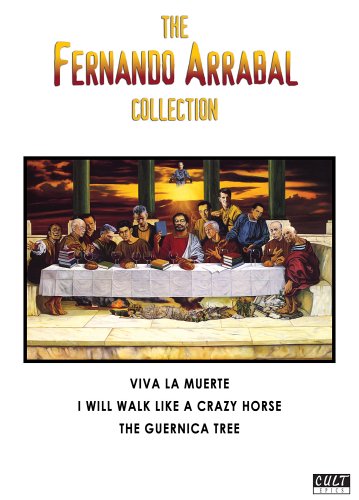
Viva La Merte (1970) was surrealist playwright and all-around provocateur Fernando Arrabal's feature film debut. Set during the aftermath of the Spanish Civil War, this is the deeply autobiographical (no matter how bizarrely presented) story of the a young boy whose father was betrayed by his mother to the security forces of the Fascist General Franco. Oedipal nightmares, extreme violence and brutal eroticism are present in force.These elements are present in the other two films as well. I Will Walk Like a Crazy Horse (1973) has a man suspected of killing his mother flee into the desert, where he falls in love with a holy man, and when the two return to society, our hero is disgusted by what he finds.

The Guernica Tree (1975) is arguably the most brutal of the three films, which should come as no surprise, given the subject matter. We are back in Spain again, during the Civil War, and the action shifts from a backwards provincial town to the doomed Gernica.

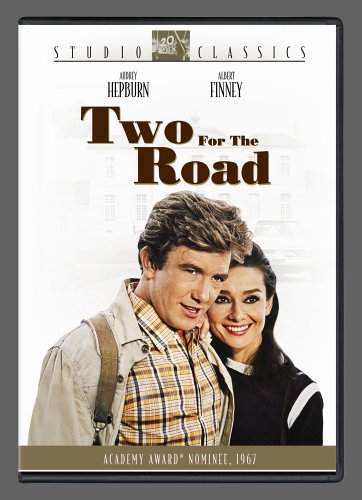
Audrey Hepburn and Albert Finney are a couple whose marriage appears to be reaching its end. They travel through France, which was the scene of so many other memories, and they (and we) experience, through interlocking flashbacks, the history of their relationship.From the moment the animated credit sequence and Henry Mancini score begin, one is clearly watching a Stanley Donen film from the peak of his career (the presence of Hepburn is yet another reminder of Charade from just a couple of years prior). The flashbacks-within-flashbacks structure might initially seem daunting, but the film is light on its feet, and is never confusing. Finney's character is sufficiently cranky even in the early stages of the relationship that one might be forgiven for wondering what Hepburn ever saw in him, but the scenery is pretty and the dialogue zings.

Audio

Synopsis

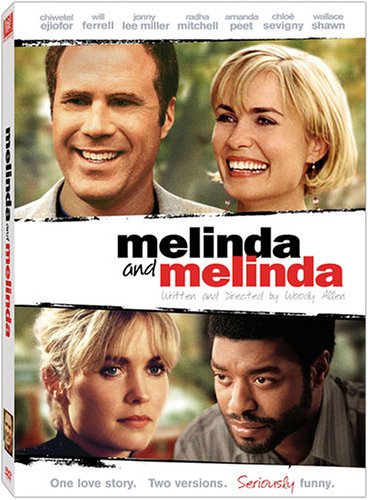
Two playwrights argue over whether life is inherently tragic or comic. To illustrate their point, they each tell the tale of Melinda (Radha Mitchell) who unexpectedly bursts in on a dinner party, creating all kinds of romantic complications. The film then alternates between the two stories. The set-up could hardly be more utterly Woody Allen, simultaneously pretentious and shallow. One story is comic (with Will Ferrell taking Allen’s usual role), the other is tragic, but you’d be hard-presse... to tell the difference. All the characters spout the same kind of incredibly stilted and self-conscious dialogue, which is neither funny nor revealing. The result is a halfway interesting idea with a talented cast outgunned by their God-playing director. Based on the evidence at hand, it turns out that life is, in fact, inherently boring.

This release is identical in every respect but one (the colourization) to the previous Studio Classics edition, and so what follow below is the same review, with an additional note about colour.

Synopsis

Synopsis

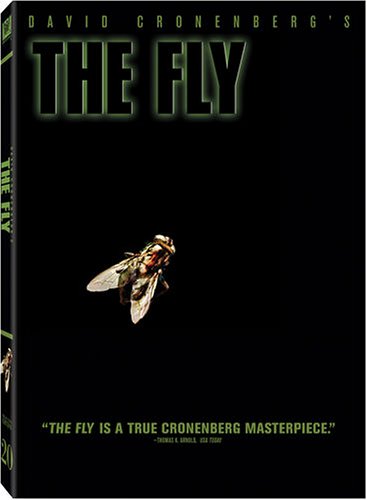
Seth Brundle (David Goldblum) is on the cusp of perfecting an functioning teleporter, a device that will transform the world. Eager to share his creation with someone, he strikes up an acquaintance with science journalist Geena Davis. She is initially skeptical, but is soon converted, and as the work progresses, the two fall in love. Then, in a fit of misplaced jealousy (he believes that Davis is seeing ex-boyfriend John Goetz), Goldblum teleports while drunk, not knowing a fly is also in th... machine with him. Their DNA is fused, and the man slowly starts transforming into a fly, his relationship and his identity crumbling along with his flesh.