Dolby Digital Mono (Spanish)

War movies, in my opinion, are one of the rarities in film, where the most recent pics are usually the best ones. I need only cite films such as Full Metal Jacket, We Were Soldiers, and Saving Private Ryan to argue my cause effectively. But that doesn't mean all of the older ones were bad. Most were because they took more of a silly ra-ra viewpoint in relation to the reality of war. They didn't show the nasty details because, in many ways, they were recruiting tools. But Decision Before Dawn> was one earlier work, which took chances with its dramatization. This 1951 film refuses to jump on any bandwagons, instead telling a captivating, and sometimes tragic, story about a strange kind of hero... one that comes not from within our own ranks, but from those of our World War II enemies. In fact, the main character of Decision Before Dawn is a captured Nazi soldier, who makes the decision to spy for the U.S. army - not for freedom, but redemption.

It's no wonder a film such as this was nominated for the 1951 Best Picture - and it's also no surprise it didn't win. This type of subject matter has never been able to avoid controversy, and the Academy hates to honor controversy. However, director Anatole Litvak's handling of the George Howe novel Call It Treason makes for an exciting and tasteful motion picture that was sure to win over audiences - even in its time - with the tale of Lieutenant Rennick, a German POW, who has agreed to go back to his home country and betray his old side to the Allies. Tension builds as Litvak plays with the possibilities of trust. Neither the Allies nor the Nazis know what to think of Rennick, and for a time, neither do we. But as the film progresses, Rennick shows there may be more to his decision of assisting the Allies than simply the proverbial "get out of jail free" card. He's one well-drawn character at the center of an important motion picture, which dared to paint an uglier face on war, and call in to question the line between treason and heroism.

Limitations of budget and social conventions of the time prevent Murder, Inc. from being all it can be - still, the performances, and the captivating dynamic between hero (Stuart Whitman) and villain (Peter Falk) result in entertaining fare, so long as this film is allowed to be a movie and not a documentary. Whitman leads a fine cast as the mob lackey, who is constantly manipulated by a tough-talking contract killer. Part of the real life syndicate of hit-men "Murder, Inc.," Falk's baddie steals every ...cene he's in throughout this early career-making performance. He smacks of a young Brando, and comes across as just the type of ice-blooded villain, which gave the 1930's Brownsville mob its infamy. He'll lie, cheat, and steal, to get what he wants - whether it be conning Whitman's assistance to off a stale nightclub comedian (Morey Amsterdam), or brutally raping Whitman's wife (May Britt). And by "brutally," I mean "brutally for the times." The word "rape" is never used, and the explicit nature never goes beyond an aftermath scene, where a disheveled Britt anguishes, "Those filthy hands. Those dirty fingers."

A film like this could be revisited to great effect by a capable director like Scorcese. In fact, stylistically, Murder, Inc. shares many attributes with Scorcese's superior mob epics. It's the kind of film that influences better filmmakers to make better pictures - but I would only use the word "classic" to describe its age, and not its quality. For one, the narration is totally out of place, and - quite obviously - the result of a receding budget. The first bit of narration doesn't come into play until we're past the first act. And when it does finally appear, all we hear is a droll voice with zero personality. We only learn later the narrator is a character in the film - the heroic cop (Henry Morgan), who takes on the entire mob organization. Rather than give the film a documentary effect, the narration serves only to clumsily fill in cracks, where story should be. "Show, don't tell," this isn't. Another weak point is how the best element is often neglected - the Whitman-versus-Falk conflict with Britt caught in between. It seems like every time this story element gets rolling, we cut away to a less interesting sidebar. And when the angle is finally resolved, it happens with such anti-climax that we wonder why we even cared at all.

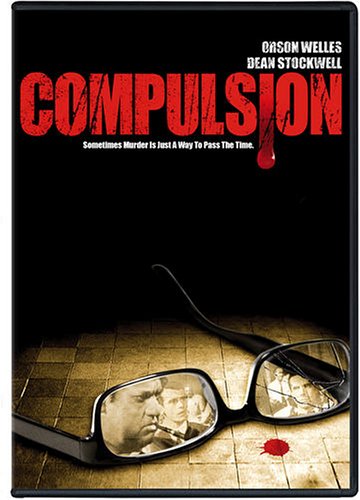
This film’s slogan was “Sometimes murder is just a way to pass the time.” A better way to fill up those empty minutes would be to watch this film. The film is based on a highly publicized real life case out of Chicago. A play was produced in the 1920’s. A book would also be written by Meyer Levin, which is the source material for this film. The story would not end there. It would be made at least twice more, including Hitchcock’s first color film, Rope. The case was perhaps made famous as much for the presence of Clarence Darrow as the defense attorney than for the senseless act of violence it represented.

A college classroom philosophical discussion opens the film and sets the stage for the crime. Judd Steiner (Stockwell) and Artie Strauss (Dillman) are intrigued by the Nietzchean concept of a superman. We’re not talking Clark Kent here. The idea is that a man of superior intellect could, and perhaps should, move through the world acting without the constraints of remorse or common law. These two guys see themselves in this role and commit a brutal murder as a sort of experiment. There really isn’t much of a whodunit. The prosecution soon stumbles upon a pair of eyeglasses that ultimately bring the two men down. Enter world renowned lawyer Wilk (Welles). He quickly finds he can’t argue innocence, so he diverts his attention to keep the young boys away from the gallows. It is in the trial version of the film that interest mounts. Welles delivers one of his best and yet most subtle performances here. The role is akin to Marlon Brando’s in A Dry White Season. His passionate closing statement is likely one of the cinema’s longest monologues.

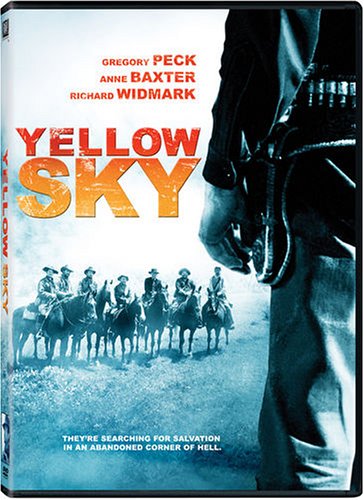
Yellow Sky is one of those near classic Westerns from 1949. For decades the film has flown under the mainstream radar, only to finally be rediscovered on DVD. Gregory Peck is an unlikely choice to play the lead role. Stretch heads a band of thieves that strike from town to town hitting usually banks. The film wastes very little time getting started. We see the gang set up, and soon pull off, one of these heists in the first five minutes. The gang is quickly chased out into the unforgiving desert sun of the Western badlands. It seems the band is done for in true western poetic justice until fortune once again smiles upon them. Fortune in this case is the ghost town of Yellow Sky. Here only an old prospector (Barton) and his young granddaughter (Baxter) reside. It seems the old man’s been hording some gold in the hopes of bringing Yellow Sky back to her glory days. Of course, Stretch’s gang has other plans. The remainder of the film slows down as the gang attempts to pry the gold from the old timer. Stretch has a change of heart, and this redeemed Stretch is less of a stretch for Peck. Here he begins to fit the part. Including the obligatory romance, the film becomes all too predictable. Harry Morgan, billed as Henry Morgan, makes a nice addition to the gang of outlaws. The film was remade in 1967 as The Jackals with the action moved to Africa.

Video

Sometimes, I get a bit of an impulse buying urge. And a while back, I went and got a spiffy Philips 727 DVD player (which I've since replaced with a Toshiba upconverting unit). Sure, it's not a higher end player or anything, but for $80 and a hack using the remote control, it's now become a decent multi-region player. So after testing out a friends borrowed Region 2 disc to see if the hack worked, I picked up a couple of movies from eBay and Amazon.UK, so I'll do the occasional Region 2 review.

For whatever reason, there are instances where the US gets yanked by the shorthairs with the occasional DVD release. If you were going to buy this movie, would you want the release that just has an anamorphic transfer and 5.1 soundtrack? Or would you want the one that has the anamorphic transfer and 5.1, along with two commentaries, as well as a 2nd disc of short films, deleted scenes and documentaries? So that's what I did. And my wife, bless her heart, is patient with me through all of this. She even watched this with me over the weekend and liked it. I've still got the bruises on my arm from where she squeezed hard.

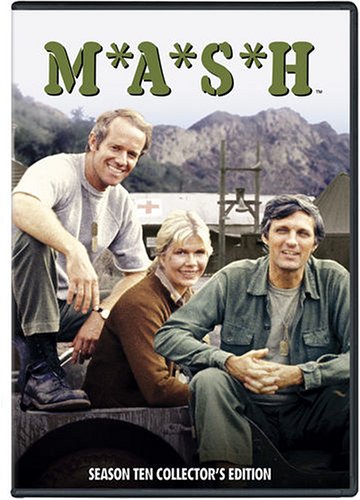
It’s true that MASH was winding down by year 10. Everyone involved already knew that the next year would be the last. This is what separates the true professionals from those in it for the money. Instead of dragging out the concept until there was virtually nothing of quality remaining, the entire cast and crew decided it was time to finish on top. A lot of folks would have simply gone through the motions once the end was in sight. Instead, these guys kept pouring it on. The stories and acting in this season are just as good as in any other. The saddest thing about this release is that there is only one more to come.

For the first time in a while there were no major cast changes in this season. All of the characters from season 9 remain. I think if anything can be said about this particular year it might be that the characters have become a bit more vulnerable. Almost every character comes into a story where they are left questioning themselves. For Hawkeye it is mostly philosophical. For Potter and Winchester there are real questions of limitations. For Houlihan there are a ton of emotional issues when she is stranded on her birthday. BJ has to deal with changes in his wife. Klinger has a close encounter with the spirit of a dead soldier that causes his own inner reflection. Finally, Father Mulcahy has to decide a huge moral issue in one of his best episodes. An AWOL soldier seeks sanctuary in the mess tent after Mass.

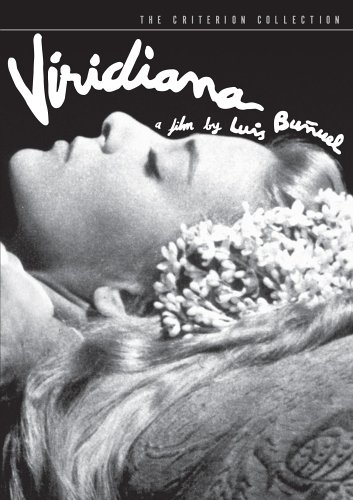
As is the case with many of Criterion's releases, Viridiana is a film that was quite controversial upon its original release, and to some extent, still is today. The film's namesake is a young woman who is just a week away from taking part in the investiture ceremony, her convent receives a letter from her Uncle, who sends his regrets that he will be unable to attend the event. The convent's Mother Superior sends Viridiana to see this Uncle, and that's where the trouble begins.

The Uncle is a single ol... man who lives in self-imposed isolation, save for a servant and the servants daughter. Once Viridiana arrives at his estate, she discovers that the Uncle has some plans for her that will certainly not agree with her faith. While most films see this as enough of a plot to complete a film, this setup is just the tip of the iceberg here.

Synopsis

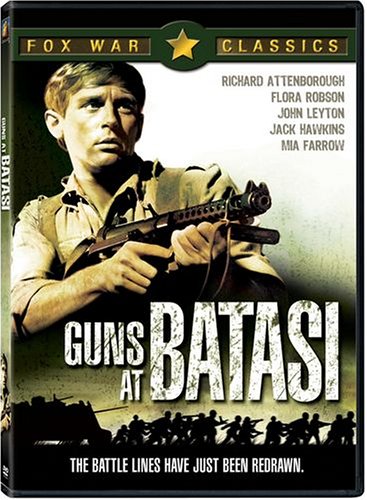
The setting is a recently decolonized Africa in the early 60's. The British army still has a presence here, but is trying no to interfere with domestic politics. As the unrest reaches the boiling point, however, the army is ordered to turn command over to local commanders. No sooner is this done that a coup turns everything upside down, and the African captain of the local garrison is captured by mutinous troops. He escapes and finds his way to the officers’ mess. There, Regimental Sergeant ...ajor Lauderdale (Richard Attenborough) determines to protect the man, no matter what grim odds mount outside.

Synopsis

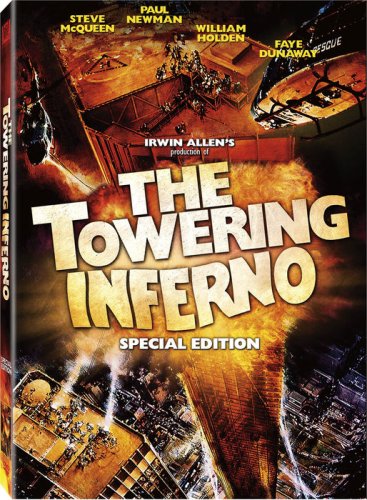
The Who’s Who of San Francisco is gathering for the grand opening of the Glass Tower, the world’s tallest building. The architect, Paul Newman, is disturbed by what appear to be corners cut in the electrical installations by Richard Chamberlain, and sure enough, a fire starts on the 81st floor. Fire Chief Steve McQueen is soon on the scene, but the situation deteriorates rapidly, and hundreds of celebrants on the top floor are at risk of fiery death.

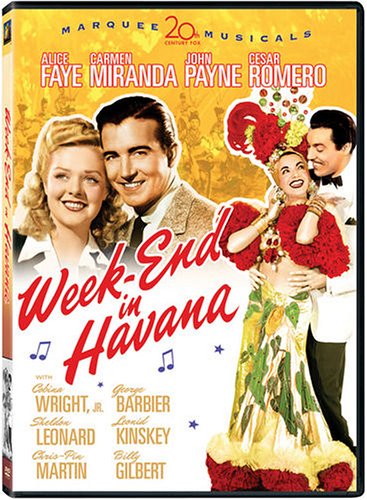
Week-End in Havana manages to entertain, but not by way of its musical numbers. For one, the songwriting is relatively lame and dated. Also, singing isn’t a forte for any of the performers. While Carmen Miranda certainly has a screen presence and a dynamic personality, her voice remains scratchy and flat – and she’s the best vocalist the film has to offer. But that doesn’t condemn it by any means. With films such as these that manage to function well as straight romance, the inclusion of musical numbers is mor... annoying than anything. Of course, without the numbers, Week-End would barely have cracked the one-hour running time mark. But at least all that remained would have been worthwhile. Once you do manage to cut through the padding of song-and-dance routines, the story provides a few nice surprises in the viewer’s journey. Instead of “will-they-or-won’t-they,” the film focuses on the question of “how will they?,” and it keeps things intriguing along that pathway.

John Payne plays leading man to Alicia Faye’s leading lady… but it’s not easy to tell this at first. Payne seems happy in his engagement, and Faye’s department store associate persona feels more than a little pathetic. She’s traveling to Havana alone, using Payne’s cruise liner company as her means of transportation. After an unforeseen occurrence ruins her trip, she plays hardball with the liner to get a free trip to Havana. But she won’t sign the waiver, which exonerates the company of any damages, until her vacation is in the bag, which means Payne has to come along for the ride. Contrived? Yes, but it’s also fun to see the complications that wait. Week-End in Havana is pure escapist fun in the nostalgic Jimmy Buffett sense of the words, and I’m sure no doubt influenced the great troubadour of beach and party tunes in his own professional journey.