DTS (English)

By 1948 John Huston had proven his ability as a director with just his first film, The Maltese Falcon. Since then he had returned to Humphrey Bogart in Across The Pacific and again in The Treasure Of The Sierra Madre. Each of these films presented the star in very different surroundings and situations. His Dobbs character here couldn't have been any farther from his Sam Spade character. But in each case Huston relied on his leading man to dominate the screen with his trademark mannerisms and his ability to liven up even the most cliché of dialog. Now Warner is bringing these classic Huston and Bogart collaborations to Blu-ray, and it's about time.

Dobbs (Bogart) and Curtin (Holt) are down-on-their-luck men trying to make a living in Tampico, Mexico during some rough times. Dobbs has taken to street hustling for enough to buy a meal or a shave. The two try working on a work crew but get ripped off by the foreman. It seems as though there is no way for the two men to get ahead. They hear a story from old-timer Howard (Huston) who regales the two with stories of striking it rich prospecting the mountains for gold. He claims to have a nose for finding the stuff in remote areas that no one else would think of looking. All he needs is a stake. When Hobbs hits a small lottery, he combines his money with Curtin’s and the three buy the supplies they need to set off after the mother lode. In what turns out to be the worst luck in the world, the three find a strong deposit and pull out over a hundred thousand bucks worth of gold dust. The success leads to suspicion, particularly for Dobbs who no longer trusts his two partners. They have to defend themselves against bandits and eventually each other in order to get off the mountain with their "goods" as they call the gold, or even their lives.

"General George S. Patton. His bold attacks are legendary. See the war the way he saw it and ride along with his hard-fighting troops as they battle their way through World War II. On this 360-degree battlefield, Patton's enemies could be anywhere and everywhere. There's nowhere to run, when the war is all around you."

Patton 360 does for the European theatre of World War II what Battle 360 did for the fight in the Pacific. Just as in that earlier program, we are brought into somewhat intimate contact with one of the most prolific and successful fighting corps in that part of the war. Patton was a larger-than-life general who often got into his own way more than the enemy ever did. He was nicknamed Old Blood & Guts based on a standard speech he delivered when addressing the troops. He was the most successful general in the European war. From Normandy he pushed across France and into Germany liberating towns along the way. The French citizens loved him and considered him a hero. His troops respected him and drew confidence from him, even if they did not necessarily love the man himself. He didn't suffer what he considered foolish behavior very well. He found himself suspended and out of the war for nearly a year when he slapped two battle-fatigued soldiers with whom he had lost patience. However, it would be impossible to discuss the Great War without spending some significant time on George S. Patton. This series does just that ... and with a certain flair.

A lot of musical acts have broken up over the decades. Some of those breakups have included public feuds and plenty of hostility between the members. You would be hard-pressed to recall a breakup as public and hostile as when the Everly Brothers called it quits. If you think Glen Fry's "When hell freezes over" remark was pretty definitive, you should have been at the final Everly Brothers concert in 1973. The argument occurred on-stage in front of a live audience. Harsh words were exchanged, and a guitar got smashed. When Phil Everly walked off the stage to leave Don to finish the show alone, it would not only be the last time the brothers would appear on stage together in a decade. They would barely even speak to each other throughout most of that time. Lots of broken bands get back together for reunion tours and shows. But if you had to lay odds, the smart money would have bet against this brotherly duo ever singing together again. But, in 1983, a full ten years after the split, the smart money lost. The Everly Brothers reunited for a special concert at London's Royal Albert Hall in front of a sold-out crowd that included a ton of stars that credit the brothers as their own early inspirations. The cameras were on hand to capture this historic moment. Now you can own it on DVD.

Unlike many groups, the Everly Brothers were more than just a performing and writing duo. They sang together, often sharing the same microphone. Part of the act was the intimacy that the boys displayed in their concerts. It made those harmonies sound just that much tighter. So the question going into this performance was rather obvious. How would the acrimony and the years effect that style of performance? You would be very surprised to find that they didn't appear to miss a beat. This is one of those moments where it appears time stood still for those ten years and the boys managed to pick up at the moment before the famous fight. And it wasn't just a one night wonder. The brothers went forward after that night in London and continued to perform and record for over 20 more years. While they never found themselves back on top again -- the times had, of course changed -- the brothers continued to pack concert halls all over the world.

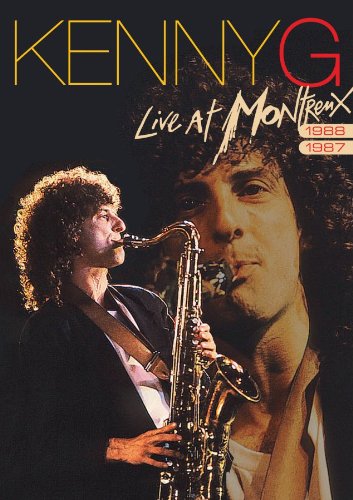
In 1987 Kenny G had released three albums already, but most of the world still didn't know who he was. He was already an accomplished musician who had played as part of Barry White's orchestra. He had dreams of taking his talents a bit further than that. But it's incredibly hard to get on the pop charts with instrumental music. It doesn't happen very often. That's not to say that it's unheard of. There have been a few instrumental pieces and musicians that have found huge success riding the international pop charts. Up until now Kenny G could not be counted as one of them.

All of that changed with the release of Duotones and the single Songbird. Both captivated the mainstream audiences and began to garner serious attention for the sax player. One of the results of that new-found recognition was an introduction to the world famous Montreux Jazz Festival. You had to show something to be invited to that stage. Kenny G appeared there in both 1987 and 1988. This DVD captures both of those performances. Fans won't need much of an inducement to pick up the release. It was an historic moment for the musician and his mostly Seattle-based band. It was the introduction of Kenny G to the world stage.

"USS Enterprise, aka The Big E, a fighting city of steel. She is the most revered and decorated ship of World War II. On this 360-degree battlefield, where threats loom on the seas, in the skies, and in the ocean depths, The Enterprise's enemies could be anywhere. Now follow this sea-bound band of brothers through four years of hell. From Pearl Harbor to the doorstep of Japan, there's nowhere to run, when the war is all around you."

"We are pioneers and trailblazers. We fight for freedom. We transform our dreams into the truth. Our struggles will become a nation."

I was really looking forward to this release. From the moment I was made aware that it was going to be arriving here for review, I made a mental note to put it at the top of my viewing list. Fact is, I'm a history junkie, particularly American history. I taught the subject in AP and honors classes along with American Government and Law for over seven years. The History Channel is also one of my favorite places on the dial. There are many thought-provoking and informative shows to be found there to help you explore almost every aspect of history. I truly expected this to be one of those milestone releases. Unfortunately, it isn't.

Johnny Handsome is based on a rather obscure and dated novel called The Three Worlds Of Johnny Handsome. Walter Hill must have found something in the dated material that attracted him to the project. Unfortunately, there wasn't much to attract audiences. The film made a very paltry $7 million at the box and has been little heard from since. In spite of a solid cast and a script that does tend to move along at a nice clip, the film has never really found an audience and is somewhat of a surprise to be found on Blu-ray.

Johnny (Rourke) is a high-level hood who goes by the name Johnny Handsome in reference to extreme deformities in his face. He looks almost like tElephant Man. His deformity even affects his speech. He's almost indecipherable when he talks. He's involved in a big takedown of a coin shop that has some valuable pieces in its collection. He and his crew take down the store, but something goes very wrong. Rafe Garrett (Henriksen) and his girl Sunny (Barkin) betray the rest of the team. They end up running off with the loot and leave the rest of the crew dead. All except for Johnny, who managed to dodge the gunfire. All of his friends are dead, and Johnny's left behind to take the fall...and the prison sentence. Still, Johnny won't rat on the two that betrayed him and got away. But Rafe's not taking any chances. He has Johnny stabbed in prison. Once again Johnny's luck holds up, and he manages to survive Rafe's wrath. In the prison hospital ward, Johnny meets Dr. Fisher (Whitaker), who has an experimental facial reconstruction procedure he'd like to try out on Johnny. It requires having his entire skull reconstructed. In return, Johnny will get a new identity to go with that new face.

"At the top of the world, there's a job only a few would dare. Last season the dash for the cash was fought on the smooth playing field of Canada's Arctic ice. This season, two old pros join four of America's bravest truckers to tackle the continent's deadliest ice passage. Just when you thought extreme trucking couldn't get more dangerous, Ice Road Truckers takes on Alaska."

It was the peak of the 1970's and CW McCall was teaching ordinary people like us about Cabover Petes with reefers on and getting by those smokeys. The man practically started a new genre of music with the hit song Convoy. The song was so popular that the back-up band used their cut to start a little project of their own. They became Manheim Steamroller and used the cash to cut their own music. The movies started giving us things like Smokey And The Bandit. Truckin' was in fashion, and a good time was had by all.

"Oh, I've seen fire and I've seen rain. I've seen sunny days that I thought would never end. I've seen lonely times when I could not find a friend. But I always thought that I'd see you again."

After nearly 40 years since they had worked together, James Taylor and Carole King finally see each other again, at least on stage. The two worked together for about two years from 1970 to 1972. They shared each other's songs and played off and on sharing the same musicians as friends and backup band. The era was an important time for each of these artists. It was the time when they were working on what would become their breakout albums and stardom down the road. For Carole King it was her Tapestry album, and for James Taylor it was Sweet Baby James. Part of the memories they created together was a series of gigs at L.A.'s famed Troubadour Club in 1971. This release finds the duo once again back at the Troubadour Club, only 40 years later, 40 years older, and 40 years wealthier. It's a throwback to an earlier time both for these musicians and the fans that drove them to their inevitable stardom.

"If you can control the sky, you can control the world."

With the current remake of Ray Harryhausen's Clash Of The Titans, is it any real surprise that there might be a resurgence of interest in the gods and goddesses of Mt. Olympus in Greek mythology? The Greeks created an entire family of deities to explain the various natural elements and phenomena around them. There were gods of the sea and of the underworld. There were even gods of wine and music. It was believed that these supernatural beings sat high on the highest point of the Greek island nation, interfering in the affairs of men to settle their own petty squabbles and arguments. Being all-powerful was somewhat boring, and so these beings, with very human qualities of greed, jealousy, and spite, played an endless game with the lives of the mere humans for their own entertainment and amusement.