DTS HD 5.1 MA (English)

When Wes Craven delivered his first Nightmare On Elm Street film back in 1984, there wasn't much expectation for the film to do anything but deliver a little profit for the new independent studio New Line Cinema. The film did quite a bit better than that. It made the small studio into a player in the industry with the budget to make mainstream films that would have never been possible if not for Craven's little Nightmare. You could say that The Lord Of The Rings owes its very existence, at least in the form of the Peter Jackson films, to Freddy Krueger.

For most people in high school, Romeo and Juliet by William Shakespeare is required reading. Sometimes more than once. Somehow, whenever it came time to read aloud in class, I always ended up with the part of Romeo. It certainly wasn’t for my striking good looks but apparently for my charming voice. As a result, I remember most of Romeo’s part to this very day. But would I be able to enjoy a fairly recent adaptation of Romeo and Juliet directed by Baz Luhrmann? We shall see.

Anyone who is looking for a direct sequel to the 2008 sleeper hit with Kiefer Sutherland or even a connection to the original Asian ghost film might tend to be disappointed in the direct-to-video Mirrors 2. This is absolutely one of those films where the name is used merely because of its franchise value, and the film's associations are mostly just a few familiar names. Add the same basic idea of a haunted mirror at the center of it all, and you pretty much have all of the connections this movie makes to either of the original projects. With that said, there is a bit more to like about Mirrors 2 than you might suspect on the surface.

A Joss Whedon universe is always a strange and fantastical place to visit. It doesn’t matter if it’s populated by vampires and demons or space cowboys. If Whedon’s name appears anywhere on the credits, you know you’re going to be in for one hell of a ride. It’s been a little while since Whedon’s been back in the saddle. His most recent series, Firefly, was fraught with problems with the network. It was very badly handled, and the show died an undeserved swift death after just a few episodes.

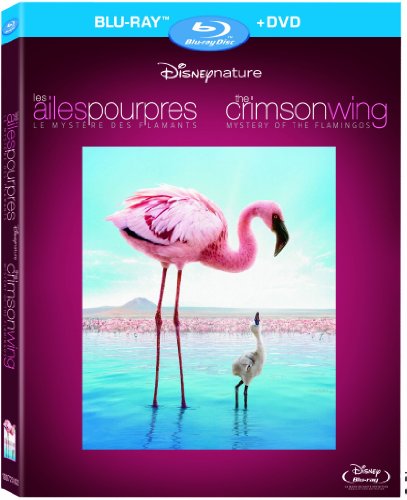
"The flamingo is said to be the inspiration for the crimson-winged Phoenix, the ancient symbol of transformation and rebirth. At the end of its life, the Phoenix is consumed by fire. It is then reborn from the ashes."

In one of the more specific full-length documentary features that I've seen in a long time comes Disney Nature's The Crimson Wing. Here the focus is on one species of bird.

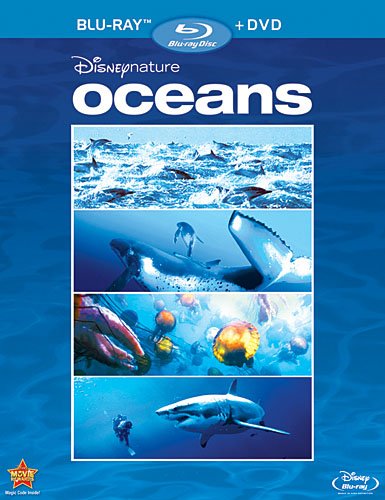
"A boy comes running up, and he asks: 'what exactly is the ocean?' 'What is the sea?' You could hit him with a lot of statistics and Latin names. But the answer isn't something you'll find in a book. To really know what the ocean is, you have to see it for yourself. You have to hear it. And taste it. You have to feel its power. To really know the ocean, you have to live it."

And live it you will with Disney Nature's latest entry into their award-winning series of natural documentaries. Walt Disney Studios is no stranger to the world of nature.

The album, Holy Diver was released on May 25th, 1983. It was Dio’s best work featuring two singles that would hit the American top 40. It would actually take a full year for the album to hit Gold and almost 6 years to reach Platinum status. However, Dio remains popular today and is still listened to around the world. With that said, it is my pleasure to bring you the last recorded concert of one Ronnie James Dio as he plays the Astoria Theatre in London, England.

"Born with a steering wheel in his hand and lead in his foot, he is the Nightrider, cruising at the speed of fright! This is the Nightrider, and we ain't never coming back. I'm a fuel-injected suicide machine..."

Long before Mel Gibson's troubles involved real-life police officers and a bad case of "foot-in-mouth disease” that has made him his own worst enemy, Mel had more dramatic enemies to deal with. The unknown Australian actor was only 22 years old when he starred in the Outback production that would put both Mel Gibson and his native Australia on the filmmaking map.

Two friends – Marie and Alexia– head out to the country home of the latter’s parents. In the middle of the night, a killer breaks in, slaughters the family, and makes Alexia his prisoner. Marie is locked in a battle to save her friend and not become a victim herself.

Of such simple storylines are horror classics made. Leave it to the French, who, after all, invented the horror movie, to pump such gloriously bloody life back into the cinema of atrocity. After an early bit of extreme nastiness in the opening minutes of the film, the movie gets down to serious terror and atrocity barely a quarter of an hour in, and from that point on never lets up.

"I never wanted a war. I just wanted people to know what happened here. 98 men, women, children ... my husband. And yet no one believed. They rebuilt the town. Life went on. But I was already dead inside. I never wanted a war."

In October 2007 30 Days Of Night was unleashed at the box office to less than stellar numbers. In fact, the film took in only $39 million off of a $30 million budget. That's not usually a good sign for any potential franchise. But the film was received very well by the folks who did like it. I was one of those people. I found myself defending the film to a lot of others who were obviously not so impressed with the take on the vampire legend.