Posted in: Disc Reviews by David Annandale on July 8th, 2007
Synopsis
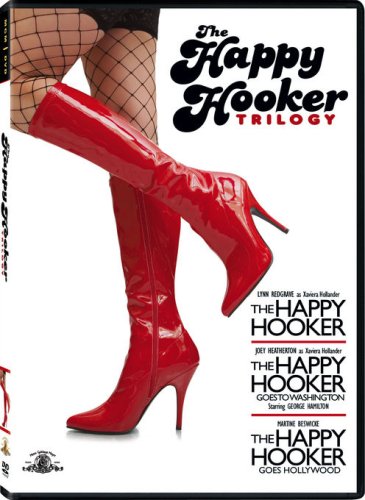
Whoah. MGM if really digging into the vaults to bring us these. Xaviera Hollander is not much more than the answer to a trivia question today, but for a while in the 70s, she had enough profile to warrant three films based first on her book, then more generally on her persona. Lynn Redgrave (!) plays her in The Happy Hooker (1975), which follows her arrival in the States and cheerful discovery of the life she was born, it seems, to lead. Mysteriously rated R, this is a film that could...have played without cuts on prime time TV twenty years ago. A film all about sex with no sex in it. Makes you long for Joe D’Amato and Laura Gemser to arrive and save the day.
Posted in: Disc Reviews by Archive Authors on January 31st, 2007
Romeo and Juliet is a classic tale that has been told and re-told over and over again. It is generally accepted that the definitive film version of Shakespeare's story of lovers' twisted fate is the 1968 version by Italian director Franco Zeffirelli. Rather than attempt to best this effort, more recent film adaptations have decided to modernize the story. Baz Luhrmann tackled it with Claire Danes and Leonardo DiCaprio using all the original dialog, but ultra modern wardrobe, sets and music. While some critics myself included) fell in love with this fast paced adaptation, others were appalled.
This time around, the story is told in a Spanish language film from Mexican director Fernando Sarinana. You know the plot. This time, the divides between the two star-crossed lovers are not political but economical. Our Juliet is a very wealthy girl, while "Romero" is a poor but good boy who has to work to get by. I really wanted to like this movie, but I just couldn't do it. This is the same lifeless high school girl romcom crap that you find here in the states, it just looks worse.
Posted in: Disc Reviews by Archive Authors on June 7th, 2006
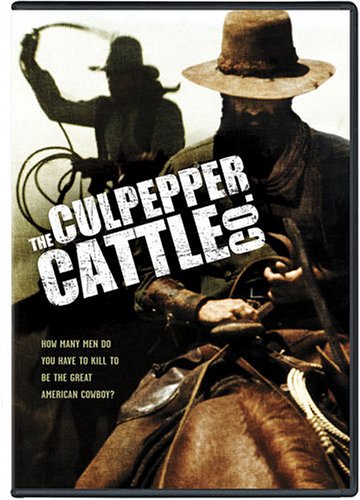
The Culpepper Cattle Company was a surprise for me, and one that I looked forward to immensely. I love a good western, and I'm particularly fond of anything post-Leone. A western doesn't have to be spaghetti, however, for me to like it. I just feel that, for all Sergio's overblown proportions, he did instill an accurate degree of nastiness in his films, which I'm sure was prevalent in that time of American history. Once Sergio came, westerns grew up, even if they were playing closer to the American style of fi...mmaking. Gone were the days of the fired gun, the clenched chest, and the instant kill. A similar renaissance affected the war film genre with the arrival of Saving Private Ryan, and I feel the recent war-time efforts have been much the better for it. After the glut of Saturday morning western chicanery found in John Wayne's early films and others of that period, it was a relief to see westerns on the silver screen with the right amount of intensity. But unfortunately, all good things must come to an end. And The Culpepper Cattle Company falls somewhere in that descent.
That doesn't mean the film is without merit. I enjoyed parts of it very much. It is, most of the time, an interesting coming-of-age tale, as it follows a young boy with a dream. That dream? He wants to be a cowboy. But as the film progresses, he gets a bitter taste of what it means to fulfill that dream. The boy (Gary Grimes) tags along with a gang of cut-throat cattlemen on a drive to Colorado. As they trek westward, the harsh realities of the prairie - be it man-against-man, or man-against-nature - start to set in. Unfortunately, it doesn't get any more interesting than that. One event after another occurs and forms an episodic monotony instead of a coherent storyline. Still, things do heat up for an exciting and well-arc'd conclusion. Where the character ends up from where he started out is a noble writing effort; but everything it takes to get him there is the dull part. The strongest aspect of the film is the ensemble of veteran character actors, led by Billy Green Bush and Bo Hopkins. These are cowboys from the days when all cowboys were straight, and any suggestion otherwise would get you punched in the teeth faster than you could say "Brokeback Mountain." While they don't seem like very open-minded chaps, they do represent a rugged nature that would have been essential to their way of life.
Posted in: Disc Reviews by Archive Authors on April 29th, 2006
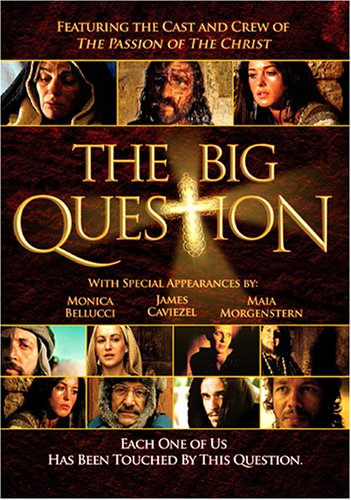
When The Passion of the Christ was released on DVD several years ago, I didn't buy it, opting instead to wait for the strongly-rumored special edition release to come. Here we are almost three years later, and no such release is being discussed. The funny thing is, The Big Question is essentially an extra for that non-existent DVD package. This documentary, which discusses questions of faith, was shot on the set of The Passion of the Christ, amongst the actors and artisans that were gathered from all parts of the planet for the production. This is a wonderful idea, and it makes for a great documentary featurette to support the film, but I just don't feel that there is enough here for a stand-alone release.
Various people from various cultural and religious backgrounds were asked the same set of questions about who God is and how He (or She, as the film asks) relates to us, and us to Him. The resulting comments serve as something of a glorified "man on the street" view of religion. While there were some religious scholars included, the end result is a muddled collection of opinions that really don't go very far toward answering many of the questions raised by the film's directors.
Posted in: Disc Reviews by Archive Authors on March 3rd, 2006
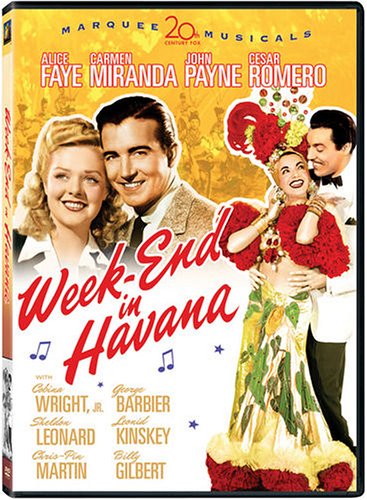
Week-End in Havana manages to entertain, but not by way of its musical numbers. For one, the songwriting is relatively lame and dated. Also, singing isn’t a forte for any of the performers. While Carmen Miranda certainly has a screen presence and a dynamic personality, her voice remains scratchy and flat – and she’s the best vocalist the film has to offer. But that doesn’t condemn it by any means. With films such as these that manage to function well as straight romance, the inclusion of musical numbers is mor... annoying than anything. Of course, without the numbers, Week-End would barely have cracked the one-hour running time mark. But at least all that remained would have been worthwhile. Once you do manage to cut through the padding of song-and-dance routines, the story provides a few nice surprises in the viewer’s journey. Instead of “will-they-or-won’t-they,” the film focuses on the question of “how will they?,” and it keeps things intriguing along that pathway.
John Payne plays leading man to Alicia Faye’s leading lady… but it’s not easy to tell this at first. Payne seems happy in his engagement, and Faye’s department store associate persona feels more than a little pathetic. She’s traveling to Havana alone, using Payne’s cruise liner company as her means of transportation. After an unforeseen occurrence ruins her trip, she plays hardball with the liner to get a free trip to Havana. But she won’t sign the waiver, which exonerates the company of any damages, until her vacation is in the bag, which means Payne has to come along for the ride. Contrived? Yes, but it’s also fun to see the complications that wait. Week-End in Havana is pure escapist fun in the nostalgic Jimmy Buffett sense of the words, and I’m sure no doubt influenced the great troubadour of beach and party tunes in his own professional journey.
Posted in: Disc Reviews by Archive Authors on February 24th, 2006
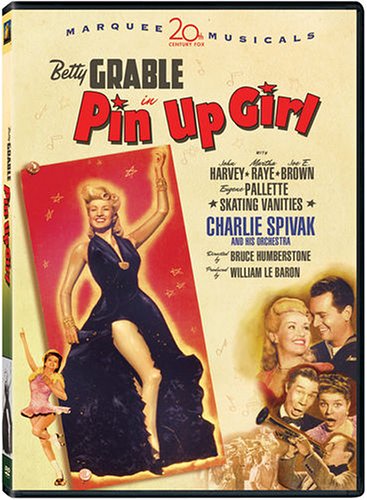
Betty Grable is best known for keeping the many, many GI’s thinking about their home country during World War II. She was mostly known for being a Pin-Up Girl during this time, and is also the star of the 1944 film Pin Up Girl. The film is part of Fox Home Entertainment’s Marquee Musicals and is pretty entertaining if you enjoy musicals or enjoy Betty Grable.
Betty Grable in Pin Up Girl is a pretty odd film overall, probably because of the four different writers the film had. The basic plot is... Lorry Jones (Grable) is the toast of the toast when it comes to gorgeous pin up girls in the USO. These girls sing, dance and provide conversation and TONS of goodies for the serving men in the armies. Lorry has one goal in being a pin up girl. Make every man as happy as she possibly can. This tends to make many of the men think there’re actually engaged to Lorry at one point.
Posted in: Disc Reviews by Archive Authors on January 21st, 2006
If the Lifetime channel was around in the 70's, I would swear that this was an original production. This is a women's liberation film at the height of the movement. Unfortunately, while its heart is probably in the right place, the film is just a big mess. When Martin Scorsese made Alice Doesn't Live Here Anymore, he nailed the feeling and the theme of this movement on the head. This thing, however, is a train wreck. It just tries way too hard. An Unmarried Woman is one of those films that tells the vi...wer what is happening, instead of showing them. One minute, a man and woman hate each other. Moments later, they are madly in love. For a film that deals with relationships, there sure is an awfully lot of talking for so little nuance and emotion.
Audio
Posted in: Disc Reviews by Gino Sassani on April 14th, 2003
Synopsis
Posted in: Disc Reviews by David Annandale on March 22nd, 2003
Synopsis
Posted in: Disc Reviews by Gino Sassani on March 8th, 2003
Synopsis