Posted in: Disc Reviews by Gino Sassani on December 14th, 2009
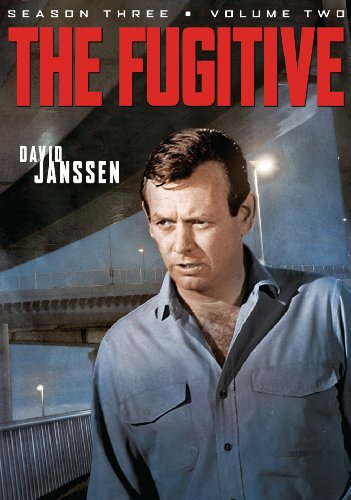
“The man is Richard Kimble and, not surprisingly, the man is tired. Tired of looking over his shoulder, the ready lie of the buses and freight trains. Richard Kimble is tired of running…”
The elusive “one armed man” is one of the best known television icons of all time. The plight of Dr. Richard Kimball has been the subject of numerous imitations and even a feature film staring Harrison Ford as Kimball and Tommy Lee Jones as his pursuer. Tim Daly left the ranks of comedy to fill the shoes of Kimball in a very short lived revival series. While some of these efforts managed to capture the essence of The Fugitive, none can truly compare to the real thing.
Posted in: Disc Reviews by David Annandale on October 28th, 2009
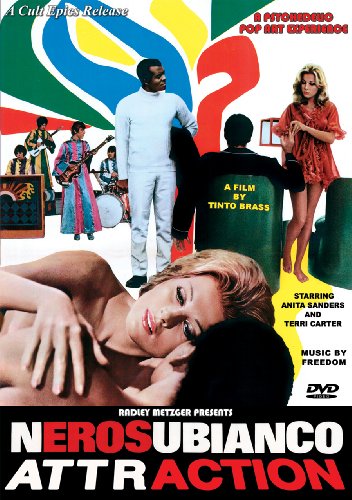
Only the most foolhardy of mortals would attempt a plot summary of this film, and I'm not quite that crazy. This is Tinto Brass's 1969 effort, coming between 1967's Deadly Sweet and 1970's The Howl. The former is a mad, pop-culture collage of noir elements, while the latter is a hallucinatory picaresque. This one is the most plot-free of the the lot. The original title is Nerosubianco, an untranslatable pun that combines “black on white” with the word “eros” (Attraction – note the word contains “action” – is an honorable attempt, and better than the theatrical title of “The Artful Penetration of Barbara,” which is what appears on the screen here, with the new name showing up as a subtitle), and that's about as much as can be summarized: this is an interracial romance. Beyond that, we have an exercise in pure formalism, an eye-popping collection of images and incidents as abstract as they are psychedelic.
Posted in: Disc Reviews by David Annandale on August 5th, 2009
I, of all people, should know that one person's cultural detritus is another's fond nostalgia, and what better example of that can there be than this release. A strange mix of athletic contest, pro-wrestling posturing and silly gimmick game show, this series (which has recently been reborn) pitted hard-bodied contestants against the even-more-hard-bodied (at least in appearance) Gladiators of the title. Some contests involve knocking each off a beam, or dodging tennis balls fired from a gun while trying to get in a shot of one's own. Or then there's swinging in on a rope in the attempt to knock the Gladiator off a pedestal. It's all pretty silly, made even more so by the straight-faced colour commentary. If the intent was to satirize sports broadcast generally, then this is quite brilliantly funny, at least at first, but the joke can't sustain itself over multiple seasons. Basically, it is what it is. If you enjoyed the show when it first ran, then perhaps you'll enjoy it again (but is there anything less intended for multiple viewings than a game show?). If you are unfamiliar with the concept, probably best to stay that way. For the benefit of the completists out there, it should be noted that this set begins halfway through Season 1.
Posted in: Disc Reviews by David Annandale on July 29th, 2009
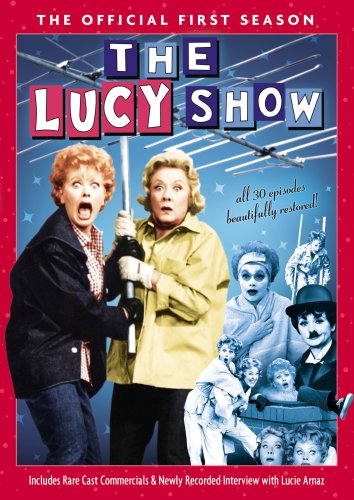
This was Lucille Ball's follow-up to I Love Lucy, and the first season is, apparently, the most highly regarded one. Here Ball is a widowed mother of two, sharing her home with best friend Vivian Vance, who is a divorced mother of one. All the other members of household are, of course, faced with the disasters triggered by Lucy. I screened this set immediately after viewing its close contemporary, Petticoat Junction, and the difference between the two was instructive. There are plenty of hoary gags and situations on The Lucy Show, but there is an enormous difference between the shows thanks to the comic genius of Lucille Ball. Her energy fills each episode, her timing is spot-on, but there is also her commitment to a type of physical comedy that to this day remains pretty much the exclusive domain of male performers. Not only does she make this style her own, she grounds it in a female reality. There is a reason she was so beloved a performer, and why her work still stands up today.

Though the image is a bit soft, with features losing definition in long shots, the picture is still looking remarkably good for television from 1962-63. The black-and-white tones are very warm, and the grain, though present, is minor. There is no edge enhancement to deal with. It is, frankly, very unlikely that these episodes have ever looked better.
Posted in: Disc Reviews by Archive Authors on May 26th, 2009
The danger in revisiting a show you used to love as a kid is that it will almost always disappoint, especially, it seems to me, if the show was made in the 70s. I have had this experience several times in my life, sitting there with a dull expression in my eyes, gazing at the screen and wondering why I ever thought Welcome Back Kotter was funny. And did I really thrill to the exploits of Starbuck and Apollo without noticing how awful Battlestar Galactica was?
Posted in: Disc Reviews by Gino Sassani on February 27th, 2009
Family Ties is likely remembered most as the series that launched the career of Michael J. Fox. There’s no question that he owes a great debt to Alex Keaton. It’s almost a bit awkward now to watch him as this young, extremely conservative teenager after Fox has spent so much of his life as a liberal poster boy in the last couple of elections. Politics aside, it’s hard not to credit his performances in Family Ties and the Back to the Future films for launching him into a well deserved lucrative career. The Michael J. Fox issue, however, might hide some of the other assets the show had going for it in its time. For one of the first times parents were portrayed as humanly flawed, and families were not the perfectly functional institutions most of these shows described. Up until Family Ties, these households were either perfect little examples of American ideal or they were so dysfunctional that they could hardly be considered families at all. This show obviously went for a bit of realism.
In addition to Alex there was Dad Steven (Gross) and Mom Elyse (Birney). They were former hippies who now had the responsibilities of adulthood and family. Sister Mallory (Bateman) was portrayed as a girl with more fashion sense than common sense. She was always worried about how she looked and not so much about school. Sister Jennifer (Yothers) was underused most of the time. She was a balance between the other siblings and often got left behind in the stories. Newest kid Andrew was starting to grow up now, and Alex often tried to take him under his wing, hoping for a miniature version of himself. The kid would now be played by Brian Bonsall, who would later play Worf’s son on Star Trek: The Next Generation. Skippy (Price) was a neighbor kid with a crush on Mallory.
Posted in: Disc Reviews by David Annandale on July 31st, 2008
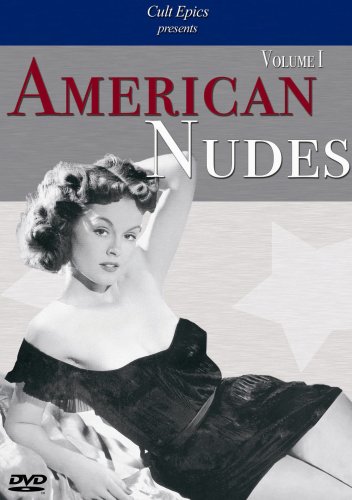
Cult Epics continues its erotic archival work with these two collections of short films. Volume 1 consists of pieces from the 1940s (with at least one from 1938 thrown in), while Volume 2 deals with the 50s. The former has such amusing “documentary” shorts as “They Wear No Clothes” (*gasp*) and various comedy routines. The latter has the inevitable Irving Klaw shorts. None of these films are by any definition “good,” but they are fascinating records of the state of American sexuality at that time. Watching all of these at one sitting would be quite the chore, but then, when was the last time you read an encyclopaedia straight through? There is a similar documentary value here.
Audio
Posted in: Disc Reviews by David Annandale on January 11th, 2008
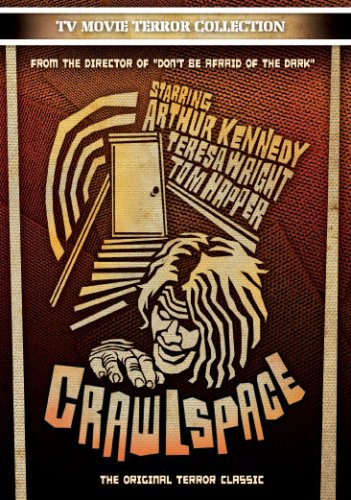
Arthur Kennedy and wife Teresa Wright are an older childless couple who discover a young man (Tom Happer) living in the crawlspace of their basement. Though they are initially alarmed, he seems harmless, and they take him under their wing. What seems to be a nice, if bizarre, solution for everyone becomes tense when Happer, tormented by locals, shows a potential for great violence.
This release from Wild Eye in their TV Movie Terror Collection is a much stronger entry than The Devil’s Daughter. Rather than highlight the limitations of television when it comes to horror, the film plays to the medium’s strengths. The tone is low-key and character-driven, and off-kilter in just the right sort of way to generate a nice current of unease. Happer is a disturbing figure, but he’s also sympathetic, much in the same vein as the Frankenstein monster.
Posted in: Disc Reviews by David Annandale on October 12th, 2007
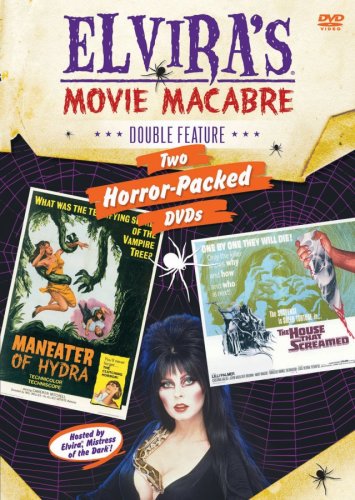
So here we have another double feature of episodes from Movie Macabre, with Elvira this time taking on Maneater of Hydra (1966) and The House That Screamed (1969). The former has the disconcerting spectacle of Cameron Mitchell appearing not only as a baron (ookaaayyy) but being dubbed. He’s experimenting with plants on his remote Greek island, and a group of tourists run afoul of one of his results. Given how long it takes for the titular plant to show up and relieve the dullness, one starts to wonder if the title doesn’t refer instead to one of the hot-to-trot tourists.
The House That Screamed, meanwhile, is a Spanish effort that is something of a period giallo. The setting is a private girls’ school where a series of brutal murders take place. The production is handsome enough, though its concept is no less sleazy for all that.
Posted in: Disc Reviews by David Annandale on September 25th, 2007
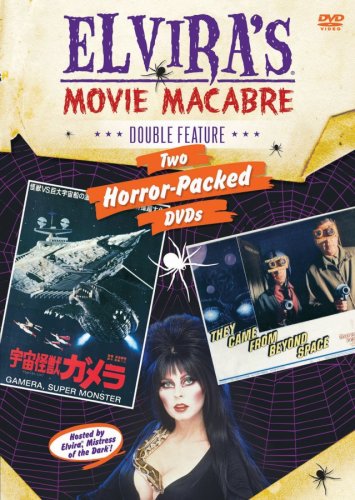
Shout Factory has begun to release DVD editions of Elvira’s Movie Macabre, the cult hit TV show from the 80s wherein our curvaceous goth host makes off-colour jokes and pokes fun, during the commercial breaks, of the movies she’s showing. Up on the chopping block in this set are Gamera, Super Monster and They Came From Beyond Space.
The former was the last Gamera film until the revival in the 90s, and is a thoroughly weak entry. An evil spaceship (suspiciously resembling a Star Destroyer, but introduced to us through the excitingly cinematic technique of ILLUSTRATIONS) is heading towards Earth. Acting in our defense is a trio of superwomen and Gamera, who battles, through the miracle of stock footage, his former foes.