English Stereo

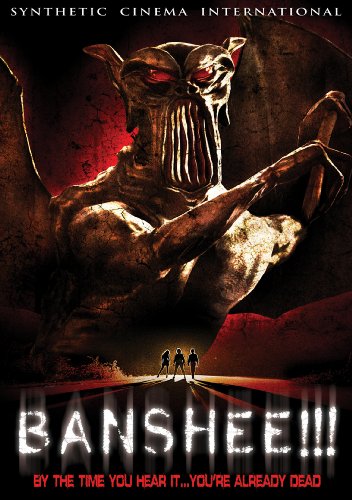
The title monster of Irish myth terrorizes people in the middle of the US for no good reason and with no explanation as to why its there, how it came to be or anything else aside from visually demonstrating that it uses sound to make its victims hallucinate. A group of teens on spring break encounter it and every single one of them survives after befriending the misunderstood beast. Of course that's a lie...they die...but doesn't the nice plot sound so much more interesting? It does to me when you've seen countless films about teenagers being ripped apart in the woods.

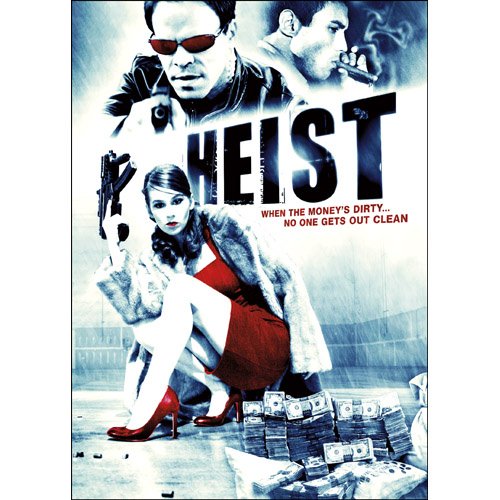
A young criminal (I assume he's a criminal of some sort) owes a major debt to a Columbian kingpin and he enlists his brother, K, for help. K bumps up a planned armoured car heist by a month in order to help, and the adventure starts there as we see a rag-tag gang pull of said heist and then plan their final moves in a rented warehouse.

What good would come from me panning a series that ended over 15 years ago? Would personal satisfaction be enough? I hope so because I'm moving forward with this.

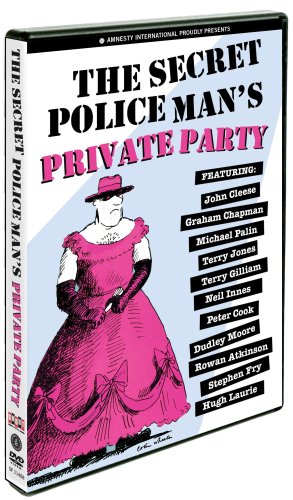
Like the musical compilation I had previously reviewed on this site (https://upcomingdiscs.com/2009/10/19/the-secret-policeman-rocks/), this DVD is another compilation of clips taken from the Secret Policeman's Balls that were held for the benefit of Amnesty International. Here we have examples of comedy sketches performed by several Monty Python alumnus and other comedians such as Neil Innes, Peter Cook, Dudley Moore and a pre-Mr.Bean Rowan Atkinson.

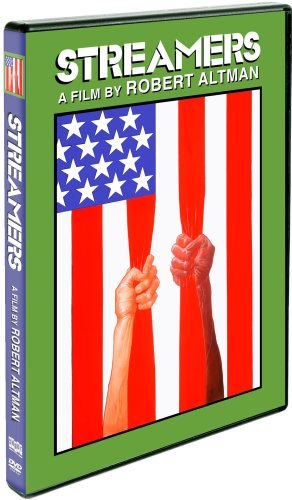
Director Robert Altman here adapts David Rabe's play about a small group of recruits on the verge of being shipped off to Vietnam. The action takes place entirely in the barracks, and here we get to know African-American Roger (David Alan Grier), fitting in as best he can in a white man's army; sensitive and gay Richie (Mitchell Lichtenstein); and possibly-closeted Billy (Matthew Modine). They talk about and dance around their various fears and anxieties, and then into the mix comes the explosive Carlyle (Michael Wright), whose life on the streets and experience with racism have turned him into someone who talks and acts long before he thinks...

Moving from stage to screen is always a tricky business. Some plays open up to the cinematic world quite easily, while others remain stubbornly stagebound. Altman's decision to restrict the film to a single set is a risky one, but it is testament to his skill as a filmmaker that it works. He preserves the claustrophobic, hothouse environment of the play, but keeps his camera and editing so active that the work remains visually interesting and properly cinematic. That said, there is no disguising the fact that Streamers is designed for the stage. The script, with its long, anecdotal monologues, could only be that of a play. What would no doubt be incredibly powerful on stage becomes, well, stagey on the screen, and though it is impossible to remain unmoved by the events in the plot, neither can one ever forget the artificiality of the enterprise, and the suspension of disbelief that would come naturally while watching a liver performance is much more difficult here. The result, then, is ultimately more interesting than powerful.

"Fighting soldiers from the sky. Fearless men who jump and die. Men who mean just what they say, the brave men of the Green Beret. Silver wings upon their chest. These are men, America's best. One hundred men will test today. But only three win the Green Beret."

The Ballad Of The Green Beret has become one of America's most famous marching songs. It has been heavily parodied. The words were written by Staff Sergeant Barry Sadler while he was in the hospital recuperating from a leg wound he received in Vietnam. The music was composed by Robin Moore, who went on to pen the book The Green Berets, on which this film was based.


The Kings: Anatomy of a One-Hit Wonder tells the story of a Canadian rock band's rise to fame. The documentary discusses the creation of their one hit "This Beat Goes On/Switchin' to Glide" as well as donates a significant amount of time to the aging rockers. The original band members all provide interviews throughout the film: David Diamond (lead vocals, bass), Sonny Keyes (keyboards, vocals), Max Styles (drums) and Mister Zero (guitar). This is an example of a rock documentary of a group that had some minor success and whose claim to fame is playing on Dick Clarke's American Bandstand.

The overall documentary is depressing. All of the band members are now entering their sixties and most of the footage is them reliving their glory years of touring. The music video montage of "This Beat Goes On/Switchin' to Glide" at the beginning of the film is well done and captures the essence of the band in five minutes. However, once the reality of the band not having any other credentials sets in, the question arises. Why make a documentary? The public seems to be infatuated with the "where they are now" VH1 style program. Unfortunately, most viewers could care less what the Kings are up to. The documentary runs roughly over 40 minutes in length and audiences ask another question. That's it? This question seems to have plagued the band since its inception in the late 1970's.

Try this plot on for size: Gordo, an ape owned by carnival sideshow barker the Great Lampini (Paul Richichi), gets loose and rampages about Long Island, raping and killing and stealing cars (!). Meanwhile, the moronic detective in charge of the murder case dismisses the idea that an ape is the culprit, and casts his racist eye on the unfortunate Duane Jones (Christopher Hoskins, whose character is named after Night of the Living Dead's lead).

Though made in 1997, this shot-on-super-8 effort does its level best to come across as the Lost 70s Grindhouse Flick, and it has to be said that it does a pretty credible job in capturing that trash aesthetic. There is also wit on display, most prominently in Lampini's deliberately overwrought and baroque dialogue. The film does, though, take its time getting to the rampage: nearly half its 77-minute running time has elapsed before the attacks begin. That first thirty minutes consists largely of people arguing, which has varying entertainment value. The gore scenes have a charming DIY feel, but there is a nastiness to the attacks on women that, as with Blitzkrieg: Escape from Stalag 69 (director/co-writer Keith Crocker's other recently released effort), is in some ways more off-putting than those of its inspirations, given how much of the rest of the film works as a goofy comedy.

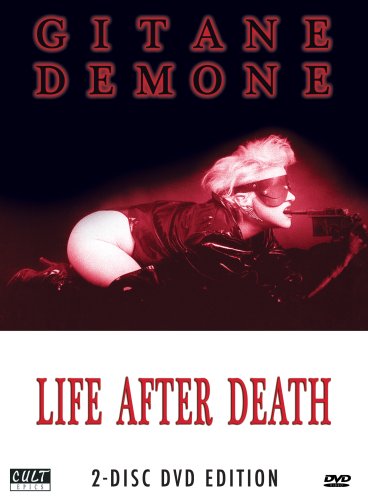
Gitane Demone was one of the lead singers for seminal deathrock band Christian Death before going solo in 1989.  This 2-DVD set is a record of her various solo efforts, tracking various incarnations, most notoriously (and most prominently featured in the release's packaging) being the fetish performances for the likes of the DeMask club and Skin Two magazine. Present here is a mix of television interviews, one video, and a raft of live footage.

Given the necessarily raw, semi-underground nature of the material (more one the picture and sound quality below), this is not really a release for the previously unconverted. The fuzzy picture and muzzy sound is not likely to draw in viewers who don't already have an investment in the subject. That said, the interviews are interesting, with Demone, in most articulate fashion, clearly situating herself within various scenes and phases of her life, and explaining how all this has affected her art. As for those who are fans, this is a very valuable record of a decade of performances.

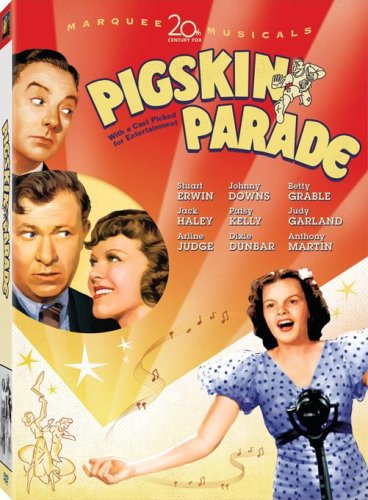
Planning a high-profile charity football game that they must nonetheless be sure of winning, the powers that be of Yale attempt to invite the University of Texas, but instead accidentally invite Texas State University, a small college whose town population is a mere 700. Newly arrived coach Jack Haley and his formidable wife Patsy Kelly face the challenge of somehow whipping the football team into something that won’t be utterly destroyed on the day of the big game. The key to possible victory is bumpkin-but-natural-prodigy Stuart Erwin, but he’s a package deal, and comes along with little sister Judy Garland, here making her debut.

In some respects, the film is most interesting in retrospect, featuring as it does future Tin Man Haley in a film with the soon-to-be Dorothy. Also of note is Betty Grable as one of the students assisting Haley and Kelly. This was also a very early release by the newly formed 20th Century Fox studios. All of that history aside, this is still a perfectly pleasant musical, completely enthusiastic in its good cheer. There’s nothing earth-shattering about the comedy or the songs, but they make the 93 minutes pass by most pleasantly.