Disc Audio

Since its premiere in 1994, Inside the Actors Studio has been a fascinating talk show for film fans and aspiring actors, writers and directors alike. Each episode a famous guest � usually an actor � is interviewed one-on-one by host James Lipton, followed by questions from the student audience.

If you�ve never seen the show, this three-disc set would make a fine introduction. Inside the Actors Studio: Icons features episodes with four towering entertainment personalities. In chronological order, star...ing with the series� first episode, the �icons� are Paul Newman, Clint Eastwood, Barbara Streisand and Robert Redford.

Synopsis

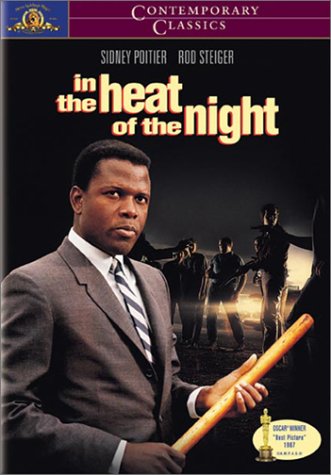
As I get older, I notice my tastes for movies change. Sure, I still like over the top action and if there is an attractive girl on the screen it gets my attention. I'm human, however as I get older I start liking films that are older. Now, I'm not talking about keeping true to films of my generation but I find myself engrossed in films that were made before I was born. There are some true classics out there such as In the Heat of the Night. This movie starred Sidney Poitier ...s Virgil Tibbs and Rod Steiger as Police Chief Bill Gillespie. A murder has gone down in the little town of Sparta, Mississippi of a prominent businessman Colbert. He was going to bring hundreds of jobs to the town for both blacks and whites alike with building a new factory. Virgil Tibbs, a black Philadelphia homicide detective is merely passing through town when he gets arrested by Officer Sam Wood (played by Warren Oates) for the color of his skin. When he is brought into the police station; the mistake is realized by Police Chief Gillespie. After a call to Philly; Tibbs is coaxed into helping out the local police solve the murder. As one would suspect from the era and the locale, this movie is steeped in race relations. This was one of the last states that was truly racist (some would argue it still is)in the middle of the civil rights movement. However, the movie brings this across in such a way as a backdrop, not the forefront. This movie is basically a whodunit where solving the murder is more important than the prejudice that surrounds it.

He's one of the most compelling villains of modern fiction. Disturbing, disgusting and absolutely captivating at the same time, Hannibal Lecter can really get inside your head.

You may not have read the novels by Thomas Harris, or even seen all of the films, but I'm willing to bet you're familiar with The Silence of the Lambs. One of the greatest thrillers in film history, the film in which Sir Anthony Hopkins became Dr. Lecter is the cornerstone of this three-movie set.

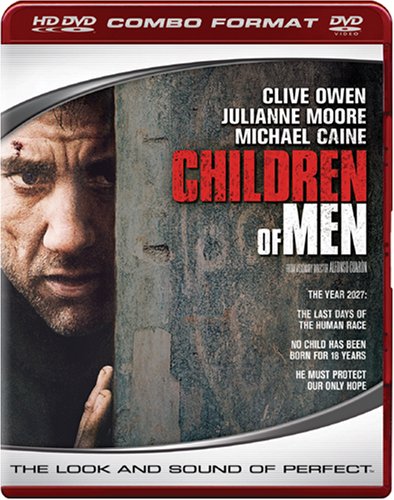
Children are the future. They're why we strive to make the world a better place, or at least to maintain the world we've got. But what happens when there are no more children, when there is no future?

That's the context for Children of Men, the latest film from director phenom Alfonso Cuarén (Harry Potter and the Prisoner of Azkaban). Based on the novel by P.D. James, Children of Men is set in 2027, our near future. There are no flying cars, or space-suit clothes. In fact, the world appears pretty rundown, and the reason for its shabby state is the most striking difference between our present and the film's - humankind is infertile.

By the time of the fifth James Bond film, producers Harry Saltzman and Albert Broccoli decided to shake things up a bit creatively. Star Sean Connery was probably getting a little antsy inhabiting the suits and drinking the martinis and feared getting pigeonholed (sorry Sean) and announced he was stepping away from the role. However, he still had one more in him, and with You Only Live Twice there was a definite change in style. It may have been based on Ian Fleming's novel, but it was adapted for the screen by Roald Dahl, of Charlie and the Chocolate Factory fame. Lewis Gilbert began the first of his three Bond adventures as director of the Bond films, and in a surprise, Freddie Young took the cinematographer reins, quite a change of pace for the collaborator of such David Lean classics as Lawrence of Arabia.

Moreover, I think You Only Live Twice is probably one o the first Bond films I can recall seeing, growing up back in the day. It's probably because the pre-opening sequence where the spacewalking astronaut gets swallowed by the satellite always stuck with me, who knew? However, the bigger surprise should probably be that there was a pretty good story along with that stunt. In this installment of the film (out of order from the original intent of the producers, who wanted to shoot On Her Majesty's Secret Service), James goes to Japan to continue to thwart the attempts of SPECTRE and Blofeld (Donald Pleasance, Halloween). And because James is in Japan and is as obvious as any tall Englishman can be in Japan, there are some subtle things to make him blend more with the people and the culture.

The Last King of Scotland generated quite a bit of buzz at this year�s Oscars, most notably the performance by Forest Whitaker. Based upon the book of the same name, which was in turn based upon the Ugandan dictator between 1970 and 1979; Idi Amin. Although the movie involves a completely fictional protagonist it apparently shadows the life of Idi Amin quite well, which offers a nice mix of fiction and reality.

Nicholas Garrigan (James McAvoy) recently graduated from medical school and decides to lead his expertise to a small countryside hospital in Uganda. Just upon arriving, a new dictator has stepped into office by force, Idi Amin (Forest Whitaker) who is greatly admired by the people. One day while in the area, Amin is involved in a small car accident and Garrigan begins treating him. A nearby cow injured from the accident is suffering and his noises begin distracting Garrigan who very boldly grabs Amin�s pistol and kills the cow. Amin appears to be offended, but when he hears that Garrigan is from Scotland, a country he respects and Amin begins to admire Garrigan. Initially Amin seems like a great guy out to improve his country; Garrigan even becomes his personal physician and his most trusted advisor. But as the story proceeds we learn more and more of Amin�s corruption and brutal ways, causing alarm for even the always-loyal Garrigan.

Zac is the fourth of five sons in a Montreal family, growing up in the 60s and 70s. He’s sensitive, and rather more in touch with his feminine qualities than his father (very macho, though a huge fan of Patsy Cline) would like. The film then tracks Zac’s struggle to accept the direction his sexuality takes, to accept himself, and to once again find his father’s acceptance.

Lord knows that rock music is more than the soundtrack of our teenage years; it’s the narration. And so it is here for Zac, with the Rolling Stones (“Sympathy for the Devil”), David Bowie (“Space Oddity”) and Pink Floyd (“Shine On You Crazy Diamond”) taking pride of place, setting up a dialogue with Zac’s father’s own life soundtrack (Patsy Cline and Charles Aznavour). By turns moving and funny, but always ringing true, this is a quietly remarkable film.

Eragon is based upon the best selling book, which was written by then nineteen-year-old Christopher Paolini. This film was met with much hype, but initially to me seemed to be another generic Lord of the Rings type rip-off, with the addition of a dragon. Not usually my type of movie, but The Lord of the Rings trilogy did more that just amaze me maybe Eragon has a trick or two up its sleeve.

Right from the beginning Eragon starts off shaky, a storyline that seems too have been done a hundred times before; a mesh of Star Wars and The Lord of the Rings. Eragon is a seventeen-year-old farm boy living in the village of Carvahall in the fictional world of Alagaesia. One night, while out hunting, he stumbles upon a dragon�s egg. At first unsure of what�s really going on, Eragon becomes enlightened that he is the chosen one to save his kingdom. It turns out that before the dark ages of Alagaesia�s dark ruler the land was ruled by Dragon Riders, who are just as they�re called, people who ride dragons. The evil king Galbatroix (John Malkovich) sends his evil minion and sorcerer Durza (Robert Carlyle) to kill Eragon and his dragon as they pose a threat to his dark rule of the kingdom. While trying to unite with the remaining rebels, Eragon is trained by Brom (Jeremy Irons) in the arts of magic, combat, and dragon riding.

Ben Affleck is a good actor. So why does he make so many bad choices? I can understand how mistakes like Pearl Harbor could happen on the front end, but how do you explain the fact that he did wonderful work in Hollywoodland and he shows up in a low-budget film like this one all in the same year? He was wonderful in Good Will Hunting and ate up every scene he was in in Boiler Room. Then he did Gigli. This guy is all over the place.

What's frustrating is that he's pretty good...even here, in a film that is overwhelmingly bland. Our man plays a talent agent who is having a crisis of personality. He has lost his confidence, his marriage is falling apart, and there's some unfortunate business with a personal journal. In fact, it's the journal that is the crux of the film. Journal, journal, journal. Practically the entire film is told in voice over. The only thing that I can imagine that is more bland than reading the journal of a no-talent Hollywood agent is hearing the guy read it to you himself.

Cupt Epics here presents five films identified as "underground" (a fluid term at the best of times). Certainly, they are all deliberately transgressive, though not all are equally successful. Two are by Nico B. - the perviously released "Pig" and "Hollywood Babylon." The former has been reviewed here before, but briefly, its catalogue of murder and S&M horrors, working out a killer's fantasies, is rather too self-conscious about its own transgression. The latter is a 4-minute tribute to Kenneth Anger, taking in exhibits at the Museum of Death. It's not a bad little piece, but it is interesting to note that its existence confirms once and for all that now even the underground film community has an established history to look back on. "Dislandia" is a half-hour, plotless portrayal of a little girl (whose face is covered in a mask) doing odd things and moving through a gritty, disconnected landscape. Interesting visually, the film is sufficiently obscure in its goals that one's mind does begin to wander. "Adoration," on the other hand, is gruelling, brutal, intelligent and effective. Based on an actual case, we see a young man invite a woman to his apartment, record her reading poetry, then kill and eat her. All of this is seen through the eyes of a camera he has place on a wall. The unblinking gaze is explicitly equated with the audience's own, and many uneasy questions about art and voyeurism are thus raised. Finally, "Le poéme" is the one that most viewers will find hardest to deal with: we watch an actual autopsy while listening to the poem "Le bateau ivre" by Arthur Rimbaud. Difficult though the film is, it is also, like "Adoration," quite beautiful.Audio

The sound is 2.0, and the actual sound quality depends primarily on the source material. In fact, "Adoration" is largely silent. But at any rate, the overall audio quality is perfectly satisfactory. There isn't too much by way of surround, and what emerges from the rear speakers isn't always perfectly placed, but the job is generally quite effectively done.