Spanish Mono

It is hard to not like a well done baseball movie.  From Bad News Bears to The Natural to The Pride of the Yankees, there have been a slew of movies on America's favorite pastime.  Today's review of Major League in its thirty years after release is another fine baseball movie which does well with great characters and easy to root for story-line of the plucky underdogs.  Let us take a look at this re-issue of a fine blu-ray with a snazzy new cover and see what it has going for it.

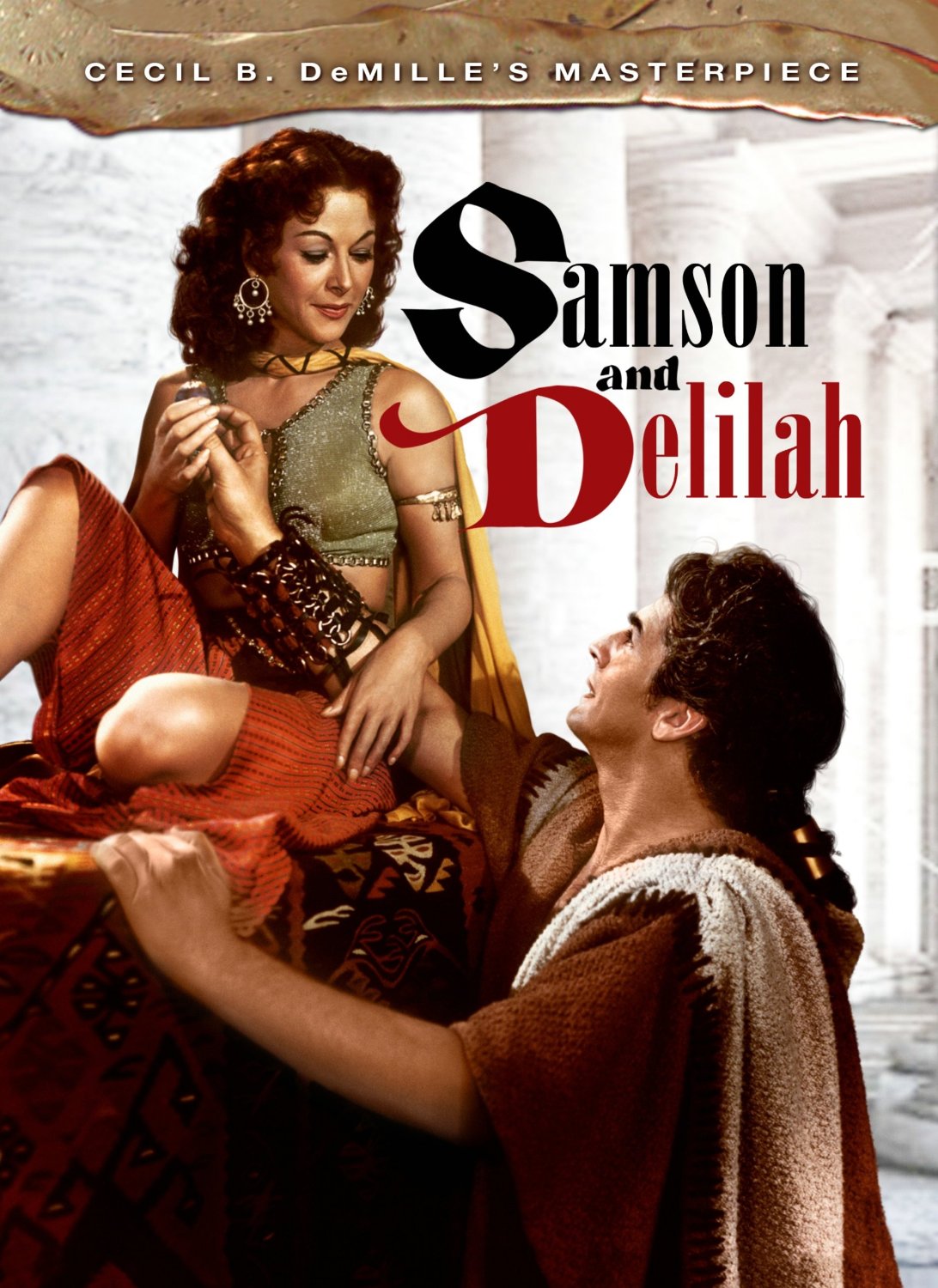
Biblical strongman Samson accomplishes many amazing feats and makes many a powerful enemy along the way. None are able to defeat this champion until his action catch the eye of Delilah, and he becomes the target of her affections. Unbenounced to Samson, Delilah has been tasked to discover the source of his supernatural strength. God granted Samson amazing physical strength, but his heart and mind are weak to the machinations of this sly, deceitful woman and it is only a matter of time before she learns his greatest secret.

Hedey Lamarr's Delilah is a character that we love to hate. Her scheming is fused perfectly into her seductive charms. Meanwhile, Victor Mature is rugged as this Hebrew He-Man. Both play well off of each other although many a time they seem to be treading water with melodramatic dialogue that rallies back and forth and only seems to accomplish extending the run time of the film instead of advancing the plot efficiently.

With smaller cable networks stepping up in the last few years and producing high-quality, original programming, we are living in a veritable Golden Age of television.

And yet.......

As some might be able to figure out from my personality, I tend to stay away from political and war type movies. Political movies (except for the special ones) tend to confuse the viewer until the final curtain is drawn. War movies on the other hand tend to be more about explosions and male bonding which is usually enough to put me to sleep. What happens when you combine the two of them? Well then you might get a movie like 5 Days of War directed by the one and only Renny Harlin .

Hiram Johnson, a US Senator once said that “The first casualty of war is truth.” We join the movie in Iraq, year circa 2007. Thomas Anders (played by Rupert Friend) is an American reporter. He is riding along with his camerman, Sebastian Ganz (played by Richard Coyle) and his fellow reporter/girlfriend, Miriam (played by Heather Graham). Sebastian is recording the two and asking them all sorts of relationship type questions.

Deep inside most people's hearts lies a layer of curiosity. Many of us could go that one step farther and say it boils down to perversion. Whether it involves a spectacular car crash or two lovers in the throws of passion, there are uninhibited moments that we want to see. But what happens when those moments go beyond curiosity and straight into voyeurism? Worse yet, perhaps straight into a very dangerous situation? Well then one might be feeling much like Jeffery Beaumont in Blue Velvet, one of David Lynch's best movies.

In the serene peaceful town of Lumberton, we see blooming flowers, kids walking and Mr. Beaumont (played by Jack Harvey) watering the grass. However, the water hose hits a snag and gets caught up in the bushes. As he struggles with the apparatus, his heart suddenly gives out and he falls to the concrete below. As he lays there motionless on the ground, a child comes out to see what happened and the dog decides to take a drink. Ants lurch out of the ground and we fade to black.

There are some things in life I will never be able to relate to. Famous sports athlete, sorry missed out on that boat when I walked off the baseball team in high school. President of the United States, I need more than the votes of my wife and parents. But there are other things on a smaller scale I can’t relate to either. Like children. I will never how it is to have my own children. While I have certainly accepted this fact and I am okay with it, sometimes movies come along with themes that are foreign to me. Enter Beautiful Boy.

We open up to some home videos at the beach. A family can be seen in what would be their last vacation together before the son would eventually go off to college. We slowly pan in to Sam (played by Kyle Gallner) who is reading his essay to a very disinterested class. Dejected, Sam finishes and sits back down. Life is difficult at the new college and Sam is finding it hard to adapt.

"Where life had no value, death sometimes had its price. That is why the bounty killers appeared."

If you had asked Clint Eastwood about the chances of Fistful Of Dollars being at all successful, he admits he hadn't given it much of a chance. The film took a lot of chances with what was already a tired genre. Add to that the fact that it was a low-budget European effort and there really was no chance that the movie would be remembered a year later. But the film did pretty good money and made a ton of international noise. The men involved ended up with more than a fistful of dollars in their banking accounts. Who could blame them for wanting A Few Dollars More?

World War II has just ended, and the recently discharged Robert De Niro hits New York on the prowl for sex. He runs up against WAC Liza Minnelli, and the more she resists his advances, the more determined he becomes. There is more: he is a saxophonist, and she (of course) is a singer). So begins a tempestuous relationship between two artists whose enormous talents and equally enormous personalities mean they can neither live with nor without each other.

The idea of Martin Scorsese taking on the form of the classic musical is so bizarre that it had to happen, and here it is. Scorsese’s conceit is ingenious: all the conventions are there (the meet cute, the songs, the artificial sets and colors), but they collide with the naturalism of the performances and the emotions. A perfect case in point: wandering the streets at night, De Niro sees a sailor and his girl perform a dance together. It is a classic musical moment, but the only sound is that of a train passing. It is a scene of extraordinary beauty, grit, and cinematic truth. And it belongs in an extraordinary film.

Somewhere in my family’s history, I have a couple of odd branches. One of them leads to a former Pope (17th century I believe) and the other is even more curious, the mob. Specifically, it leads to the most popular gangster of them, Al Capone. It is pretty far down the branch, but interesting nevertheless. This leads us to our movie review for today: Kill the Irishman which deals with the real life story of Danny Greene, a man who escaped death countless times and took down the mob.


The period in time is Cleveland, Ohio circa 1975. Danny Greene (played by Ray Stevenson) is driving along and listening to his 8-track player. All of the sudden, his player starts to fizzle and then sparks fly. Danny realizes that the car is about to explode and gets out. He narrowly escapes death. He shouts, “It will take more than a few firecrackers to kill me.” Indeed it would.

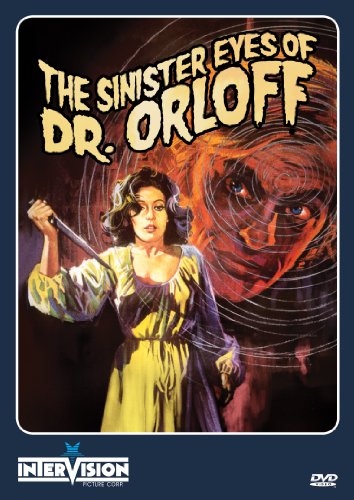
Haunted my recurring nightmares, crippled Melissa (Mona Proust), the heiress to a huge fortune, falls under the care of Dr. Orloff (William Berger). Unforunately, Orloff doesn't have Melissa's best interests at heart. Still enraged over having failed to win the lover of Melissa's mother, Orloff enacts his revenge by using his hypnotic powers to transform Melissa into a killing machine. One by one, the distinctly unsavory members of Melissa's family fall under the knife.

A 1973 effort by Jess Franco, the god-emperor of Eurosleaze, this is a pretty handsome film. Franco doesn't abuse the zoom lens quite as much as elsewhere, and he makes excellent use of his Gothic settings, especially in a remarkably strong stalk-and-kill sequence late in the film. There are quite a number of truly beautiful scenes, showing what Franco is capable of when he's interested. Meanwhile, the violence and nudity are very restrained by Franco standards, but the characters are just as depraved and twisted as ever (that's a good thing). The score (by Franco), meanwhile, varies from the disturbingly effective (abstract soundscapes punching home the nightmare Melissa is trapped in) to the WTF laughable (a folk song so dire it will live forever). This isn't Franco's best work, but it has a lot going for it, and fans are strongly advised to check it out, with two strong caveats in mind. One is that the subtitles are horrendous. The grammar is all over the map, vocabulary is mind-boggling (one character is “condoned as a pedophile”), and the subs go missing altogether for the entire sequence that explains Orloff's motivation! That's helpful! The other problem is the picture quality, about which more below.