Posted in: Disc Reviews by Gino Sassani on December 13th, 2011
"'Twas the night before Christmas and all through the house, not a creature was stirring...not even a mouse..."
The poem is a popular one. It was originally titled A Visit From St. Nick and has been a holiday staple since the 1820's. No one knows for sure who wrote it, and there are several schools of thought on its authorship. What is not in doubt is that the lines are about as familiar as Christmas itself. Over the years it has been lampooned and used as an inspiration for many films, plays and songs. In 1974 Rankin & Bass tackled the title, and it has since become a holiday staple. While not quite as popular as The Grinch Who Stole Christmas or A Charlie Brown Christmas, it remains one of those fond memories, particularly with those of us who were children in the 70's.

Posted in: Disc Reviews by Gino Sassani on November 2nd, 2011
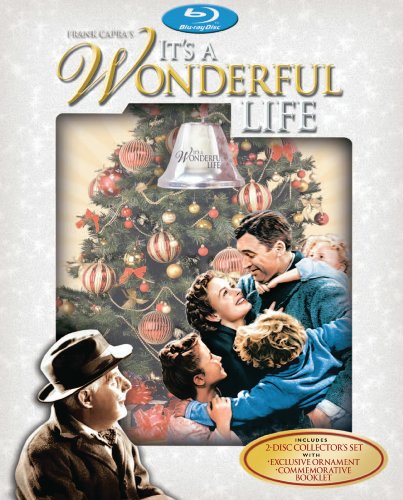
Every generation has had its Christmas classics, films that have become as much a part of the holiday family traditions as Christmas trees and candy canes. For me it has been the more modern A Christmas Story with ol’ Carl Kolchak himself, Darren McGavin. Kids today have taken more of a shine to even more recent films, but for more than one generation, Christmas wouldn’t be the same without Frank Capra’s It’s A Wonderful Life. Since 1947 the film became a seasonal fixture in neighborhood movie houses across the fruited plain. In the 1970’s the film temporarily fell into the public domain and was played relentlessly on local television stations as each holiday came and went. Unfortunately, these were usually prints in horrible condition, so that scratches and splice marks became a part of the experience, not to mention ads for department stores touting their early bird specials. It is with that experience that I as did most from my generation become acquainted with Jimmy Stewart's George Bailey. When the home video market began to bloom with VHS in the mid 1980’s a better print resurfaced, so that the experience improved dramatically, along with the loss of those commercials. Of course, this new resource of home entertainment created a fight for the rights to the film to once again be restored to a single owner. It ended up being the film’s score that would allow the rights to be enforced once again. The crappy television prints disappeared, and by the early 1990’s efforts to restore the film began.
These restoration efforts invariably turned to the controversial subject of colorization. If anyone remembers Ted Turner’s push to colorize RKO films, including King Kong, you will also remember how bad those films looked. The color was an added texture of hue covering the picture so that the subject’s textures and subtleties were obliterated. It was almost as if some child decided to finger paint all over the negative. There was nothing magical or at all realistic about the process. It’s A Wonderful Life has been colorized no less than three times. In both 1986 and 1989 the film got the colorized treatment, both failures. Now in 2007 It’s A Wonderful Life has been colorized by a new process developed by Legend Films. This new process allows films to be colorized naturally, retaining all of the detail and texture of the original print. These are the guys who are working with legendary Ray Harryhausen to colorize and restore many of his classics. The new process uses a 16-bit grayscale which offers over 64,000 shades of just gray. The process, called “Photo-Real”, can reproduce HD quality pictures with stunning life-like color. I was a very cynical skeptic of the process and was prepared to rip this color print to shreds in my review. I was blown away by how natural the color looks. You will be hard pressed to believe this wasn’t an original color print. Not only are the colors realistic, but the print retains the particular color palette of the 1940’s, so that the film still looks like one from the correct era. I know you’ve seen incredibly bad colorization before, and it likely has made you unwilling to even give this one a chance, but you owe it to yourself to check it out.
Posted in: Disc Reviews by Gino Sassani on October 11th, 2011
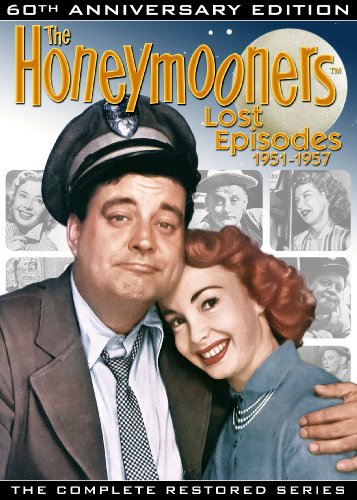
It's hard to believe that one of the most popular comedy shows of the 1950's was not really a show at all, at least not in the way that we think of a television series today. The show began its life in 1951 as a segment on the popular Cavalcade of Stars. At that time only Jackie Gleason and Art Carney starred in their familiar roles. Alice was played by Pert Kelton. The series took its more recognizable look when it became part of The Jackie Gleason Show in 1955. That's also when Joyce Randolph joined the series as Trixie Norton. The series would take up a half hour of the slot. The second half was taken up by a larger variety of pieces, usually a series called Stage Show. The show would come and go, with other cast members coming and going over time. Even Art Carney had left The Jackie Gleason Show at one time, only to return in 1957 to the role. The show's history is a complicated one to which entire books have been devoted over the years. It wasn't until syndication that the series was really a show unto itself. The original 39 episodes were joined with nearly 70 re-edited versions of the other various incarnations of the show have made up what most of us today think of as The Honeymooners. The final original versions of the show ended in 1971; both Audrey Meadows and Joyce Randolph were gone by then, replaced by Sheila MacRae and Jane Kean respectively.
But this show that wasn't really a show had legs. The syndicated versions became hugely popular, and new generations of fans were being indoctrinated with each new package. The show even survived on pay television at Showtime for a while in the 1990's when the 70 newly-formed "Lost Episodes" first aired. But the fever just never died. The show would influence a large number of series that would follow. Even the animated world of cartoons wasn't safe. The Flintstones would come along and become a prehistoric cartoon show that was basically the same down to the characters. Fred and Barney couldn't have been closer to Ralph and Norton if their names had been the same. Today, comedians constantly recall The Honeymooners and Jackie Gleason as their inspiration. To more than one generation of television viewers, Gleason really was "The Great One".