Posted in: Disc Reviews by Gino Sassani on December 5th, 2023
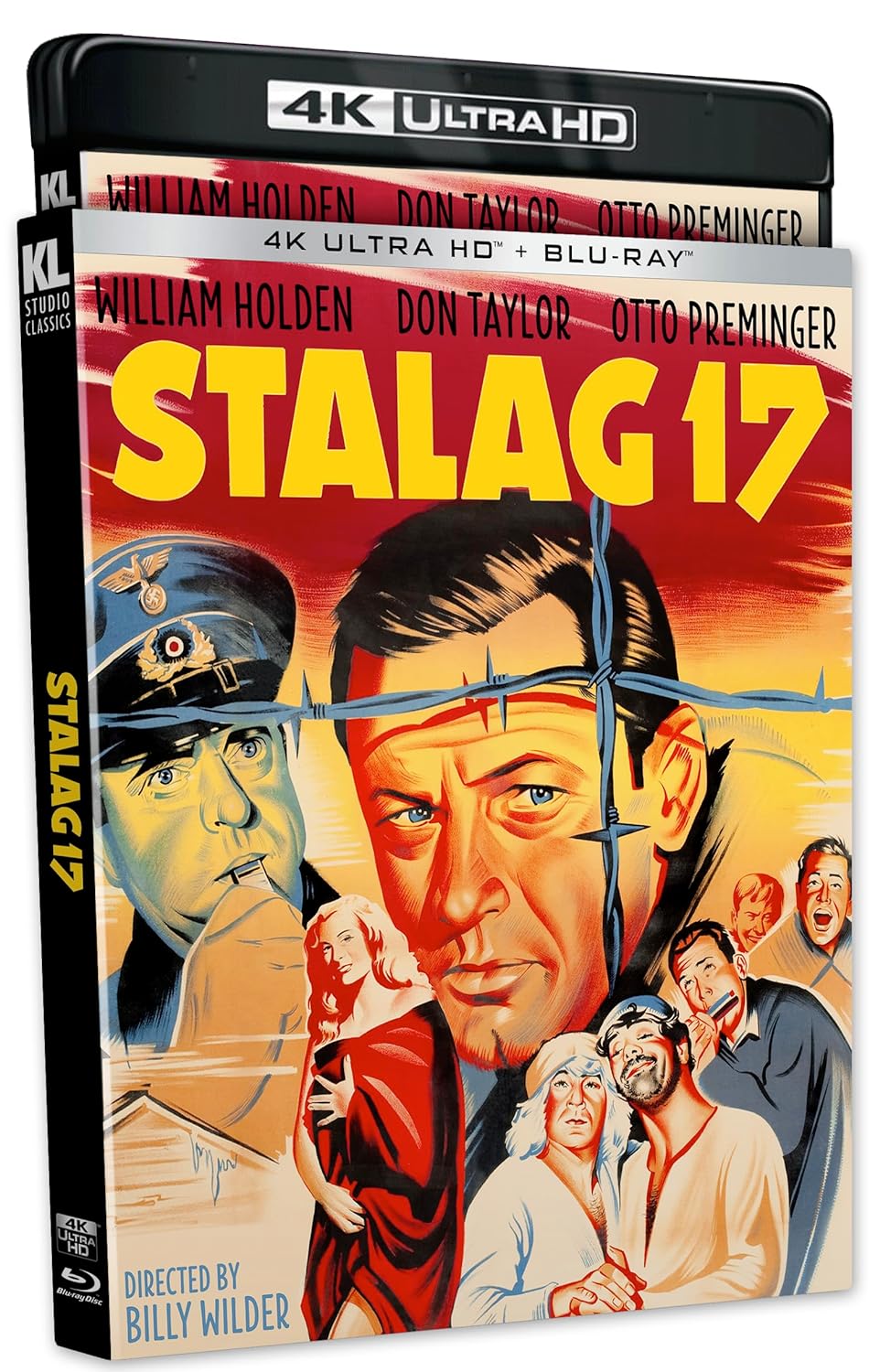
"I don't know about you, but it always makes me sore when I see those war pictures ... all about flying leathernecks and submarine patrols and frogmen and guerillas in the Philippines. What gets me is that there never w-was a movie about POWs - about prisoners of war. Now, my name is Clarence Harvey Cook; they call me Cookie. I was shot down over Magdeburg, Germany, back in '43; that's why I stammer a little once in a while, 'specially when I get excited. I spent two and a half years in Stalag 17. "Stalag" is the German word for prison camp, and Number 17 was somewhere on the Danube. There were about 40,000 POWs there, if you bothered to count the Russians, and the Poles, and the Czechs. In our compound there were about 630 of us, all American airmen: radio operators, gunners, and engineers. All sergeants. Now, you put 630 sergeants together, and, oh mother, you've got yourself a situation. There was more fireworks shooting off around that joint ... take for instance the story about the spy we had in our barracks ..."
Stop me if you've heard this before. The premise is we're in World War II, but not where all of the action is. There aren't any big firefights, and you won't see or hear any of those big guns raining Armageddon down on some poor hapless pinned-down soldiers. Instead we're inside of a German POW camp, which they called Stalags. This one is run by a self-important commandant who takes pride in the fact that there has never been an escape from his Stalag. The prisoners themselves are always trying to find a way to outwit the camp Sergeant, a rather rotund officer named Shultz. Of course, I'm talking about Hogan's Heroes. But I'm not. 12 years before the CBS comedy would hit the airwaves, iconic film director Billy Wilder gave us a quasi-serious version of that particular scenario in the film Stalag 17. The film was based on a contemporary Broadway production written by Donald Bevan and Edmund Trzcinski based on their own actual experiences at the real Stalag 17. The film was originally planned as a vehicle for Charlton Heston, but when Wilder came on to direct, he immediately dismissed the idea, believing that it would become a Charlton Heston film more than a film about its own actual elements, and he was likely correct. Heston was big at the time, coming off larger-than-life parts like Moses and Ben Hur. The role went to William Holden, and the casting would become one of those lightning-in-a-bottle kind of things that can elevate a film from good to classic. And by the way, Wilder and gang sued Hogan's Heroes when it did arrive on the scene but were not successful.

Posted in: Disc Reviews by Gino Sassani on October 2nd, 2023
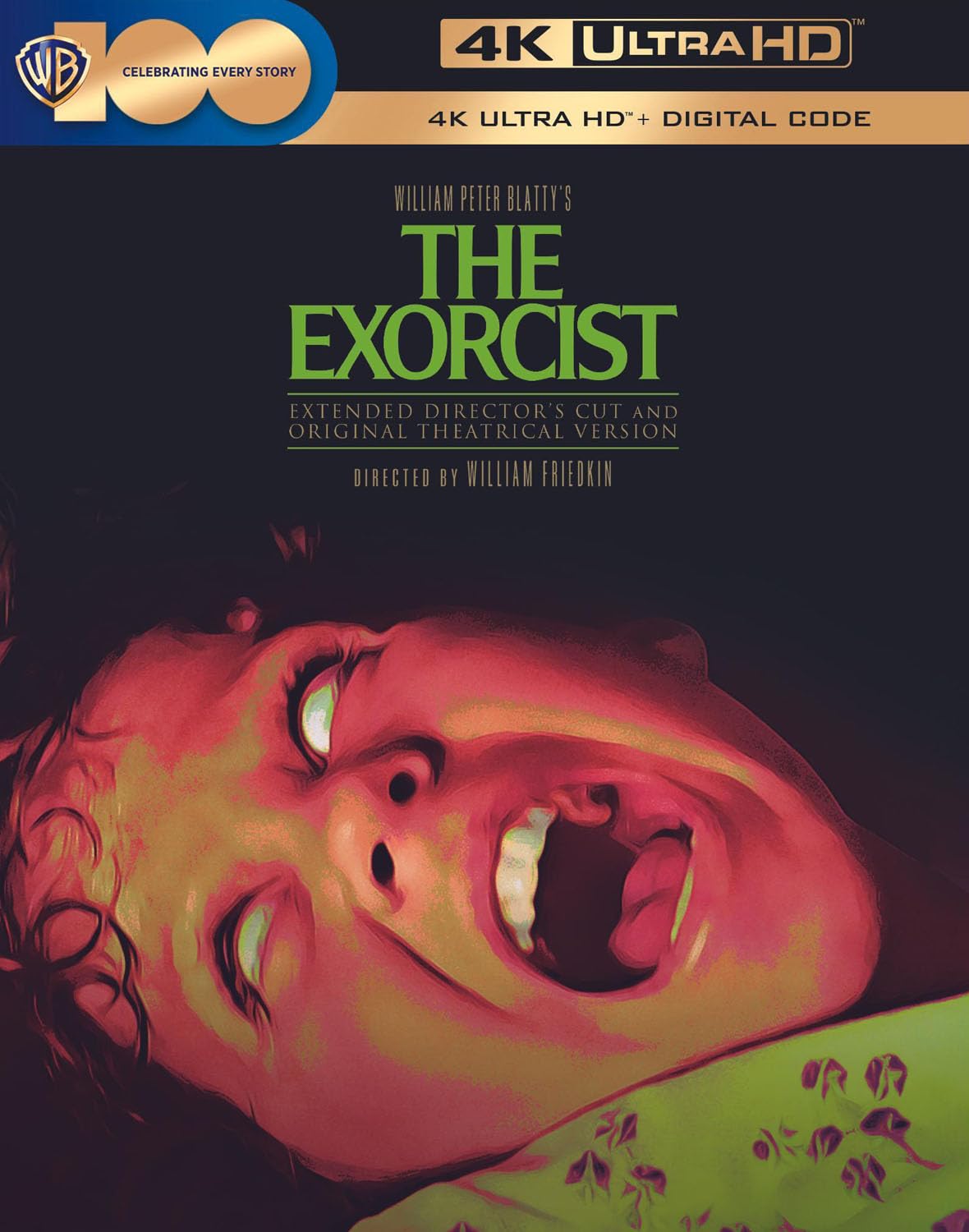
"Have you ever heard of exorcism? It's a stylized ritual in which rabbis or priests try to drive out the so-called invading spirit. It's pretty much discarded these days, except by the Catholics who keep it in the closet as a sort of embarrassment. It has worked, in fact, although not for the reason they think, of course. It was purely the force of suggestion. The victim's belief in possession helped cause it. And just in the same way, this belief in the power of exorcism can make it disappear."
By now we've all heard of The Exorcist. The film was based on a best-selling novel by William Peter Blatty. Blatty himself based the story on a real exorcism of a young boy many years earlier. And that's where the true power of the film begins. The monsters of horror movies often allow us a sense of unreality that protects our inner selves from being truly terrified. Yes, they may frighten us, but it's fun to be frightened, isn't it? It's rare that a horror film touches on something inside of us and delivers an experience that is truly terrifying. It's arguable that The Exorcist has done this in a way that has rarely, if ever, been repeated in horror movie history. Whatever your religious beliefs might be, there is that little voice deep in our minds that fears what we call evil and can't deal with the possibility that we can be taken over by such evil. Devil. Demon. Mental illness. It doesn't matter. We're all afraid of losing control of who we are to some invading force within our minds. Within our very souls.
Posted in: Disc Reviews by Gino Sassani on August 18th, 2023
"It's always open season on princesses."
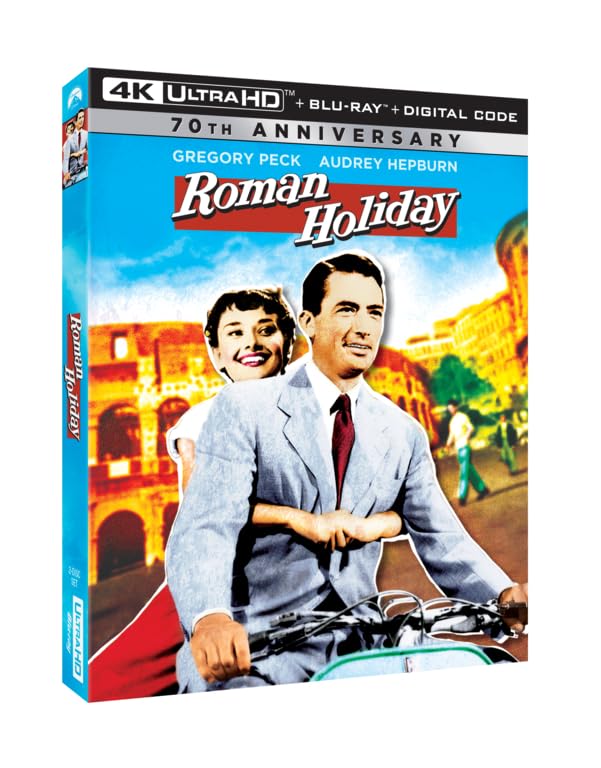
Roman Holiday is one of those classic films that had an extremely hard time getting made. Frank Capra had the rights to the story for several years. Most of what he had was based on a screenplay by Dalton Trumbo, but that was extremely problematic, as Trumbo was one of the original Hollywood Ten and was blacklisted. They were a group of Hollywood people who refused to answer questions before the Joe McCarthy-led House Un-American Activities Committee that was pretty much rooting out communist with little regard to whether they were there or not. The committee ruined thousands of lives, and in 1947 the group had turned their attention toward Hollywood. Many played along by attending the hearings, and some even passed on names of others to avoid trouble for themselves. The Hollywood Ten stood up to the madness, and it got them blacklisted. They couldn't work for any studio in the country. That meant Trumbo could not be given credit for his screenplay, and it was Ian McLellan Hunter who acted as a beard for Trumbo and took the credit and sold the rights to Frank Capra, who planned on directing the film with Gary Cooper and Elizabeth Taylor in 1949. By then at least eight other writers took shots at revisions, and the piece truly suffered under the "too many cooks" situation. The budget appeared to skyrocket, and Capra ended up selling it to Paramount for $35,000. Paramount also spent too much money and time going through various rewrites. Finally the project ended up with William Wyler, who went back to pretty much the script that Trumbo wrote under Hunter's name, and in 1991, Trumbo's writing credit was deservedly restored.
Posted in: Disc Reviews by Gino Sassani on August 17th, 2023
"In northern California, the Santa Lucia Mountains, dark and brooding, stand like a wall between the peaceful agricultural town of Salinas and the rough-and-tumble fishing port of Monterey, fifteen miles away It's 1917 just outside of Monterey."
James Dean was somewhat of a brief candle. Very much like Marylin Monroe, he came upon Hollywood so bright and hot only to burn for a short time. And while Norma Jean had a few good years in which to shine, Dean would have less than a handful. In those few years he made three incredible films. His last was Giant, and before that was perhaps his best known, Rebel Without A Cause. East Of Eden was the first of this trilogy of films that would pretty much make up the career of James Dean. All three films were made in the years 1955-1956, and just as suddenly as Dean had come upon the scene, billed as the next Marlon Brando, he was gone. One car ride into eternity and it was all over just as it had begun: Explosive and brief. Through Warner Brothers 100 years of movies restoration and release celebration, we have already seen and reviewed Giant and Rebel Without A Cause. Now the trilogy is complete in the place where it began: Elia Kazan's masterpiece, East Of Eden.
Posted in: Disc Reviews by Gino Sassani on August 2nd, 2023
"Man gets shot that's got a gun, there's room for reasonable doubt. Man gets shot that hasn't got a gun, what would you call it? But, you knew that already; otherwise you wouldn't have set things up the way you did."
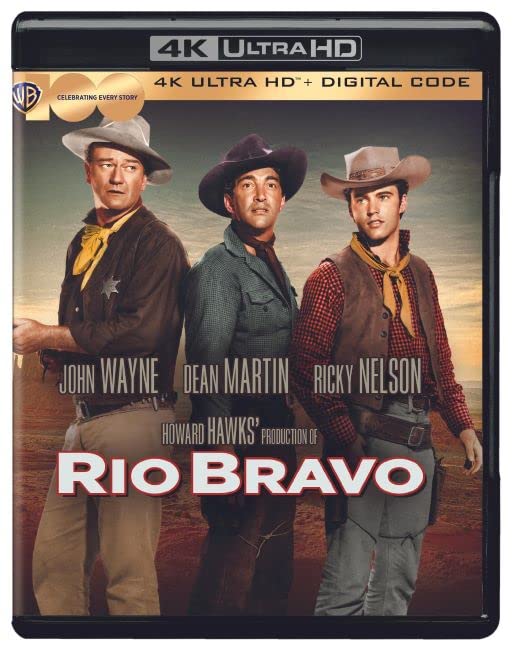
Rio Bravo (1959) stars John Wayne as John T. Chance, a small-town sheriff facing the fight of his life. His town is infected by a gang of 30-40 men, professional bad guys on the payroll of Nathan Burdette (John Russell), whose brother, Joe, Chance has locked up for murder. Burdette is dead-set on freeing Joe, and the only help Chance has got is his former deputy, Dude (Dean Martin), who’s been drunk for two years since he got involved with the wrong kind of woman, and Stumpy (Walter Brennan), an old, trigger-happy cripple. The trio has six days until the U.S. Marshall comes to collect Joe, but that’s a long time to wait when you’re surrounded by the enemy.
Posted in: Disc Reviews by Gino Sassani on May 11th, 2023
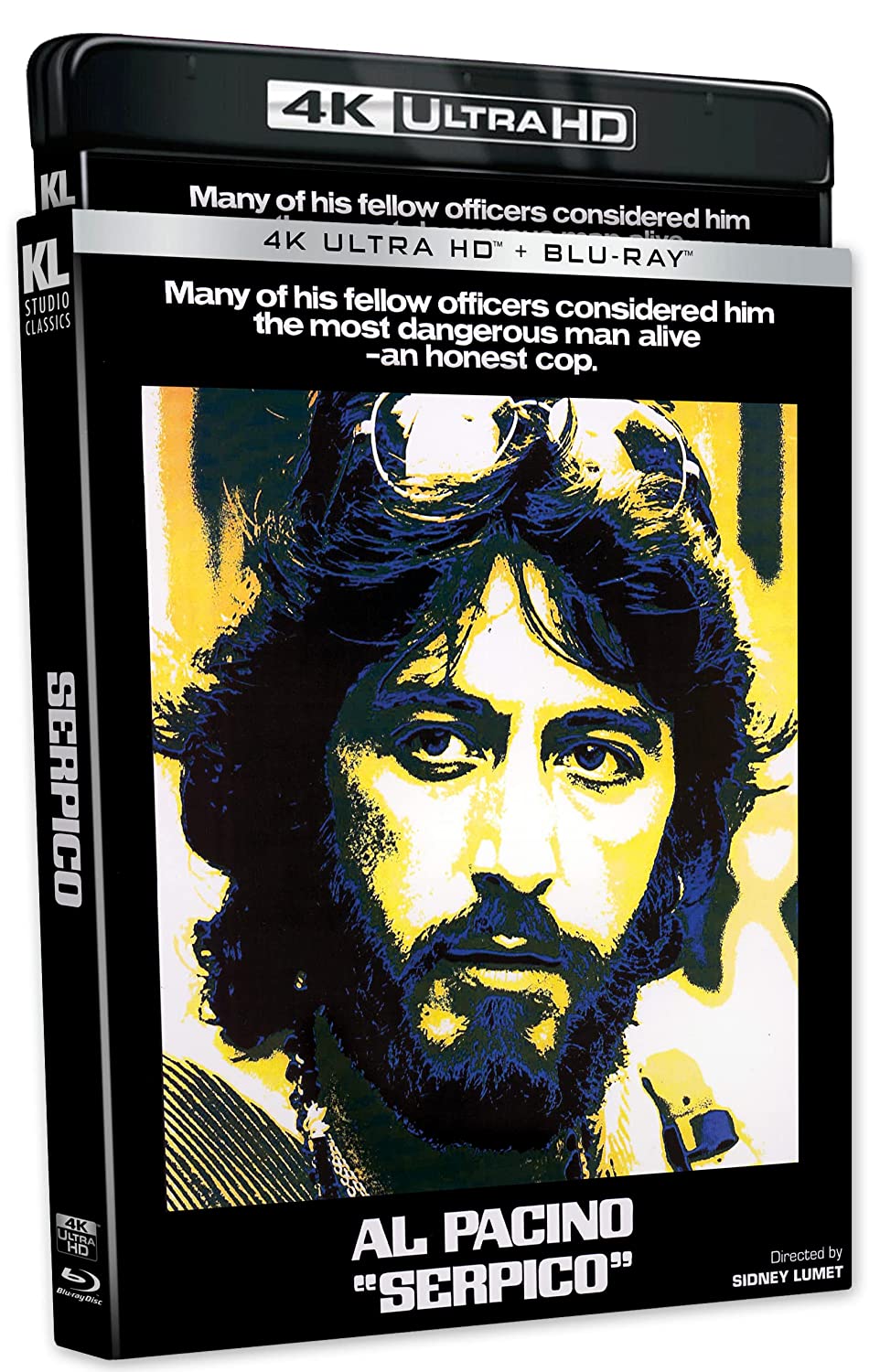
"All my life I wanted to be a cop, you know. It's like I can remember nothing else. I remember this one time somethin' happened. A domestic argument or somethin'. Somebody stabbed somebody or somethin'. And -- there was this crowd around this tenement. I must have been nine, ten years old. I was this big. I went over to see what was going on. I noticed the red light -- goin' around and around, all these people, and I couldn't see. And I kept saying, ‘Do you know what's goin' on? Do you know?’ Nobody knew. It was like a big mystery behind that -- that crowd there. All of a sudden, the crowd just parted. Like the Red Sea, you see? And there were these guys in blue, and I said, ‘They know.’ What do they know? What do they know?”
Frank Serpico was a New York City cop in the 1960's and early 1970's. Thanks to the film, everyone knows who he is, and they also know about his struggle as an honest man in a hornet's nest of corruption. His honest stand saw him a pariah and almost killed when his fellow officers stood by as he was shot in the face. He would eventually recover and testify before the famous Knapp Commission that investigated the systemic corruption inside the NYPD. If you know his story, it's because of this film, because that's the plot, pure and simple. What isn't so pure and simple is the inspired performance by Al Pacino, still a relative unknown, who had just finished The Godfather but hadn't really had a lead role up to this point. Serpico changed all of that. Pacino was on a rocket ship to stardom, and this film as much as The Godfather started the whole thing going.
Posted in: Disc Reviews by Gino Sassani on April 25th, 2023
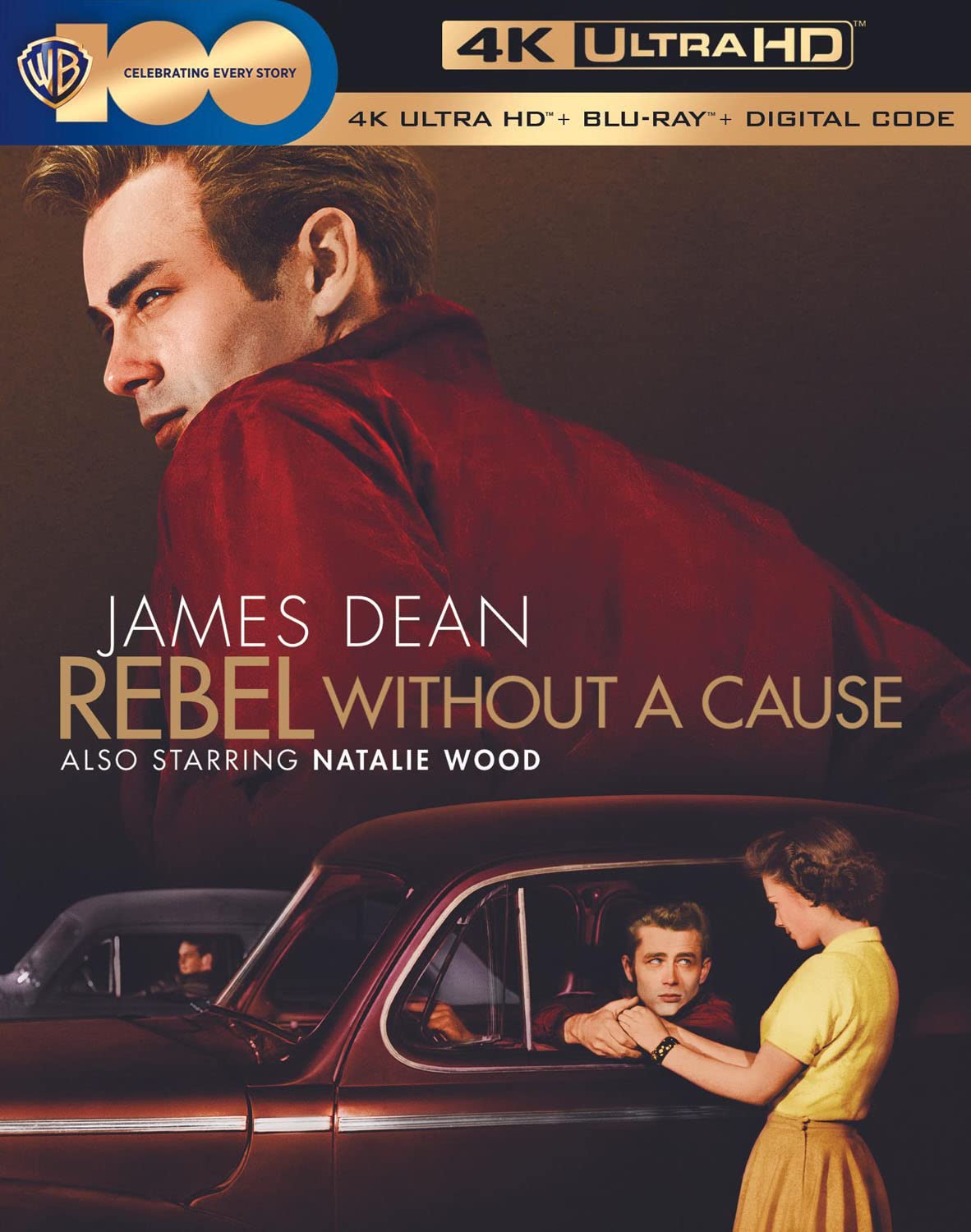
"If I had one day when I didn't have to be all confused and I didn't have to feel that I was ashamed of everything. If I felt that I belonged someplace. You know?"
There are a handful of films in Hollywood history that have stories as compelling if not more so than the story the film itself tells. I don't know if there has ever been a film about the making of Rebel Without A Cause. There have certainly been several books, but this is one of those classic films which is surrounded by so many legends, some of them urban myths, but so many of them were true that I find it rather difficult to watch the film on its own terms. With Warner's 100th anniversary celebration of 100 classic films, I had a nice chance to revisit the classic motion picture, and this time I tried my best to watch it without all of the noise that goes along with it. That wasn't easy, but I think I've now seen the film for itself more now than I ever did before. It was a groundbreaking film with an incredible cast that broke so many taboos of the time that you get the idea someone wasn't really paying attention to what was going on on the screen. It's as compelling today as it was then, and maybe more so with all of the baggage. The truth is I've never been able to watch Rebel Without A Cause the same way twice. Now I can try as often as I like with a nearly flawless print finally in UHD Blu-ray and in 4K. Warner Brothers is having a birthday, and I've been unwrapping all of the presents.
Posted in: Disc Reviews by Gino Sassani on April 21st, 2023
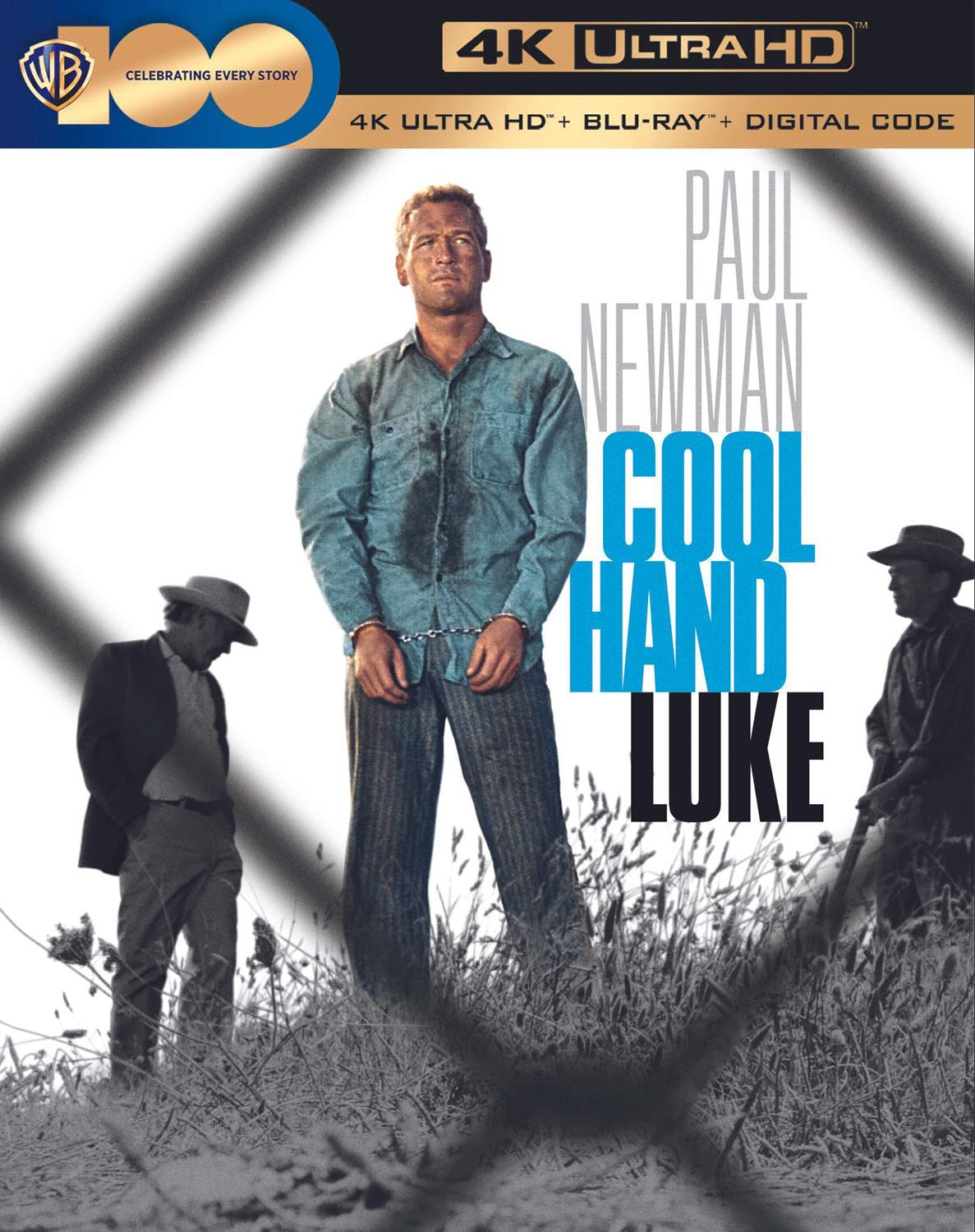
"Them clothes got laundry numbers on them. You remember your number and always wear the ones that has your number. Any man forgets his number spends a night in the box. These here spoons you keep with you. Any man loses his spoon spends a night in the box. There's no playing grab-ass or fighting in the building. You got a grudge against another man, you fight him Saturday afternoon. Any man playing grab-ass or fighting in the building spends a night in the box. First bell's at five minutes of eight when you will get in your bunk. Last bell is at eight. Any man not in his bunk at eight spends the night in the box. There is no smoking in the prone position in bed. To smoke you must have both legs over the side of your bunk. Any man caught smoking in the prone position in bed ... spends a night in the box. You get two sheets. Every Saturday, you put the clean sheet on the top ... the top sheet on the bottom ... and the bottom sheet you turn in to the laundry boy. Any man turns in the wrong sheet spends a night in the box. No one'll sit in the bunks with dirty pants on. Any man with dirty pants on sitting on the bunks spends a night in the box. Any man don't bring back his empty pop bottle spends a night in the box. Any man loud talking spends a night in the box. You got questions, you come to me. I'm Carr, the floor walker. I'm responsible for order in here. Any man don't keep order spends a night in..."
You guessed it ... the box. Enter our anti-hero, Luke. The anti-hero has become somewhat cliche today. What was once an artistic expression of the gray line between good and bad guys has morphed to the glorification of the just plain bad guy. We end up loving and rooting for such vicious characters like Vic Mackey, Tony Soprano, and Dexter Morgan. These are killers with nary a pang of conscience. Their deeds are always self-serving no matter what they pretend they might be. But if you go back far enough -- most credit Marlon Brando's coda performance in The Wild One -- you'll find there was once a far more nuanced kind of anti-hero. One of the industries best examples of this was Paul Newman's troubled teenager, Luke. Luke wins us over with a charm and an honest belief that he's a good guy. The archetype would later be pruned to perfection by Jack Nicholson in One Flew Over The Cuckoo's nest several years later. McNulty and Luke have a lot in common, and their environments and motivations aren't all that different. In the end they're both "broken" by the establishment, conforming to a code that did not allow guys like this to live happily ever after. Times and sensibilities have certainly changed, but performances like Paul Newman's Luke remain to remind of us of a time when audiences just wouldn't have been ready for the likes of Hill Street's Detective Buntz. Ironically, it would be Marlon Brando again who would be the first to make us root for a cold-hearted killer named Vito Corleone.
Posted in: Disc Reviews by Gino Sassani on April 11th, 2023
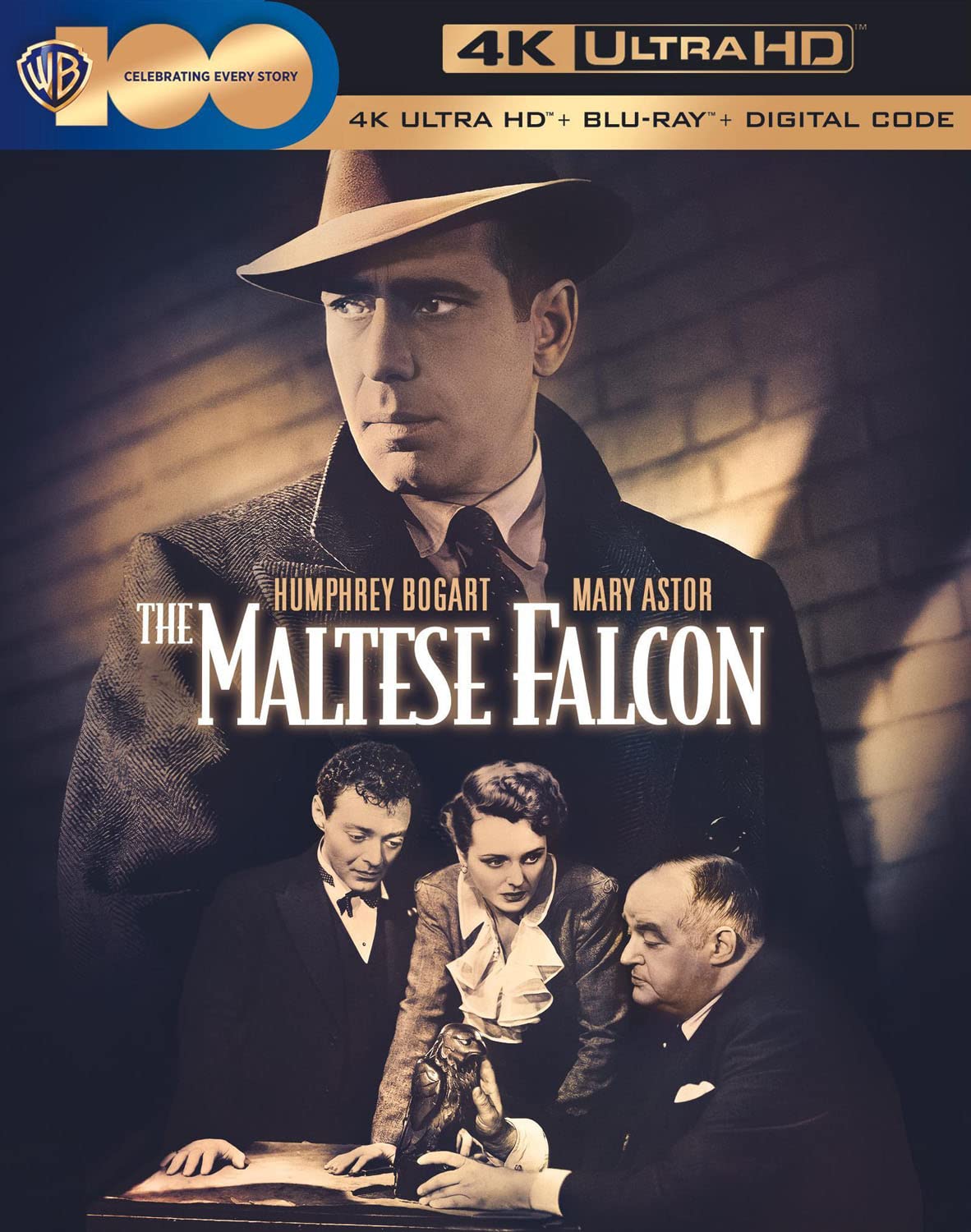
"In 1539 The Knight Templars of Malta paid tribute to Charles V of Spain by sending him a Golden Falcon encrusted from beak to claw with rarest jewels --- but pirates seized the galley carrying this priceless token, and the fate of the Maltese Falcon remains a mystery to this day."
What is not a mystery today is the significant role that The Maltese Falcon has played in cinema history. The film itself was a remake. In fact, it was actually Warner's third attempt to film the Dashiell Hammett novel in a single decade. The first version came in 1931 and starred Ricardo Cortez as Sam Spade. That film also featured Dwight Frye as Wilmer Cook. The film was a moderate success but never really delivered on the potential of the source material. Five years later Warner would attempt a comedy version of the story in Satan Met A Lady. It was a total flop. It would only take another five years before the studio took its third crack at the material. In this case, the third time certainly was a charm.
Posted in: Disc Reviews by Gino Sassani on April 11th, 2023
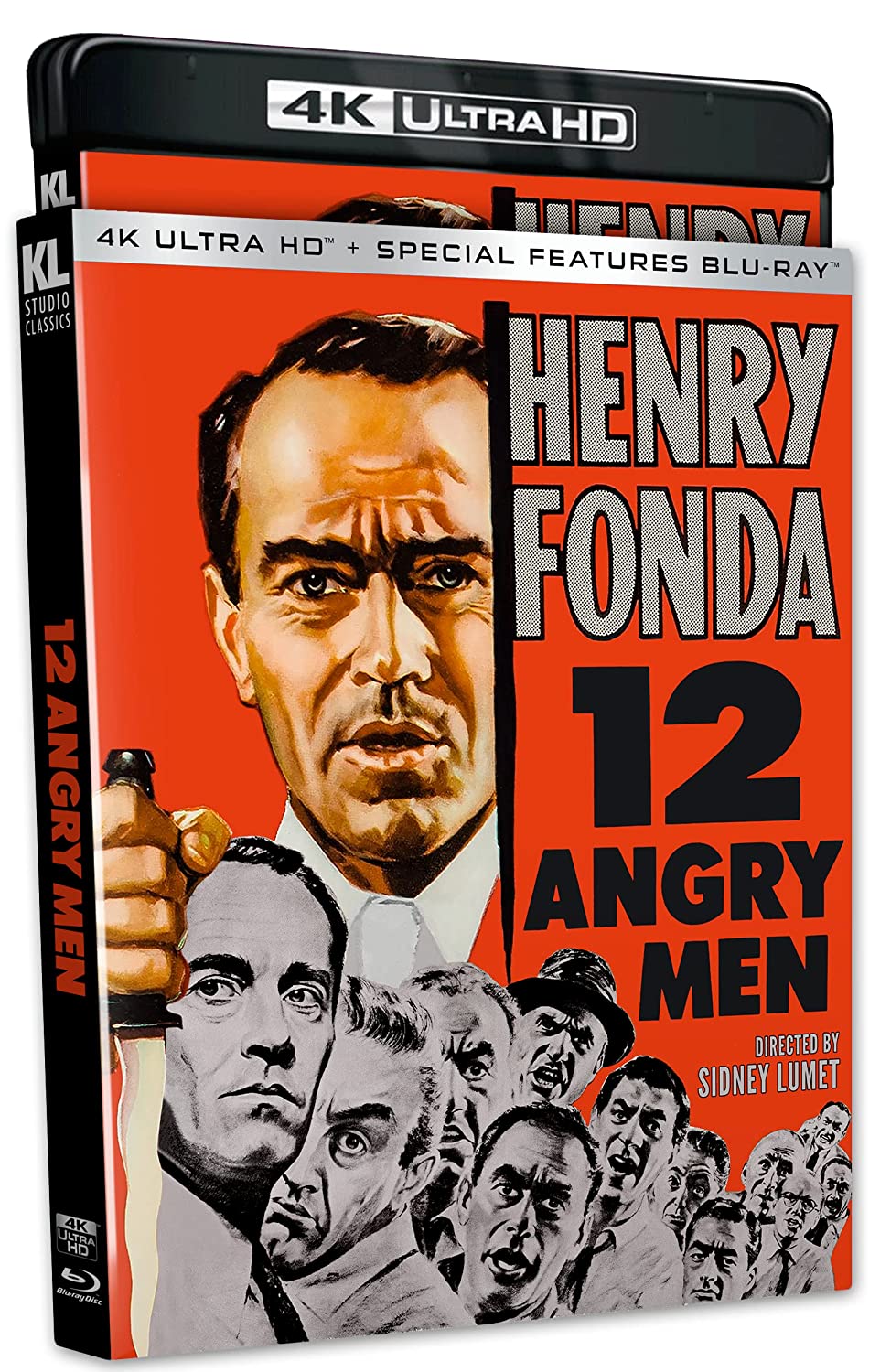
12 Angry Men is one of those rare films that appears to defy all the Hollywood constants and yet become one of the best films of its kind ever made. The setting is entirely too claustrophobic. With the exception of two bookend scenes, the entire film takes place in the tight quarters of a jury deliberation room. The story had only a couple of years earlier been the subject of a live television drama, so the story was far from a fresh idea. The director was a complete unknown who had not at that point directed a major picture. Enter Henry Fonda, the only member of the cast who was a strong A-list name. He was also the driving force behind getting the film made. He produced the film and was involved with most of the major decisions. With all of these elements going against it, you would expect the film to fail miserably, and that’s exactly what it did. During its premier run, the film only lasted a week and was a complete financial failure. It happens all the time, and we would expect the story to end there, but it didn’t.
Enter the 1970’s. There was a rush of independent television stations that were looking for anything and everything to fill up air time. This constant need for programming meant pretty much any film that could be had cheaply was bought and aired, often for an almost nauseating number of showings. 12 Angry Men was one such film, but something amazing happened. People began to notice just how brilliant the film actually was. By then that first time director, Sidney Lumet, had gone on to rather remarkable success. Films like Fail-Safe, Dog Day Afternoon, Serpico, Murder On The Orient Express, and Network had exposed just how much talent the young man actually had. Suddenly the kid from Philly was hot, and the public became interested in his earliest work. Everyone discovered what Fonda already knew back in 1957: Lumet was a genius. These television airings led to revival screenings at local movie houses, and before the first year of the 1980’s this one-time failed film was an admired classic.