Comedy

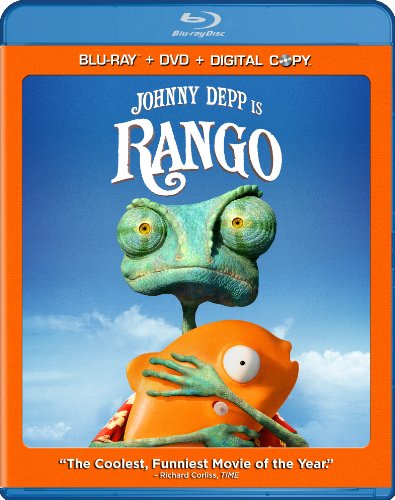
Rango (Johnny Depp) is a chameleon with an enormous imagination. In his terrarium, he has developed a social network with inanimate objects that would be the envy of Castaway’s Tom Hanks. He essentially lives inside his head, but then reality (perhaps – the film maintains a certain ambiguity here) suddenly intervenes and he finds himself cast from his safe, hermetic world. Marooned in the desert, he arrives in the town of Dirt, where his inclination for the dramatic has him claiming to be a sharp-shooting, quick-drawing hero. When he accidentally proves his claim by killing, through sheer stupid luck, a hawk that has been terrorizing the town, he is enlisted by the townspeople to defend them from the tyrants who keep them oppressed and thirsty.

Another day, another self-referential computer-animated film, this one taking on westerns rather than fairy tales. And sure, there are more references than you can shake a stick at, to westerns or otherwise (check out the lightning-fast nod to Depp’s Fear and Loathing in Las Vegas during the highway scene). But this isn’t just a pastiche. The love of classic westerns is palpable, and the film is unapologetic in its adoption of the genre’s convention, but it does take care to fully realize its characters. Visually, the film is extraordinary, displaying a rich palette of colours and moods, an imagination as exuberant as its protagonist’s (a dream sequence becomes exactly what Salvador Dali would have imagined had he been a thirsty chameleon), and the detail work of the animation is bleeding edge. Not everything in the narrative is exactly a surprise, but some pleasures are pleasures precisely because they are familiar, and there are plenty of charming eccentricities to make us forgive the occasional lapses into the been-there-done-that. Certainly one of the better animated films of the year.

“Look, you got what you wanted, I'm officially out of control.”

Based loosely on (Executive Producer) Mark Walberg’s meteoric rise to fame, Entourage has always been a male bonding fantasy; it plays like a boys-will-be-boys version of Sex in the City. Following Vincent Chase (Adrian Grenier) and his posse’s misadventures through the decadent lifestyles of the hyper-rich and fabulously famous carried with it a certain insider’s credibility and made for fun, if not slightly debauched TV voyeurism. HBO sweetened the deal by liberally mixing in hard body nudity with jaw-dropping self-satirizations from a slew of Hollywood cameos the like not seen since The Larry Sanders Show.

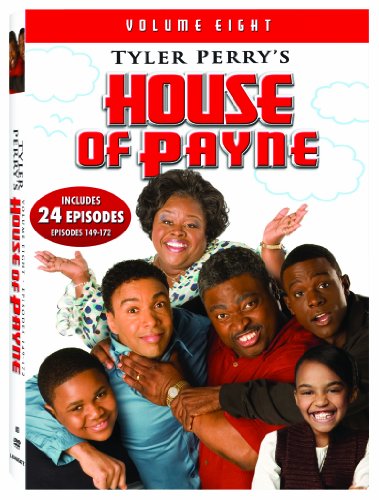
I have never been a huge fan of Tyler Perry's creations. Particularly, House of Payne is something I really don't care for. Mostly this is due to the fact that the original story that made the household dynamic of mixed family members what it is throughout the series came from a story about a woman who was a crack addict and arsoned her own house. After seeing this story, and the completely insensitive way it handled drug addiction struck me as so foul that I have yet to find forgiveness. So here I stand, weighing my possible bias' versus my standard issue journalistic neutrality as a reviewer, and hoping my opinion remains respectable.

This bundle of 24 episodes continues the series' usual path of melding corny humour with major issues such as theft, drugs, racial topics and so forth. As much as it tries to be poignant, the setup and execution of each story is too unnatural to be ever be taken seriously. As well, there are just far too many negative black stereotypes being used for my own comfort level. I'm not asking it to be like the Boondocks and try to explode stereotypes while displaying them, but there certainly could be a lot more efforts made to not fall into such ugly situations or characters (none of which I shall honour by repeating here...if you are a masochist, investigate the show yourself).

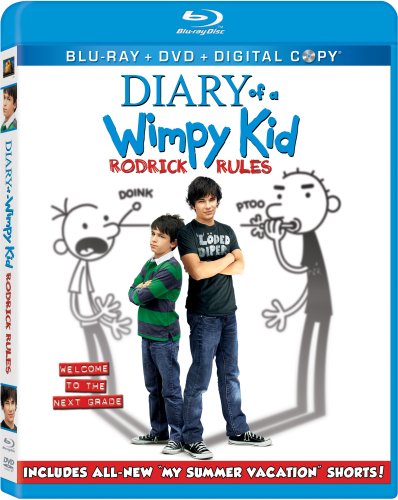
One of my favorite books growing up was Dear Mr. Henshaw by Beverly Clearly. It was a charming book that told the story of a child who would write letters to his favorite author. But somewhere in the middle of the book, it turns from letters to a journal of his life in the second grade. The book series, Diary of a Wimpy Kid focus on the experiences of Greg Heffley and told through the pages of a journal. Today, I get to review the second movie adaptation subtitled: Rodrick Rules.

Like the pages of a drawing book, we join the Rocket Rollers Roller Rink (say that five times fast) where they are welcoming back Westmore 7th graders. A car pulls up and some drawings get out? Oh I get it. By the way, the sign has now changed to, More Lame 7th Graders courtesy of two 8th or 9th graders I assume. As the drawings come out, they dissolve to a family of four.

The setting is a comfortably large house in the English countryside. Kin and friends have gathered for the funeral of the family patriarch bringing with them their foibles, eccentricities, and disasters waiting to happen. At the centre are the two brothers, Daniel and Troy (Matthew MacFayden and Rupert Graves). The former struggles under the shadow of his famous brother’s success as a writer, his plight encapsulated by the fact that everyone in attendance is disappointed that Troy will not be giving the eulogy. But his problems are about to become much, much greater, as the funeral descends into a chaos of unwelcome revelations, blackmail, drug freak-outs.


Director Frank Oz here rebounds from the disaster of his Stepford Wives remake with a pure slamming-door farce, and, for the most part, he succeeds. While Dean Craig’s script isn’t exactly bursting with surprises, it does have plenty of fun antics, and there are many “oh boy here comes trouble” anticipatory moments to revel. The cast is strong, with Alan Tudyk (currently essaying yet another accent to fine comic effect in Transformers: Dark of the Moon) and Peter Dinklage turning in particularly funny performances. If the shenanigans are ultimately a little familiar, think of this as the comedy equivalent of comfort food. Shepherd’s Pie may not be enticingly new, but it goes down fine all the same, and so does this.

A high school football team has a longstanding tradition of bringing their team good luck by sleeping with virgins and then crossing their names off of a secret list. Three girls on said list figure out the football player's plan and decide to strike back with pranks and some feminist rebellion that is supposed to be inspired by Lysistrata.

First and foremost, let me immediately address any connections to Lysistrata this film claims to have. While Lysistrata is about women withholding sex from men because of they have gone to war (to put it in simple terms), Wild Cherry is more about the girls seeking revenge over a sense of humiliation that their boyfriends may not like them as much as they'd hoped. Lysistrata empowered its female characters while the three protagonists of this film are ultimately still just trying to be liked by the popular boys. The rebellion they stage builds to nothing more than a couple juvenile pranks and a lame speech made at a the most sparsely attended football match in cinematic history.

Happythankyoumoreplease is centered on a group of twenty something New Yorkers at various levels of transition: love, career, and growing up.  The film is written, directed, and also stars Josh Radnor (How I Met Your Mother).  Radnor’s directorial debut showcases a colorful side of New York and a variety of colorful characters. The group of young actors all put together solid performances which is essential for an ensemble cast.  This is another festival friendly film with a solid group of actors that is definitely worth a look.

All too frequently independent films are stymied by previous failures and clichés. It’s refreshing when a film utilizes prior missteps to shape its story. The multiple narrative is difficult to pull off if the characters are flat. The integral part is that the characters need to be interesting.  I found myself drawn to Sam Wexler (Josh Radnor) he’s an aspiring writer that finds himself taking care of a foster child. Sam is the lead of the ensemble cast as well as the character experiences the most development. Radnor’s performance is more than just a guffaw or two.  He actually demonstrates some range with his ability to show compassion as well as have some comedic timing. He is undeniably charismatic and had some chemistry with Mississippi (Kate Mara). I found Annie (Malin Akerman) to be the weakest of the cast. Throughout the film, I found myself having to get through her scenes to the more interesting storylines.  Most people would chalk that disinterest up to writing. However, I feel like good actors will command the viewer’s attention whenever they are on camera and she just does not do it. As an up and coming actress, she just needs to be better.

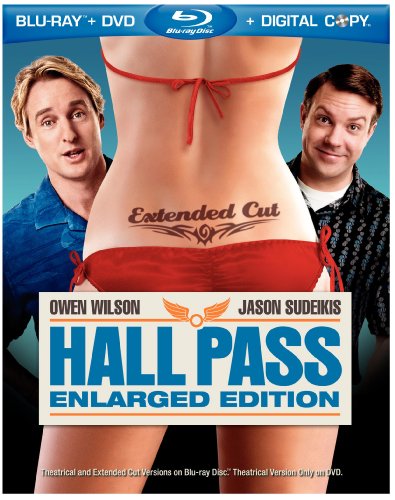
A pair of serial “gawkers” are getting into awkward spots in their marriages until their wives offer them a 6-day “Hall Pass” that grants them freedom to act as single men for that time. As each couple go their separate ways, each do battle with the temptation to act on their freedom, versus learn some sort of lesson about the virtues of domestic monogamy.

Each scene has the actors standing in such a staged manner that nothing feels natural about this film. Not that the token R-rated language and lowbrow gags didn't already give that effect, but there is something to be said about actors being able to deliver their lines without cheating their bodies towards the audience, as if this were a theatre production. If only this were some magical new form of performing where a camera is able to show the audience angles of a performer we cannot see from stage, without the actor having to move at all! My goodness, what a marvel that would be! Alas, the Farrely bros have forgotten what century we live in and let each scene look the first off-book day for amateurs in an Intro to Comedy Acting course.

There is hardly any differentiation between the Jackass series and its films, aside from a few more celebrity cameos and bigger budget stunts as the years have gone by. A testament to this is the “.5” editions of each film, which are literally cobbled together using rejected sketches and stunts from the original release. Unlike when such films as X-Men or Spiderman put out a DVD called 1.5 or some such, this is not simply an expanded version of the original release, but a whole new film. Saying that the Jackass series has X amount of seasons on TV or X amount of movies is relatively useless because that would suggested there is a more defined time line in their history, and we'd have to exclude the copy-cats and offshoots such as Viva La Bam and Wildboyz in the canon. These boys have been filming for over a decade and whenever they get 3 hours worth of usable footage, they put out two movies (one to theatres, one straight-to video), that's the basic gist of it.

There is honestly not that can be criticized because, at this point, audiences know exactly what they're in for when it comes to Jackass. Mind you, those that are fans will notice that the stunts have become tamer. In some backwards way, some of the older stunts had either a way of being entertaining for being clever or cute in perfectly harmless ways, or even slightly educational when it came to becoming human guinea pigs for tazers, rubber bullets or other devices that are being used to harm humans on purpose. The stars of Jackass have become just that: “stars.” They have invested many injuries and humiliations to get to where they are today, and are not as willing to take chances these days. There was an interesting bit about paranoia and just how miserable being on a Jackass set can be because pranks can happen at any point. Perhaps some of the stars' hesitation comes from being exhausted of being victimized whenever they turn their backs or attempt to nap.

I never had a big momma growing up. My mother and each of my grandmothers were never what I would call big. My mom and her mom barely cleared 5 feet tall and my grandma on my dad’s side while pretty tall was very wiry and thin. So I never had the huge momma experience and it was probably for the best. However, I am not foreign to the concept of Martin Lawrence playing a Big Momma as I saw the first movie. Two movies later, does it still have its magic?

Malcolm Turner (played by Martin Lawrence) is a FBI agent who specializes in the art of disguise and witness protection. But today, he is threatening his local mailman (played by Ken Jeong) to pull the postal vehicle over. Eventually he does and then the two get into a fight because the mailman has to deliver the mail. Malcolm gets the letter he was looking for. His son has just been accepted to go to the school he went as young adult, Duke University.