Comedy

I always hated Moonstruck, but do not get me wrong, this is a positive review. See, it seemed like, back in my childhood, every time I wanted HBO or Showtime to play The Goonies, they were always in the middle of yet another airing of this Academy Award-winning romance. It was a boring movie about love with that lady Cher, who needed to stick to the radio, and stay off my movie screens. My, how a little age and maturity can alter perceptions. As a seven-year old boy, I just did not have the sensibility for this film. And while many would argue I have not grown up much in the years following, I gauge all such detractors wrong by the simple fact I now enjoy her shining moment thoroughly. I mean, there has to be some growth there. Right?

Moonstruck is a modern film, which uses the model of classical Italian comedies as its primary structure. In fact, some elements are directly lifted from the divine comedies of yore, but Norman Jewison, along with a top-notch script, and a terrific cast, lend a freshness not seen in the romantic by-products of today, which make the film more homage than rip-off. For one, the story centers on a 37-year old widow (Cher) not your common leading lady role whose superstitions dictate her happiness. She agrees to marry an older man, whom she admittedly does not love, just to bring some structure and stability to her life. Then she meets her fiance and his estranged younger brother, and a spark ignites that turns her world upside down in a good way. The eccentricities of her Italian-American family are mined to perfection with both warmth and humor. The film explores how cruel the closest people can be to one another without wrapping viewers up in any negativity. I can finally see what the critics were raving about – a good, solid film.

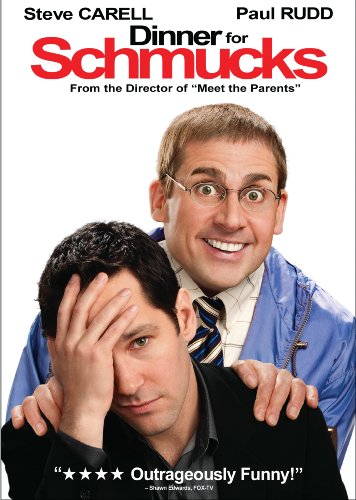
Paul Rudd is desperate for a promotion. Moving from the drudgery of the sixth floor to the executive seventh will, he feels, cement his financial status and convince his girlfriend (Stephanie Szostak) to marry him. Opportunity knocks, but also has a price: he must find an idiot to bring to boss Bruce Greenwood’s dinner party, where these unfortunates will be ridiculed. Rudd doesn’t like the idea, but then he (literally) runs into Steve Carrell, a man of such transcendent idiocy that Rudd can’t resist the siren call he represents. But before they can make it to the dinner, Carrell’s well-meaning stupidity threatens to completely derail Rudd’s life.

This is a remake of 1998’s The Dinner Game (Le diner des cons). Francis Veber’s farce clocked in at 80 minutes. Jay Roach’s bloated retread is half again as long, and only half as funny. The Paul Rudd character in the original, played by Thierry Lhermitte, was a superior, cruel SOB who deserved to have his life taken apart. Furthermore, the characters never actually make it to the dinner of the title. The remake, of course, finds it necessary to stick literally to its title, and gives us the dinner, thus inviting us to engage in precisely the form of cruel laughter it pretends to condemn. It also tries to make Rudd sympathetic, and having his character be a nice guy runs counter to the very premise of the film. End result: a film that tries much too hard to be funny, laboriously working every last predictable gag until those horses are fit for nothing more than the glue factory. There are some amusing moments, but this is, by and large, a gigantic, time-consuming waste of the talent involved.

Paul Rudd is desperate for a promotion. Moving from the drudgery of the sixth floor to the executive seventh will, he feels, cement his financial status and convince his girlfriend (Stephanie Szostak) to marry him. Opportunity knocks, but also has a price: he must find an idiot to bring to boss Bruce Greenwood's dinner party, where these unfortunates will be ridiculed. Rudd doesn't like the idea, but then he (literally) runs into Steve Carrell, a man of such transcendent idiocy that Rudd can't resist the siren call he represents. But before they can make it to the dinner, Carrell's well-meaning stupidity threatens to completely derail Rudd's life.

This is a remake of 1998's The Dinner Game (Le diner des cons). Francis Veber's farce clocked in at 80 minutes. Jay Roach's bloated retread is half again as long, and only half as funny. The Paul Rudd character in the original, played by Thierry Lhermitte, was a superior, cruel SOB who deserved to have his life taken apart. Furthermore, the characters never actually make it to the dinner of the title. The remake, of course, finds it necessary to stick literally to its title, and gives us the dinner, thus inviting us to engage in precisely the form of cruel laughter it pretends to condemn. It also tries to make Rudd sympathetic, and having his character be a nice guy runs counter to the very premise of the film. End result: a film that tries much too hard to be funny, laboriously working every last predictable gag until those horses are fit for nothing more than the glue factory. There are some amusing moments, but this is, by and large, a gigantic, time-consuming waste of the talent involved.

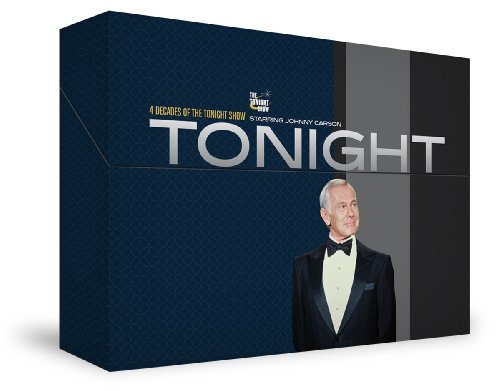
He's been called the King Of Late-Night. Today when there are so many talk shows on at pretty much every hour of the day, that might not appear to be such a huge distinction. There were talk shows on before Johnny Carson, but there can be no doubt that he invented the modern late-night show. For 30 years Johnny Carson was like a member of the family for millions of Americans. He was a friendly face at the end of a long, stressful day. He was that dependable routine that you could set your biological clock by. You would lie back in bed and let Johnny bring the world to you. You could count on a wide assortment of entertainment experiences. Johnny would deliver a monolog that often touched on the hot topics of the day. The news programs might be depressing, but Johnny always gave you a reason to crack a smile at the worst of times. There were characters like Aunt Blabby and Carnac who became comfortable old friends. The top names in show business competed for precious minutes on his stage, and if you were very lucky you spent some time on the couch and some face time with Johnny and his faithful sidekick Ed McMahon. Johnny could make or break your career in three minutes. He brought you the best of the new comics and musicians while delivering the big stars just as well. When you made it to The Tonight Show, you really made it.

There will never be a complete season or complete series set for Johnny Carson. There are several problems that present themselves almost immediately. Johnny was on nearly every night for thirty years. Do the math and you'll realize there have been thousands of episodes. The sad fact is that many of these moments are lost forever. Footage has either been lost completely or is in such bad shape as to be almost unwatchable. The was so much variety that having a full season would be a logistic nightmare to find those favorite moments. No, there just isn't ever going to be a complete anything when it comes to Johnny Carson. But Respond2 Entertainment has come about as close as I would have believed possible with the extraordinary release of 4 Decades Of The Tonight Show. Now, I hesitate to even call this a comprehensive collection. Again, I'm just convinced that wouldn't be possible. This comes as close as it gets.

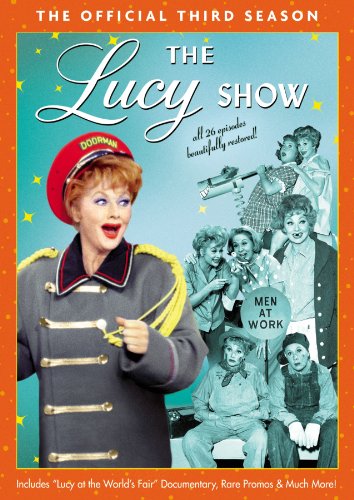
This was Lucille Ball’s follow-up to I Love Lucy. Here Ball is a widowed mother of two, sharing her home with best friend Vivian Vance, who is a divorced mother of one. All the other members of household are, of course, faced with the disasters triggered by Lucy. I screened this set immediately after viewing its close contemporary, Petticoat Junction, and the difference between the two was instructive. There are plenty of hokey gags and situations on The Lucy Show, but there is an enormous difference between the shows, thanks to the comic genius of Lucille Ball. Her energy fills each episode, her timing is spot-on, but there is also her commitment to a type of physical comedy that to this day remains pretty much the exclusive domain of male performers. Not only does she make this style her own, she grounds it in a female reality. There is a reason she was so beloved a performer, and why her work still stands up today.

The third season offers up even more laughs. Some highlights of the season include:

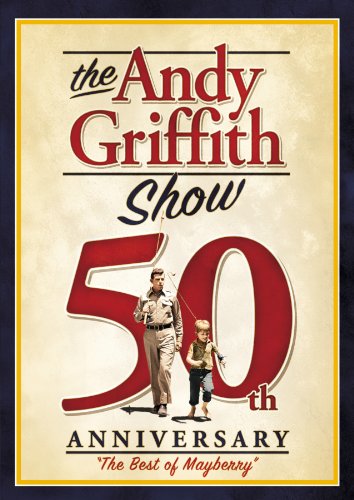
Who doesn’t have a soft spot in their heart, if not their DVD collection, for The Andy Griffith Show? The denizens of Mayberry have been with many of us our entire lives. For most of America, The Andy Griffith Show has become the template for any small rural town. The characters stand as prerequisite citizens in any said town. The town drunk, the local barber, the motherly little old lady, and the corner mechanic all look like Otis, Floyd, Aunt Bee, and Goober to most of us now. Griffith himself brought fine qualities to his role of Sheriff Andy Taylor, but it was Don Knotts as the incompetent but lovable deputy Barney Fife who stole the show. And who was that sweet little boy? He grew up to be a first class filmmaker with plenty of Oscars on the shelf. No question that The Andy Griffith Show started something back in 1960.

Sheriff Taylor (Griffith) is a widower with a young son, Opie (Howard). His extended family includes lovable doting Aunt Bee (Bavier). His deputy, Barney (Knotts) appears to be a few trout short of a stocked creek. They live in the small southern town of Mayberry.

The comedy team of Jason Friedberg and Aaron Seltzer should be commended for their unwavering attempt to destroy the spoof comedy entirely. Sure, they aided the Wayans brothers in creating the first Scary Movie film (which is decent spoof film) but in 2006 they started their campaign with Date Movie and continued right through Epic Movie, Meet the Spartans, Disaster Movie, and now Vampires Suck. Did they succeed? And did it take the recent loss of Leslie Nielsen to have us be reminded that spoofs where once a glorious and enjoyable thing.

Well, while their previous efforts (I'm cringing at the idea that any “effort” was placed into making their films) where bloated with endless pop culture references that were dated before being made, Vampires Suck mostly just runs on one, the Twilight series. Yes, there is still a parade of references made, mostly to reality TV shows such as Keeping up with the Kardashians and Jersey Shore, but they mainly stick with vampire and werewolf gags that have either been done already or are simply too weak and witless to even register as a complete joke.

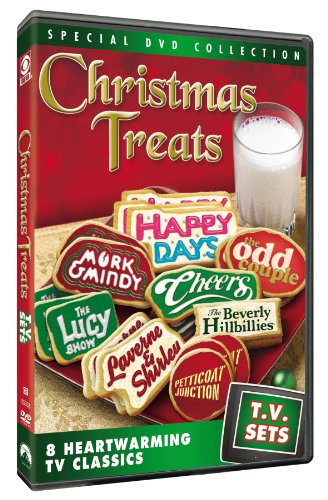
This single DVD contains 9 Christmas episodes of CBS’s most endearing comedies. All were influential to those that came after. These weekly shows offered that much-needed relief from the pressures of whatever decade they appeared in. The stars are names that everybody knows, even those that appeared 50 years or more ago. Celebrate Christmas with these classic moments in television history.

In the first season of Showtime’s Californication, we were introduced to David Duchovny’s character, bitter yet upbeat writer Hank Moody. Hank, after moving to Los Angeles on the heels of his first novel – a critical darling entitled “God Hates Us All” – has recently lost his long-time love and, by extension, his daughter, to a straight-arrow bore who makes his girlfriend Karen (Natascha McElhone) feel safe.

The first season told us the story of Hank’s attempts to win Karen back and his increasingly perilous relationship with a sixteen-year-old Lolita, whose inclination for combining sex with a wicked right hook leads to one of television’s all-time great novel titles. Oh yeah, and it also featured lots and lots of raunchy sex between Hank and many gorgeous women. This was a major reason for the show’s notoriety, but what really makes the show work is Duchovny’s portrayal of Hank. He imbues him with a charming kind of good-natured nihilism and, even when he is being a grade-A jackass, we still like him.

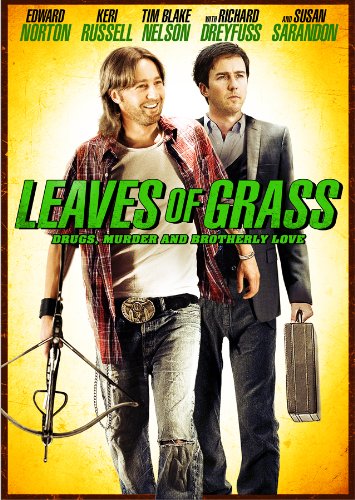
Leaves of Grass, the latest film from writer/director/actor Tim Blake Nelson, is one of those rare films that defies both description and expectation. While marketed as a violent stoner comedy along the lines of Pineapple Express, Leaves of Grass is far more difficult to categorize. Yes, there is comedy, though not as much or of the type one would expect. And yes, there is violence, but a far more realistic and less cartoony variety than you would think. But there is much more to this little film - there is thought and reflection and philosophy and poetry behind every piece of dialogue, and you get drawn into it so that, halfway through the film, it doesn’t even strike you as odd that you just watched Keri Russell recite Walt Whitman while gutting a catfish.


As the film opens, we are introduced to the lead character, Bill Kincaid (Edward Norton in the first of his two roles here), a Classical Philosophy professor at Brown. We meet him as he lectures an adoring group of students on Plato and soon afterward is fighting off the advances of a young female student. Bill is clearly a brilliant academic, and is being courted by the big schools. We also learn about his humble roots; he grew up poor in a little town near Tulsa, and earned his way into the academic elite.