Comedy

"Well when you gettin' "got" and somebody done "got" you and you go "get" them, when you get 'em everybody's gon' get got."

When Tyler Perry started writing his small plays, he probably never had a clue just how far it might all go from there. The plays had a solid audience, but there was always concern that the appeal would be too narrow. That didn't stop Perry from putting together a few relatively low-budget films located in his adopted film hometown of Atlanta. For the most part the studio got pretty much what it expected. The payoffs weren't huge, but they more than covered the costs. Perry's creativity attracted some big-name actors and cameos, and that wasn't bad for business either. The mainstay of his moderate success was his cross-dressed character, Madea. Mabel Simmons was a wildcat old lady. She didn't take no "stuff" and she spoke her mind. The racial profiling here was a bit rough, but nothing more than the blacksploitation films of the 1970's. Anyway, it was all harmless fun, and no one seemed to be all that upset over the characterizations. There was talk of sending Madea to that big old folks’ home in the sky when the numbers for Madea Goes To Jail came in. They weren't good. They were extraordinary. The film pulled in over $90 million at the domestic box office with very little money spent. Tyler Perry, that one-man writer/director/producer/ and three-character actor, had a bona fide hit on his hands. And we’ve continued to deal with loud-mouth Madea ever since.

Tyler Perry once again dons multiple costumes to incarnate several characters, most prominently Madea, the no-nonsense but mischievous matriarch of a very fractious family. She is ordered by the court to take in a runaway as a foster child, and that project of reclamation joins that of helping out her nieces. They have a mother from hell. One sister is struggling to learn how to love again, while the other is being forced into marriage with the hideously abusive Blair Underwood.

I hope that outline makes the plot sound as bizarrely split as it really is. This feels like two completely different movies yoked together with violence. On the one hand, you have Perry mugging it up as Madea and her husband, dispensing pithy aphorisms and grits in what passes for comedy. On the other, you have the saga of the nieces, which involves horrific abuse both mental and physical, and builds to emotional climaxes so over the top we’re in Southern Gothic territory. And then the slapstick re-enters the picture for a dangerously simplistic solution to at least one real problem. This is a picture as smug in its own morality as it is confused in its tone.

As one could expect, I read a lot of books when I was a kid. I stuck with the classics from Ronald Dahl, Tolkien, and even Charles Dickens . But among all of the male authors in this boy's life, I also read a few female ones too. One stands out in particular, Beverly Cleary. From Henry Huggins to Runaway Ralph and the beloved Dear Mr. Henshaw , I clearly enjoyed her work. But I must confess, I even read the beloved Ramona books, so naturally I was delighted to see Ramona and Beezus on my doorstep.


Ramona Quimby (played by Joey King) is 8 and three quarters and attends the third grade. She would be a normal student if it weren't for one thing: her overactive imagination. It gets her into trouble more often than not and leaves her at the mercy of her third grade class. Apparently, it also leads to less than desirable grades and a report card that she has to hide when she gets home.

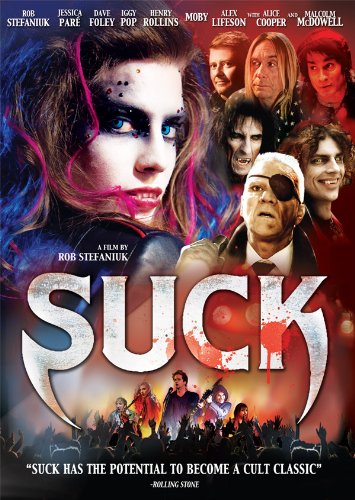
The Winners are anything but, being an undistinguished rock band playing to tiny, apathetic audiences in nowhere bars. Their time has not only passed, it never arrived. But just as they seem headed for the scrapheap, their bass player (Jessica Paré) is bitten by a vampire. Though her newly acquired taste for blood is a bit of an inconvenience, leading to some extremely messy murders to clean up, she now mesmerizes audiences, and the band catches fire. Leader Rob Stefaniuk is so desperate to catch a break that he is willing to turn a blind eye to just about anything. But complications loom, not least of which is Malcolm McDowell in full Van Helsing mode, heavily armed and sporting an eye patch.

Suck has the potential to become a cult classic,” reads the blurb from Rolling Stone, and that might well turn out to be the case. But Suck also rather desperately wants to be a cult classic, and that desire can stand in the way of its becoming the genuine article. It pulls all the right moves – black humour, full musical numbers, rock star cameos, outrageous gore, Malcolm McDowell – but those moves feel just a bit too self-conscious. The songs are rather bland, and the humour is hit and miss – though to its credit, when the film is funny, it is very funny (Iggy Pop's deadpan turn is one highlight). The flashback scenes of McDowell's traumatic first vampire encounter are very well done, cleverly incorporating repurposed footage of a young McDowell. In the end, while not everything works here, what does work, works well enough to make this worth a rental.

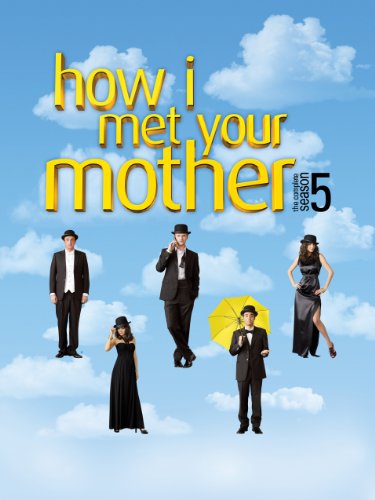
I don’t like referring to myself as a “fan” of anything. The word leaves a bad taste in my mouth; it suggests a kind of mindless devotion that doesn’t leave room for noticing any shortcomings in the subject of one’s devotion - The legions of Twilight fans immediately spring to mind. However, if being a fan means to regularly watch, re-watch, and enjoy a show for a period of years, then I can call myself a fan of How I Met Your Mother. The show has had its high and low points, and I must admit that during season 5 I was among the critics of the show who said it’s losing momentum and maybe it’s time to wrap this thing up already. Upon re-viewing the season for this review, my position, though unchanged for the most part, has softened a bit.

For those unfamiliar with the show, How I Met Your Mother is a hold-out sitcom of a bygone era in a way; it’s among the last of the old three-camera, laugh-track sitcoms, yet it manages to inject fresh ideas and some edge into the old horse now and again. It has consistently found original ways to tell its stories and continues to utilize its greatest strength, a superb comedy ensemble.

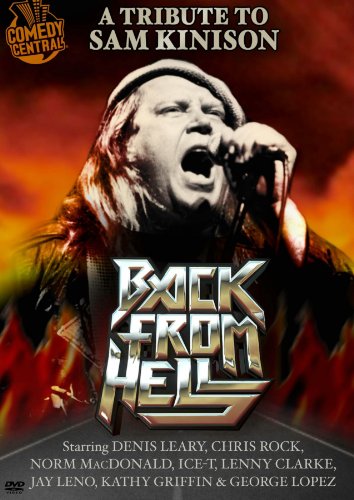
Dear Faithful Readers, Due to the nature of Sam Kinison's work on stage and off stage, this review may contain foul but funny humor, bad but heeeeelarious language, and not so politically correct (but correctly off the wall) jokes. Please be aware before you continue to read. Yours Always, Noms

*Yells into a microphone* NOW LET'S GET THIS PARTY STARTED! Oooooooo owwww owww owwwwwwww! For those of you who don't know, Sam used to be a preacher. No, I am not a liar dangit, look it up! But after his divorce with his first lousy skeeze who broke his heart into a billion pieces, I mean *cough* wife... he left that behind and became a comedian. And not just any comedian, an effin legendary comedian. It is just sad that his life was cut short, and not because of drugs or alcohol that HE used (which everyone and their mothers swore was gonna be the cause some day) but due to a drunk driving, 17 year old, kid. The world works in mysterious ways.

This series from Comedy Central began as a low-budget film hosting show in a small television station in Minnesota. It was the brainchild of Joel Hodgson. It ended up running for 11 years and a feature film version.

Mystery Science Theatre is an acquired taste. For me, I’ve really got to be in that certain mood to watch it. That’s the beauty of these DVDs. You pop them in when you’re ready. The idea is pretty whacked. Depending on the season you’ve got, Joel or Mike is trapped in space on the “Satellite of Love”. Doomed to spend his life watching very bad films, our hero makes the best of a bad situation. He uses his resources to construct a couple of robot pals. There's Crow T. Robot (Beaulieu), Tom Servo (Murphy), and Gypsy (Mallon). Part of an experiment together, they watch the films from the front row, constantly ranting throughout. If you’re like me, you’ve invited a few friends over to watch a schlock festival. The movies weren’t as important as the banter you created while watching. That’s exactly what you see here. The silhouettes of our host and his robots dominate the lower portion of the screen, where they provide alternative dialog and sometimes witty commentary on the action. The two evil station owners/mad scientists send them a new bad film each week to observe their reactions to the bombs. The films are broken up by off-the-wall skits and fake commercials to alleviate the tedium. This DVD collection is better than some because it includes films from four different seasons to give you a good sample of the overall series. This edition features an all Joel collection.

Having made it through WWII, fellow soldiers Bing Crosby and Danny Kaye are now a song-and-dance team. Kaye is worried about the lack of romance in Crosby's life, but that problem seems likely to be resolved when sister act Rosemary Clooney and Ver-Ellen show up. These two pairs of entertainers must pool their talents in order to save the inn run by former general Dean Jagger from financial ruin.

The plot is, of course, very thin, a mere excuse on which to hang the sentiment and the songs. This is, of course, not the film which originated the title track – that was the earlier Holiday Inn (1942), which Crosby was teamed up with Fred Astaire. The holiday this time is strictly the Christmas one, and White Christmas goes its predecessor one or two better in terms of spectacle, thanks to Technicolor and VistaVision. The end result is not really the classic it self-evidently wants to be, but it and its cast are extremely likable.

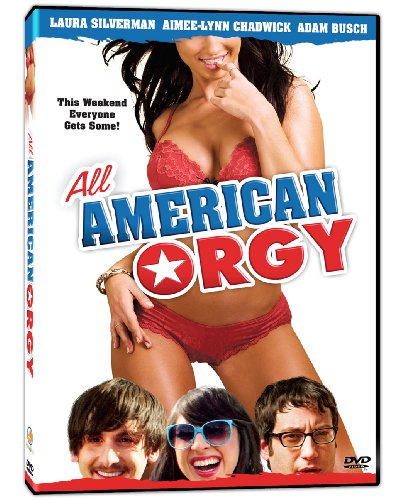
Three couples are meeting for a trip out to the country to have an old fashioned, American orgy. What instigated said orgy is mostly a mystery, as is what truly keeps them motivated to go through with it. Needless to say, most of them are in it for reasons beyond being carefree and their ulterior motives and inner demons will only spoil the party.

The pacing of this film is like that of an art film...which is code for saying it's slow. This would not be a hindrance on the film if the mood of did not waver so often between being painfully uncomfortable and being curiously intriguing (more often the former). Some of the characters are perpetually unlikeable, while others are just so bland that one could hardly care enough to notice if they were likable or not. The last half of the film offers more for the audience as they inch closer to the moment of moving their relationships past casual friendship...and then when they do well beyond that, but that tension is all the film has going for it.

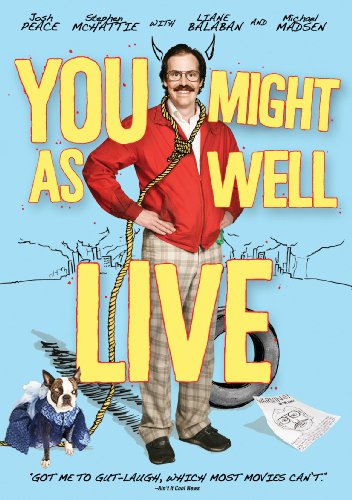
Robert Mutt feels like a hopeless loser and tries to “off” himself (several times). Even in death, he is a failure and finds himself in a mental asylum. Upon receiving some experimental treatment from a new therapist, his confidence is (seemingly) restored and he sets back out into the real world to become a real “somebody.”

Without a doubt, this would be classified as a “Dark Comedy” for it does not skimp on the nudity, vulgar jokes, drugs, violence, cannibalism, and other assorted bits of madness and politically incorrect gems. At the same time, the film is almost endearing in how relentless it is. The disabled are fair game for jokes, but also play the most sentimental roles for our lead (especially one catatonic girl who wins his heart). Mutt is as naive as a young child, and even though the man who is bent on ruining his life is clearly a manic pedophile, he still assumes the best of him and does his best to simply get around him. Mutt's quest is an adorable one but it takes him to the strangest places imaginable. Thanks to hallucinating his life long hero, Clifton Manitoba, an infamous baseball player, and getting some advice from said hallucination, Mutt does everything from dealing out animal porn DVDs to roller skating with a transvestite to find the three things he needs to fell like a somebody: some money, a girl, and a championship ring.