Posted in: Disc Reviews by Gino Sassani on March 17th, 2009
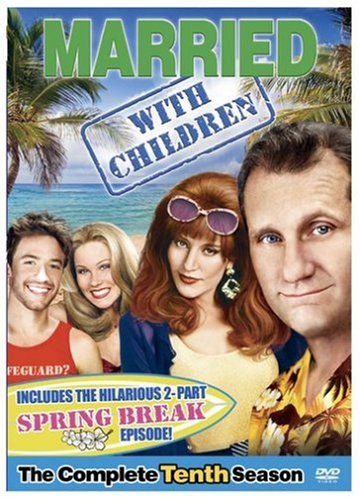
On October 9th 1986 the network television landscape did something that hadn’t been done successfully in its 40 year history. A fourth network broke on the airwaves. It was called FOX and wasn’t even going to broadcast 7 days a week. Most pundits in the television industry never gave it a chance. Most of the channels were in the double digit UHF range. This had long been considered the independent station area, and a lot of televisions didn’t pick up this band as well as the established VHF band. And for a while it looked like the network was going to disappear almost as quickly as it appeared. But by 1987 the network suddenly had two big hits on its hands. The first was a silly cartoon, originally aired as a throwaway segment on a variety show. The cartoon featured the most unlikely of television families, The Simpsons. That show is still with us nearly 25 years later. The second hit was a live action series, also based on a very unlikely and this time seemingly unlovable family, the Bundys. Right from the start there was criticism that the name itself was a death knell. At the time America was still dealing with the pending execution of a far more infamous Bundy. Married With Children, however, would become an almost instant break-out hit.
Al Bundy (O’Neill) was a working stiff. He had seen his high school glory years evaporate into the rearview mirror of his ancient Dodge when he married his childhood sweatheart (no, I did not misspell), Peggy (Segal). The red-headed woman would soon become his curse. She was lazy. Peggy wouldn’t know what a stove looked like if it fell on her. She was content to sit around all day while Al worked for minimum wage at a mall shoe store. Tying Al to his meager existence were two children. Bud (Faustino) was a frustrated teen who couldn’t seem to find his cool. Girls scorned him, and he appeared to be headed to the life of his father. Daughter Kelly (Applegate) was a teen slut. She slept around and used her looks to make her way in life, which was likely good, because she was dumber than rocks. Al was also plagued by neighbor Marcy (Bearse) who was a feminist and usually a thorn in Al’s behind. Her second husband, Jefferson (McGinley) was often Al’s accomplice in trouble. Most of the material involved Al’s suffering and the apathy of his family to his lowly station in life.
Posted in: Disc Reviews by Gino Sassani on March 17th, 2009
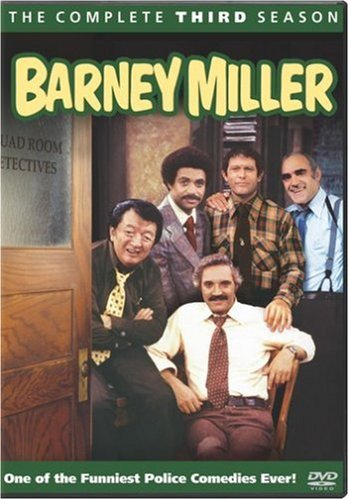
In 1976 a New York media group conducted a survey of the NYPD detectives. The question was: “Of all the TV cop shows, which most accurately portrays life as a detective?” The overwhelming response was the comedy Barney Miller. Seems real cops related to the daily grind and weekly wackos of Barney Miller. Let’s not put aside that this was also one of the most consistently funny shows on television. I remember it took me a while to accept Abe Vigoda in such a light role as Fish. My first exposure to Vigoda was the ruthless mobster in The Godfather. Barney Miller always managed to be funny while still telling a good short story. The characters were always wonderful.
Captain Barney Miller (Linden) was in charge of the detective squad at New York’s 12th Precinct. Among his detectives were a colorful group of odd individuals. Detective Ron Harris (Glass) was writing a book that detailed his life as a New York detective. It was called Blood On The Badge and was far more fiction than fact. He prided himself on his stylish clothes and culture. Arthur Dietrich (Landesberg) was a know-it-all. He had an almost encyclopedic base knowledge on everything and anything. He would bore his colleagues with his endless drone of facts. Stan “Wojo” Wojciehowics (Gail) was the typical New Yorker everyman. He might not have been the brightest tool in the box, but he more than made up for it in heart. At times his desire to show initiative would end up getting the squad in trouble. Fish (Vigoda) was past his prime and spent more time in the men’s room than actually fighting crime. He was always suffering from one old age ailment after another. His bulky frame made him look intimidating, however. Nick Yamana (Soo) was a lovable Japanese guy who wasn’t always the first to understand. He had a literal way of interpreting speech which led to some very classic misinterpretations. He was also a gambling junkie, often on the phone with his bookie. From time to time the squad would be visited by the clueless Inspector Luger (Gregory). He often reminisced about his glory days and often expressed regret that he didn’t go down in a blaze of glory like his old friends had. He was usually intruding upon the squad’s time with long pointless stories. Finally, patrolman Levitt (Carey) was an ambitious uniformed officer who wanted to be a part of the squad, which he eventually did.
Posted in: Disc Reviews by Gino Sassani on March 11th, 2009
I often have trouble believing that South Park has been around for as long as it has. It’s not just the passing of 12 years, but the sheer brilliance in the face of an increasingly politically correct society. It’s like watching old episodes of All In The Family. Who believes that Archie Bunker would have any chance of survival in the 21st Century? It’s no wonder that Norman Lear has become involved in the series. It’s the last remaining vestige of a once great freedom to be ridiculous and offend. Eric Cartman’s a lot worse than Archie ever was. We always knew that, in his heart, Archie had a soul. Cartman’s a psychopath without a conscience, and in a civilized society we would be terrified of the existence of such a demon spawn…except he’s just so dang funny. Trey Parker and Matt Stone have been walking a tightrope for over 12 years now, and it just doesn’t get old. One of the reasons the show doesn’t grow stale is their ability to make such a quick turnaround on current events. Because the show takes literally days to write and produce, they are quite often always the first to address an issue. They had an election night episode on literally the next day in this season. That means the ideas stay as fresh as the headlines. Finally, you have to credit the expanding universe of good characters. The core group of Cartman, Stan, Kyle, and Kenny were great for a lot of years. But, watching this 12th season you have to admire how much Butters has infused himself into that core. We also have such great semi-regulars as Timmy, Jimmy, Token, and lately the Goth kids. These characters allow the stories to expand in ways the core group could not. I’ve honestly come to think of Butters as one of the core now.
So what about the episodes themselves? Let’s play a little game called: The Good The Bad, and The Ugly, shall we?
Posted in: No Huddle Reviews by Archive Authors on March 10th, 2009
Posted by Ken Spivey
Based upon Toby Young's 2001 memoir and pseudo-confessional, “How to Lose Friends and Alienate People” is the uproarious tale of journalist Sidney Young’s ascension from a hack to a successful hack. Young tracks the rich and famous, writes scathing stories about them, sleeps with many of them, all while reaping a whirlwind of trouble along the way. His career receives a major coup when he is offered a job at the prestigious “Sharps” magazine. Toting witty comments and salacious attempts to bed every beautiful actress he meets, the story of Sidney Young's (Simon Pegg) rise to journalist nirvana is a laugh a minute and a sincere delight from inception to completion.
Posted in: Disc Reviews by Archive Authors on March 7th, 2009
"There are more fat people in American than there are people." That's the dry wit of Tom Baker, Little Britain USA's narrator, introducing a sketch about "Fat Fighter" Marjorie Dawes. If the series stuck with that brand of humor, I'd have enjoyed it thoroughly. Instead, it goes places so crude I was continually startled by its outrageous comedy. I'm of the opinion that blue humor is a love-it-or-hate-it genre. If you enjoy the nasty stuff, Little Britain USA : the complete first season is definitely up your alley. Mine? Not so much.
The series is yet another British invasion, having begun as a program in the U.K. before crossing over the Atlantic to reach American audiences, like The Office, Life on Mars and many others. Of course, this time it's still helmed and starred in by its original creators, which should alleviate the concerns of fans of the British version. And in this case, I wasn't familiar with the original series, so Little Britain USA was my introduction to the talents of show creators and stars Matt Lucas and David Walliams. They play most, but not all, of the regular sketch characters, which include the above-mentioned Fat Fighter, horny prime minister Sebastian Love, grossly obese seductress Bubbles Devere, over-muscled homoerotic gym buddies Mark and Tom, eighth man on the moon Bing Gordyn and many others. They're joined in the six episodes of this first season by guest stars like Rosie O'Donnell, Paul Rudd, Sting and Vivica A. Fox.
Posted in: Disc Reviews by Gino Sassani on February 27th, 2009
This is actually a very charming situation comedy that harkens back to the days of The Cosby Show, but is actually far more honest and less about one liners. While everybody loves the Cos, the show got cluttered and rarely dealt with real life issues in any serious way. In My Wife And Kids, I get the sense of a real family here. The cast makes it work, but credit the writers for coming up with a comedy that did not rely on one liners. Don’t get me wrong, the jokes are there, and they sometimes fly fast and furious, but one always feels there’s more to any given scene or situation. The show is completely family friendly. I’m a little sorry that I stumbled on it after it was already gone.

Michael Kyle (Wayans) lives a comfortable life. He’s quite content. He makes good money, so they live in comfortable style. His wife, Jay (Campbell) is pretty much a stay at home mom and day trader. They have three children: Kady (Posey), Junior (Gore II), and Claire (Raycole). The younger child has a Hispanic nanny, Rosa (Forte), who doesn’t like Michael at all. But life is about to change in the Kyle household. Jay’s trading skills have gotten so good that she’s offered a job as a full time broker. Michael wants to be supportive, but he’s gotten used to having a housewife around. Now Michael will have to adapt and share some of the parenting. His own brand of common sense and efforts to advise the children tend to be where much of the show’s comedy is mined.
Posted in: Disc Reviews by Gino Sassani on February 27th, 2009
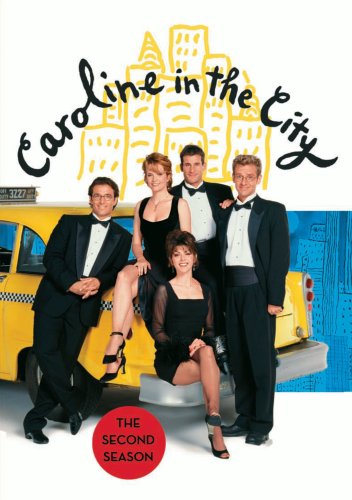
While nowhere does anyone actually say it, Caroline In The City is obviously inspired by/ripped off from the popular newspaper comic strip Cathy. Each episode, for a time anyway, would begin with an animated scene from one of the “Caroline” strips. The topic mostly deals with the pitfalls of being a single New York City girl. From these roots there was an often awkward attempt to create a warm and fuzzy romantic comedy that never seemed to find its own focus, let alone footing. It didn’t help matters that the title character was played by Lea Thompson, best known for her role as Michael J. Fox’s mom in the Back To The Future films. Here as she was there, Thompson is relatively unemoting, a tragic flaw in a romantic character. She’s a good enough actress, but she does appear to be missing charisma in the role. Caroline was joined by her comic strip colorist, Richard, played by Malcolm Gets. Here again we have a pretty reserved actor. Now we’ve got a couple of very low key actors playing a couple where sparks should be flying, and it never works. Most of the laughs, in fact, don’t even come from our leads. Instead Amy Pietz has most of the funny lines as intrusive next door neighbor Annie. Annie’s a cast member in the then huge Broadway production of Cats. She would often barge into the apartment where Caroline and Richard are working/sniping at each other and offer the comic relief in this situation comedy.
What’s most disappointing about the show is that it comes from minds like James Burrows, who brought us so many great moments on Cheers. On the surface there really isn’t anything wrong with Caroline In The City. There are many funny moments, but most of the time it simply hangs there leaving you waiting for the punch line, until you realize you’ve already heard it. I found the characters somewhat charming, but there’s no dynamic or chemistry there to suck you into these characters’ foibles. In the end it neither pleases nor displeases; it was merely just there. Gone soon and as quickly forgotten.
Posted in: Disc Reviews by Gino Sassani on February 27th, 2009
Family Ties is likely remembered most as the series that launched the career of Michael J. Fox. There’s no question that he owes a great debt to Alex Keaton. It’s almost a bit awkward now to watch him as this young, extremely conservative teenager after Fox has spent so much of his life as a liberal poster boy in the last couple of elections. Politics aside, it’s hard not to credit his performances in Family Ties and the Back to the Future films for launching him into a well deserved lucrative career. The Michael J. Fox issue, however, might hide some of the other assets the show had going for it in its time. For one of the first times parents were portrayed as humanly flawed, and families were not the perfectly functional institutions most of these shows described. Up until Family Ties, these households were either perfect little examples of American ideal or they were so dysfunctional that they could hardly be considered families at all. This show obviously went for a bit of realism.
In addition to Alex there was Dad Steven (Gross) and Mom Elyse (Birney). They were former hippies who now had the responsibilities of adulthood and family. Sister Mallory (Bateman) was portrayed as a girl with more fashion sense than common sense. She was always worried about how she looked and not so much about school. Sister Jennifer (Yothers) was underused most of the time. She was a balance between the other siblings and often got left behind in the stories. Newest kid Andrew was starting to grow up now, and Alex often tried to take him under his wing, hoping for a miniature version of himself. The kid would now be played by Brian Bonsall, who would later play Worf’s son on Star Trek: The Next Generation. Skippy (Price) was a neighbor kid with a crush on Mallory.
Posted in: Disc Reviews by Gino Sassani on February 27th, 2009
“Come and listen to my story about a man named Jed. Poor mountaineer barely kept his family fed. Then one day he was shootin’ at some food and up from the ground comes a bubblin’ crude. Oil that is… Black Gold…Texas Tea…”
Who doesn’t remember the Clampetts, those lovable Beverly Hillbillies? The show has been revived in a film, rap songs, and a Weird Al parody of Dire Straits’ Money For Nothing. Terms like cement pond have lingered in our pop culture. The song was a genuine Billboard hit at the time and is still instantly recognizable some 40 plus years after the show aired.
Posted in: Disc Reviews by Gino Sassani on February 27th, 2009
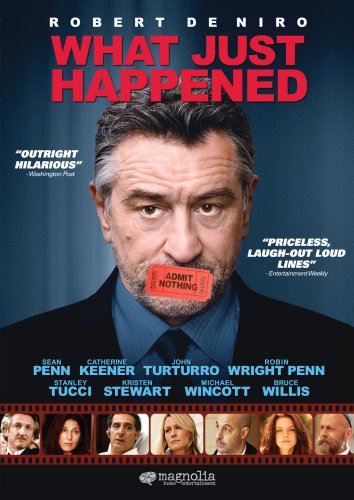
I used to think that any movie that Robert De Niro attached his name to had to be good. And that used to be true. I was willing to take a chance on low budget or blockbuster films, knowing that De Niro wouldn’t lead me wrong. Then along came Stardust, and honestly, the man hasn’t been in a good film in some years now. Still, my loyalty remains, and What Just Happened looked to be interesting enough that my buddy, Bobby D couldn’t disappoint me again. So, what did just happen? He let me down.Films about filmmaking are always a hazard. We all think that we want to see inside the true Hollywood, don’t we? Gossip programs and internet sites would seem to indicate that we can’t get enough of the inside poop. So, the temptation to deliver accurate films that portray these inside aspects of Hollywood come along every once and awhile. We peek, because we think we want to know. The truth is that voyeurism gets boring pretty quickly. We all want to eavesdrop on other people’s private moments. I’ve done it both professionally as a private detective and even for fun with a scanner that allowed me to listen to cell phones back in the old analog days. You know what? People are boring. It was exciting at first and my friend Mike and I would sit and listen to stuff for hours. We would get together and talk about what interesting things we heard. Before long we both realized that most of it was so painfully mundane that we just sort of stopped doing it. That’s what these films remind us. No matter how exciting the world of movie stars, directors, and producers might look from the outside, 90% of it is pretty pedestrian stuff. Unfortunately this film doesn’t spend much time in the 10% that might be exciting. In the end, not even some good casting could save this picture from making me feel like I did listening to those cell phones.
Robert De Niro is Ben, a big time producer and power broker in Hollywood. He’s dealing with two films at the moment. One is already shot and stars Sean Penn. The film’s director, Jeremy Brunell (Wincott), is a temperamental pill addict. When the advance screening doesn’t go so well, he’s told he has to redo an ending that shows a dog get blasted dead by the film’s bad guys. He doesn’t want to compromise his artistic integrity, but the studio boss, Lou Tarnow (Keener) will pull the plug on his Cannes premier if he doesn’t play ball. Ben’s upcoming film stars Bruce Willis, who shows up for his fitting appointment overweight and sporting a “Grizzly Adams” beard, which he refuses to shave. The studio bosses insist they’ll shut the film down and sue everybody involved if Willis won’t shave the beard and work out to lose weight. Willis’s agent is a crazy hypochondriac who is deathly afraid of his client, so Ben can’t get him to lay down the law. The agent is played wonderfully by quirky character actor John Turturro. Ben needs both pictures to work out because he’s supporting two ex-wives who are used to fancy living at his expense. The film is mostly told from Ben’s point of view, often through De Niro’s narration, as he attempts to save both pictures and deal with the more recent of his ex-wives. They’re actually in therapy to learn how to live without each other.