Posted in: Disc Reviews by Michael Durr on February 26th, 2009
Most of you know that video games are very near and dear to my heart. When it comes to video games on my TV, I’m usually restricted to G4’s X-Play or perhaps somebody got a hold of a license and turned it into a bad movie. Sure, there are times when they try to turn video game comedy into a sitcom of some sort. Game Over even though it was awesome, only lasted six episodes. In fact, Code Monkeys is the only current sitcom I know of that is using video games as a primary source of material. Needless to say, I was very interested when I saw Videogame Theater on my review list. I found my expectations to be too high.
Ever wonder what would happen if various video game legends were made into puppets and given a more real world approach to their character? There is Pac-Man who must be addicted to “Power Pills” and have a broken family. There is Donkey Kong and Mario who work at a construction site and fight over the foreman’s daughter. Lara Croft, well she’s part of a college sorority and in danger of expulsion if she can’t pass the archeology final.
Posted in: Disc Reviews by Gino Sassani on February 24th, 2009
“A movie filled with so much terrible horribleness, you’ll crap someone else’s pants”
Bruce Campbell has carved out himself quite a little niche in the acting game. No one would consider him a superstar, and the films he’s most notable for are the kind of cult favorite films that critics tend to hate, all except this particular critic. What’s kind of funny about the whole thing is that Campbell has appeared in some seriously successful films, including all three Spider-Man movies. His parts in these affairs might have been small, but Sam Raimi fans know that it wouldn’t be a Raimi film if it didn’t have Bruce Campbell somewhere. Campbell got his start with the Raimi brothers doing little backyard films with them as children. When Raimi got the opportunity to create something a little higher profile, his first choice as the lead was Bruce. That film became the fan favorite Evil Dead and spawned two sequels. The Evil Dead films don’t take themselves or the zombie genre very seriously. They’re a farce, and a failure to recognize that is why the critics hate those films so much. Just take another look at them. The blood effects border on the ridiculous, and Campbell plays such an anti-hero that we laughed far more than we screamed at those movies. For Raimi it meant the chance to become one of the best selling directors out there. For Bruce Campbell it meant wearing the title of schlock king for the next 30 years. If you understand what I just said about The Evil Dead films, than you understand Bruce. And you simply have to understand Bruce, or you will hate this movie.
Posted in: Disc Reviews by Gino Sassani on February 19th, 2009
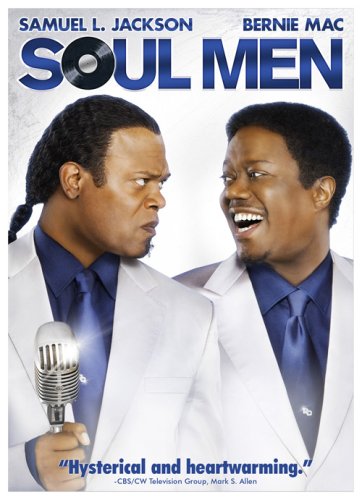
“You’ve got Samuel L. Jackson. You’ve got Bernie Mac. Just turn on the camera and I guarantee you got something you can keep.”
During an August weekend in the past summer of 2008 the entertainment world lost two of it’s brightest stars in just two days. On August 9th comedian extraordinaire Bernie Mac died from complications of pneumonia. The Mac-Man, as his friends liked to call him, was little more than 50 years old. Just a few hours after Bernie Mac passed, on August 10th legendary soul man Isaac Hayes also died. Hayes was 10 days shy of his 66th birthday. This was certainly a tragic weekend for the entertainment community, but the unlikely coincidence is made somewhat bittersweet by the fact that both men appeared together in what would be one the final appearances by both performers. That movie was the comedy Soul Men. To make the coincidence carry further, that film would have as its main plot point the idea of getting to the funeral of a soul legend, recently passed away.
Posted in: Disc Reviews by Gino Sassani on February 19th, 2009
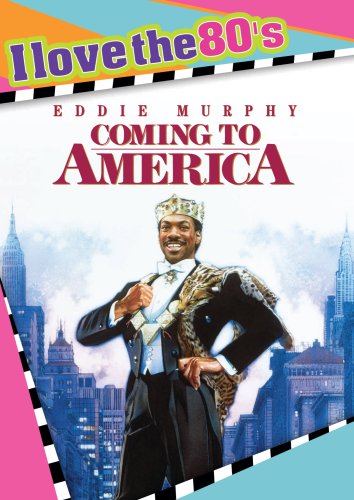
Remember when Eddie Murphy was funny? You know, before the fat suites and fart jokes. I guess many of you hadn’t even been born yet. Ronald Reagan was still president of these United States. CD’s were the latest thing. VHS was just catching on. The Rams were still in L.A., and it was the Cardinals that were playing in St. Louis. No one had ever heard about DVD, MP3, or Wi-fi. It was 1988 and Eddie Murphy was staring in Coming To America.
I’ve long considered this the last funny Eddie Murphy film. It just seems like he’d turned to gimmicks and quick physical humor. He got lazy, and you know what? So did I. I decided it wasn’t worth the effort to get my seat into those theater seats to see him clown around anymore. So journey with me back to a magical time when Murphy was still hungry and he let his talent shine.
Posted in: Disc Reviews by Gino Sassani on February 19th, 2009
Leslie Nielsen was once a serious actor. He starred in one of the most important science fiction films ever made, Forbidden Planet. He was a staple on the 1950’s television dramas. His unique features and voice made him a busy character actor all the way until the 1980’s. That’s when the cornball kings Jim Abrahams, David Zucker, and Jerry Zucker cast him as the “don’t call me Shirley” Dr. Rumack in Airplane. From that moment on Nielsen went from being a serious actor to becoming the face of an entire comedy genre of corny films. If there was a subject to spoof throughout the 80’s and 90’s, you could count on Leslie Nielsen having a prominent role. Two years after Airplane he had a television series, for all of 6 episodes. It was a cop show spoof called Police Squad. In the show he stared as Detective Frank Drebin, a modern day Inspector Clouseau. He would bumble his way through the show’s unique cases, always finding a way to stumble on the solution. The only case he couldn’t crack was how to get people to watch the show. The brand of humor that Nielsen is now famous for has a very narrow niche. You either get it or you don’t. You either like it or you don’t, and most of America decidedly didn’t.
So what do you do with a miserably failed television show that ran just 6 episodes? You make it into a series of major motion pictures, that’s what you do. Six years after the series was gone and forgotten, the Abrahams/Zucker team decided to take it to the medium they’ve had so much success in already. What didn’t work at all on television appeared to have new life at the box office. The film brought in an impressive $79 million, which was a phenomenal number for a comedy in 1988. It went on to become the 8th highest grossing film of 1988. With a production budget of only about $20 million, this was a cash cow Paramount couldn’t afford to milk. They did indeed go to the well twice more, with the bottom falling out on the third try. The audiences loved it, but they could only take so much.
Posted in: Disc Reviews by Gino Sassani on February 19th, 2009
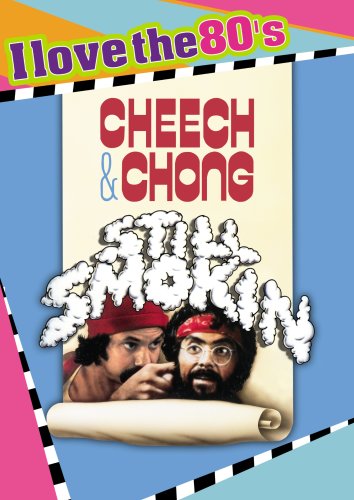
The series might be called “I Love The 80’s” and the film Still Smokin’ was indeed released in 1983, but when I think of Cheech & Chong I am brought back to the 1970’s. It was then that the pair had their first success with an iconic brand of “stoner” comedy. Their LP’s sold millions across the country. You didn’t have to be a stoner to appreciate the jokes. I was about as straight as they come, but I really loved listening to Cheech & Chong. The material was about more than just getting high. It was timely, at least it was then. It mirrored the culture that we could see from our own windows and like all inspired comedy, it was relevant.
In 1978 the boys ventured into the movies with Up In Smoke. While the film wasn’t a box office blockbuster, it did a fair amount of business, and before long the boys were in the big time. Unfortunately by the time of the release of Still Smokin’ things were already on the decline. By 1983 the world had changed enough that the humor no longer reflected popular American culture. By now the movies really were strictly for the stoners.
Posted in: Disc Reviews by Gino Sassani on February 13th, 2009
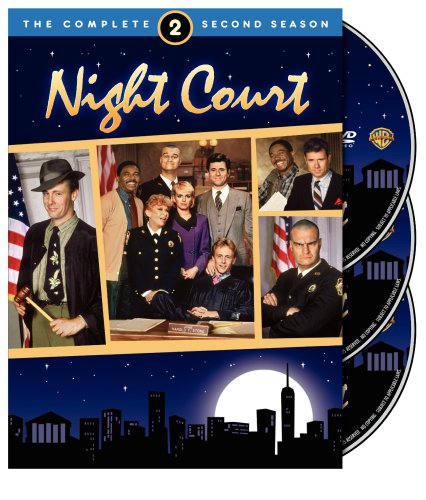
Night Court appeared on the scene at NBC in 1984 and was to last 8 seasons. If you thought it looked and sounded a lot like Barney Miller, you won’t be surprised to learn that a number of key people, including creator Reinhold Weege, came from that classic cop comedy. Several key elements of Miller can be found in Night Court. The themes are almost identical with both beginning with an easily identifiable bass run. The most important imported element from Miller was the constant parade of the kookiest and craziest criminals this side of the Cuckoo’s Nest.From a hick farmer played by then beginner Brent Spiner to hookers with hearts, Night Court relied heavily on the eccentric character to provide most of its laughs.
Harry Stone (Anderson) is a young hip judge who almost blunders into a judgeship of a Manhattan evening session courtroom. The role appears tailor fit for Anderson’s style of humor. The character even retained Anderson’s flair for amateur magic. He was always trying to bring levity to even the most dire of circumstances. Joining him in his courtroom was prosecutor Dan Fielding, played by the extremely funny John Larroquette. He was a material man with an overactive lust for the ladies. He was self centered and always looking to gain from someone else’s misfortune. He would often find himself having to suck up to the young judge who he found too footloose with the law. His groveling always brought the judge a perverse pleasure. The court was presided over by two bailiffs. Bull was played by Richard Moll. He was a mountain of a man with a bald head. While he might look and act like a monster who would eat little babies, he was in fact, a gentle and often childish character with an IQ lower than his shoe size. His partner and mentor was Selma, played by the raspy voiced Selma Diamond. Selma was a no nonsense, say what she wanted to, chain smoking authority in the courtroom. Unfortunately, Diamond would pass away after this second season, and this is your last chance to catch the character. Charles Robinson joined the cast in the second year as the court’s new clerk. He was likely the most “normal” member of the cast. Throughout its run there were a rather large number of actresses to play the public defender role in the series. Eventually that role went to Markie Post who kept it for the longest time. In season two it was Billy Young playing a very awkward Ellen Foley. The character never clicks with any of the others, and she will also be gone at the season’s conclusion.
Posted in: Disc Reviews by Archive Authors on February 12th, 2009
Top Secret comes to DVD in a new "I Love the '80s" edition. The film continues the legacy of David and Jerry Zucker and Jim Abrahams as kings of sight gags and the ludicrously unexpected. Made in 1984, the film stars a young Val Kilmer as rocker Nick Rivers, an artist so clearly modeled after Elvis that he even sings potential lover Hillary Flammond a spoof version of "Are You Lonesome Tonight".
Posted in: Disc Reviews by David Annandale on February 11th, 2009
Welcome to 1972, when the sexual revolution is simultaneously in full swing, yet also showing signs of exhaustion (all that swinging can wear a body down, don’t you know). Barbi (Anna Biller) is a model housewife who is awakening to the feeling that there is a world outside her four walls. When she and her husband have a falling out, she hooks up with her more extroverted neighbour Sheila (Bridget Brno), who is also in the midst of a marriage crisis, and the two of them seek new love by taking work at an escort agency. What follows is a picaresque series of encounters, with nary a sexploitation angle ignored.
This film is a textbook definition of “labour of love.” Anna Biller no only stars, she directed, scripted, co-produced, edited, and took care of production and costume design. The latter took ages, since she wanted the costumes to match the decor, but the result was worth it – no small part of the film’s humour comes from its rigorous fidelity to the worst of seventies’ sense of aesthetics. Biller has recreated the classic sexploitation film down to the smallest detail. There are just enough winks to the audience to acknowledge the passage of time (and there is one address to the camera, describing the era as a fleeting utopia for the male of the species, that is as incisive as it is hilarious). The performances perfectly nail their models, capturing stilted, unnatural expressions and their forced enthusiasm. But no matter how much fun is poked at those bygone films, Viva also radiates an enormous love for them. As funny as the movie is, though, at 120 minutes, it is simply too long, and the pace is too measured. Lost of fun, all the same.