Comedy

Woody Allen lands a terrific cast with his latest attempt at comedy, Vicky Cristina Barcelona, but there is something very off about the way these characters are written. Annoying pretentious dialogue renders a whimsical, fairy-tale-like backdrop ineffectual, causing each moment of silence to come all too slowly.Rebecca Hall is Vicky. Scarlett Johansson is Cristina. They are two differently wired friends enjoying an extended vacation in Barcelona, where they meet up with ruggedly handsome artist Juan Antonio Gonzalo (Javier Bardem), whom both girls can’t seem to resist. Juan Antonio asks both girls to join him in bed the first time he meets them. Vicky is offended, while Cristina finds his approach radically interesting – enough so to decide she’ll take him up on the offer. Unfortunately for Cristina, food poisoning cuts her plans short, and in steps the combative Vicky to fill the empty slot.


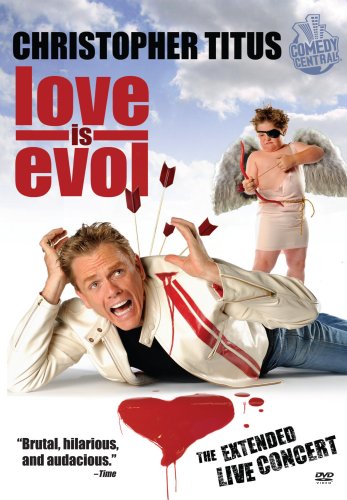
Christopher Titus lands in stores just in time for Valentine’s Day with his most recent concert tour Love Is Evol. “Tonight could fix your relationship, or end it,” he says at the opening of the performance. “Either way, you’re welcome.”After discussing the recent developments of his life with tongue planted firmly in cheek, he backs this opening promise up with nearly an hour and a half of comedy that is equal parts storytelling, punchline, and attitude.

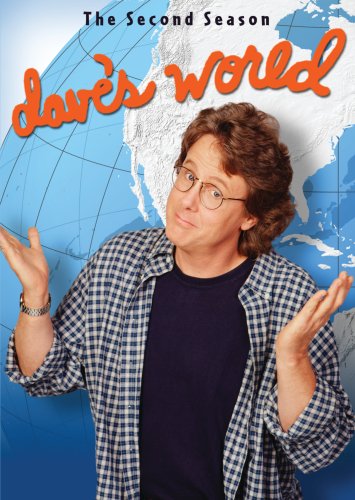
I was first introduced into the somewhat twisted world of Dave Barry in 1986 when I moved to Florida. The Tampa paper carried his Sunday column, and all I can remember is that it had something to do with dinosaurs on the beach and that I couldn’t stop laughing. For years afterward both my wife and I made the column regular Sunday reading. As years went on other things fill one’s life, and I only occasionally read the material until he disappeared almost completely from the Central Florida scene, keeping more to himself some 250 miles to our south. He’s since spent a lot of time playing in a writer’s band with the likes of Stephen King. So I was pretty eager when Dave’s World first came to television in 1993. To say I was disappointed wouldn’t exactly be fair. The show was pretty funny, but Harry Anderson was so ingrained in my mind from his Night Court role that I never did accept him as Dave Barry. Once I was able to separate the character from the writer, the show was a little better going for me.

Anderson supplies narration to the show in a voice much like that of his column so that we’re placed into that world. It was a nice touch. Dave (Anderson) worked from home. He had a wife (Matthews) who was a teacher. He also had two young children. Most of the show dealt with Dave’s childlike look at the world around him. He found life to border on the ridiculous, and that’s what he wrote about. His world was also populated by the typical guy friends that have become staple in shows like King Of Queens and Everybody Loves Raymond.

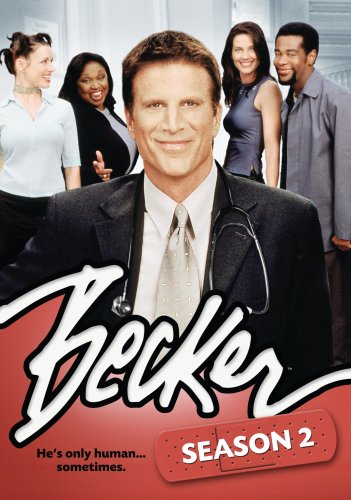
Who says no one likes a guy who’s negative all the time? Becker has got to be one of the most cynical, grumpy, and negative characters to grace our sit-com screens. He’s a guy you probably love to hate, and he’s also hilarious. Ted Danson spent over a decade behind the bar at Cheers and could have easily called it a career. You know, stop while you’re ahead. Instead he climbed right back into the television saddle and reemerged as Dr. Becker. This time he’s a medical doctor who hates everything and everyone around him. Refusing to display that little bit of a heart we all know he has, Becker spends most of his life complaining about everything. Never before has it been so much fun to watch a guy moan and groan for twenty minutes at a time. Fortunately for him, Becker is truly a dedicated doctor, and while he’s likely to complain about it the whole time, he’ll go to any extreme to help a patient.

The secret to Becker’s genius is characters. Like Cheers before it, Becker is populated with wonderfully distinctive characters played by actors carefully cast for the roles. To start with there’s his office nurse, Margaret, played skillfully by Hattie Winston. Margaret runs things for Becker in his doctor’s office. She’s pretty much his mother and the brains behind the outfit. She’s one of those straight talking ladies that don’t take any guff, and that means not even from Becker. The office assistant is Linda, played by Saw star Shawnee Smith. Linda’s used to getting by on her looks, which is fortunate because she’s naive and a little short on the intelligence front. How she got the job and holds it is anyone’s guess, but her blundering makes for some classic comedy. Becker spends much of his off time at a café owned by Reggie. Reggie is portrayed by Star Trek: Deep Space Nine’s resident Trill, Terry Farrell. There’s a hint of a romantic interest here. Reggie is more interested talking about her own pitiful social life than serving her customers. Jake, played by Alex Desert, is blind, and interestingly enough runs a newsstand out of Reggie’s Café. He’s pretty much Becker’s best friend and often foil. A frequent patron of the Café is sleaze Bob, played by Saverio Guerra. He’s got the hots for Reggie and just about any other woman who meets his criteria (breathing) even though he’s married to an unseen wife. Bob always refers to himself in the third person and is clearly the most entertaining support character on the show. He was a recurring character up to year three where he was finally upgraded to regular. I can’t imagine the Becker universe without him.

The box art promises that Red, White, & Brown won’t disappoint Russell’s die hard fans. I totally agree. This extended Comedy Central concert is pretty much standard Russell Peters. I’ve only seen his act in bits and pieces in the past, but what I saw here looks very much the same. Peters’ comedy is pretty much made up of riffing on ethnicities and various stereotypes. He gets away with what many others comics can’t by having an Indian heritage that’s not really as evident as he makes it sound. Looking at the man, I would not, as he often does, characterize him as a “brown man”. He doesn’t look even vaguely Indian to me. We’re talking Indian from India, and not the Native American variety here. Whether he actually looks the part or not, he uses the ancestry to get away with racial material. Unfortunately, if some of this stuff were coming from a white guy, there would be protests and firings.

It was a little bit of a surprise to me that the audience shots showed that young children had been allowed into the concert. The material does get sexual, and Peters even acknowledged one of the young audience members while continuing with one of those kinds of routines. The stuff isn’t offensive, just not appropriate for 7 year old kids.

“You wanna be where everybody knows your name”

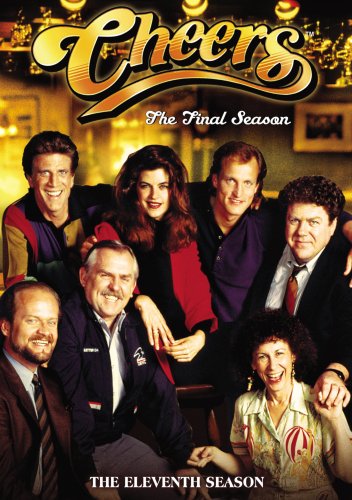
Cheers was that kind of place that songs have been written about. Billy Joel’s Piano Man describes such a place where the patrons are, for the most part, regulars, and pretty much family. In the days before huge screen televisions and satellite networks, Cheers would likely have been considered a sports bar. In those days the sports was more the talk of the place and not merely gathering to watch 127 games at a time. The bar’s owner was Sam Malone (Danson). Sam was a washed up baseball player for the local Boston Red Sox. He was a pitcher who liked to drink a bit too much. So, what does he do? He buys a bar. Actually the character has kicked the drinking and is always seen sporting a bottle of water. At first his bartender was his old baseball coach, until Nicholas Colasanto passed away after 3 years. Coach was replaced by Woody, played by Woody Harrelson. Woody was a farm boy with naiveté and small town charm reminiscent of Radar from MASH. His innocence was often the butt of the jokes. In a strange coincidence, the show’s popular theme song, performed by Gary Portnoy, sounded a lot like Harrelson’s voice, and for years it was believed by anyone too lazy to read the credits that Harrelson sang the tune. The barmaid was Carla, played by Danny DiVito’s wife Rhea Perlman. She reminded us a lot of her husband’s Louie character from Taxi. She was abrasive, sarcastic, and more than willing to kick a guy when he was down. She had a soft spot for Sam, however, and was often protective of him. Kirstie Alley played Rebecca Howe, an on again off again romantic interest for Sam and also on again off again owner of Cheers in later years. She replaced Shelley Long, who played Sam’s romantic interest and barmaid Diane for the first half of the show’s run. The steady customers offered most of the stories for Cheers. Cliff, played by John Ratzenberger, was a postman who spent more time nursing a beer than actually delivering the mail. He often joked about how hard it was to fire a civil service employee. He was a know-it-all and too often bored his comrades with longwinded explanations for even the simplest concepts. His best friend was Norm (George Wendt). Norm was one of the more popular patrons, greeted with shouts of “NORM” whenever he entered the bar. He sat in the same stool, usually griping about his life but unwilling to move off his seat and actually do anything about it. He was married to an unseen wife who worked while he loafed at Cheers. Finally, Kelsey Grammer played psychiatrist Dr. Frasier Crane. You might recognize that character the most, because he got his own show after 9 years on Cheers which lasted another decade. Frasier was the elitist who acted superior to the others but deep down just wanted to be one of the guys.

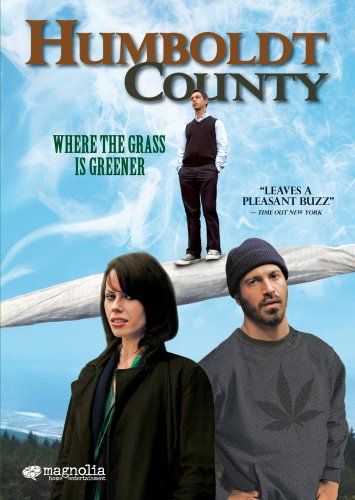
Humboldt County, the new independent comedy-drama from writers/directors Darren Grodsky and Danny Jacobs, sneaks on to shelves this month with a quietude as serene as its iZLER-composed musical score. Despite apt writing and direction, this slice-of-life piece simply fails to assert itself and leaves viewers with an indifference to the material.That’s not to say Humboldt County lacks competence. There isn’t a bad performance in the film. Two performances, in fact, are absolute dynamite. The always dependable Brad Dourif does what he does best, playing the crazy eccentric type, but this time he has a very human twist that endears him to the audience like never before. And Madison Davenport, a stunningly talented child actress, marks her debut with a strong performance that captures every scene she’s in.


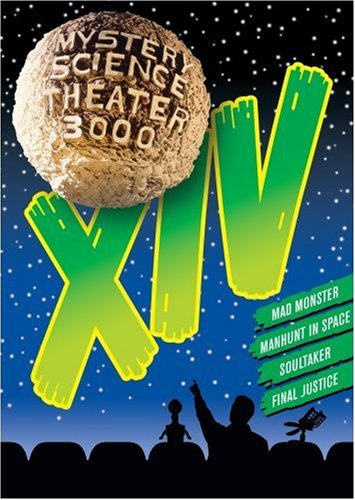
Here we go with four more cruel experiments inflicted on Joel, Mike, Tom Servo and Crow T. Robot on the Satellite of Love. The Mad Monster is a 1942 proverty row epic with George Zucco as a mad scientist giving future Frankenstein Monster Glenn Strange transfusions of wolf blood, with predictable results. Manhunt in Space is a Rocky Jones, Space Ranger adventure – multiple TV episodes pasted together into one dreadful piece of SF idiocy. Soultaker has the unfortunate Joe Estevez, under the orders from Angel of Death Robert Z’Dar, tracking down four teens who are supposed to have died in a car crash. Finally, Final Justice sees Joe Don Baker as a Texas Ranger confronting the mob in Malta. But of course.


Naturally, the real interest of these releases is not in the films themselves (which are, with the partial, nostalgic exception of The Mad Monster, utterly unwatchable), but in what Joel or Mike (depending on the episode) and the ‘bots do with the films. Two hits here, and two misses. The comments aimed at The Mad Monster and Final Justice are disappointingly unimaginative. The failure of the latter is a special sore point, since MST3K’s previous shot at Joe Don Baker, Mitchell, is one of the series’ masterpieces. This time around, the boys don’t have much to say other than to comment on the man’s eating and digestive habits. On the other hand, inspiration was at hand for both Soultaker and for a good chunk of Manhunt in Space (i.e. the first half, and with the accompanying episode of General Hospital).

So there's this group of flight attendants, and we follow their swinging adventures and affairs on and off planes. One, for instance, hopes to be an actress, and hooks up with an advertising executive. And if you care what the plot of “the first 3D sex film” is, you need your head examined. Much of the what goes on  is mind-numbingly banal (SEE  Wine being poured  SEE  Drinks being mixed  HEAR  Dull conversations ), though the acid trip that leads one woman to make out with a lamp in the form of a greco-roman head is something you don't see every day.

The film is an object lesson on how far mere novelty can take a film – it was a huge success at the time, and 3D was, in 1969, a rarity again after its initial craze in the 50s. So there are numerous shots of legs and pool cues (and feet) jabbing at the camera, enough, presumably, to have kept audiences entertained while everything else remained mundane beyond words. Or, so the situation is for most of the running time. But the last act takes a sudden turn into the starkly dramatic, and becomes very dark indeed. It is also rather more imaginatively shot than most of the rest of the film. The ending is a vicious sucker punch that must be seen to be believed, and suggests that the filmmakers were storing all of their creative juices for the cruel finale. In fact, as the accompanying featurettes reveal, the dramatic plot was added to the film after the rest of it was completed, and indeed, after it had already been released in some markets. In the final analysis, this is a vital piece of low culture.

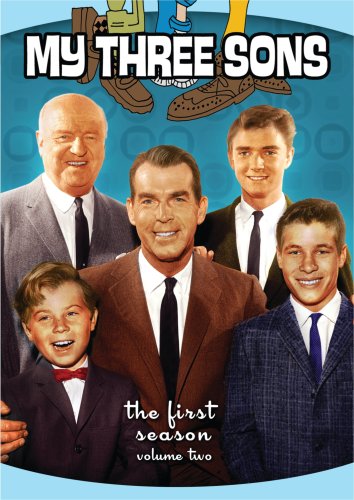
Just to look at it you would think that My 3 Sons was a Disney production. Its star Fred MacMurray had appeared in many Disney films of the 50’s and 60’s and is most likely recognizable from those appearances. Two of the three boys were also known for work with Disney. The eldest boy, Mike, was played by Tim Considine, who starred with MacMurray in Disney’s The Shaggy Dog. Middle son Robbie was played by a former Mickey Mouse Club Mouseketeer, Don Grady. The youngest son, Chip, was played by Stanley Livingston, the only non Disney alum in that group. Another reason for the confusion is the decidedly Disney-like material the series covered. Steve Douglas (MacMurray) was a widowed single parent who was trying to balance his job with that of raising his three sons. Most of the stories involved the warm and fuzzy heartwarming stuff that Disney had pretty much cornered the market on in the films. Whatever troubles arose, no problem was so bad that a heart to heart talk couldn’t fix it. The style would prosper and continue in the form of 70’s shows like The Brady Bunch. The four guys were also joined by Steve’s father-in-law, Bud, played by I Love Lucy favorite William Frawley. That was no surprise, since the show was actually produced, not by Disney, but the Desilu studios.

My 3 Sons was for some time the second longest running sit-com on television. It lasted from 1960 until 1972. The series would undergo major changes as the boys each grew older and eventually married and led their own lives. Frawley would also become very ill after 5 years and leave the show. His replacement, William Demarest as Uncle Charley, is likely better known in the show. The syndicated version of the show often ignored these early black and white versions of the series, opting for the later color ones that featured the Uncle Charley character. It’s very likely you’ve never seen these early episodes as they appeared infrequently in the syndicated markets. The theme from Frank DeVol became pretty popular in the mid 60’s and even entered the pop charts at one time. The show also originally ran on ABC, but moved to CBS in 1965, also accounting for the different syndication packages. It was during that move that many of these big changes occurred.