Documentary

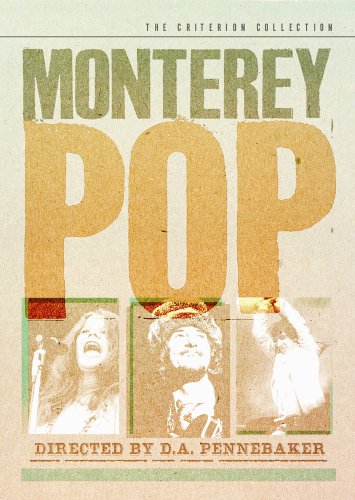
The 60's have become something of a caricature of themselves. Take a girl with straight hair and flowers, throw in a “groovy” and a “man”, add some grainy photography, and you're all ready to go. It is sometimes hard to remember that there was a time when this was not a kitchy formula, it was just the way that it was. This film is so authentically steeped in 60's hippie culture that it almost doesn't seem real when the footage starts rolling. Once the film begins to sink in, though, the viewer is completely drawn in ...o this world than many of the modern era may only know from oldies radio, of all things.

The Monterey Pop Festival was a large music festival held in Monterey California in 1967. The bill included not only some of the top acts of the day, such as the Mammas and the Papas, Simon and Garfunkel, Jefferson Airplane and The Who, but it also launched the careers of such legends as Jimi Hendrix, Janis Joplin and Otis Redding. The weekend festival was a defining moment in the history of rock and roll, as well as of the hippie movement.

Synopsis

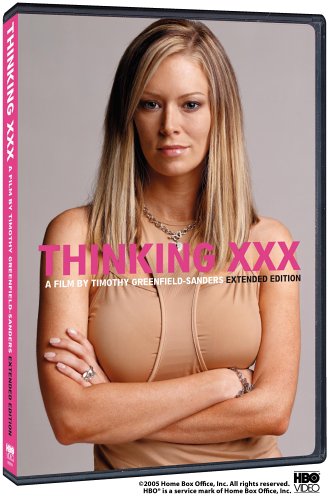
Photographer Timothy Greenfield-Sanders decided to do a series of portraits of some 30 porn stars. Two pictures of each, one clothed, one not, the same pose in both pictures. This is his documentary of that shoot. Scenes of the studio process are intercut with interviews with the various stars and talking-head moments from the likes of Karen Finley, Gore Vidal, John Waters and Whitley Streiber (!). We are at the other end of the porn spectrum from Dag Yngvesson’s Rated X – these are t...e top-paid performers, and so the overall experience is less depressing the world shown in Yngvesson’s film. (Though there is some inevitable overlap.) Many of the stars are very articulate (and not just from the expected sources such as porn star/activist Nina Hartley), and there is quite an interesting range of personalities and views presented here. Jenna Jameson is seen, but presumably was too expensive for an actual interview. Instead, she is talked about, and so accrues the semi-divine aura of an all-powerful, all-knowing, enigmatic Mona Lisa. One is left a bit wanting: one doesn’t learn very much about Greenfield-Sanders’ photographic process, and one wishes many of the interviews were longer and more in-depth. That said, a fascinating piece.

Synopsis

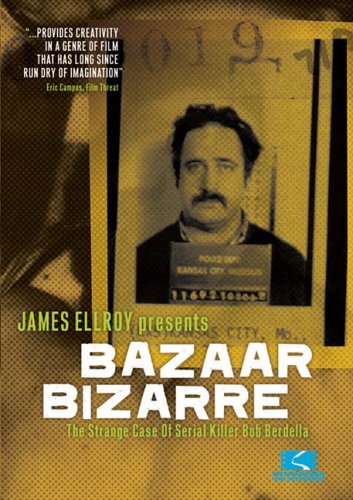
This is an odd fish. It’s a documentary about Bob Berdella, who raped, tortured, killed and dismembered six men in the late 80's. Director Benjamin Meade combines interviews with the investigators, the prosecutor, a survivor and Berdella himself with gruesome recreations of the crimes, an expectedly hard-boiled narration from James Ellroy, and incongruous performances of songs by the rock band “Demon Dogs.” The result is certainly interesting, but it jumps around so much that it can become h...rd to follow (structurally, it resembles Glen or Glenda? done by someone with talent). There’s a lot of raw power here, somewhat diluted by the songs that, though catchy enough, are more puzzling than anything else by their presence.

Before we get into it, just a quick recommendation to check out "Making Movies" by Sidney Lumet, the director of Network, Dog Day Afternoon and 12 Angry Men. While it's a quick read at 220 pages, it talks about dealing with the actors, rehearsal, a day on the set, and other various forms of a production, and includes stories that happened on his sets also. It's an intriguing book, worth checking out at your local bookstore. A "Ryan's Book Club" pick, if you will.


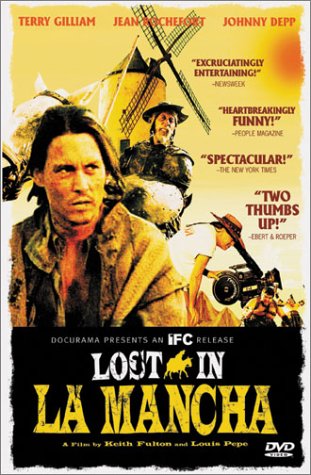
Then there's Lost in La Mancha, Terry Gilliam's documented efforts to make a film called The Man Who Killed Don Quixote. Keith Fulton and Louis Pepe had worked with Gilliam previously to film a documentary for Gilliam's 12 Monkeys, entitled "The Hamster Factor and Other Tales of 12 Monkeys", and whose help was enlisted to film a behind the scenes documentary here. The movie was Gilliam's vision of Cervantes "Man of La Mancha", and something he'd tossed around since 1991. He even came close to starting a production in 1999 before financing fell through. However this time, he had solid financing, and a cast that included Johnny Depp (Fear and Loathing in Las Vegas) and French actors Jean Rochefort (playing Quixote) and Vanessa Paradis. The film notes the problems that previous directors had in shooting a film on Quixote, and features footage of a film shot by Orson Welles that saw a theatrical release, helping to bring life to the aptly named "Curse of Quixote." Gilliam's Hollywood reputation is discussed as well, including the struggles surrounding the making of Brazil and The Adventures of Baron Munchausen. Gilliam is quick to point out on Munchausen there was a producer who promised the stars and the moon, but simply didn't have the budget for what he wanted to do, and Gilliam's name was tarnished from the experience. Being a veteran of such battles almost gives Gilliam a foresight into how his productions will turn out, as 7 weeks before the production starts, he says that there's "a lot of potential for chaos." 3 weeks later, Rochefort arrives, with a newly learned English accent he is eager to show off. As the production is due to start, Rochefort has some "phantom" back pains, so he does not board the plane from Paris to Madrid (where the production is housed). During the weeklong delay, Deep and Paradis arrive and start with screen tests and other work. Rochefort does arrive, and the production starts. Here's where the curse kicks in.

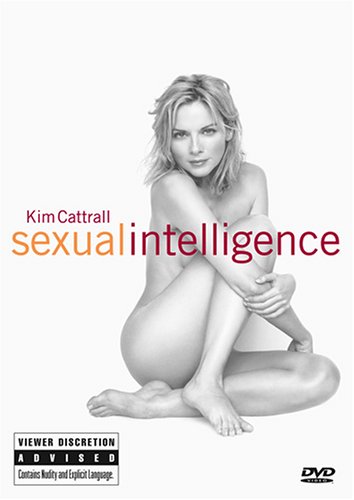
Kim Cattrall has had a long and storied career in both television and movies. In the 80's she hit a streak of cult comedies with parts in such as Porky's, Police Academy, Big Trouble in Little China and even Turk 182. Of course, even with a resume like that, we would never be talking about her today were it not for her work as Samantha on Sex and the City. In 2005, Cattrall wrote a book Called Sexual Intelligence that explores various areas of sex, such as arousal, desire and...fantasy. This documentary, originally aired on Cattrall's old friend HBO, serves as a companion piece to her book.

This documentary falls somewhere between HBO's Real Sex series, MTV's old Sex in the 90's and Cattrall's previous job on Sex in the City. Not only is this film undeniably educational, but its witty dialog is downright comical. If the sexual content were not quite so graphic, I would not at all be surprised to find this documentary as a special event on The Discovery Channel. It is scientific, yet almost guiltily entertaining.

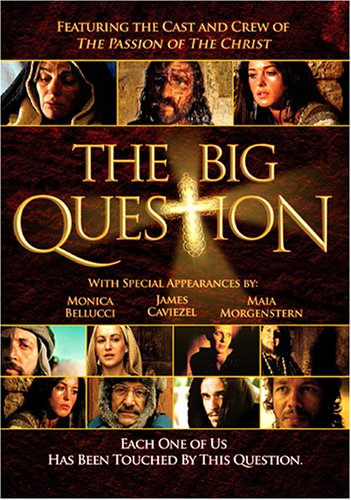
When The Passion of the Christ was released on DVD several years ago, I didn't buy it, opting instead to wait for the strongly-rumored special edition release to come. Here we are almost three years later, and no such release is being discussed. The funny thing is, The Big Question is essentially an extra for that non-existent DVD package. This documentary, which discusses questions of faith, was shot on the set of The Passion of the Christ, amongst the actors and artisans that were gathered from all parts of the planet for the production. This is a wonderful idea, and it makes for a great documentary featurette to support the film, but I just don't feel that there is enough here for a stand-alone release.

Various people from various cultural and religious backgrounds were asked the same set of questions about who God is and how He (or She, as the film asks) relates to us, and us to Him. The resulting comments serve as something of a glorified "man on the street" view of religion. While there were some religious scholars included, the end result is a muddled collection of opinions that really don't go very far toward answering many of the questions raised by the film's directors.

Synopsis

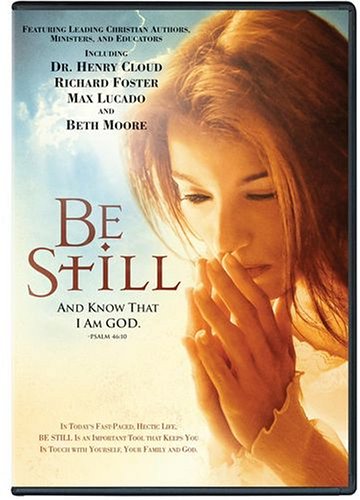
Not much to is. This is one larger film and a series of shorter ones (though they are all of a piece) extolling the virtues of contemplative prayer, which, it appears, consists in sitting quietly and listening to God, rather than speaking yourself. The whole thing drips in every “inspirational” cliché you can imagine (lots of shots of parks, clouds, sunsets, gentle spring rains, and so forth). Oddly, for a piece that’s supposed to help viewers practice being quiet, some of the speakers here ...re hardly advertisements for that fact. Priscilla Shirer, in particular, speaks in a Camille Paglia-style torrent of words, making one extremely doubtful that she has ever had a quiet moment in her life. But whatever. Those who like this sort of thing will surely like this sort of thing. Obviously, I’m utterly outside the demographic for this thing. For a chuckle, check out the consumer review on Amazon to see how this bit of flotsam can generate hugely polarized viewpoints. Hilarious.

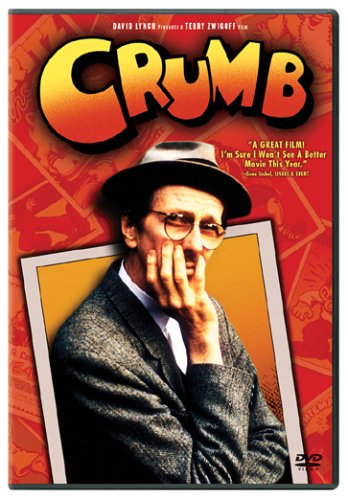
Say what you want about Robert Crumb, and his controversial cartoon funnies, but at least he’s found a healthy way of expressing not-so-healthy ideas – more than what can be said for his brothers, Maxon and Charles. Sony’s classic documentary Crumb (directed by Terry Zwigoff) demonstrates this in a beautifully ugly piece of filmmaking, now available in a new special edition to celebrate (albeit, a bit late) the film’s tenth anniversary. Maxon is the “molester” of the Crumb kids, and I say that hoping it’s an e...aggeration, but knowing somehow, deep-down, he’s probably been on his share of sex offender lists. Charles, if not for his appearance in this documentary (and role in Robert’s life), might as well not exist. He sits at home and bathes sporadically (but never often enough – you can almost smell the guy as he sits there with a pompous grin and green teeth), and he never leaves the house to get a job, seek out a slice of personal happiness, or add any value to society. The brothers of Robert Crumb are, indeed, losers, and the only things preventing Robert from sharing their fate is his talent for drawing, and for using said talent to carve out a better niche in life. Still, he, too, is guilty of hypocrisy, not necessarily in his work, but in his personal thoughts and opinions. He bemoans the commercial aspects of our society. He makes rushes to judgment about large groups of people, based solely on the kind of clothes they wear, yet his own views do little else besides espousing hostility towards women and presenting other races in unflattering lights (even if that isn’t his intended purpose). He can lay claim to all the liberal social ideas he wants, but if an African-American read his strip “Angelfood,” and had immediate access to Crumb’s throat, he or she would be ringing it emphatically (and would be just in so doing).

I am unsure of Zwigoff’s intentions in his presentation of Crumb – is this guy supposed to be a visionary artistic hero, or a mealy-mouthed little pervert with better ways of expressing it than Max? What I managed to draw from Crumb is that the case can be made for both. Make no mistake – I did not like this man. I’m more inclined to believe the pervert aspect of him than the hero. Still, I find his artistic style pleasing to the eye, and I enjoyed this examination of his work very much. He may not be a model citizen, and his move to France, which takes center stage in the final act, can only mean good things for our country, but he’s an interesting chap, and he makes for interesting viewing during the solid two-hour running time. I also found the extensive discussions among the three brothers very fitting to the film’s overall purpose – to dissect a legendary artist and his work. See, the brothers play such a huge part in shaping what this central figure becomes that, without them, there is no film – and subsequently, no Robert Crumb. Overall, this is a great piece of documentary filmmaking, which represents the difference between those that dream, and those that make their dreams come true. But the more obvious message – at least, to me – through the dichotomy of the Crumb siblings’ personalities, is how a degenerate doesn’t have to be a human slug, too. And that’s how Robert differs from his brothers.

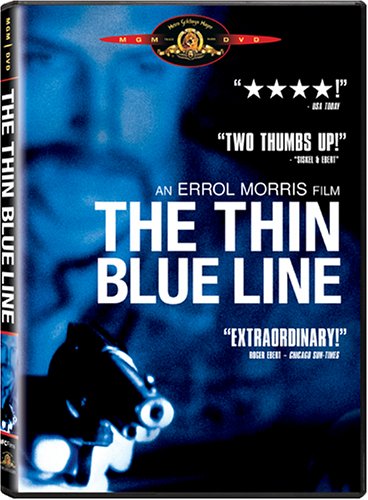
I am unsure of what the greater tragedy is: a man losing over ten years of his life for a crime he didn’t commit (and very nearly being executed for said offense), or the fact “documentaries” such as Fahrenheit 9/11 enjoy more commercial success than the excellent Errol Morris work The Thin Blue Line. On the surface, the former may seem far worse than the latter, but consider that it’s so-called journalism like that found in F 9/11 that colors false perceptions of reality and bears blame for guys...like Line’s Randall Adams staying incarcerated and unnoticed for over ten years. (I’m dealing in principles here, of course.) But when the impact of the media and its devotion to crap before truth is considered, the success of Moore’s film to Morris’s is disturbing – even frightening. And while Morris’s documentary was released in 1988, it still holds relevance today. I need to think only of the state trooper in Arkansas, who will probably get off Scott-free for murdering an unarmed mentally handicapped boy because he “thought” he was an escaped convict from Michigan – despite the fact that one brief comparison of photos calls to the contrary. People don’t like to admit the authorities watching over them at night are capable of the atrocious behavior presented in Morris’s documentary. And it’s that kind of indifference and lack of caring for facts that allow people like Adams to experience injustice to the extent he did from 1976 to 1988, as detailed in the film.

The Thin Blue Line played a large role in Adams’ eventual release. In the world of documentaries, that would make it the go-getter brother that rises from obscurity to achieve great things. F 9/11, much like its director, is the big fat disgusting slug that does nothing, but finds more favor with Mom and Dad because he refuses to get a job and move out of the house, thus delaying Empty Nest Syndrome, where they actually have to face the reality of life instead of the fantasy. With that said, I think Line fails on one front. Morris wants this to be an argument against the death penalty, but it isn’t. An argument against injustice perpetrated by the system? An argument against police and judicial corruption? An argument against quack doctors and faulty eyewitness testimony? Yes, on all counts. But to say the death penalty should be abolished for what Adams endures is like saying we should stop sending people to jail for fear of locking up the wrong guy. No, Line is effective and expertly crafted, but it’s more about questioning authority than altering punishment.

Synopsis

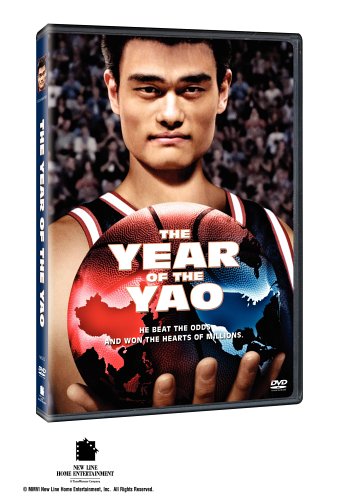
This is a portrait of the rookie year of Yao Ming, a Chinese basketball superstar who is imported to play for the Houston Rockets. He arrives not just with the expectations associated with being a first-draft pick, but also with the hopes of (we are told) one billion countrymen on his shoulders. His debut is a disaster, but he soon establishes himself as a force to be reckoned with, as well as charming American fans with his self-effacing personality and humour.