Posted in: Disc Reviews by Archive Authors on March 13th, 2006
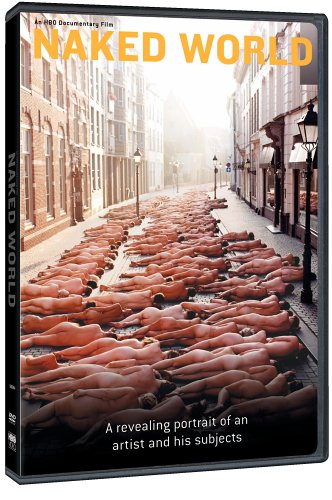
Most of the time, I’m a pretty big fan of HBO’s documentaries, so you can imagine my disappointment when I had to sit through the overly long 76 minutes of Naked World, which follows attention-hungry tit-bag Spencer Tunick, as he embarks on a world tour to find idiots wanting to pose for him. They all have their reasons why they’re baring all for the handful of people, who watch this documentary, but the underlying reason is – much like that of Tunick himself – attention. These lunatics may have even convinced...themselves it’s not for attention, but make no mistake – it is. It doesn’t take much in way of talent to snap the shoddy photographs Tunick provides here, and his medium is nothing more than a gimmick, rather than an actual talent. He’s a sniveling, complaining, sideshow huckster demanding recognition as an artist, and there’s nothing more obnoxious to me than that. I’m not inclined towards nudist art, but I will admit, there are sculptors and painters out there with actual talent, who can carry out what Tunick is trying much more effectively.
Even more amusing than the claim that Spencer Tunick is an artist are the delusional subjects for much of his work. There is a woman dying of AIDS, who somehow feels showing her naked body in a group of over one thousand others doing the same thing will somehow make a worthwhile statement to the rest of the world regarding her plight. I’m sympathetic towards anyone dying of a vile disease such as AIDS, but the context in which this is done is a contradiction to her whole purpose. And once you have bared all – so what? What statement does it make? If nobody cares, what’s the point? If your statement is, I know no one cares, and I want them to know I don’t care either, then again – what is the point? If you really didn’t care – like you say – then why do you need to make a statement to begin with? This unfortunate lady is not the only one humiliating herself for five minutes of notoriety in this documentary, but she is one of the most memorable. The best favor you can do these participants is to avoid the film all together and not subject them to the self-deprecation they’re unwittingly committing upon themselves.
Posted in: Disc Reviews by Archive Authors on March 11th, 2006
Synopsis
The first time I became acquainted with the work of documentarian James Miller and reporter Saira Shah was when I first saw the documentary Beneath the Veil some years back, shortly after the September 11th attacks. It was an unnerving and powerful look at life in the Taliban-led area of Afghanistan, where women were brutalized and humiliated beyond comprehension.
Posted in: Disc Reviews by Archive Authors on March 4th, 2006
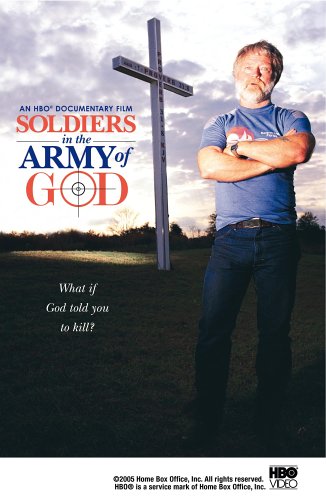
Not only is HBO not afraid of controversial programming, they actually embrace it. It is widely believed that the two topics that cause the most tension among people is politics and religion. Maybe that's why abortion is such a hot-button issue. No other topic simultaneously evokes such strong political and theological views. Solders in the Army of God is an HBO original documentary that takes a close look look at the "Army of God" organization, the most violent anti-abortion group in the United States.
Now, my interest is not to share my personal beliefs on the subject of abortion, or to try to persuade others to share my viewpoints. My sole aim here is to comment on the quality of the film, which I will gladly do. This is a short but extremely powerful film that provides an incredibly insightful look into this frightening organization. By definition, the Army of God is a terrorist organization, and though this film was originally shot in 2000, it provides invaluable insight into the mind of a terrorist and the beliefs of a terrorist organization in the 21st century climate.
Posted in: Disc Reviews by Archive Authors on February 24th, 2006
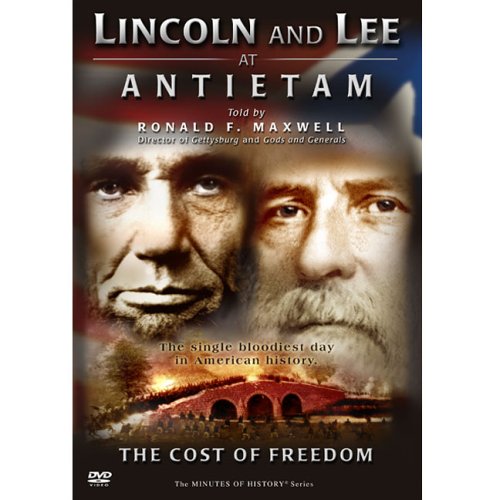
Lincoln and Lee at Antietam: The Cost of Freedom delves into what is, without doubt, the single bloodiest day in American history. In 12 hours, we lost about 24,000 people – nearly eight times the carnage of 9/11. As historical events go, The Battle of Antietam is one of the most vivid reminders we have of the realities and the horror of war. It was also one of the first battles in the history of the world whose carnage was put on display for all to see through actual photographs. After Antietam was in the boo...s, a studio opened in New York and made available for public viewing pictures containing the bodies of soldiers from both sides, twisted and broken on the battlefield. Unfortunately, the years which have passed since that day have lessened the impact of the battle, but this new documentary succeeds in taking us back to that time, and forcing us to appreciate the lives of these men and the fear they must have felt.
War should never be a course of action – it should always be a course of reaction, and an extreme one at that. This documentary does a fine job of making us see such a truth, and Antietam is an excellent example of how the Civil War was altered from being a war of rebellion to becoming one of freedom for all men. It was this hard-fought and costly victory that allowed Lincoln to be effective in his release of the Emancipation Proclamation, and though by no means does it represent the end of the War, it’s where the tide turned for the North, and freedom became a reality rather than a possibility. I highly recommend this documentary to every American. It succeeds at presenting both the broad picture and the personal intimacies of the participants. And it does so without any partisan fat connected to current political climates. It’s simply about remembering these men and this battle – not judging them – and that’s the kind of neutrality we could use more of in our history books. The only drawback is some of the narration is overdone by the actors, but it’s just a minor complaint to an all together informative, entertaining viewing experience.
Posted in: Disc Reviews by David Annandale on February 23rd, 2006
Synopsis
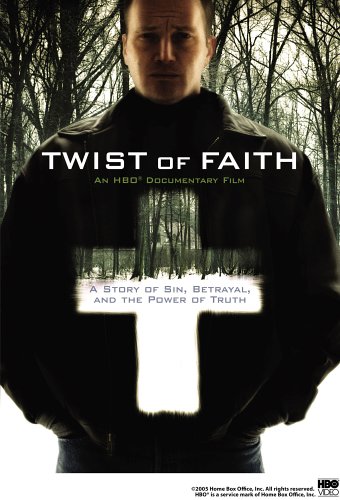
When he was a teenager, firefighter Tony Comes was sexually abused by a Catholic priest. When he and his family move to their new home, and he discovers that his victimizer lives just down the street, the shock forces him to come to terms with his past, and to seek redress. The documentary follows what happens, detailing, among other things, the way the Church circled its institutional wagons, and the terrible emotional cost to Comes and his family as the court battle drags on.
Posted in: Disc Reviews by Archive Authors on February 23rd, 2006
Synopsis
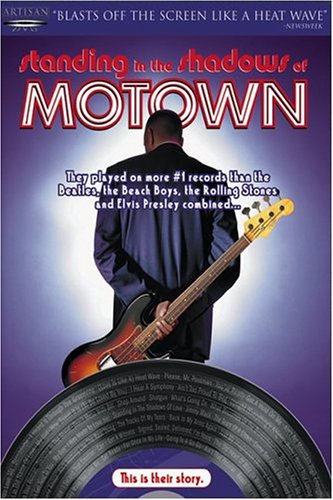
What bothers me about music, aside from the sanitized, overmarketing of a band or artist, is the way that those who play it for its enjoyment are cast aside so rudely and without thought. In Frank Zappa’s outstanding “The Real Frank Zappa Book”, he talks about appearing at a jazz festival with his group the Mothers of Invention, and witnessing the legendary Duke Ellington pleading for a $10 advance on his appearance fee. Quoting Zappa’s response; "We’d been together in one configuration or another ...or about five years at that point, and suddenly EVERYTHING looked utterly hopeless to me. If Duke Ellington had to beg some assistant backstage for ten bucks, what the fuck was I doing with a ten-piece band, trying to play rock and roll - or something that was almost rock and roll?"
Posted in: Disc Reviews by David Annandale on February 23rd, 2006
Synopsis
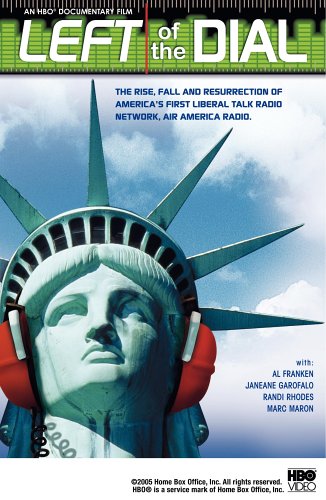
Documentary makers Patrick Farrelly and Kate O’Callaghan followed the creation of the liberal Air America Radio, a deliberate attempt to create an alternative to the all-encompassing right wing dominance of the talk radio airwaves. The making of the film took an unexpected turn when the newly born network suddenly fell into serious financial difficulty, and all sorts of stories of impropriety involving its founder circulated.
Posted in: Disc Reviews by Archive Authors on February 2nd, 2006
In the era of the popularity of documentaries, it seems that everywhere we look a new documentary is coming out about another subject. From Michael Moore’s look into the Bush administration’s ties with the Sauds in Fahrenheit 911, to the recent look into the world of penguins in March of the Penguins, each documentary holds something special as they bring us to a world we may have never known if it not for these filmmakers. One of the more special documentaries in recent time is an extremely powerful na...ure documentary called Grizzly Man.
Grizzly Man deals with a man named Timothy Treadwell who, for 13 summers, spent his time living in Alaska’s Katmai National Park and Reserve investigating grizzly bears. The film is like no other documentary I have ever seen. It has a certain level of power that is unheard of. The director of the film Werner Herzog, nor the actual documentary, approve of what Treadwell is doing. It’s also not too concerned with presenting the animals as marvelous creatures. The film was assembled by Herzog from some 90 plus hours of video that Treadwell shot in the wild directly interacting with these bears. Treadwell never showed any fear, despite Treadwell knowing and once saying ”If I show weakness, I’m dead. They will take me out, they will decapitate me, they will chop me up into bits and pieces---I’m dead. So far, I persevere.” Low and behold, this is exactly what does occur to Treadwell and his girlfriend.
Posted in: Disc Reviews by Archive Authors on February 1st, 2006
Synopsis
I never thought that a 90 minute documentary surrounding one joke could be so entertaining. And for all the praise that critics have heaped onto The Aristocrats, I was curious to see what the hype was. The film’s creators, comedians Paul Provenza and Penn Jillette (of Penn and Teller) spend the time interviewing many different comedians, and all of them share their thoughts about the joke. But it does a little more than that. Along with various versions of the joke, there is a deconstruction...of it from a realist’s point of view, but it takes on a deeper meaning. The joke perhaps is a larger metaphor for those who decide to go into comedy, giving them an idea of just how difficult it can be.
Posted in: Disc Reviews by Archive Authors on January 29th, 2006
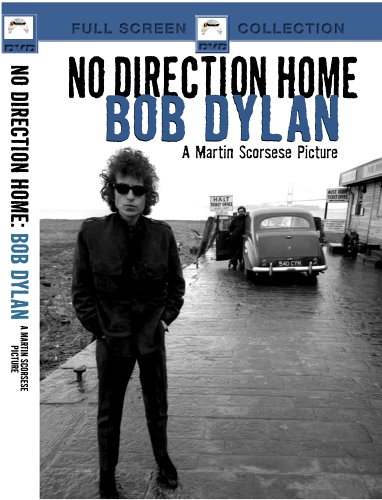
It's great to see Scorsese return to his love and respect of music in documentary form. Of course, the first time he did a music documentary, the result was what many consider to be the best musical performance film of all time; The Last Waltz. He has always paid special attention to rock and roll music in his films, from using Cream in a gangster film (Goodfellas) to The Moody Blues in a film about old Las Vegas (Casino). Music has played an interesting and important role in all of Scorsese's fi...ms, no matter the theme.
No Direction Home is more than just a documentary about Bob Dylan. It approaches The Beatles Anthology in both its superior style and its importance as a historical record. This is not just a film about a rock musician, this is a film about the consummate rock musician. Uncle Bob is an entire generation all wrapped up into one man. In the Southern part of the United States, the importance of getting the stories of the eldest generation onto tape is often discussed, as so much of their lives are still passed down today through the oral tradition. This 2-disc documentary is a very similar idea, as so much of it is made up of Dylan discussing his childhood, his early days in music and on into his career. The result is a record of a life that is both important and utterly captivating.