Posted in: Disc Reviews by Archive Authors on January 3rd, 2011
From beginning to end, the emotional impact of Prayers for Bobby will leave you reaching for a tissue.
The screenplay for Prayers for Bobby is from the biographical novel by Leroy Aarons about the Griffith family. Sigourney Weaver plays her role as the matriarch Mary Griffith perfectly. Mary Griffith (Sigourney Weaver) is a devout Christian who believes that by the power of God and of prayer, all problems have a solution. Mary and her husband, Robert Griffith (Henry Czerny), raise their children under a conservative religious perspective. Their young son, Bobby (Ryan Kelley), believes he is gay. For years, Bobby has dealt with confusion, inner turmoil, and shame. Naturally, he is terrified to tell his family. Bobby knows his secret will change the way his parents and siblings look at him forever.
Posted in: Disc Reviews by Archive Authors on December 30th, 2010
Written by Dave Younger
This is a prison drama, where the most feared criminal in Combs State Prison is born-to- be-bad Miles “Cain” Skinner (Ving Rhames). His nemesis Redfoot (Robert LaSardo) has just been caught doing his last drug deal and is transferred there. Which tough guy will prevail? Cain is so dangerous he’s in solitary confinement, so that makes it harder to take him out. But he is allowed out one hour a day. He’s handcuffed – sometimes – and security is increased, so it seems like Redfoot has an advantage. But those handcuffs could be nasty weapons…
Posted in: Disc Reviews by David Annandale on December 24th, 2010
Omar (Omar Metwally)desperately needs to write the biography of author Jules Gund if he wants to hang on to his academic post. In order to do this, he will have to secure the cooperation of the reclusive author's surviving family: his wife (Laura Linney), his mistress (Charlotte Gainsbourg) and his brother (Anthony Hopkins). Pressured by his girlfriend to make something of himself, Omar heads off to Uruguay and essentially invites himself into the Gund residence, an isolated mansion in a state of genteel decay. Hopkins and Gansbourg are quick to agree to the project, but Linney resists, and Omar is gradually entangled in the family's complicated web of relationships, while drifting into an affair with Gainsbourg.
I haven't read Peter Cameron's novel which which the film is based, so I can't say whether this story's vision of academic life is the same as the book's, but I will say that what we have here is rather bizarre. Yes, there is some truth to the old “publish or perish” saw, but Omar's desperate career straights are ludicrous. So the film starts off with a shaky premise, and is further saddled with a distinctly callow protagonist. Though he is clearly supposed to be a rather weak figure, he is so difficult to care for that the film has a void at its centre. As for Linney, Hopkins and Gainsbourg, these are people who could make a recital of the phone book interesting, and their time on the screen is compelling, even if the film itself isn't quite.
Posted in: Disc Reviews by Gino Sassani on December 23rd, 2010
"I have come to tell you a story..."
Director Phillip Noyce is no stranger to the spy-and-espionage genre. His father was an intelligence officer with the Australian government, and he spent many years of his childhood listening to tales of derring-do. He often recounts in interviews how he would play spy as a young man. He would pick out some stranger he'd see while out and about. For the next several hours he would follow that person, noting their actions, all the while practicing not getting caught. He'll tell you that his nerve got the best of him or he might have very well found himself following in the footsteps of his father. Perhaps someone else would have been making films about his exploits. Instead he gravitated to the next best thing. He decided to make movies about such things. Some of those films like Clear And Present Danger and Patriot Games are solid examples of the genre. Others might not be quite so successful at the box office but are often better than their numbers might indicate. Count Salt in that category. Salt was obviously intended to start a new franchise. The ending doesn't even hide the setup for another film. But the reality is that the movie made only about $118 million on a $110 million budget. $7 million might sound like a lot of money to you or me, but in Hollywood those aren't the kinds of numbers on which solid franchises are built. Too bad, really, because Salt is a pretty entertaining film.
Posted in: Disc Reviews by Gino Sassani on December 16th, 2010
John Wayne Gacy was one of Chicago's most infamous killers. He most remembered for the images of him as a clown. He used to entertain at parties in the costume. While it was never really part of his killing life, he was forever known as the Clown Killer. Gacy would entice young men, often gay hookers, into his home where he would drug them and have sex with them. He would also trick them into putting on handcuffs, and he would strangle them to death. He buried the bodies of his victims in a crawlspace beneath his house, where the mass grave's discovery would lead to his arrest and conviction. A bit of a surprising development was that Gacy himself ended up drawing an accurate map of where each of the bodies could be found, because he didn't want them to rip up his floors. Of course, it should have been clear to him by then that he wasn't going to be living there ever again.
We all know the story. There have already been countless films and documentaries as well as books dealing with every aspect of the killer's life and crimes. Apparently, there was another little known story that hadn't gotten quite the same amount of attention. In the 14 years that Gacy was incarcerated awaiting his eventual execution for the murders, he was quite the communicative butterfly, writing to many of the folks who wrote to him in prison. He would attempt to manipulate these people from behind his own prison cell. One of these pen pals was criminology student Jason Moss. Moss would later write a book about his experiences with Gacy called The Last Victim. In the book he described the correspondence that led to him actually visiting with Gacy in the last days leading up to his execution. Obviously, there are going to be some liberties with the film, but it is nonetheless a fascinating character study of a relationship that got terribly out of hand.
Posted in: Disc Reviews by William O'Donnell on December 14th, 2010
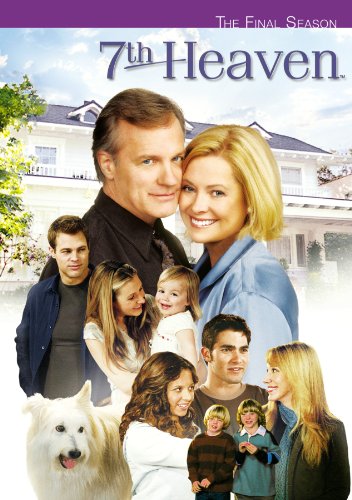
7th heaven reaches its 11th and final season of rampant political correctness and lessons of family togetherness through Christian love. Yes, that was a mildly passive aggressive summary of this show, but I feel sometimes one strong bias deserves another to challenge it. This show, the story of a very large family lead by a Minister (and don't deny it, he leads them) as they convey their socially and politically conservative Protestant Christian point of view of “real-life” situations.
To be a fair reviewer, I shall put aside my personal objections to critique how the show works just as a family drama for a moment. The 11th season is quite hard to get into as there are countless references and relationships that have been building up for a very long time. I'm not asking it to be like a Law and Order brand of storytelling, where a viewer can jump in at any episode to enjoy a fully encapsulated story, but this show becomes an undeniable challenge to watch if you are seeing it without any background knowledge of the characters and their previous stories.
Posted in: Disc Reviews by Archive Authors on December 13th, 2010
Written by Dave Younger
Young Adam (2003, 98 min.), set in drab postwar Glasgow, Scotland, combines the kitchen-sink dramas of late 50s/early 60s northern England with a Hitchcockian tale – what if you discovered your girlfriend floating dead in a river? Throw in explicit full-frontal NC-17 sex (most movies, like Blue Valentine, will do anything to avoid this kiss of death, but Young Adam embraces it; they wanted to cut Ewan McGregor’s junk for the American release, but he fought to keep it in) with the sexually-charged characters of Joe (McGregor), Ella (Tilda Swinton), and Cathie (Emily Mortimer), and you have more than enough angry young men and women to overcome the tedium of being one of the working poor in the grimy, coal-infused landscape of the docks of Glasgow.
Posted in: Disc Reviews by William O'Donnell on December 12th, 2010
Bryce and Juli first meet in the second grade. Juli is convinced that Bryce is walking around with her first kiss, while Bryce is not returning any sense of being similarly infatuated with Juli. As the years pass by, Bryce manages to keep her at bay, until things “flip” (as it were) and it is Juli who may be veering away from Bryce.
This will-they won't-they (probably will) romance is told by trading the point-of-view and narrator between Bryce and Juli. This tactic makes the story more interesting to take in, despite the potential tedium of having the entire story essentially being told twice. The audience is privy to the continuous compare and contrast happening between Bryce and Juli's thoughts and feelings and so we get a more immediate understand of who they are, and what they are motivated by.
Posted in: Disc Reviews by Gino Sassani on December 9th, 2010
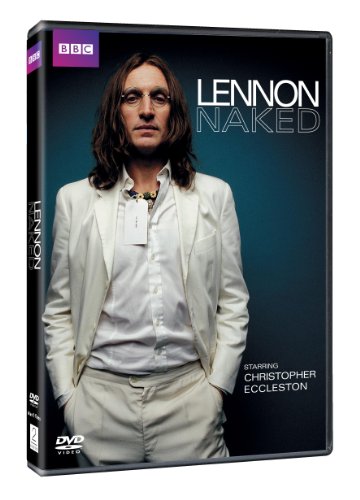
In December of 1980, John Lennon was gunned down by a crazy man who was trying to get the attention of yet another celebrity. In 2010, the BBC assassinated the man's character in this dreadful television film called Lennon Naked. I had such high hopes for the film. I rather like star Christopher Eccleston. I enjoyed his take on The Doctor from Doctor Who. He was also quite good in the zombie thriller 28 Days Later with a run as a man who can become invisible on Heroes. What made such a fine actor stoop so low as to take a gig like this is beyond my understanding. If it was the temptation to maybe play an idol from his childhood, I would have hoped he would have stopped short once he'd read the script. As the aforementioned warning tells us, this film is actually a hodgepodge of speculation that doesn't fail to kick the singer at every point.
I'm not a huge John Lennon fan. In fact, I only have mild feelings about The Beatles in general. I respect what they have done but have leaned more toward Paul and George in their years after the super-band. I have no illusions that Lennon was anything but a spoiled brat, particularly at the height of his career. His famous, "We're bigger than Jesus Christ" statement said a lot about his immaturity at the time. It should be expected. The "lads" were mere teens when their music caught fire. Before they had a chance to start shaving, women were throwing themselves practically faint at the band, and money was coming in as if it were the most common thing in the world. It's really no wonder that the band members had a feeling of entitlement and were a bit rough around the edges. There is certainly a bit of fairness to some of this portrayal.
Posted in: Disc Reviews by Gino Sassani on December 6th, 2010
Erle Stanley Gardner wrote crime fiction, and while many of his 100 or so works are unknown to most of us, he created a character that has become as identified with criminal lawyers as any other in fiction. It was in these crime novels that Perry Mason first faced a courtroom. He developed a style where he would investigate these terrible crimes his clients were on trial for. He would find the real killer, and in what has become a Hollywood cliché, reveal his findings in a crucial moment during the trial. While we may not remember the novels, we all remember the man in the persona of Raymond Burr. Burr had a commanding presence on our screens and enjoyed a well deserved 11-year run as the clever lawyer. What makes this run so amazing is that the show followed pretty much the same pattern the entire time. We always know what’s going to happen, but we wait eagerly for that gotcha moment when Perry faces the witness on the stand. We know when he’s got the guy squarely in his sights, and we can’t sit still waiting for him to pull the trigger. OK, so maybe that’s a little over the top, but so was Perry Mason. From the moment you heard that distinctive theme, the stage was set. To say that Perry Mason defined the lawyer show for decades would be an understatement. Folks like Matlock and shows like The Practice are strikingly similar to Perry Mason. If you haven’t checked this show out, this is your chance. See where it all began.
At this rate, it’s going to be quite some time before you complete your collection. I’m not even sure that DVD will still be a viable format before the end of the series on DVD. It’s another half season, and the episodes continue to fly at us at a snail’s pace. But slow and steady wins the race, and as long as the quality episodes continue to deliver that classic Mason charm and style, I guess folks like us will continue to come back for more.