Drama

Westerns are typically fun movies to review because they usually don’t deviate much from a basic formula. There is usually a criminal, and there is usually a good guy out there to shoot that varmint. Technically, that is all there is to it. Furthermore, the budget (unless big stars are involved) is small, making for some creative storytelling. Today, we get to review an Australian western: Red Hill. Let’s see if it differs from the typical American one.

We overlook a lush Australian landscape (aren’t they all this way?) and pause to look at some horses. Suddenly, there is a disturbance in the distance and the horses run. Dun dun dun. Scene shift. Shane Cooper (played by Ryan Kwanten) is up and getting ready for first day of work. His wife, Alice (yes…Alice Cooper, played by Claire van der Boom) who apparently got her Frankenstein fed, is very pregnant. They talk about his first day, and soon he goes off to work.

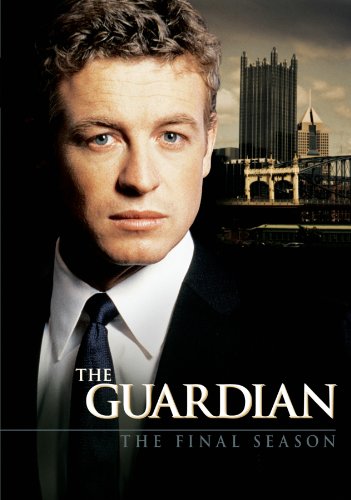
Simon Baker is riding high these days. Last year his new series, The Mentalist, was the highest ranked new drama of the year. That accomplishment got the show paired with CSI in that enviable Thursday night time slot. I’m amazed when I hear folks tell me how the actor appeared to come out of nowhere. A few film roles and he’s Mr. Television. Well, count me in with the small group that isn’t so surprised and saw him coming as far away as 2001 with a sleeper CBS series called The Guardian.

Baker played Nick Fallin, a talented young lawyer who just got busted for cocaine. Nick won’t see the inside of prison, however. His father, Burton (Coleman) is the senior partner at one of Pittsburgh’s most influential corporate law firms. Instead of jail, Nick is given five years probation and ordered to serve 1500 hours of community service. His court ordered assignment is Legal Services Of Pittsburgh, formally Children’s Legal Services. He’s placed under the charge of Alvin Masterson (Rosenberg), an idealist who set up the law clinic originally to speak for children who have no one else to do so. He’s resentful of Nick’s pampered lifestyle and at first wants to make the gig hard enough on him that he might ask to be assigned elsewhere. Eventually they warm to each other as Nick becomes more vested in the job than he thought he would be. Much of the show’s conflict is derived from Nick juggling these two worlds. He still has a duty as a shark attorney for his father’s firm, yet must find time to help these indigents and children that have come to the clinic for help.

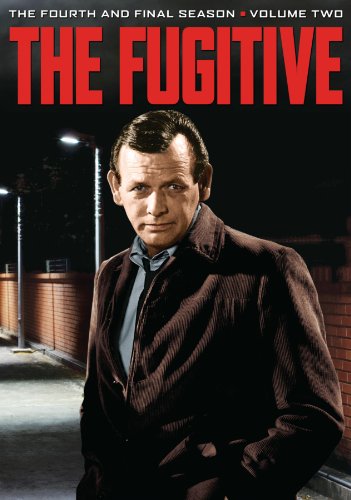
“The man is Richard Kimble, and, not surprisingly, the man is tired. Tired of looking over his shoulder, the ready lie of the buses and freight trains. Richard Kimble is tired of running…”

The elusive “one-armed man” is one of the best-known television icons of all time. The plight of Dr. Richard Kimball has been the subject of numerous imitations and even a feature film staring Harrison Ford as Kimball and Tommy Lee Jones as his pursuer. Tim Daly left the ranks of comedy to fill the shoes of Kimball in a very short-lived revival series. While some of these efforts managed to capture the essence of The Fugitive, none can truly compare to the real thing.

"He paws fiercely, rejoicing in his strength and charges into the fray. He laughs at fear, afraid of nothing. He does not shy away from the sword. The quiver rattles against his side, along with the flashing spear and lance. In frenzied excitement, he eats up the ground. He cannot stand still when the trumpet sounds."

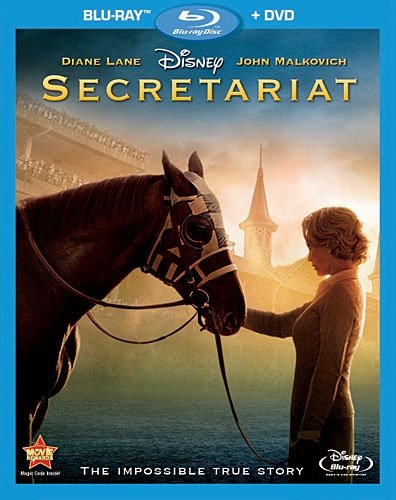
Disney has a grand tradition of putting out a certain kind of sports film. You know the type well. There is a champion that must overcome incredible odds and usually their own flaws to rise to the top of their game. Secretariat fits that mold, but only to a point. Usually the movie centers on the athletes themselves, and it's something from within that must change or conquer. With this film, the champion is a horse, and while that often doesn't stop the folks at Disney from allowing us to hear from their perspective, this is based on a true story and remains firmly planted into a reality, of sorts. But, we can't hear from Secretariat himself. Instead this is really the story of his owner Penny Chenery, and it's not a very flattering story at all. I'm afraid that I didn't find myself cheering for the hero this time, and therein lies the fatal flaw of Disney's latest rise-of-a-champion story.

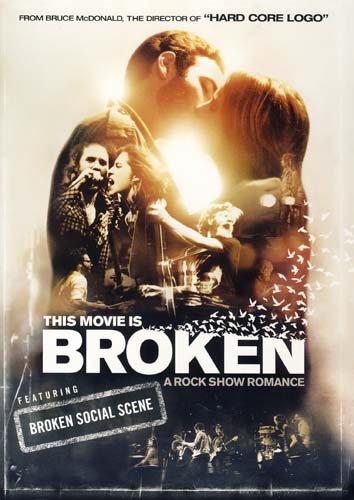
Not quite a concert film, not quite a drama. This film follows a young man named Bruno, who sleeps with his life long crush, the night before she moves from Toronto to Paris. On this final night, Broken Social Scene are playing a free show and Bruno uses a connection to get backstage passes as a last ditch effort to win over his crush. All the while, we are treated to a multi camera view of that very same concert, running the duration of the entire film.

Some concert films separate the songs with behind the scenes moments of the band leading up to that same show, but here we are separated from all that with the fictional romance plot. As things progresses, the music does what a soundtrack is supposed to do, and highlights the emotions of the scenes it accompanies, but since we are privy to the live performance of that same soundtrack, the passion of the musicians playing syncs up with whatever the actors are doing or feeling. There is a symbioses between the concert and the drama, making each better than they ever would have been simply on their own.

Allen Ginsberg is often regarded as one of the most important poets of the 20th century. He is seen as a symbol of the Beat Generation and contributed to the San Francisco Renaissance. His most important work, Howl has created both worldwide controversy and praise. It escalated into a 1957 obscenity trial of the poet and Lawrence Ferlinghetti who had published Howl along with other selections from Ginsberg. The film is a celebration of Ginsberg’s life as well as the results of this trial.

In 1955, an unpublished 29 year old poet presented his vision of the world as a poem in four parts. His name was Allen Ginsberg (played by James Franco) and the poem was Howl. In 1957, Allen and his work would be put on trial for obscenity. The trial would be prosecuted by Ralph McIntosh (played by David Strathaim) and defended by the prominent Jake Ehrlich (played by Jon Hamm). Judge Clayton W. Horn (played by Bob Balaban) would preside over the proceedings and render judgment.

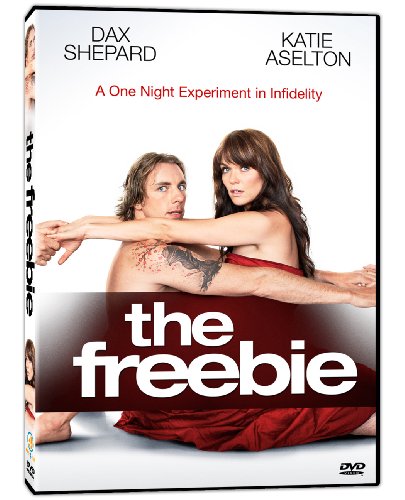
The Freebie is a festival friendly drama-comedy about Darren (Dax Shepard) and Annie (Katie Aselton) ailing sexual relationship.  The film is interested with relationships after they pass the lust stage.  How do couples maintain a healthy romantic relationship? Darren and Annie strive for ways to spice up their situation and the idea eventually becomes one night of freedom from each other to explore other options.  The film is shot very intimately and the audience will be shocked at the warmth conveyed by direction.  The tension explored in this film is not typically deployed in this genre.  This film showcases a perspective that could surprise viewers, I know I was. 

Both Dax Shepard and Katie Aselton are able to deliver solid performances.  I have always been skeptical of Shepard’s acting chops given his track record.  However, he delivers a subtle and strong performance.  His scenes with Aselton always have naturalistic approach and the direction only amplifies this.  The intimacy and warmth in scenes is overwhelming.  Aselton also directs and she uses a variety of tight portrait shots to convey emotion.  I commend the effort and was surprised at how invested I found myself in the characters.  

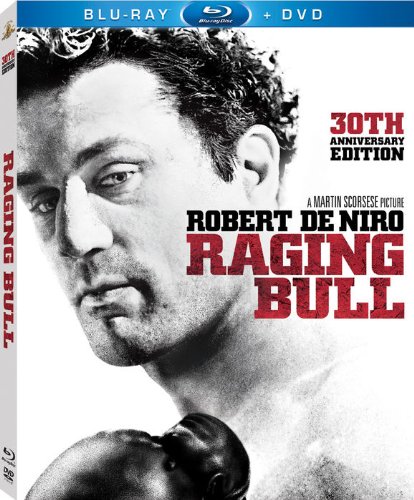
"Give me a stage where this here bull can rage."

Under normal circumstances and certainly under less skillful hands the story of Jake La Motta would not be one worth telling. His life is a story without heroes. It's a life of abusive behavior and an almost unredeemable personality. The only way he was ever capable of expressing himself was in the boxing ring. Even there he was doomed to feel inadequate most of his life. Even as he was rising toward the middleweight championship of the world, he was obsessed by his own small hands and the realization that he was fated to never test himself against the world's very best fighters. He alienated everyone around him. He was utterly and completely self-destructive, and you either left his sphere of influence or you let him drag you down in to his own dark abyss. Why in the world would anyone want to see, let alone make a film based on the life of Jake La Motta?

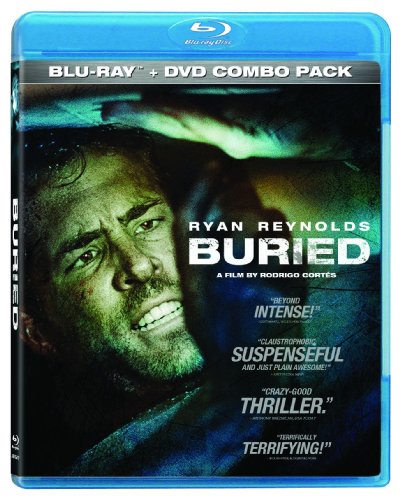
"Dear Screenwriter,

"Here’s your writing prompt: You are to write a feature-length screenplay with only one on-screen character. This character is to remain in only one location for the entire duration of the film, and that one location must be a 2' x 7' wooden box. You cannot use flashbacks, cut-aways, or any other narrative device that would take the action outside that box. Sound impossible? It’s not. In fact, all this exactly describes the film BURIED."

There’s no doubt that Kevin Costner’s name has been attached to some pretty crappy projects during his career – Waterworld, The Postman, and 3000 Miles to Graceland to name a few – and it’s unfortunate, because the aforementioned dirt loafs have tarnished the fine film that we’re here to discuss, Dances With Wolves. Heck, even I had horrid recollections of the film from viewing it years ago in theaters. However, this review forced me to check the film out again and I actually found myself…enjoying it – and enjoying it immensely. What was going on here? Time has definitely been kind to Dances With Wolves – it has aged like a fine wine. However, it seems that Costner’s later career choices had clouded my memories of the film, and thankfully, I was able to watch it again to find out how wrong I have been. It’s a good thing too, as I might have deprived myself of this film forever had it not been for this review.

For such a “bad” film, it actually racked up during the 1990 Academy Awards ceremony, as Dances With Wolves took home seven Oscars (Director, Adapted Screenplay, Cinematography, Sound, Score, and Editing) and had a worldwide gross of over $300 million when it was all said and done. (Heck, $300 million is a load in today’s dollars.) For a debut director, who before was only thought of as a marginally decent actor, that’s not a bad way to start a career behind the camera.