Posted in: Disc Reviews by Gino Sassani on August 11th, 2009
Billy Bob Thornton got himself a well deserved Oscar for the film Sling Blade. If you’ve ever seen the film, or anything else by the man, there’s no surprise that he took home one of the coveted statues. What is a bit surprising is that he took the Oscar home for the screenplay for Sling Blade and not for the masterful performance. Now don’t get me wrong. The screenplay is a brilliant one. He certainly deserved that award, but there hasn’t been a performance as riveting as his portrayal of Karl Childers in a decade or more. It was this performance that made Thornton the household name he became. It’s doubtful many of the other opportunities he did get would have come his way without such a landmark role. The character has become an icon in American pop culture and is imitated frequently in films, television shows, and skits. There have been plenty of imitations, but there’s only one Sling Blade.
It’s almost hard to imagine that this baby is almost singlehandedly the product of Billy Bob Thornton. He wrote the story, directed the film, and played the lead character. It just doesn’t happen this way very often. You’ve seen enough of my reviews here to know what I tend to think of these, often egotistical, one man shows. Most of the time they are self serving crap that passes for high art or entertainment. This is certainly one of those exceptions that, as they say, proves the rule. Of course I never did understand that phrase all that much. Still, it fits about as perfectly as you please here. Every aspect of this film is near perfect. The story is a compelling one to be sure, but I don’t think it would have been nearly as good without such sweet direction and acting. The award might have been deserved; probably was, as Karl would say. But it was the other two elements that really made this film.
Posted in: Disc Reviews by Gino Sassani on August 11th, 2009
The Soloist is based on a book written by Los Angeles Times columnist Steve Lopez. The book was based on a series of columns the writer assembled involving his relationship with a street musician he happened upon while searching for material. Lopez was touched by the musician, Nathaniel Ayers, who was playing a violin with only two remaining strings. Still he was able to produce music that made the writer do a double take and begin to wonder what he was doing out on the street. Ayers’ ramblings made it immediately obvious that the man was suffering from mental illness. Their first contact revealed that the street performer was once a student at Juilliard. Lopez took a personal interest in the story, resulting in a series of columns that got him a bit of attention and a personal relationship with Nathaniel Ayers. When he finds out that Ayers was a classically trained cellist, his column ends up providing a nice cello for the musician to play. Lopez attempts to use the instrument as a way to coax Ayers inside and off the street. He exposes him to music instructors in the hopes of cultivating his talent more completely. Together they grow, in a way.
There really isn’t much more of a story than that. Credit director Joe Wright for not attempting to add the usual Hollywood flares in an attempt to make the film more of a commercial success. The story is very true to the real life events and never attempts the usual over the top approach that has become trendy in Hollywood today. Unfortunately, while the decision might have been an honorable one, it might not have been the right one for the film. It did rather poorly at the box office, pulling in a little over $30 million, which didn’t even cover the budgets costs. You have to look at this one strictly as a character study, because you won’t find a satisfying enough story in the film. It just kind of sits there and never really develops into any kind of cohesive form. It’s obviously the product of a series of loosely related pieces of work. We get the idea that Lopez is moved by this man and that he decides at some sacrifice to get involved, but where is the whole thing going? Again, they decide to forego the warm and fuzzy Hollywood ending that wraps things up in a nice tidy bow for everybody. Most of the story hasn’t been told; the relationship is, apparently, ongoing. Perhaps the story needed a proper ending before making its way to a movie.
Posted in: Disc Reviews by William O'Donnell on August 7th, 2009
This film is rooted in the activism of the Poor People's Economic Human Rights Campaign. Within the film are the stories of several Philadelphia residents, told in sporadic vignettes that are loosely tied together by a mysterious flier that is being handed out in the neighbourhood. While some characters cross into other's stories they mainly stay separated until the very final scene which reveals that the flier was out promote a rally on behalf of the aforementioned Campaign.
Posted in: Disc Reviews by William O'Donnell on August 6th, 2009
The story originally seems to set itself up to be that of redemption for a young man who is fresh out of jail. While this story is around, there seems to be parallel stories that arise as subplot but soon race alongside the original tale like proverbial track horses (and horses also just so happen to be the nexus for said plots). Just as one seems to buck into the lead, another comes along to grab the focus.
Posted in: Disc Reviews by David Annandale on August 5th, 2009
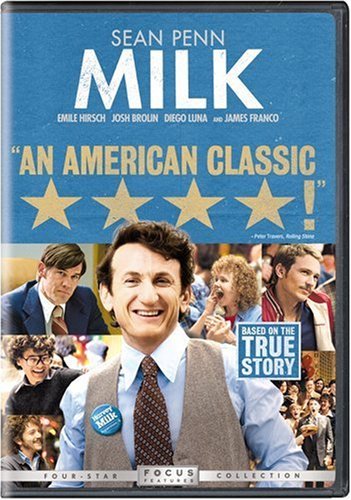
Foreseeing his own assassination, Harvey Milk (Sean Penn), America's first openly gay elected politician, records his memoirs. The film flashes back to follow his narration, tracking his transformation from don't-make-waves semi-closeted New Yorker to activist San Franciscan. In his new home, he decides to run for City Supervisor, and after numerous failed attempts, which take a toll on his personal relationships, he finally wins. The battles are only just beginning, however, as he must now wage war against the intolerant laws being pushed by California Governor Briggs and anti-gay crusader Anita Bryant. Meanwhile, a prickly professional relationship with fellow Supervisor Dan White (Josh Brolin) is sowing the seeds of tragedy.

Posted in: Disc Reviews by Gino Sassani on August 5th, 2009
Imagine waking up one morning to find a newspaper on your front porch. Here in Tampa, the fact that the paper is actually on your front porch is miracle enough. Imagine further that this ordinary looking paper isn’t today’s paper at all, but rather tomorrow’s edition. If you could trust that what you held was the genuine article, so to speak, just think of the possibilities. For most of us our thoughts turn to the myriad ways in which we could enrich ourselves: sports scores, lottery numbers, even stock tips. If, however, you’re less selfish, there is an equally endless number of ways in which you could help your fellow man, or woman as the case may be. You would have advance knowledge of tragic accidents, crimes, and other unfortunate events about to befall your fellow human travelers. That’s the essence of Early Edition.
Gary Hobson (Chandler) is having some bad luck. His wife kicks him out of the house, on their wedding anniversary, no less. He ends up forced to live in a cheap hotel room. One morning he discovers that a mysterious orange tabby has left a gift by his door. Instead of the usual rodent surprise, Gary finds a copy of the local newspaper. This paper happens to be dated tomorrow. At first Gary doesn’t even notice the odd date as he attempts to go about his busy stockbroker life. It isn’t until Gary’s attempt to follow the price of wheat that he is finally alerted to his special edition of the paper. His buddy Chuck (Stevens) wants to use the paper to check out a few sports results. Gary avoids the temptation and refuses to allow his friend to have the paper. Instead he uses the information to assist another friend, Marissa (Davis – Williams), who’s in desperate need of a windfall. Together they become a team. As the event repeats itself, the three work to find ways to help others with their advance knowledge. There’s a little comedic tension, as Chuck is always trying to get his own taste out of the information. Marissa, grateful for the help she received, is far more keen on passing the good deed along.
Posted in: Disc Reviews by Gino Sassani on August 3rd, 2009
“What is Echelon? It’s NSA’s central computer. It filters all global communications. Echelon’s a juggernaut. It can access any security system on the planet… Echelon’s been compromised.”
In 1948 British author George Orwell delivered a sobering science fiction novel about a future society where the State has become a parent figure to its people. It watches over everything that you say or do like a …big brother. That term originated with the novel 1984. The work has added such words as “big brother” and “Orwellian” to our lexicon. It was intended as warning against intrusions that weren’t yet possible. Today we’ve moved beyond 1984 both in linear time and in Orwellian technology. You’re not paranoid. Someone is pretty much always watching you. From ATM’s to supermarkets, you are on camera pretty much anytime you’re out in public.
Posted in: Disc Reviews by Gino Sassani on August 3rd, 2009
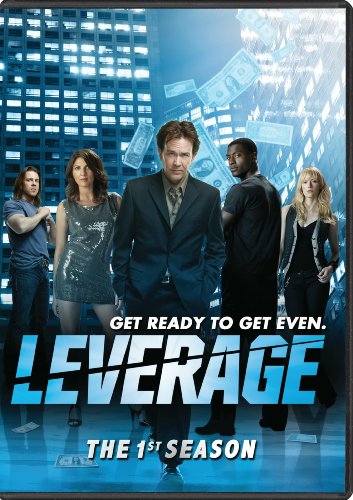
“Corporations… They have all the money. They have all the power and they use it to make people like you go away. Right now you’re suffering under an enormous weight. We provide the Leverage.”
I remember seeing like a million ads for this show toward the end of the last football season. If memory serves it was heavily promoted during the Super Bowl. In any case, I had made a mental note to catch it, but it was still several weeks away and I ended up forgetting about it by then. Fortunately, the release of the first season on DVD has given me a second chance for a first look at this intriguing series.
Posted in: Disc Reviews by Gino Sassani on July 22nd, 2009
Since the events of 911 there has been a lot more appreciation, at least publicly, for the real life heroes who populate fire and police stations all over the country. Few jobs offer so little reward for such high risk all in the name of protecting our society from harm. It’s likely no coincidence that while Third Watch began a couple of years before those events, it reached its peak in popularity in the months and years that followed. A better than average procedural drama, Third Watch offered a look at both police officers and firefighters along with their paramedics. You could call it a cross between Hill Street Blues and Emergency.
The police officers and the fire fighters are all members of New York’s 55th Precinct. The Precinct carries the nickname of Camelot. While they work from separate facilities, they are across the street from each other and their duties often find them working together. The two houses share a bond, but there are also moments of stress and rivalry. But when there’s a crisis, these men and women are the best and get the job done.
Posted in: Disc Reviews by Gino Sassani on July 22nd, 2009
The third season of Matlock brought more of the same. If you’re a fan, that’s very good news indeed. What is that, you ask? Imagine Sheriff Andy Taylor older and now an attorney, and you pretty much have the setup for Matlock. Forget for a second that both characters were played by Andy Griffith. That’s not all they have in common. Matlock is every bit the “southern gentleman” that Taylor was. He might be a little smarter, but he walks and talks like Andy Taylor.
Matlock began life as a television movie from Dean Hargrove, who brought us Columbo. Hargrove would later work the same magic with Dick Van Dyke in Diagnosis Murder. In fact the two shows could easily have been companion pieces. Both featured sit-com stars from the 1950’s and 60’s that had become somewhat iconic characters. Both would don the role of professionals. Both shows would subscribe to the “formula” mode of storytelling. Diary Of A Perfect Murder would set up the Matlock formula. It’s simple, really. Matlock was a lawyer in Atlanta. Some wronged defendant, usually charged with murder, would show up asking for Matlock’s help. Matlock and his team would investigate the crime with an eye toward, as OJ Simpson is fond of saying, finding the real killer. His team consisted of his daughter Charlene, herself a competent lawyer, and Tyler Hudson (Holliday), his private investigator. In the pilot the Matlock character was less Andy Taylor and a little more slick at first. I’m sure that while it was intended to show Matlock’s prowess as a high priced attorney, somewhere along the line it became obvious that the show’s finest asset was Griffith himself and that southern charm he was already famous for. Whatever the reason, you can see the character soften significantly during the early episodes of the season. And that decision was a smart one, as Matlock would continue for nearly a decade.