Posted in: Disc Reviews by Archive Authors on May 26th, 2009
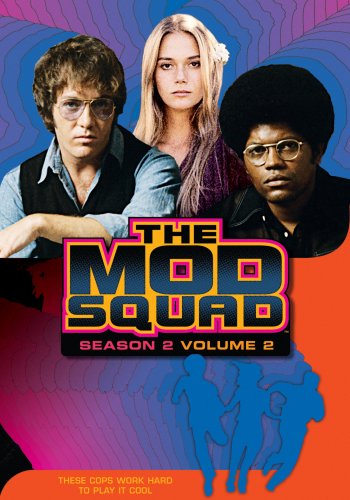
The danger in revisiting a show you used to love as a kid is that it will almost always disappoint, especially, it seems to me, if the show was made in the 70s. I have had this experience several times in my life, sitting there with a dull expression in my eyes, gazing at the screen and wondering why I ever thought Welcome Back Kotter was funny. And did I really thrill to the exploits of Starbuck and Apollo without noticing how awful Battlestar Galactica was?
Posted in: Disc Reviews by Gino Sassani on May 22nd, 2009
“Life is a tightrope. You’ve got to learn to dance.”
We’ve all had bad days. Everyone can relate to that. We’ve all had moments when we weren’t at our best, when we’ve said or done something in the heat of the moment that wasn’t exactly our most shining moment. We can only hope that these momentary lapses of reason don’t cause permanent harm to ourselves or to others. We can only plead our case that we aren’t ultimately defined by these brief acts of frustration brought about by mitigating circumstances. Most of the time we get lucky. Sometimes that fleeting moment isn’t so fleeting. Some times you have a bad day, all of it. That’s the premise behind this Samuel L. Jackson and Ben Affleck vehicle.
Posted in: Disc Reviews by Gino Sassani on May 22nd, 2009
Director Brad Anderson and writer Scott Kosar were unable to find backing or support from any of the American studios when they were shopping this movie. Apparently there were worries that it wasn’t very commercially viable. It turns out they were correct. The film made just over $1 million in domestic box office. That’s not a mistake. I meant $1 million. Even the foreign market came up short, coughing up only an additional $7 million total. Because of the lack of interest here in the States, the duo went to the Spanish government and received a grant. The grant required the film to be made in Spain and include Spanish cast members. But the movie kept its California setting and shot Barcelona for California, and not very effectively either. The truth is, there’s a lot more wrong with this film than just the lack of studio interest and its forced European locations. The team missed a grand opportunity here. They got to shoot in a rather exotic location but never took advantage of the wonderful surroundings. Instead they insisted on keeping the film urban, and in the end rather generic. The only solid set piece is the machine shop, which was filmed in a working plant.
Trevor Reznik (Bale) is a very odd man. We find him a year into a rather dramatic and steady decline. He hasn’t slept in over a year. He is losing weight to the point of emaciation. He works as a machinist for National Machine, where his bosses think he’s taking drugs and his coworkers don’t like him either. None of that is helped when his inability to focus causes another man, Miller (Ironside) to lose his arm in a machine. The only companionship he has is a hooker, Stevie (Leigh) who he pays a hundred bucks a pop and his café waitress, Marie (Sanchez-Gijon) who serves him coffee and pie. His decline appears to accelerate when he meets an apparent new employee at National. Ivan (Sharian) is a monster of a man with whom Trevor becomes obsessed. He leaves little post-it notes to remind him to do everyday things, but these notes usually disappear, replaced instead with cryptic messages and a hangman game. As his mind and body deteriorate, he becomes increasingly paranoid. His mind is pushing him to accept a reality that is not going to be pleasant.
Posted in: Disc Reviews by Gino Sassani on May 21st, 2009
For many, Saving Private Ryan has been the measure of the perfect war film in the modern era. Without question the Steven Spielberg film is a milestone in depicting battle on the screen. But I’m going to make the possibly unpopular statement that Enemy At The Gates is a better film, and the standard by which war films should now be measured. The movie is at least almost as good technically as Private Ryan. There are battle scenes that offer the same caliber of shocking reality. And even if this movie falls a little short of the technical marvel that Private Ryan was, this movie captures the human element of war time in a way I hadn’t seen before or since. Certainly all of the necessary hallmarks of the war picture formula are intact. There are plenty of battle scenes and enough ultra realistic bloodletting to satisfy the most insatiable aficionado. But Enemy At The Gates refuses to rely on such brutality to make its point. Instead the hazards of war are merely the atmosphere that allows an excellent cast, under brilliant direction, to bring to life an inspired script.
It’s the heart of World War II. Hitler and his Third Reich are marching across Europe spreading their shadow of fascism and tyranny wherever they go. They have now begun their assault on the young Soviet Union. For the Soviets, troops are weary and supplies are scarce. For the beleaguered soldiers of the Red Army, it is a matter of being shot by the enemy or by your own field commanders should you even think about a retreat. Their mission now is to defend the city of Stalingrad, which bears the name of “The Boss” and stands as a symbol of nationalism to the infant nation. But things are not going well at all. Only every other soldier is armed. The unarmed soldier is admonished to wait until the one holding the rifle is killed to take up arms himself. For these Russian men it is not a matter of if they are killed, but merely when. After a heavy day of fighting, a political officer, Danilov (Fiennes) finds himself pinned down with another young soldier, Vassili (Law). Vassili manages to take out the officers who stand in their way of escape. Danilov decides that Vassili could well be the hero that the Soviet soldiers need. He realizes that fear is not as good a motivator as inspiration. Before long he has written news articles that chronicle the exploits of Vassili as he takes his positions in the city and racks up an impressive score of German officers. Unfortunately, it is not only the Soviet soldiers who hear of these adventures. Vassili comes to the attention of the German brass who bring in their own sharpshooter, the decorated officer, Major Konig (Harris). The two play a dangerous game of cat and mouse in the ruins of Stalingrad. Vassili must also contend with his feelings for an intelligence officer, a young woman named Tania (Weisz). The three become engaged in a love triangle of sorts, causing Danilov to attempt to take down the hero he created. He also begins to doubt the figure he has become to the Soviet people. Konig and Vassili will eventually face each other, and only one of them can survive.
Posted in: Disc Reviews by Gino Sassani on May 21st, 2009
“Don’t expect too many mistakes from this man. After all he does seem rather more interesting than just another reader researcher. For example; has he gone into business for himself? Was he turned around? Does someone operate him? Is he homosexual? Broke? Vulnerable? Could he be a soldier of fortune? Did he arrange the hit? Is that why he’s still in flight? Still, he may be innocent. But why didn’t he come in gently?”
Sydney Pollack might have been channeling the essence of Alfred Hitchcock when he directed 3 Days Of The Condor. It’s hard not to see the similarities to some of Hitch’s work. But he might also have been having a bit of precognition at the same time. The later novels and films about Jason Bourne bear a striking resemblance to this 1975 thriller. Whatever connection Pollack might have been making, he managed to direct a film that was timeless while being very much a product of its time. We are reminded of that long gone era of the 1970’s with generous shots of the just built World Trade Center towers. Ads and shots of Eastern Airlines planes bring back some memories. These images securely place the action in a specific time. Still, it works maybe even more today than it did in 1975.
Posted in: Disc Reviews by Gino Sassani on May 20th, 2009
“I don't know who you are. I don't know what you want. If you are looking for ransom, I can tell you I don't have money. But what I do have are a very particular set of skills; skills I have acquired over a very long career. Skills that make me a nightmare for people like you. If you let my daughter go now, that'll be the end of it. I will not look for you, I will not pursue you. But if you don't, I will look for you, I will find you, and I will kill you.”
That pretty much sums things up quite nicely for you. The filmmakers must agree, because the scene figured prominently in their marketing campaign for the film. In the end it’s not really anything that we haven’t seen before with Bruce Willis, Mel Gibson, or a handful of other actors in the role. What might make the whole experience somewhat unique is that Liam Neeson isn’t usually associated with this kind of a character. You usually find him more on the cerebral side of things. He plays the part well in spite of the handicap that he never really looks quite right for the part. Give the thespian credit for making the whole idea at least somewhat believable.

Posted in: Disc Reviews by Archive Authors on May 14th, 2009
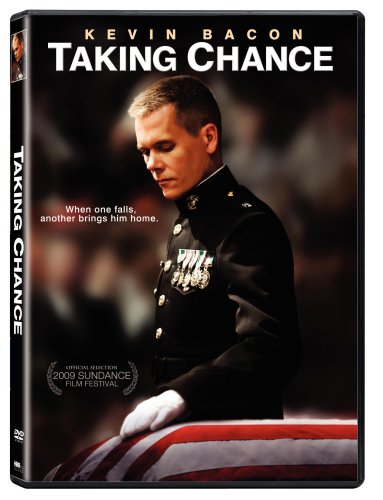
Taking Chance gives audiences another perspective into the Iraq war. Lt. Colonel Michael Strobl (Kevin Bacon) volunteers to escort the remains of a recently deceased Lance Corporal Chance Phelps. During the trip across America’s heartland, Strobl gets to see how the Iraq war is implicating not just the families involved, but the nation as a whole. The film is also based on true events, which adds to the stories levity. The film manages to give alternative perspectives on the war and also manages to be objective at the same time.
Posted in: Disc Reviews by Archive Authors on May 12th, 2009
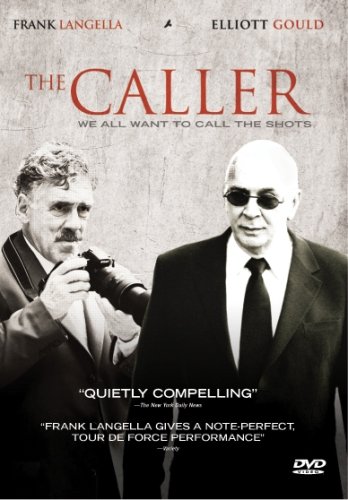
The Caller is a film starring Frank Langella and Elliott Gould. It is a tense thriller about corporate foul play and voyeurism, wait, what year is it? With the recent critical acclaim of Langella, it seems only fitting to market his name on a low-budget film. Unfortunately for the film, Langella’s performance is one of the only shining moments. Langella plays an aging VP of an energy company that decides to blow the whistle on the corporate wrong doings that are going on. Understanding that he’s written his own death certificate, Langella hires a private investigator (Gould) to follow him to help catch his eventual killer.
Posted in: Disc Reviews by Gino Sassani on May 11th, 2009
“Your life is defined by its opportunities... even the ones you miss.”
F. Scott Fitzgerald is one of those great American writers from the classic age. In school most of us were required to read various works from the writer. For many students those works included The Curious Case Of Benjamin Button. The original work is a mere 20 page short story. For the last 15 years Hollywood has made one attempt or another to bring the classic story to the screen. The closest anyone got was Ron Howard who expected to bring in John Travolta as Benjamin Button. The one reason or another these attempts never made it past screenplay drafts. Along comes one of the best and most diverse directors, David Fincher. Fincher’s work needs little introduction and spans the genre spectrum from Se7en to Fight Club. The original short story would be adapted by Eric Roth. That left many, myself included, to expect a remake of Forrest Gump. When you consider that Roth wrote both screen adaptations and that he was once again working with a character spanning many years of history, the concerns were not unfounded. Would Roth take Benjamin Button on a journey through the 20th Century that would find him present at crucial moments in history as he did with Gump? Fortunately, Roth resisted such temptations and delivered a story relatively faithful to the original work, where the main character was a silent witness only to the major events of his life. Of course, I say relatively faithful because Roth also turned that 20 page story into an epic 3 hour film.
Posted in: Disc Reviews by Gino Sassani on May 6th, 2009
“Symbols are a language that helps us to understand our past. As the saying goes, a picture says a thousand words, but which words? Understanding our past determines actively our ability to understand the present. So, how do we sift truth from belief? How do we write our own histories, personally and culturally, and thereby define ourselves? How do we penetrate years, centuries of historical distortion to find the original truth? Tonight, that will be our quest.”
Conspiracies can be fun. We all buy into them to one degree or another. I’m not talking about the paranoid nutjob who sees a conspiracy behind every closed door, and even a few open ones. Of course, there is something to the old axiom that just because you’re paranoid doesn’t mean they’re not really out to get you. Of course, we’re not talking about the persecution complex style conspiracy here. We’re talking about the old fashioned cover-up. It’s what made The X-Files so famous for so many years. It’s why JFK’s death is so much more interesting than anything he did in his remarkable life. There are still some crazy people out there that believe George W. Bush orchestrated the 9/11 attacks, or at the very least was complacent in them. Everywhere from Super Bowl outcomes to manned missions to the moon, someone somewhere thinks it was all a big lie. So, you might as well cop to it now. We all love a good conspiracy theory. In his second Robert Langdon novel, The Da Vinci Code, Dan Brown writes about what would be the mother of all cover-ups. As one character put it so well in both the novel and film, “What if the greatest story ever told was a lie?”