Drama

“You’ve gotta know what you’re doing when you go in. You gotta have it figured out. Those are the rules. How you get in. How you get out. How many shots you’re gonna need. Make sure you know where everybody is. Make sure nobody sees you. Don’t hang around. Don’t get interested. Then you don’t make mistakes.”

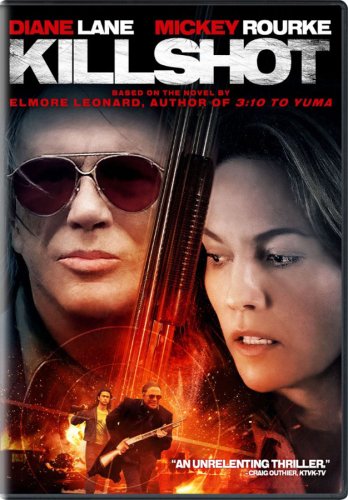
How many times have we seen some criminal looking to do that one last job that can get them out of the business forever? This time it’s a hit man known as “The Chief” or “blackbird” (Rourke). He’s an American Indian, and he’s considered one of the best in the business. He sticks religiously by his rules. As the film opens we see that he kills a young woman in the shower just because she saw his face. Unfortunately for Blackbird, the girl happened to be sleeping with the guy who hired him. That guy’s not so happy that she got killed during the job. Now the hunter’s going to become the hunted as the boss wants revenge for the girl’s death. Enter Richie Nix (Gordon-Levitt) who’s a young punk super crook wannabe. He’s been threatening a car dealer he intends to shake down. To get wheels for that job he jacks a car that happens to be driven by Blackbird. The two end up becoming somewhat kindred souls, and Blackbird needs a place to lay low, so he agrees to school Richie and help him pull off the job. Of course, that doesn’t go well, and a woman at the dealership gets a good look at them. She and her husband get away, but now Blackbird and Richie have to track them down and kill them. The couple, Wayne (Jane) and Carmen (Lane) have already had their share of problems and were about to split up when they’re forced into witness protection. The two rekindle the old romance somewhat while trying to stay alive.

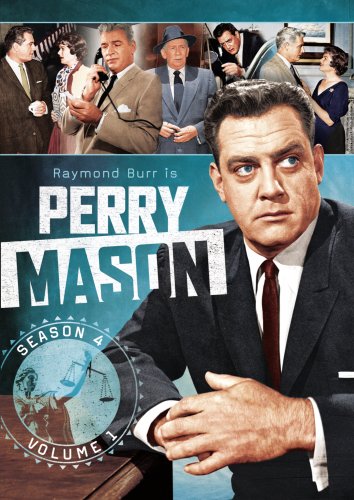
At this rate it’s going to be quite some time before you complete your collection. I’m not even sure that DVD will still be a viable format before the end of the series on DVD. It’s another half season, and the episodes continue to fly at us at a snail’s pace. But, slow and steady wins the race, and as long as the quality episodes continue to deliver that classic Mason charm and style, I guess folks like us will continue to come back for more.

Erle Stanley Gardner wrote crime fiction, and while many of his 100 or so works are unknown to most of us, he created a character that has become as identified with criminal lawyers as any other in fiction. It was in these crime novels that Perry Mason first faced a courtroom. He developed a style where he would investigate these terrible crimes his clients were on trial for. He would find the real killer, and in what has become a Hollywood cliché, reveal his findings in a crucial moment during the trial. While we may not remember the novels, we all remember the man in the persona of Raymond Burr. Burr had a commanding presence on our screens and enjoyed a well deserved 11 year run as the clever lawyer. What makes this run so amazing is that the show followed pretty much the same pattern the entire time. We always know what’s going to happen, but we wait eagerly for that gotcha moment when Perry faces the witness on the stand. We know when he’s got the guy squarely in his sights, and we can’t sit still waiting for him to pull the trigger. OK, so maybe that’s a little over the top, but so was Perry Mason. From the moment you heard that distinctive theme, the stage was set. To say that Perry Mason defined the lawyer show for decades would be an understatement. Folks like Matlock and shows like The Practice are strikingly similar to Perry Mason. If you haven’t checked this show out, this is your chance. See where it all began.

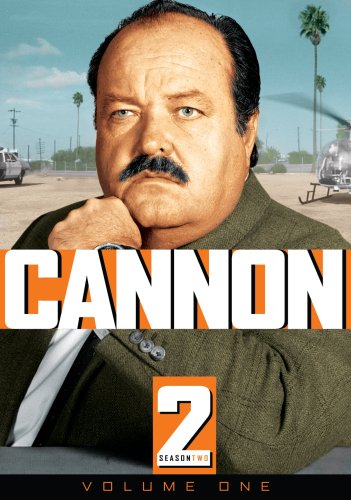
William Conrad was no stranger to audiences when Cannon joined the Quinn Martin stable of television dramas. In fact, most folks knew his voice before they got to know his trademark girth. Conrad was the original Matt Dillon when Gunsmoke was a radio drama. When the drama entered the visual medium of television, even Conrad admitted later that the audience, who thought of him as tall and handsome, would have been disappointed. His voice lent authority to any role he played, and on radio his size was never an issue. He was famous as the voice of the stern narrator in the Rocky and Bullwinkle cartoons who often crossed the laws of the trade and interacted with the title characters. He was also the voice that narrated the struggles of Dr. Richard Kimble on The Fugitive, another Quinn Martin production. He continued to narrate series intros even after his own success. He gave us the informative opening dialog in Buck Rogers In The 25th Century. As a voice, Conrad was one of the best, but when CBS approached Quinn Martin asking for a television vehicle for Conrad, it was a huge gamble. The gamble, of course, paid off… well… huge, and Cannon became an iconic figure in television. Cannon was so popular he was showing up on other shows as well. He appeared on the pilot for Barnaby Jones. The show ran 5 seasons and returned with appropriately enough The Return Of Frank Cannon tele-film in 1980. It is also interesting to note that Conrad, while greatly overweight, lived to be 74.

Frank Cannon was unlike any detective we’d ever seen on television before, or since. He was known as a high priced PI with a taste for the finer things in life, particularly fine food. His appearance was counter to all of the rules about rock-jawed handsome detectives who ran around shooting it out and beating up the bad guys. Cannon was a big man and wasn’t about to do much running and fighting. He wasn’t totally different, however. Cannon had a lead foot and could run a car chase with the best of them. He was smart and often a bit flashy in his technique if not in his appearance. It was also rare for a series to have a lone regular to carry the … um… weight. Conrad was up to the task and made the show and the character a permanent part of our pop culture.

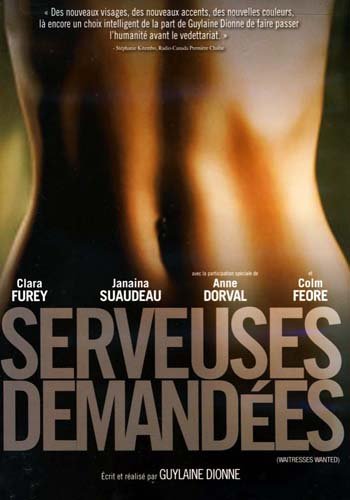
The main plot of the film is that of a young woman from Brazil named Priscilla, whose student Visa expires and is lead into working as an exotic dancer. The title of the film comes from the ad posted by the pimps and promoters of exotic dancers “Waitresses Wanted.” The film is bookended by the profiles of all the dancers featured in the film, all of whom are from a different nation, all beautiful, and all arrived in Canada with different careers in mind than to get involved with Columbian pimps or Russian mob lords.

Priscilla is taken under the wing of Milagro, a fellow stripper who is known for recruiting new girls and the two start up a romance that leads them away from their shady work. I don't exactly buy the immediate seduction of Priscilla by Milagro. It seems to occur simply because the writer wants it to occur. Priscilla is not as strong as she claims to be and cannot get into or out of the stripper life without someone leading her, and she is very easily lead. There is a recurrence of memories and images of Brazil, obviously meant to be Priscilla's. These find a way of attaching themselves to Milagro as she continuously brings up her desire to escape to Brazil, which may explain her attachment and excitement for Priscilla. To Milagro, Priscilla is a part of what she really wants in the end, and as the twists start arriving at the climax of the film, we find out just how significant all of these ties really are.

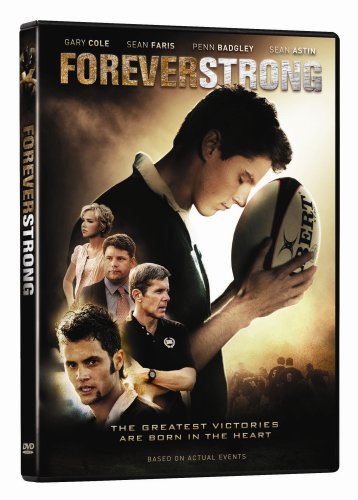
Forever Strong is a classic example of sports melodrama. The only wrinkle to this film is the sport. The sport in question, is not typical at all (i.e. Football, Basketball or Hockey) it is Rugby. The film revolves around a rambunctious youth, Rick Penning (Sean Faris) who runs into trouble with the law and is shipped out to a juvenile detention centre. He is introduced to Marcus (Sean Astin) who is an administrator and acts as Rick’s sponsor. After the initial introduction, Marcus uncovers Rick’s passion for Rugby and encourages him to play for his old team. Rick decides to play and the emotional journey begins from there.

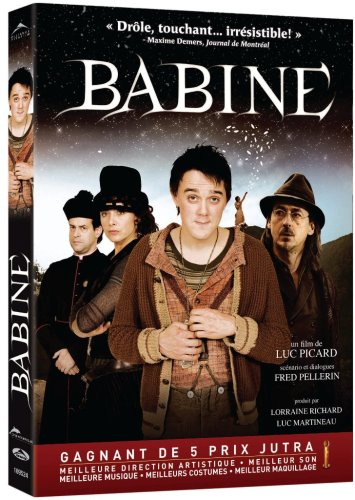
In a village where there is a great deal of time (there are months whose days are numbered in the 40s), the local witch gives birth to the title character. Twenty years later, Babine is the Village Idiot. Though he is a thoroughly gentle soul, he also becomes the scapegoat for every ill, real or imagined, that befalls the villagers. Fortunately, he has some champions, including Toussaint Brodeur (played by director Luc Picard), the local fly-raiser. But then the church burns down, and terrible trouble looms for Babine in the person of the new, fanatical village priest.


Obviously, as the above synopsis suggests, we are in the realm of the utterly fantastic here. Narrated by storyteller Fred Pellerin, whose tales form the basis of the script, Babine is endlessly inventive, at the cost of being a bit too episodic for its own good (something that Picard, during his commentary track, admits he struggled with) and giving short shrift to some of its striking characters. There is no denying, however, that its world-creation is very successful. The film is a visual feast, one very much on par with the likes of Tim Burton, and this achieved with a fraction of the budget of its Hollywood equivalent.

Robert Calestino hasn’t had a lot of experience as either a writer or director, and it shows in Yonkers Joe. When he’s writing about the things he obviously knows and understands, the film is quite good and extremely engaging. Unfortunately, Calestino felt compelled to bring some heart into his picture in the person of Joe, Jr. While he thinks he’s adding a necessary emotional element to the story, he’s really delivering a distraction that makes the film somewhat less than it ought to be. This is a clear case of more being less. I’m not sure why Calestino the writer or the director felt the need to bog down his brilliantly crafted world of these con artists and attempt to make it about the emotional turmoil between father and son. It only serves to take us out of the movie with each predictable development. My advice for Calestino? Next time, stick with what you know.

Yonkers Joe (Palminteri) is a card and dice mechanic; that’s to say that he’s skilled in manipulating these items for the purposes of cheating. He can deal from almost anywhere in the deck or even switch the deck entirely with flawless precision. Even when you know it’s coming, you just can’t see it. He can do the same with dice. He can switch dice in a game with everyone watching, including a casino’s camera system. He has a dream of taking his skills to the big time. He wants to take down an Atlantic City, or even better, a Vegas casino with his dice skills. His personal life is intruding upon the dream. His son has Down’s Syndrome and has been living in a facility most of his life. Joe’s rarely seen his kid. Now the boy’s about to turn 21 and can no longer live in the juvenile facility. The staff has tried to convince Joe, Jr. (Guiry) that he would be better in a group home where he can get a job and function somewhat normally. Jr. loves where he’s at and is not very good with change. Joe decides to take him home for three weeks and try and convince him to move to the group home. Joe’s partner/lover, Janice (Lahti) develops a soft spot for the boy and thinks the three of them can become a somewhat normal family. Circumstances remind her that none of them can be considered normal. Meanwhile Joe is developing his plan to take down a Vegas casino. He can switch the dice just fine, but the casinos mark their bones with a special dye that shows up on the security cameras. That way they instantly know when a loaded pair show up in the game no matter how clean the switch. Predictably, Jr. becomes an important link in the plan, and eventually he discovers himself in the process.

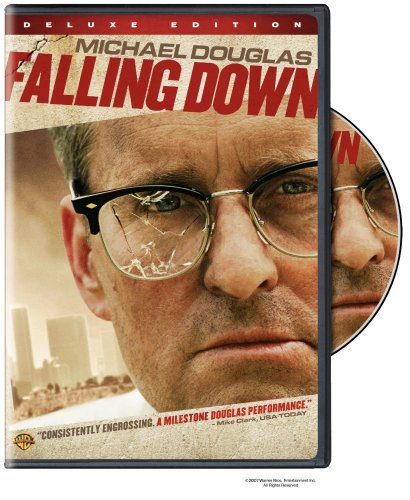
William “D-Fens” Foster (Douglas) is caught in a typical L.A. traffic jam. The annoyances about him are beginning to mount up: a buzzing insect, tremendous heat, a child screaming. All of these things are becoming a perfect storm that is about to ignite a powder keg that’s been gathering here for some time. He abandons his car in the middle of the street and begins an apparently aimless walk across L.A. He first encounters a Korean convience store clerk, who he critizes for his accent and exorbitant prices. He thinks 85 cents is highway robbery. I guess he’s never been to a ball game. He picks up the clerk’s baseball bat and begins to “roll back prices”, smashing items he considers too high as he plays a twisted game of The Price Is Right with the clerk. After smashing up the store he gladly pays 50 cents for the Coke and walks out as if he’s just conducted a routine transaction. Next he meets up with a Latino gang, whose territory he unwittingly stumbled into. After an escalated fight with them he leaves a few dead, and now he has a gym bag filled with automatic weapons. Next stop is a burger joint that doesn’t subscribe to the “Have it your way” philosophy. Out come the guns, and his destructive trek across the city continues. Through phone calls we learn that Foster has a family. Or, more accurately, had a family. His wife has a restraining order against him to protect her and their young daughter who happens to be celebrating her birthday today. Now Foster has a destination in mind.

Enter Detective Prendergast (Duvall). It’s is last day on the job. He’s about to retire because his wife is a bit loony tunes. His colleagues think he’s a coward because he’s avoided dangerous jobs, and now he’s taking an early retirement. At one point he’s leaving his retirement party just when the stripper arrives eliciting a comment: “Are you afraid of girls, too?” He’d rather they all think that than learn the truth about his wife. His partner, Detective Sandra Torres (Ticotin) knows the truth and is the only one willing to work with him. He’s been following the seemingly unrelated reports of Foster’s antics. He’s pieced together the real story but no one takes him seriously, so he spends his last day tracking down Foster and attempting to stop him.

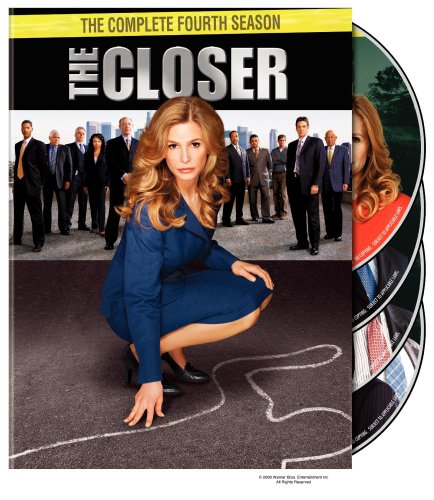
This 4th season release of The Closer would become my first exposure to the rather good series from TNT. I don’t have time for network television these days, so the cable shows often fall by the wayside in my schedule. Of course, I’ve made time for some of the better ones over the years, but The Closer never seemed to find its way onto my radar. It should have. Of all of the cop or detective shows I’ve seen over the years, I can relate to this one better than any of them.

You see, years ago, I was a detective. I wasn’t a cop and mostly did internal investigations for a large Florida retail chain. While I was a fair detective in most areas, I did eventually develop a specialty of sorts. When other detectives ran into a brick wall interviewing their subjects, they’d often call on me to get whatever information they were trying to extract. No, I didn’t beat it out of them. I was never a physically intimidating guy. I was just good at getting them to talk. I guess I was a little bit of a con artist who was working for the good guys instead of preying on hapless marks. I never lied to a subject and never threatened violence. It was a battle of wits, and I always won. That’s exactly how you would describe Brenda Johnson (Sedgwick) in The Closer. While the series was, in many ways, your standard procedural police drama, each episode would end with Brenda getting some reluctant perp to spill their guts. She relied on Southern charm. She looked and sounded harmless enough that she could get the person to lower their guard and fall for some rather simple trick or another. Case closed.

It’s a disc loaded with pilots. No, you won’t find any daring men and their flying machines here. These pilots owe more to Philo T. Farnsworth than The Wright Brothers. Farnsworth transmitted the first televised image in 1927. In case you’re wondering, that image was a dollar bill. These pilots follow in those footsteps; that’s because these pilots are television shows. They’re the first episodes of some of the best action series to appear on CBS over the last few decades. Going back as far as the 1960’s, these shows represent a nice cross section of television action entertainment.