Drama

Christmas is a long way off, but many people look forward to jingling bells all year round. For them, it’s a wonderful time with family, friends, exchanging of gifts and general merriment. For many others, though, Christmas can be a depressing time of the year. There’s even a long-running myth that suicide rates increase significantly over the holidays. Yes, it’s a myth, but it endures because it’s easy to imagine why people might hit rock bottom when others around them are so darn happy.

Midnight Clear is a film inspired by the myth, but it feels no less poignant in light of the facts. It’s a universal story with an understated message, about the difference small acts of kindness can make in people’s lives.


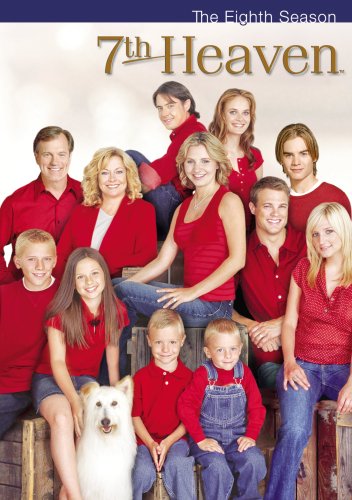
The last time I reviewed a set of the popular family TV series Seventh Heaven, I made the statement that “one of the hardest parts of reviewing DVD’s for this site is getting dropped in to the middle of a show I neither followed nor cared to follow….” Not much has changed since that time, certainly not regarding an improvement in the show’s quality, or in my enthusiasm regarding it. With Seventh Heaven – The Eighth Season, the Camden family and friends become increasingly obnoxious in their journey to the heart of sappy endings and Full House-esque melodrama. A dear friend of mine – a girl, no less, so it’s obvious this is not a matter of gender, but experience – recently pointed out that Seventh Heaven is little more than the one-hour drama version of the old TGIF lineup’s crap-tastic Bob Saget-starring sitcom. I agree.


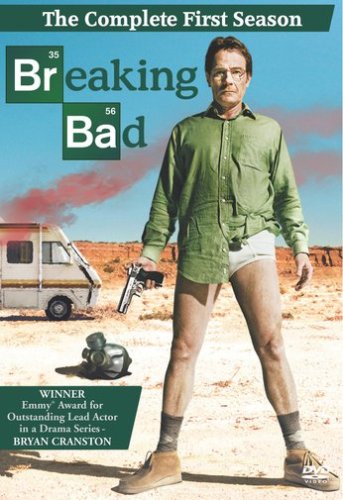
Breaking Bad could be the best show on television. I say “could be” because I haven’t seen enough of its competition to make a fair and adequate comparison. But one look at the beginning of Vince Gilligan and Mark Johnson’s breakthrough new series will have you undeniably hooked.


“The dead can hover on the edge of our vision with the density and luminosity of mist. And their claim on the Earth can be as legitimate and tenacious as our own.”

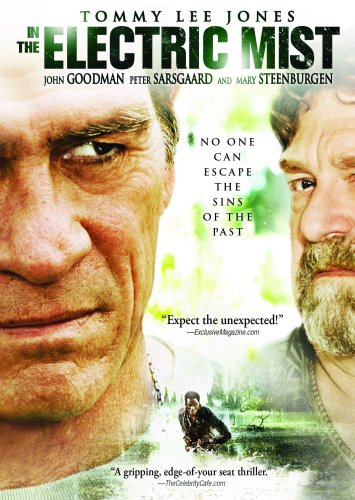
In The Electric Mist is based on one of James Lee Burke’s Detective Robicheaux novels, In The Electric Mist With Confederate Dead. The role was previously played by Alec Baldwin in Heaven’s Prisoners. There couldn’t be any two more diverse actors playing the same role. I have never seen Baldwin’s film, so can’t make an actual comparison, but I suspect that Tommy Lee Jones adds far more depth and a more contemplative nature to the role.

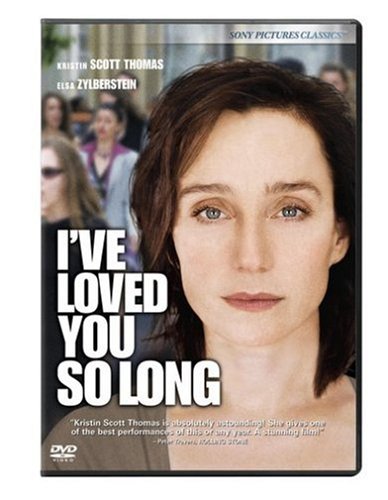
The highpoint of I’ve Loved You So Long is a rather brilliant performance by Kristen Scott Thomas. She is able to inhabit a character in ways I’ve rarely seen. You’ll be hard pressed to find any identifiable boundaries between the actor and the character. Now, usually, that’s the foundation for a solid film. The problem is that her character just isn’t that interesting of a person after a while. Of course, there are nuances to observe, and Thomas serves them up well, but after a short time we’ve really come to know this character pretty well. We just don’t find her all that interesting.

Juliette (Thomas) has spent the last 15 years in prison for the murder of her 6 year old son. She has been expectedly abandoned by her family while locked up. When it is finally time for her to be released, the only one willing to even talk to her is her estranged sister, Lea (Zylberstein) who takes her into her home. Lea has a family of her own now. She is married with two adopted Vietnamese children. The film pretty much follows no plot or story. It’s more or less Juliette’s journey to adapt to the outside world and deal with her own flood of emotions. If the movie is Juliette’s journey, then it is also a journey for Lea. Without revealing the ending, I can safely say the only destination here is understanding.

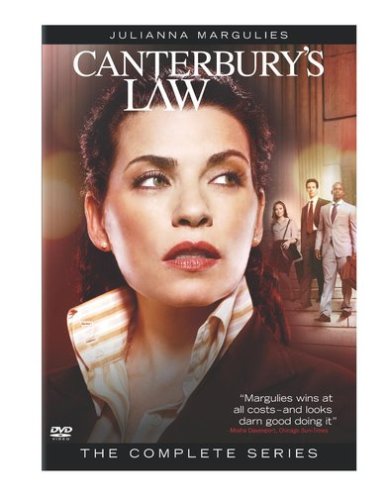
What happens when a television series depends on a title character, but that character is completely uninteresting? The answer is you get a 6 episode run, and then you’re over. That’s exactly the story with Canterbury’s law. I have no doubt that Julianna Margulies is a better actress than she showed on this show. I mean, she has to be, right? Margulies walked through her role as lawyer Liz Canterbury. The character had tons of potential. She was a bit of a rebel. She wasn’t afraid to bend…all right, break … the rules for her client. That kind of a maverick character usually means high ratings. But not if the actress playing the part refuses to invest anything into playing the character. Even when Canterbury is fired up, which, honestly, is most of the time, there’s almost no expression on Margulies’ face. Her voice fails to lift the dialog to the level of passion the material might be calling for. In short, she plays a charismatic character with no charisma. To make matters worse, the team was made up of unknowns, likely to remain such. Not that I really blame the actors. The parts were pretty bad. Ben Shenkman stars as Liz’s partner, Russell. Russell was once on the DA side of things. What makes him decide to partner up with Canterbury is a mystery deeper than any case the show explored. He disagrees with her nearly 100% of the time. He doesn’t appear to be happy most of the time. The firm appears to be struggling, so he’s not in it for the bucks. Liz, for her part, is always waiting for him to cut and run. It seems he’s there only to prove he’s loyal. Her associates are made up of Keith Robinson as Chester. Chester’s dad is running for the Senate and is a powerful man who doesn’t like the idea of his son in such a dead end firm. Chester’s trying to prove he’s got street cred and distances himself from his influential father. Finally you have Trieste Dunn as Molly, the attorney who has yet to pass the bar. She’s the budding idealist who was just beginning to develop somewhat when the show’s bottom fell out. Liz is dealing with a lot in her personal life as well. Her son was abducted three years ago, and it’s caused a strain on her marriage. The infidelities she’s had didn’t help much either. She’s in a pissing contest with one of the DAs who is out to bring her down at any price. She happily assists by doing things like suborning perjury and tampering with a jury. Did I miss anything?

Video

Each episode of Canterbury’s Law is presented in its original broadcast 1.78:1 aspect ratio. I hope this show looked better when it was on the air. This stuff is a mess. Colors are often unnatural and heavy on the reds and yellows. They also run and appear blurred. Flesh tones are hampered by some odd soft focus that makes it look like a kid was running the camera. There’s an excessive amount of grain, particularly in the pilot episode. If it looked this bad in HD broadcast, it likely improved the odds of it not surviving. This is a very bad video presentation.

Juliette (Thomas) has spent the last 15 years in prison for the murder of her 6 year old son. She has been expectedly abandoned by her family while locked up. When it is finally time for her to be released, the only one willing to even talk to her is her estranged sister, Lea (Zylberstein) who takes her into her home. Lea has a family of her own now. She is married with two adopted Vietnamese children. The film pretty much follows no plot or story. It’s more or less Juliette’s journey to adapt to the outside world and deal with her own flood of emotions. If the movie is Juliette’s journey, then it is also a journey for Lea. Without revealing the ending, I can safely say the only destination here is understanding.

The highpoint of I’ve Loved You So Long is a rather brilliant performance by Kristen Scott Thomas. She is able to inhabit a character in ways I’ve rarely seen. You’ll be hard pressed to find any identifiable boundaries between the actor and the character. Now, usually, that’s the foundation for a solid film. The problem is that her character just isn’t that interesting of a person after a while. Of course, there are nuances to observe, and Thomas serves them up well, but after a short time we’ve really come to know this character pretty well. We just don’t find her all that interesting.

“Did you pick your feet in Poughkeepsie?... Have you ever been to Poughkeepsie?... When you were in Poughkeepsie, you sat on the edge of the bed, didn’t you? You put your fingers between your toes and you picked your feet…. If I can’t bust you on this other thing I’m going to bust you for picking your feet in Poughkeepsie.”

There can be no argument on this point. The 1970’s was a golden age for the cinema. When you think about the iconic characters and films the decade produced, it’s hard to contradict the point. Films like The Exorcist, The Godfather (both parts), Jaws, Dirty Harry, Star Wars, Superman The Motion Picture, The Sting, Rocky, Deliverance, Apocalypse Now, Alien, One Flew Over The Cuckoo’s Nest, and yes, The French Connection. They redefined film genres. The slasher film was born in the 1970’s. Their influence is felt on nearly every film today, and inspired nearly every new filmmaker to come along in the years since. Yes, there were golden eras before then, but I’m not sure there’s been one since. Of course, there have been truly great movies since, but can you remember a decade with that kind of a run?

The French Connection had one of the best film endings a show of this kind could ask for. There was absolutely no need for a sequel. Obviously the success of the first film laid the groundwork for another adventure. In reality the case was rather left open, so there was certainly room to follow up the action. The problem is that none of the elements from the first film remain in the second beyond Gene Hackman’s portrayal of Popeye Doyle and the return of Fernando Rey as the villain Charnier. Friedkin would not return to direct, and even though he was replaced by an even greater director in John Frankenheimer, not much of the original crew remained. Neither Egan nor Grosso were used to consult on the film, and of course, Grosso’s character along with the corresponding Roy Scheider were gone from this film. The gritty streets of New York were replaced by the streets of France. Even the Poughkeepsie line used in the film’s early minutes is a throwaway line meant merely as a wink to the audience. The film has none of the police procedural drive and passion that the original had. In short, this sequel lacks almost everything that made the first a great film. But in spite of all it did not have, it managed to at least be a good film.

None of this film occurs in New York. We begin with Doyle (Hackman) arriving in France to track down “Frog #1”, Charnier (Rey). He doesn’t attempt to hide his contempt for the French and so does little to endear himself with the local police here. Instead they’ve invited him merely to be a target to lure Charnier out of hiding. It backfires, and Doyle is captured instead and hooked on heroin so that Charnier can find out what they know. The film becomes far more of a personal journey for Doyle and less about catching the bad guy. Fortunately Hackman is up for the job and puts in a highly emotionally charged performance. He has to play Doyle, first as a forced junkie, then in the throes of detox. Here we find the film’s best moments. He has a rather long interaction with a French detective (Fresson). This scene is priceless and alone worth the price of admission. In the end it’s a film about obsession as large as the great white whale in Moby Dick.

Season two marks the actual first complete season of Nash Bridges. It’s time for the show to deliver on the high octane, high attitude it was to be famous for. This was also the year that both of the main actors reunited with their former partners. Tommy Chong and Philip Michael Thomas both guested on the episode Wild Card. The show paid homage to both of the former partners. Chong plays a pot dealer, and Thomas plays a hotshot gambler friend of Nash's who likes to dress up like the Vice characters did . It was a pretty sweet episode on top of everything else. It might be the best Nash Bridges episode ever, definitely for this season. Don Johnson also got to stretch his acting chops a bit in an episode where he believes Cassidy, his daughter, has been killed in an accident. Nash also goes up against the infamous Zodiac killer in an episode crosses real life surreal episode. In Till Death Do Us Part, Joe thinks he’s only got a couple of days to live after he’s exposed to a deadly toxin. Cheech Marin really works this for all it’s worth. Marin also has an incredibly good episode in Inside Out, where he goes undercover as a prison inmate to take down a Mexican gang leader. In Knock Out, we learn that Nash’s sister is gay. Given an entire run of episodes, Nash has finally arrived for real in the second season.

When Miami Vice finally left the air in 1989, Don Johnson was a very hot commodity indeed. He decided to try and parlay that success into a film career that never really brought him the breakout roles and fortunes he envisioned. Not too proud to return to his roots, he signed a deal with CBS that gave him pretty much a blank check to star in whatever kind of television series he wanted. It was a rare deal that forced CBS to air, or at least pay for, whatever Johnson came up with. Many of us were expecting pretty much a Miami Vice clone when it was announced he would once again be playing a cop. It was all sounding pretty familiar. Bridges was a super cool cop, this time from San Francisco with a rather tattered personal life. He was going to be teamed up with a partner, who wasn’t going to be a cop, but an investigator whose cases would cross paths with Bridges’. It was rumored that the partner might not survive the pilot, thereby killing the buddy cop routine that was beginning to sound very much like Johnson’s previous show. It appeared doomed to failure, and even CBS was at first looking to back out of the deal. They tried to buy Johnson off, but he was by now very excited about the new show and insisted he get his episodes. But how could this new show not be compared to the old? How could anyone have the kind of chemistry with Johnson that John Diehl had? On March 29, 1996 everyone held their collective breaths as Nash Bridges appeared on the scene. Cheech Marin ended up with tons more chemistry with Johnson, helped by the fact the two had been friends for over 25 years. In short order Nash Bridges had arrived, and television audiences everywhere found themselves saying: “Miami Who?”