Posted in: Disc Reviews by Michael Durr on April 6th, 2009
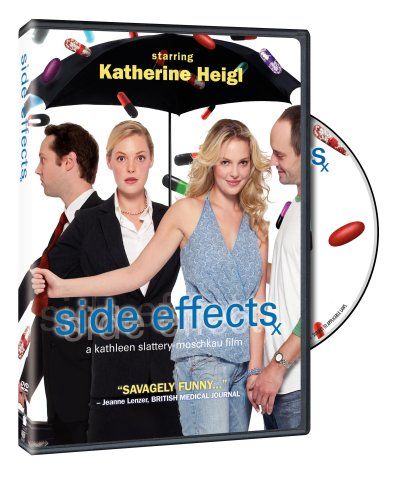
My paying job in life is spent as a computer system administrator (unfortunately it is not writing reviews and columns). Often, I have wondered why I’m in the cubicle jockey life and not tried to find some job where I could use my writing skills more effectively and get paid for it. There is also a lot of bs and chicanery in the corporate world that annoys me to no end. It is little wonder that I was interested in the movie Side Effects which deals with the pharmaceutical sales industry. I wasn’t interested in pharmaceuticals but I was interested to see how one deals with the corporate crap that does go on. It made for an interesting experience.
Karly Hert (played by Katherine Heigl) is a pharmaceutical sales rep. Basically she pushes pills to hospitals and doctors whether they need it or not. Karly has a hard time of it and her sales are not doing well. She meets a fellow sales rep, Zach (played by Lucian McAfee) who decides to quit after the first week. A relationship forms between Karly and Zach as he challenges her views on her work and her life. As a result, she decides to quit her vocation but not for six months. She keeps track of the days on a white board above her bed.
Posted in: Disc Reviews by Gino Sassani on April 3rd, 2009
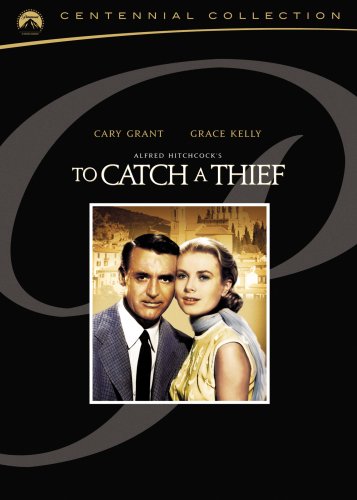
To Catch A Thief is not typical Alfred Hitchcock territory, but then again, it really is. It’s not a terribly suspenseful film coming from the acclaimed “Master of Suspense”, nor is it at all a frightening film even though it was directed by one of horror’s genius minds. What really is scary, however, is how close to a different film this almost was. Cary Grant had exiled himself into retirement. If you can believe his statements at the time, he was concerned that the moviegoing public was pretty much sick of seeing him and preferred the younger actors just then coming of age. He turned Hitchcock down for the role at least twice, before Hitch made a personal visit and appeal to the Hollywood legend. Grace Kelly was also reluctant to do the part. She did it because she loved working for Hitch. Unfortunately, Paramount had other plans. They were troubled that Grant was nearly twice Kelly’s age, and worried either the public or the standards censors would not accept the situation. They were half right. While the film was one of Hitch’s toughest battle with the Standards folks, the public flocked to see Grant and Kelly on the screen together. Grant would continue his return to acting for over a decade longer. Not so Grace Kelly. The Philadelphia native would have her faithful meeting with Prince Rainier of Monaco and would spend nearly 30 years portraying the larger than life, but real nonetheless, Princess Grace of Monaco, before a tragic automobile accident would end her life. All the same, To Catch A Thief would remain one of her last films. Hitch almost lured her out of retirement some years later, but she declined, saying that if she were to do a film, Hitchcock was about the only man she would have done it for.
John Robie (Grant) is a renowned jewel thief and cat burglar. While he’s been retired for fifteen years, he’s still the prime suspect when a rash of burglaries occurs on the French Riviera. The MO is the same as Robie’s, and before long the police are blaming him for the work of France’s newest celebrity thief, The Cat. Robie sees only one chance to get himself out from under the mess. He has to go to the area and catch the real thief. Once there he hooks up with insurance agent Hughson (Williams) who cooperates on the off chance his company can be spared these high payouts. Robie also meets young and attractive socialite Frances Stevens (Kelly), who sets her sights on catching this thief for her own. She constantly tries to seduce Robie, knowing who he is and suspecting him of being The Cat. When her own family jewels turn up missing, she begins to rethink the dangerous game she was playing. That only gives Robie even more incentive to catch the real crook. Will Robie catch The Cat? Will Frances catch Robie? Only Hitch knew for sure, and in 1955 audiences found out in the film classic, To Catch A Thief.
Posted in: Disc Reviews by Gino Sassani on April 3rd, 2009
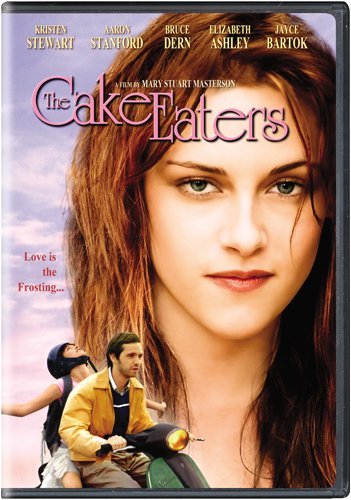
It’s amazing what a difference a hit movie can make. Your less worthy films are drummed out of obscurity. Not only that, but your billing even on these other films is suddenly pushed to the top of the class. Almost overnight, everything you did before gets pushed toward the public’s eye, for good or bad. Kristen Stewart has enjoyed a deserved boost to her career with the success of the teen vampire film, Twilight. Now the independent film The Cake Eaters is being released in time to coincide with Twilight’s own DVD release. This is a film that most certainly would have found its way into release on its own, but I doubt that the timing is at all coincidental. On the film Stewart’s billing is actually somewhere near the bottom of the front credits. On the box art she has amazingly leapfrogged the others and takes the top spot. That doesn’t mean she doesn’t turn in a great performance here, and it doesn’t mean that The Cake Eaters is a horrible film. But it’s not a great film, and so any help it can get from one of its stars’ rising popularity isn’t going to hurt any.
It’s more or less the story of two families in small town America. Easy (Dern) leads one clan. He’s recently lost his wife and lives with his younger son, Beagle (Stanford). His older son, Guy (Bartok) has just returned from New York, where he was pursuing a music career. There is obviously some tension between the two brothers. In another family, we have Georgia (Stewart) who is suffering from a degenerative nervous disorder. It limits her mobility and slurs her speech. It also will eventually cause her heart to give out, so that she’s aware she is on borrowed time. Her mother, Violet (Balsam) is an art photographer and specializes in partially nude photographs of Georgia. Her live in, Judd (Martin) is the more protective of Georgia. When Georgia and Beagle meet at a swap meet or rummage sale, they are attracted to each other. Georgia decides she wants to have sex so that she can experience it before she dies. Both teens are rather awkward personalities, and they begin to develop a bond, counter to the social norms around them. The relationship reminds me a lot of the one in Natalie Wood’s Splendor In The Grass. The film unravels as secrets and relationships are revealed that bring all of the characters to a point of self examination.
Posted in: Disc Reviews by Gino Sassani on April 1st, 2009
For first time screen writer Allen Loeb, Things We Lost In The Fire is quite an ambitious script. It relies almost completely on the writing and the performances that can be gotten from the acting leads. There’s really no place to hide in this story for anybody. And while I certainly found several elements of the story forced or contrived, there was an underlining emotion to the whole thing that carried through strong enough for the actors to find some very solid grounding. With that grounding Halle Berry and Benicio Del Toro delivered what should have been award winning performances. Of course, I didn’t see all of the films released in 2007, but I find it hard to believe there were many, if any, better performances. These two had to carry the entire film, all the while manipulating the audience’s emotions, keeping them engaged with very little action or other stimulation. It’s the only thing that kept me watching, that and having to write this review.
Audrey Burke (Berry) has just lost her husband Brian (Duchovny) to an act of violence. She has two young children, and she’s having a very difficult time dealing with her loss. In a rather strange turn of events she turns to Brian’s best friend, Jerry (Del Toro) for some kind of comfort. What makes this so strange is that she, up to this point, hated Jerry and tried to convince Brian to stay away from him. Jerry is a drug addict, whom Audrey believed was just taking from Brian without giving anything back. She resented the fact that Brian was the only person that hadn’t completely given up on Jerry. Now she feels the need to connect with this man. She invites him to the funeral and finds herself fascinated with him. She asks him to stay at her house, and attempts to assist him in kicking his addiction. The two learn to explore their own emotions and deal with their grief. Together they find a way to improve themselves, by sharing this common bond.
Posted in: Disc Reviews by Michael Durr on March 31st, 2009
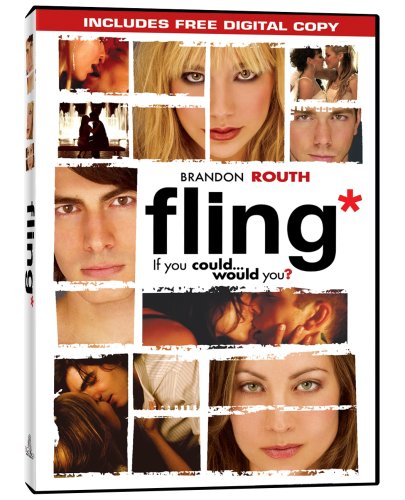
Open relationships have never really been in my repertoire. I’m a pretty committed guy. I find a girl or she finds me and we stick it out until one or both of us feel otherwise. Some people will argue that it is not natural to simply have one mate, instead we have to find multiple people to share relationships and intercourse with. In the movie Fling, it deals with an open relationship between Samantha & Mason. My money is on the fact that one of them goes too far in their openness and the relationship becomes strained. Let’s see how good my guesses are today.
Sam (played by Courtney Ford) and Mason (played by Steve Sandvoss) are in an open relationship. Sam is looking to open her own business while Mason writes trashy romance novels. They also find time to have relations with each other and anybody else they can shack up with. At a wedding, Sam rekindles a relationship with James (played by Brandon Routh), an old boyfriend. Mason, meanwhile finds out that his best friend Luke’s (played by Nick Wechsler) sister, Olivia (played by Shoshana Bush) is very taken with him.
Posted in: Disc Reviews by Gino Sassani on March 26th, 2009
On January 23, 2002 Daniel Pearl, a reporter for the Wall Street Journal, was kidnapped and eventually killed by terrorists while working in Pakistan. A Mighty Heart is based on this true story. The narrative comes from the book by his wife Marianne Pearl. While this is certainly the tragic tale of a murdered reporter, this film is more the story of Marianne and her struggle to locate Pearl in the 10 days from his capture until a video tape surfaced depicting his beheading.
A Mighty Heart begins with us getting to know Daniel Pearl (Futterman), and it quickly takes us through the events leading to his capture. From here on out the theme shifts to the massive investigation to find him. Various American and Pakistani agencies come together to track down every lead in a relentless search. We are cleverly kept bonded to Pearl through well placed flashbacks mostly dealing with intimate moments shared with his wife. Her memories keep Pearl alive for us as they must have for her during those trying times. Of course, if you are at all familiar with these events, and who isn’t, you already know that this film has no happy ending. There aren’t even any satisfying answers left to at least leave you with some feeling of closure. You will leave, perhaps, with more questions than when you started. But there are no easy answers to be found here, and any attempt to provide them would not be honest if the film intends to make an impact as this one does. There are no apologies made, nor should there be for the brutal way the terrorists and their pursuers are portrayed and the culture in which they thrive.
Posted in: Disc Reviews by Gino Sassani on March 26th, 2009
I was very eager to revisit this film now that it has come our way on Blu-ray and high definition. There are issues that I struggled with in my own viewing that I will discuss later in this review. In high definition this film becomes a case study in contradiction. It’s amazing how pretty a thing can be when it really isn’t very pretty at all. We are witness to bad things, but the director chooses to present these things amid a flurry of beauty. It’s a rather striking contrast, made more so on Blu-ray. It actually made for a much more effective experience, even if most of my initial feelings about the film remain unchanged.
Posted in: Disc Reviews by Michael Durr on March 26th, 2009
The WTO or World Trade Organization came into being on the 1st of January in the year of 1995. It was the successor to GATT (General Agreement on Tariffs and Trade) and was designed to supervise and liberalize international trade. In their ministerial conference of 1999, they decided to have the conference on US soil. The site chosen was Seattle, Washington. The WTO had drawn criticism from protestors around the globe that proclaimed that the WTO was pursuing commercial interests ahead of human principles. In 1999, the WTO convened at the Washington State Convention and Trade Center. Protestors came by the thousands and soon despite their peaceful efforts, riots ensued. There was mass police involvement. It also gave way to some of the more horrific scenes of innocents and guilty arrested alike. Battle in Seattle is a docu-drama directed by Stuart Townsend that mixes a drama-thriller with the real events that surrounded the days that followed November 30th, 1999 in Seattle, Washington.
Jay, Lou and Django (played by Martin Henderson, Michelle Rodriguez, and André Benjamin) are three activists who are planning a mass protest at the 1999 conference of the World Trade Organization in Seattle, Washington. Meanwhile, a SWAT cop named Dale (played by Woody Harrelson) gears up for that same conference in order to keep the peace. His mind is not on the protestors, instead his mind is focused on his wife, Ella (played by Charlize Theron) who is five months pregnant.
Posted in: Disc Reviews by Archive Authors on March 23rd, 2009
In the vein of The Cincinnati Kid (1965) and a sprinkle of The Sting (1972) John Dahl brings us Rounders. Card prodigy Mike McDermott (Matt Damon) quits the game after losing everything. Once Mike’s best friend Les “Worm” Murphy (Edward Norton), gets out of jail, Worm attempts to get Mike back into the poker world. As Worm’s behavior begins to implicate Mike, Mike decides to come out of poker retirement.
The film itself is good. The on-screen chemistry between Damon and Norton is not forced. The other performances in the film do not distract from the narrative, with Martin Landau’s standing out. The film is shot very plainly without too many fancy editing techniques or wild Dutch angles. Dahl simply conveys a character piece that does what it is set out to do with little failure. David Levien and Brian Koppelman’s script has been appropriately dubbed “cool” by the poker community. Upon initial viewing most poker references will soar above the viewer’s head. However, upon multiple viewings, you tend to pick up on the language. This collector’s edition offers a plethora of bonus features which is miles away from the previous release.