Drama

My wife and I have gotten into a small discussion about October Road. A fellow writer has mentioned that this show is the natural progression of shows like Gilmore Girls, where you've got young twenty and thirty somethings living in an idyllic setting, somewhere in the Northeast, as they take in the residents of the town they used to spurn. I think my wife likes it in that vein. Me? Not so much.

Arthur Kennedy and wife Teresa Wright are an older childless couple who discover a young man (Tom Happer) living in the crawlspace of their basement. Though they are initially alarmed, he seems harmless, and they take him under their wing. What seems to be a nice, if bizarre, solution for everyone becomes tense when Happer, tormented by locals, shows a potential for great violence.

As the Harry Potter franchise heads into the home stretch of films, some of the film’s young cast members are attempting to break out into other roles, or at least employ a little bit more emotional depth in the roles that they’ve made into small cottage businesses. And of course, the biggest one in the bunch is Harry himself, Daniel Radcliffe. He’s appeared in a London played named “Equus”, in which he appeared nude in and got a lot of notoriety for, but received some praise based on his performance. He also appeared in the Ricky Gervais show Extras where he played himself in a role where he really really wants to break out from his childhood perception. But in December Boys, he plays a bit of a loner of sorts, though people seem to label the film for the sensationalist things Radcliffe does in the film. Look, Harry Potter smokes and gets it on with a girl, wow! But looking beyond perception, it’s a decent film.


HBO’s Rome was cutting edge historical drama and, of course, was crazy successful. Is it any surprise that their largest rival Showtime would attempt to cash in on that success? Showtime’s The Tudors flashes forward a few centuries to 16th Century England and the rule of Henry VIII. The Tudors has more than just history in common with Rome. Both series have an almost obsessive fixation on sexual encounters. This one is not going to play well in those history classes for the kiddies.

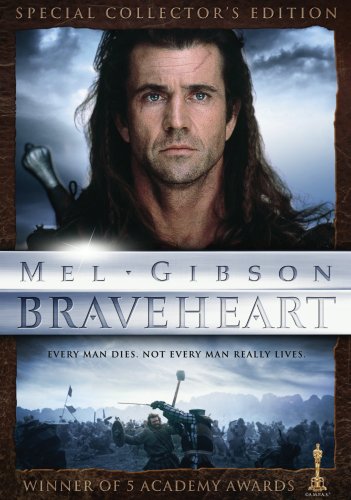
Mel Gibson has had a bit of a rollercoaster life these last couple of years. He has apparently given up on the mainstream films that have made him such a hot property over the years. His DUI arrest and subsequent anti-Semitic rant have caused many to look less favorably upon the man himself. It doesn’t help that his last two films have been less accessible and in obscure ancient languages. These films have not come without their own controversies. Still, no matter how you view Gibson or his work today, it can’t be denied that he has created one of the more compelling films of our day in Braveheart.

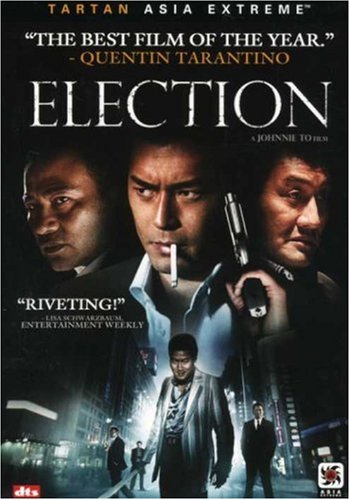
Every two years, the Wo Shing Society, an ancient Triad, elects its chairman. The two candidates this year are Lok, an amiable, level-headed, managerial type, and Big D, a flashy hothead cut from the same cloth as Tybalt. Big D throws bribes and around in an effort to win, but to no avail. Refusing to accept defeat, he resorts to violence, threatening to tear the Society apart. The question is whether Lok is made of the necessary stuff to make good his victory.

So here we are again with a second collection of episodes from The Young Indiana Jones Chronicles television series. This is the middle of a three volume set and concentrates the stories around World War I and II. It can hardly be a surprise that Young Indy kept himself quite busy during these war years in Europe. He was a pilot, secret agent, and even ballet dancer all for the cause. The set has as an appropriate subtitle: The War Years.

U.S. soldiers return home from war and find it difficult to re-assimilate into everyday American life. We've seen this idea played out dozens of times, mostly with Vietnam as the conflict of choice. In Home of the Brave, writer-director Irwin Winkler (De-Lovely) transplants the story into more modern times with the war in Iraq, without much success. Panned by critics and moviegoers alike, Home of the Brave feels a lot more like a made-for-TV movie than a major theatrical release, despite the presence of perennial Hollywood badass Sam Jackson (Snakes on a Plane).

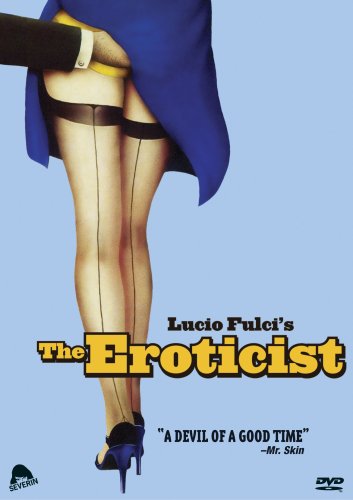
Lando Buzzanca plays Senator Puppis, a telegenic young politician on track to become Italy’s next president. He’s been groomed for the part practically from birth by the Vatican, which plans to re-exert social control over the country through its presidential puppet. But plans go badly awry as Puppis suddenly develops an uncontrollable urge to fondle women’s buttocks (Stephen Thrower has aptly described the character as a “repressed heterosexual”). Even as he seeks help for his condition, various parties around him begin to panic, as the police think Puppis is planning a coup without telling them, the military think they are being left out of the loop by the police, and the Vatican, along with its Mafia catspaws, starts whacking everyone in sight in a desperate attempt to keep everything from completely unravelling.

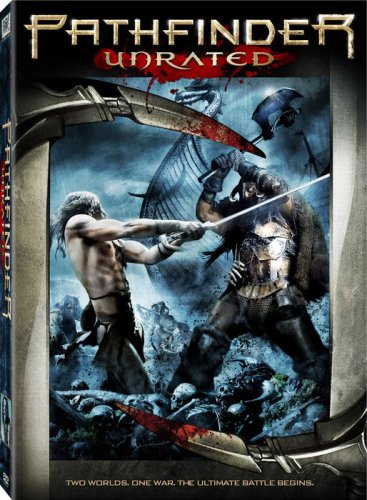
There is a certain audience that really gets into what I call "mythic combat". Zena and Hercules on TV, and movies like Reign of Fire, Conan and Dragonslayer all fit into this category for me. While I typically don't enjoy this type of faire, I am a sucker for the more popular versions, such as the Lord of the Rings trilogy and 300. After seeing a very promising trailer in the theater, I had high hopes for Pathfinder. Unfortunately, the final film did not live up to the potential of its marketing.