Drama

Stephen King must be solely responsible for an acre of deforestation a year in legal pads and typewriter pages alone. I have heard it said that he writes at least ten pages a day, including holidays. A quick check of IMDB shows that he is credited for writing 106 television or movie stories, at least in part, since "Carrie" in 1976. While no writer - as I well know - can hit a home run every time they put pen to paper, King's "good to crap" ratio is far superior to that of the majority of the novelists working today.

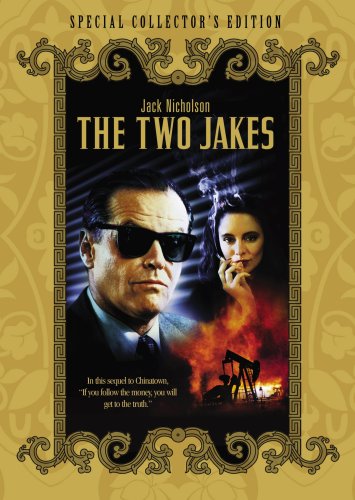
I wanted to watch these movies back to back to try and get a feel for how they work together. The box art tells us: “Much has changed since we last saw Jake.” No truer words were ever spoken. Jack Nicholson is now a household name and a fixture at the Lakers games. Many a classic character has worn Jack’s sardonic smile since Chinatown. Perhaps it was the timing that was bad. Nicholson decided to resurrect Jake Gittes as his first role following his awesome turn as The Joker in Tim Burton’s Batman. Perhaps it was the absence of Roman Polanski. Or maybe the time for Chinatown had come and gone.


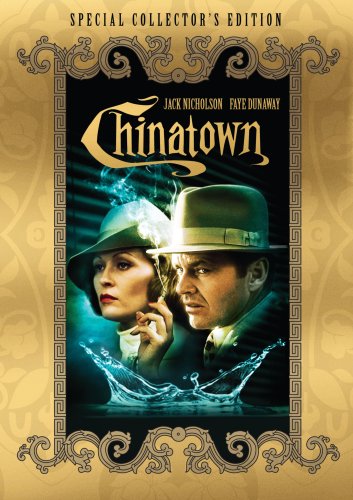
Jack Nicholson’s career has been decades of a man who is constantly redefining himself. Few actors have created as many memorable roles; among them has to be Jake Gittes. This Raymond Chandler styled character first appeared here in the Roman Polanski Film Noir Chinatown. The feel of Chinatown was far more effective in 1974 than it is today. Unfortunately the style has been done to death and often with disastrously horrid results. Still, in 1974, Polanski was able to create an effective atmosphere and use it not just for style but as a place to tell an engaging story. Chinatown takes you to a Los Angeles that simply no longer exists. He utilized many locations that were even in 1974 on the verge of disappearing forever. Perhaps one of the reasons that the style has never been reproduced quite so successfully since is that Chinatown was made at just the right time. The last dying embers of the Los Angeles between the wars are caught on film, making Chinatown a somewhat historical event in itself.


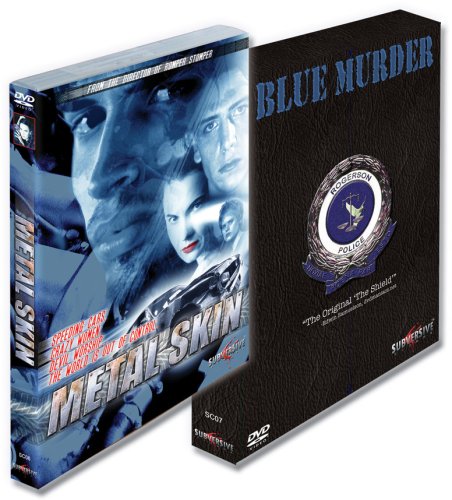
The name of this double-pack is slightly misleading, but that is not to suggest the film and television mini-series on offer are in any way bad. Quite the contrary, in fact. It’s just that they aren’t exactly “action” films per se. So don’t pick this up hoping for something in the vein of The Road Warrior. Instead, these are brutally intense dramas with strong action elements. Both titles are excellent.

Metal Skin is a 1994 effort from director Geoffrey (Romper Stomper) Wright. He returns here to the world of youth subculture. Here, instead of Skinheads, this is a world of underground races, but the denizens are just as doomed as in the earlier film. The main character is a disturbed young man whose dreams of driving a fast car and forming a romantic attachment are utterly deluded. He has a fraught relationship with a trio, each of whom has his/her own reasons to see the world as a black hellhole. When the car-duel climax arrives, it is earned at the emotional level, and makes the likes of The Fast and the Furious look even more anaemic than it already is.

There are few things as tragic as potential that is unrealized. Whether it’s by choice or by extenuating circumstances, to see a life cut down before it has a chance to develop and make an imprint on the world is sad to see. And it seems to happen disproportionately among musicians. In most casts, drugs frequently has been the main culprit (see Jimi Hendrix, and Janis Joplin), or suicide in some cases (Kurt Cobain being the more notable name in recent memory). But when an entertainer is murdered, the abrupt nature of the crime seems to shake many to the core. It was sad four decades ago when Sam Cooke was murdered, and equally disappointing two decades later when Marvin Gaye was felled by the hands of his father. When Selena Quintanilla was murdered by her business manager in 1995, it sent shockwaves through the Latin music community. Here was a young woman on the fast track to superstardom, gunned down before her full promise could be delivered.

With the cooperation of the Quintanilla family, Selena was made in part to make sure any films that were being made without the family’s approval would be made null and void. So while Selena’s father Abraham had the final say over what was included in the film, the film itself was written and directed by Gregory Nava (Bordertown), and in the main role, a young pre-diva Jennifer Lopez (Gigli) as the Tejano star. Her charisma is noticed early in her life by Abraham (Edward James Olmos, Miami Vice), who was a musician in his early days and he wants Selena to do well and maybe be a star while avoiding the things he had to endure.

Many people – myself included, looked at Timothy Spall as Wormtail from the Harry Potter films and didn’t think much about it. But the guy has found other work and done well for himself over the years. Recently, he made The Last Hangman, a film based on the life of Albert Pierrepoint, one of England’s chief executioners during the pre and post-war eras.

To sum up Pierrepoint’s accomplishments, for lack of a better word, he executed over 600 convicted criminals during a quarter century period. Most of them were convicted British criminals, however he was responsible for the executions of some Nazi war criminals after the war ended. Spall portrays Pierrepoint as one who took to the job rather well, with a detached efficiency that was praised at many high levels of British government. He was married for a long period of time to Annie (Juliet Stevenson, Bend it Like Beckham), who was increasingly aware of his notoriety as the years went on, and he almost unwillingly served as a lightning rod for the capital punishment debate in London.

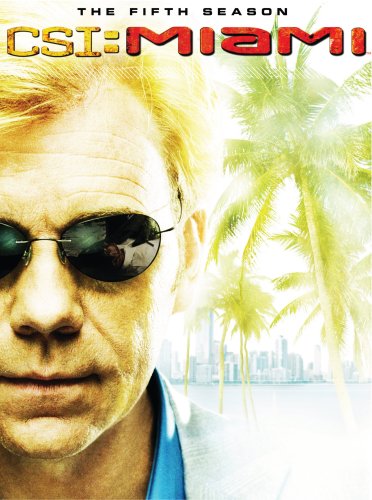
I love CSI and have been an avid fan from day one. I think it brought a fresh look to the procedural crime dramas that have long ago become just a little stale and predictable. The problem is that the series has gone the Dick Wolf route of branching out so that the final product might be a little diluted. Unlike the Law & Order franchise, each version of CSI has attempted to take on a unique look and style to reflect the location without giving up those elements which are the tradition of the series. CSI: Miami is by far the inferior of these three shows. In trying to create a slick glitzy Miami feel, the show has gone the way of style over substance. While the oversaturated colors and bright locations might make for a more visually stunning series, it tends here to overshadow the meat and potatoes of CSI, the stories. I get the impression that the show wants badly to recreate the Miami Vice accomplishment of trend setting fashion and style. Those days are long gone, and CSI has an entirely contrary mission that is weakened weekly by this overboard attempt to look good. The show is also beginning to adopt the 24 style of multi frames for no other reason than they think it looks cool. The show doesn’t respect the audience enough to believe they will buy into the series without all of these high tech distractions. It’s a shame, really, because I had higher hopes for this version of CSI, as I happen to live in Florida. Unfortunately most of CSI: Miami is shot in L.A. with the exception of a few overused establishing shots. Let me tell you, L.A. doesn’t look anything like Miami. Perhaps the show should consider dropping all of the fake glitz and move to location where they can take advantage of the city in a far more realistic way.


Very few of us know A Clockwork Orange as the 1962 novel by Anthony Burgess, instead we know it as the 1971 Stanley Kubrick film adaptation. Not only did Kubrick direct this cult classic, he also wrote the adapted screenplay and produced it. There’s no doubt that Kubrick put a lot into this movie, and by now we all know the results. A Clockwork Orange is a perfect example of Kubrick’s career, highly controversial. After the cult hit 2001: A Space Odyssey, it was crucial for Kubrick to keep the audience on the edge of their seats, and what better way to do that than adapt A Clockwork Orange. There are those who would call this movie trash, and of course there are those who absolutely love it, then of course there’s everyone in between. Well A Clockwork Orange isn’t new news to me, it’s release on HD DVD already looks to impress.

The film takes place in a then futuristic England (ca. 1995) and follows the life of demented youth Alex DeLarge (Malcom McDowell, I Spy) who’s passions are Beethoven, rape, and violence. He leads a gang of thugs who share the same pleasures as him, including fights with rival gangs, beating defenseless tramps, and a violent home invasion. On another occasion while Alex should be at school he instead picks up women and takes them to bed. Eventually his gang members overthrow him and leave him knocked out at the scene of a robbery, where he is found and in turn sentenced to 14 years in prison. But after 2 years he is given the chance to be let out early if he participates in a newly formed aversion therapy technique. After time he is rendered incapable of committing violence, and returns home where everything is turned upside down. His parents have essentially replaced him, his old friends beat on him, and is incapable of fighting back. The real question at hand is, was he cured, or just made into a victim? Well if you watch the film you're sure to make your own assumptions and interpretations of its ending.

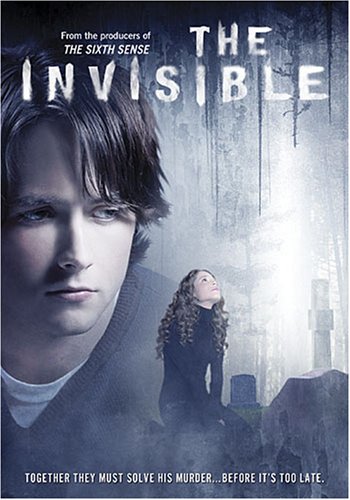
The Invisible appears to have been marketed a couple of different ways when it was released in early 2007, but the most used phrase for the film appears to be “Supernatural Thriller”, which might address it to some degree if it was, you know, thrilling.

Christine Roum (Bodyguard II) co-wrote the screenplay, which David Goyer directed. Goyer has been a longtime writer, providing words to such films as Dark City, Blade and Batman Begins. And for all the good work he’s put in as a writer, you’d think he would have learned some things when it comes to directing, but ultimately, he’s just another guy who was talented in one area and needs some work in his new one.


I can still remember the first time I saw Raiders of the Lost Ark. It was just after my birthday in June, and I had some time to kill on a weekday afternoon. I didn’t recall seeing a lot of hype, and it seemed no one knew just how huge the film was going to be. My expectations were not really high. The film looked interesting, and I was just looking to escape for a couple of hours. By the time I left that theater, I felt a little bit like Indiana Jones himself having made some grand discovery. I had to tell my friends. I even managed to drag a friend who hadn’t liked a movie since 1972 to see it with me the very next day. Of course, the film was followed by The Temple Of Doom, and my faith in old Indy Jones was shaken somewhat. Along came The Last Crusade, and I was born again into the world that was Indiana Jones. All of us are now gearing up for a fourth film after what seems like decades, because it has been. However, the decades have not been a complete Indiana Jones blackout. For a short time Indiana Jones could be found in the most unlikely of places… network television. Enter The Adventures Of Young Indiana Jones.