Posted in: Disc Reviews by Archive Authors on June 27th, 2006
Synopsis
Private Kang (Jan Dong-kun) is a coast guard – i.e. a soldier tasked with watching the South Korean coast for spies from North Korea. He is obsessed with shooting one, even though it is extremely unlikely that he will encounter any. One night, he sees movement and opens fire, killing not a spy, but a teenager having a tryst with his girlfriend. The boy isn’t just shot – he’s riddled with bullets and then blown to pieces with a grenade. No surprise, then, that the girl is traumatized to the p...int of insanity. When Kang realizes what he has done, his mental state disintegrates rapidly as well.
Posted in: Disc Reviews by Archive Authors on June 26th, 2006
Let’s face it. Movies released in January usually aren’t very good. Yes, some of these movies are Oscar hopefuls that are released nation-wide, but only after being released in selected cities to quality for those Oscars. No, we’re talking about stinking piles of crap like Uwe Boll’s Bloodrayne here. Being that January is Hollywood’s cinematic dumping ground, it comes as no surprise that Tristan & Isolde was released during this very same month in 2006.
Delayed for nearly a year, Tristan & ...solde follows a slew of disappointing historical epics, so common sense would tell you that the studio heads looked at this film and dubbed it a risk, with no bankable stars attached. What the studio heads seemed to forget (or miss, because let’s face it -- they’re more concerned with target audiences and opening weekends than quality) Tristan & Isolde is not half bad. In fact, it’s rather good.
Posted in: Disc Reviews by Archive Authors on June 26th, 2006
Let’s face it. Movies released in January usually aren’t very good. Yes, some of these movies are Oscar hopefuls that are released nation-wide, but only after being released in selected cities to quality for those Oscars. No, we’re talking about stinking piles of crap like Uwe Boll’s Bloodrayne here. Being that January is Hollywood’s cinematic dumping ground, it comes as no surprise that Tristan & Isolde was released during this very same month in 2006.
Delayed for nearly a year, Tristan & ...solde follows a slew of disappointing historical epics, so common sense would tell you that the studio heads looked at this film and dubbed it a risk, with no bankable stars attached. What the studio heads seemed to forget (or miss, because let’s face it -- they’re more concerned with target audiences and opening weekends than quality) Tristan & Isolde is not half bad. In fact, it’s rather good.
Posted in: Disc Reviews by Archive Authors on June 23rd, 2006
Synopsis
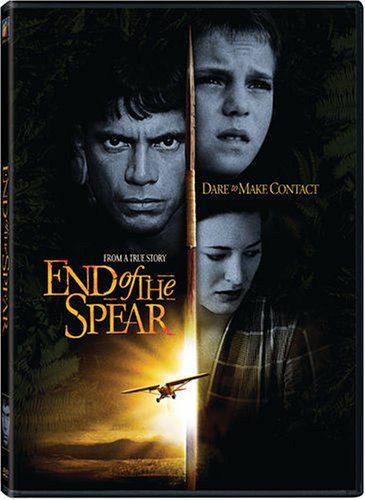
The Waodani tribe of the Amazon is, we are told, so violent that they have almost hunted each other to extinction. Oops. Anyway, in 1956 a group of missionaries and their families arrive to live with the Waodani and do the missionary thing. A misunderstanding leads to the missionaries being slaughtered, but their wives decide to stay. The film follows the journey of the son of one of the five men, and the whole thing is all about forgiveness.
Posted in: Disc Reviews by Archive Authors on June 21st, 2006
The world of politically charged films has certainly grown in the past few years. Films like Farhenheit 911 have seen big success, while other films like Rupert Murdoch’s OutFoxed have seen more of a critical success. Both of these films had extreme media attention, one obviously more than the other, prior and after their releases. Both asked questions and demanded answers to topics and issues we, as people, wondered about but never really asked about as a simple person can’t really enact a high success...rate in terms of results. However, if you have a name like Michael Moore or Rupert Murdoch attached to the bill, people will probably pay attention. A similar note is given to the recent political thriller Syriana starring George Clooney. Even though Syriana had actors like Matt Damon and George Clooney attached to the bill, would this be enough to make the film’s questions seem important enough to make an impact?
Syriana, to sum up the film in three words, is about oil and money. The film begins with one of the Gulf States agreeing to supply the up and coming China with some of its oil. Texas based company Connex, views this deal as a huge defeat. At the exact same time as this deal is happening with Connex, another company, Killen, has signed a deal to drill for oil in Kazakhstan. Connex, obviously, announces an immediate merger with Killen, thus giving them the oil. Wait one second. This sounds pretty familiar doesn’t it? Naturally the Justice Department intervenes and the movie starts to accelerate.
Posted in: Disc Reviews by Archive Authors on June 20th, 2006
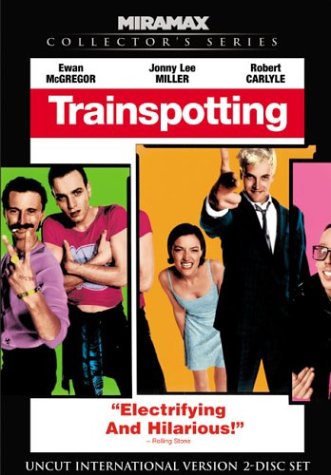
I've seen people quote this film from time to time, and I never understood the attraction because I saw it once and forgot about it. After a bit of intrigue, I finally got my hands on a copy of the US version of this 2 disc set (though the UK version, with the orange cover and silhoulette image of Ewan McGregor on the cover looks much cooler) and gave it a spin, lo and behold, I discovered a pretty good movie.
It's been talked about a lot for awhile I guess, but to sum up, McGregor plays Benton, a heroin addict in Scotland, who spends his days getting high and hanging around with his mates. Spud (Ewen Bremner, Black Hawk Down) wears Nancy Reagan-like glasses from time to time, and seems to be the closest one Renton relates to; Sick Boy (Jonny Lee Miller, Hackers) is the one that tries to make himself superior to the group, when he's not off spouting weird theories about movies that Sean Connery has starred in; Tommy (Kevin McKidd, Topsy Turvy) is against his buddies using but is curious about it, and then there's Bigbie (Robert Carlyle, The Full Monty), a beer-drinking Scot with an offensive mustache and a penchant for getting into brawls.
Posted in: Disc Reviews by Archive Authors on June 9th, 2006
Synopsis
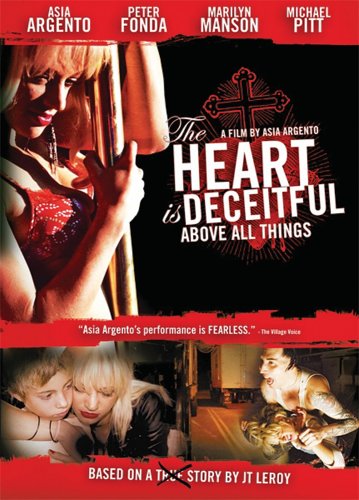
Jeremiah is taken at the age of five from his loving foster parents and turned over to the tender mercies of his white-trash mother, Sarah (Asia Argento, in an absolutely monstrous role). He is dragged down into the abusive nightmare of her life, being raped by her male partners when he is being beaten by them. There is an interlude where he is taken under the care of his fundamentalist grandparents (whicih is a nightmare in itself), but mother reclaims him, ultimately making him up as a gir... and having him turn tricks with her at truck stops.
Posted in: Disc Reviews by Archive Authors on June 9th, 2006
Limitations of budget and social conventions of the time prevent Murder, Inc. from being all it can be - still, the performances, and the captivating dynamic between hero (Stuart Whitman) and villain (Peter Falk) result in entertaining fare, so long as this film is allowed to be a movie and not a documentary. Whitman leads a fine cast as the mob lackey, who is constantly manipulated by a tough-talking contract killer. Part of the real life syndicate of hit-men "Murder, Inc.," Falk's baddie steals every ...cene he's in throughout this early career-making performance. He smacks of a young Brando, and comes across as just the type of ice-blooded villain, which gave the 1930's Brownsville mob its infamy. He'll lie, cheat, and steal, to get what he wants - whether it be conning Whitman's assistance to off a stale nightclub comedian (Morey Amsterdam), or brutally raping Whitman's wife (May Britt). And by "brutally," I mean "brutally for the times." The word "rape" is never used, and the explicit nature never goes beyond an aftermath scene, where a disheveled Britt anguishes, "Those filthy hands. Those dirty fingers."
A film like this could be revisited to great effect by a capable director like Scorcese. In fact, stylistically, Murder, Inc. shares many attributes with Scorcese's superior mob epics. It's the kind of film that influences better filmmakers to make better pictures - but I would only use the word "classic" to describe its age, and not its quality. For one, the narration is totally out of place, and - quite obviously - the result of a receding budget. The first bit of narration doesn't come into play until we're past the first act. And when it does finally appear, all we hear is a droll voice with zero personality. We only learn later the narrator is a character in the film - the heroic cop (Henry Morgan), who takes on the entire mob organization. Rather than give the film a documentary effect, the narration serves only to clumsily fill in cracks, where story should be. "Show, don't tell," this isn't. Another weak point is how the best element is often neglected - the Whitman-versus-Falk conflict with Britt caught in between. It seems like every time this story element gets rolling, we cut away to a less interesting sidebar. And when the angle is finally resolved, it happens with such anti-climax that we wonder why we even cared at all.
Posted in: Disc Reviews by Archive Authors on June 6th, 2006
Synopsis
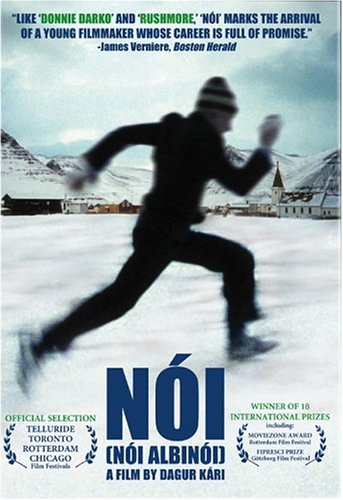
Tómas Lemarquis plays Nói, a 17-year-old living in a tiny, frigid, massively isolated town in Iceland. He is brilliant, but refuses to be so, and many people in the town think he isn’t all there. He sleeps through school (when he bothers to show up), deals with his useless alcoholic father, and dreams of being somewhere else. When he meets a young woman who turns out to be a kindred spirit, his desire to escape is further enflamed. The odds, however, are stacked against him.
Posted in: Disc Reviews by Archive Authors on June 2nd, 2006
Synopsis
Emmanuel Xuereb plays Gabe, a man whose dying wife has left him for his best friend. (The psychiatric term for this situation is “bummer.”) His mourning takes the form of attempting to seduce women he doesn’t know, and he beings a relationship with Irene (Charis Michelsen), married but bored with her unimaginative husband. Irene is initially thrown when it turns out that Gabe is breaking into the homes where their encounters occur, but soon she is a willing participant in this game.