Drama

Taking place in the 1950’s, Good Night and Good Luck deals with the impending threat of Communism in the world. Many feared it so much they decided to never speak of it. One Senator in particular, Wisconsin Senator Joseph McCarthy used a type of propaganda basically creating this threat of Communism as one of the single biggest threats anyone could face. Ala President Bush, many Americans who wanted to take a stand against McCarthy and his views, decided not to for fear of being called an unpatriotic American....It wasn’t until eight members of a CBS radio show, lead by Edward R. Murrow (Clooney), decided to take a stand against McCarthy. The film, instead of showcasing Murrow’s entire career (and quite the career it was indeed), focuses on this one portion of his career. I applaud Clooney for doing this film, since a character like Murrow would be eventually viewed as a hero for standing up against the power. It just goes to show that sometimes, if you try fight the good fight, the right will prevail.

What makes a film like this so powerful and necessary viewing is not the direction of George Clooney (even though it is rather good), but more the power of the message behind these eight men. In a time of fear and worry in the country, these men stood up as one and decided to take a stand against a man who used fear and his power to take advantage of his audience (sound familiar no)? Subtle little things also make this film’s message powerful. Instead of casting a McCarthy look-a-like to shoot these scenes, Clooney, in a wise move that brings more credibility to the film’s message, used archival footage of McCarthy actually speaking about Communism. After viewing these messages in the film, one can easily see where a certain man may have come up with messages of fear in hopes of winning over an audience.

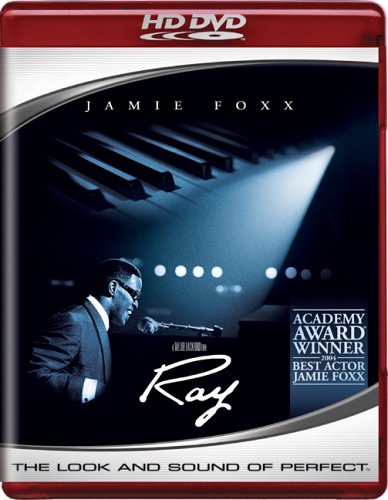
Taylor Hackford’s drama Ray tells the remarkable story of singer Ray Charles’ life – dealing with subjects such as his drug addictions, his blindness and his family. We also get a look into his various recordings, his quick rise to stardom and his impact within the recording industry. More notable then the film itself is the Oscar-winning performance of Jamie Foxx in the lead role. Foxx does a fabulous job in his portrayal of Charles - most deserving of his Best Lead Actor statue.

There are scene... where, according to Director Hackford, Foxx acted so similar to Charles that he couldn’t distinguish between the two. Foxx did an unimaginable amount of work into acting just like Charles – from researching his life, to jamming and meeting with Charles himself, to wearing prosthetics over his eyes making him partially blind. In fact, Foxx is so truly good that you sometimes forget that Foxx is actually acting and wonder sometimes if Charles himself was acting in the film. Yes, Foxx is truly that good in this roll.

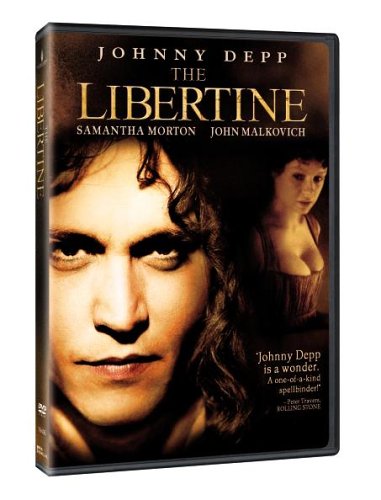
Johnny Depp continues to work hard in both good films and bad. While I didn’t care for this outing, I’m not sure I would call it a bad film… just one that didn’t connect with any of my tastes. Fans of Mr. 21 Jump Street will delight in yet another strong performance. He has the skill and talent to be remembered as one of the true greats. His performance in The Libertine does nothing to diminish that. But at the same time, there’s something dreadfully boring about films like these. Something not even Depp’s un...istakable craft can overcome.

Who the hell told writers and actors that films about them are so enthralling people will want to see them play the same characters in the same situations over and over again? It seems artsy folk are much more fascinated with themselves than John Q. Public, or any other moviegoer, could, or should, be. The weaknesses of The Libertine aspire to present them selves as the film’s strengths, and I, for one, am not buying. The plot is the same eccentricity finding redemption “on his own terms” theme that plays out in a lot of these films. Nothing much to say except that Depp plays an eccentric playwright, who insults King Charles II (John Malkovich) with a bawdy play that humiliates him in front of a group of French aristocrats. The stunt gets the playwright exiled, a punishment which seems more befitting than death to such a man, as he can no longer connect with his audience. Boredom ensues. The end.

Synopsis

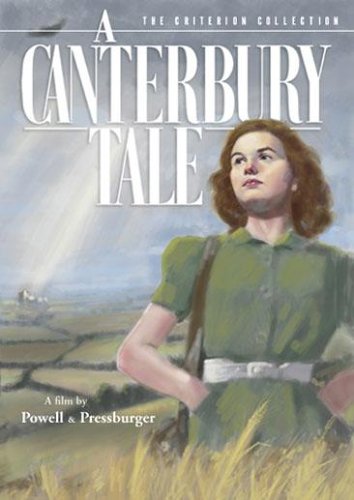
Arriving late one night at a village near Canterbury are an English sergeant (Dennis Price), and American one (Sgt. John Sweet) and a landgirl (Sheila Sim). As they leave the train station, Sim is set upon by a mysterious figure who dumps glue all over her hair. The trio become amateur detectives, determined to unmask the “glue man” and their suspicion first falls on Eric Porter, the local magistrate who is consumed by an enormous love for the countryside.

It’s always interesting when works of art (books, plays, films, etc…) are updated from their native settings. Baz Lurhman’s Romeo + Juliet took the Bard’s most famous play and set it in modern day California, making it fresh again. Francis Ford Coppola set Conrad’s Heart of Darkness during the Vietnam War, making Apocalypse Now one of the most revered and realistic films of that era. There are several more examples in this trend that deserve to be mentioned, but I must fast-forward to the film a... hand. That is Brick, a film written and directed by newcomer Rian Johnson. Johnson wisely sets his film noir story in a modern day California high school. The update takes a while to get used to, but after a small buffer period, Brick becomes a fresh spin on the film noir genre, who’s day has come and gone.

Joseph Gordon-Levitt plays Brenden, a high school student who watches as his ex-girlfriend, Emily (Lost’s Emile de Ravin), falls into the wrong crowd and winds up dead. After Brenden receives a panicked call for help shortly before her death, he dives into the drug-dealing underworld inhabiting his school to find out who done Emily wrong. As with most film noir films, Brenden discovers that the truth behind Emily’s death is not simply a black and white issue. Brenden is also aided by a femme fatal in Laura (Nora Zehetner), who may or may not be on his side.

Burned out actor Howard Spense (Sam Shepard) has a mid-life crisis, rides off the set of his latest western, and visits his mother (Eva Marie Saint), whom he has not seen in over 30 years. Mother Spense informs Howard that he has a son named Earl, (Gabriel Mann) living in Butte, Montana from a fling he had with Doreen (Jessica Lange), while he was there shooting on location 20 years ago. Upon arriving in Butte (he gravitates there more than actually arriving), Howard also meets Sky (Sarah Polley), a mysterious woman ...ho is carrying the ashes of her mother in an urn. She may also be his daughter.

If this sounds like a Lifetime made-for-TV-movie-of-the-week, then you wouldn’t be far off. There are lots of angst-riddled father-son arguments and tearful reunions. But director Wim Wenders and cinematographer Franz Lustig inject the film with a minor art-house vibe and some major western landscapes, elevating the film into something more relevant than a generic film found on the “men are evil” Lifetime network. Wenders also supplies the film with an excellent alt-country soundtrack (courtesy of T-Bone Burnett) that adds an emotional punch that is sorely lacking on-screen.

Synopsis

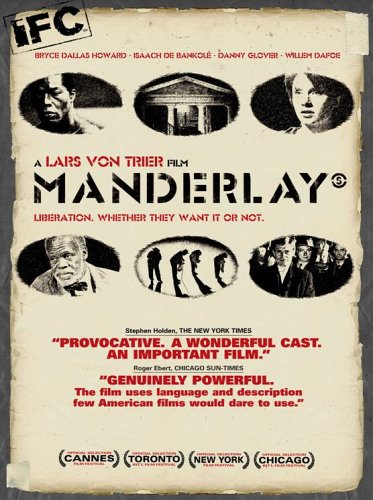
Marnderlay is part two of the trilogy that began with Dogville. Picking up where that film left off, we see Grace (Bryce Dallas Howard replacing Nicole Kidman) and her gangster father (Willem Dafoe taking over from James Caan) arriving at Manderlay, a plantation where slavery never ended. Grace, horrified by this state of affairs, orders slavery abolished, but her attempts to bring freedom to the slaves lead inexorably to disaster.

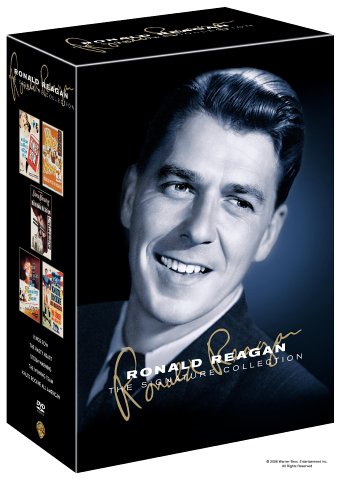
I've said it before, and as long as Warner Brothers keeps putting these classic discs out, I am going to keep on saying it. No studio respects their classic film catalog like Warner's. They have done marvelous things with their special editions of classic films, such as their fantastic 2-disc tin box release of King Kong. They have the largest collection of classic films on the planet, including the entire RKO Pictures catalog, and they are succeeding in introducing an entirely new generation of film fans to the best that cinema has to offer.

In addition to their wonderful single-title releases, they started releasing “Signature Collection” boxed sets of a couple of years ago. These are sets of films featuring a single actor or director, and they are packaged in beautiful boxes, complete with the original artwork for each film. This time around, they are focusing on five films by Ronald Reagan. Included in this box is the 1942 Best Picture nominee King's Row, 1949 film The Hasty Heart, the surprising (and way ahead of its time) drama Storm Warning, the inspirational baseball film The Winning Team and the beloved film Knute Rockne All American, which reminded the world to “win one for the Gipper”.

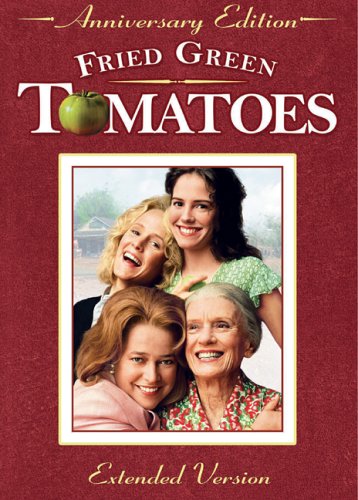
Kathy Bates and the late Jessica Tandy star in Fried Green Tomatoes, a wonderfully surprising film about four strong women finding friendship, loyalty, and strength in each other. Sounds boring, right? I thought so, too, until I actually sat down and gave the extended anniversary edition a chance. The film, based on Fannie Flagg's novel Fried Green Tomatoes at the Whistle Stop Cafe, is really two stories in one. Bates plays an unhappy Southern woman stuck in a marriage routine, which doesn't favor her n...eds at all. She is underappreciated, despite her calm, sweet demeanor, and routinely thrown out of her husband's aunt's room at the nursing home. It's during one of these rejections that she meets Nanny Threadgoode (Tandy), a positive old woman determined to get her house back, and eager for the chance to talk about her past.

But it isn't her own life that Nanny wants to tell her new friend about - it's the friendship of two women, Idgie (Mary Stuart Masterson) and Ruth (Mary-Louise Parker), whom Nanny used to know, that gets the old woman talking. Be forewarned. There are some hanky moments, but they're all handled with great care. Also, the racial elements of the backstory and an intriguing murder mystery amp up the drama to a reasonably tense and captivating level. Director Jon Avnet keeps the film from ever getting too hoky or melodramatic, though I will say it can't escape predictability. There are some pseudo-surprises you should see coming from a mile away, and even a touch of morbidity toward the film's conclusion. But it all works, thanks in large part to great source material, a strongly adapted script, and the amazing performances of all four women.

While V For Vendetta certainly met with some backlash when it was released in theaters earlier this year, having now seen the film myself, I am shocked that it didn't meet with even more opposition; especially from the White House. Of course, if the White House had come out against the film, it would not only have spurred greater ticket sales, but it also would have placed the government in the position of the film's villain. To speak out against this film would be to be to speak out against basic American values.

Set in the near future, this film tells the story of V, a terrorist that rallies against an unjust government. He is something of a modern-day Che Guevara, except he bases himself on a 17th century activist named Guy Fawkes, who was foiled in an attempt to destroy the English Parliament. Among other acts of terror, V plans to succeed where Fawkes failed.