Drama

A small town girl named Lorie Walker is injured, which forces her to abandon her dreams of becoming a professional ballerina. After a chance encounter with an old friend, she is convinced to appear in a rap music video. The director of said video is immediately smitten with her beauty and takes her away to Los Angeles to become a Video Model.

The music video's Lorie appears in are of the lowest common denominator standard (her debut video seems to only consist of the lyrics “I got a big booty cutie” repeated over and over) and her roles only demand that she stand around and look pretty for the camera. If you are not a casual fan of modern (and may I say, low grade) hip-hop, these will be the first hurdles you have to cross to become invested in this film.

There have been a lot of films out that deal with the Iraq war and the various political situations that region of the world has had to deal with since that time. Most of these efforts are trying so hard to make some radical political point that they tend to serve their audiences poorly as entertaining films. Happily, that's not the case with Lee Tamahori's The Devil's Double. The film cuts through the polarizing political elements and provides a brutal view of the Hussein regime through the actions of one of Saddam's sons, Uday. Tamahori has created a modern Scarface by using those regime elements to paint the picture of a man overwhelmed with power and driven to excess. Unlike Scarface, Uday is not an outlaw; rather in this environment he is the law, and suddenly we have a film that delivers a unique take on the theme of the corruption of power.

Latif (Cooper) is a simple soldier in the Iraq army in the days before the Kuwait invasion. He has been called to the Royal Palace, summoned by Prince Uday (Cooper) whom he had known in his school days. The two share a remarkable resemblance that Uday intends to exploit. He wants a body double to help protect him from the various threats that his position elicits. Latif attempts to decline, but Uday threatens his entire family if he doesn't accept. Acceptance means that Latif is now dead, and he is to live in the palace with all of the luxury of a prince. Uday refers to him as his brother. But instead of having Latif take his place in public, he merely drags him around with him. It's a poor plan for a body double, because it soon becomes pretty much general knowledge that this look-alike exists. Latif finds himself more and more disgusted as he is drawn closer in toward this world. All he wants now is to escape.

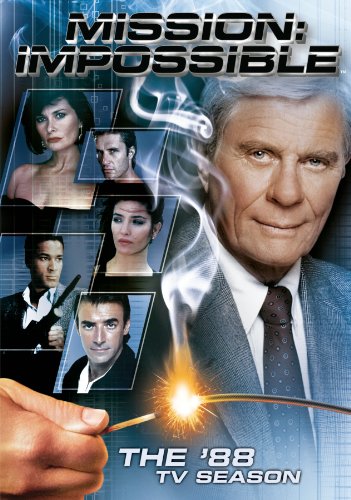
"Your mission, should you decide to accept it..."

Those words have certainly been a part of the American pop culture for almost 50 years. It all started with the Desilu television series that hit the airwaves in 1966. That first year is probably unfamiliar to most of us. It was in black & white and starred Steven Hill as the leader of the Impossible Mission Force. A year later the show jumped to color and Peter Graves took over the team as the indomitable Jim Phelps. The show lasted a good 7 seasons. The Impossible Mission Force was a black-ops team that worked under the "secretary" who would disavow their mission should any of the team be caught or killed. The show had a pretty good run before ending in 1973. Gone, but never forgotten.

A couple in their 30s decide to adopt an injured cat and have 30 days before receiving it. In that time, the burden of responsibility becomes too much and they start making drastic changes to their lives. I have reviewed enough films to realise that, unless it is a science documentary, a film title such as “The Future” can only imply a pessimistic view of it's namesake when coming out of the “indie” film scene. This film validates such fears to a tee.

SPOILERS AHEAD. BE WARNED.

As some might be able to figure out from my personality, I tend to stay away from political and war type movies. Political movies (except for the special ones) tend to confuse the viewer until the final curtain is drawn. War movies on the other hand tend to be more about explosions and male bonding which is usually enough to put me to sleep. What happens when you combine the two of them? Well then you might get a movie like 5 Days of War directed by the one and only Renny Harlin .

Hiram Johnson, a US Senator once said that “The first casualty of war is truth.” We join the movie in Iraq, year circa 2007. Thomas Anders (played by Rupert Friend) is an American reporter. He is riding along with his camerman, Sebastian Ganz (played by Richard Coyle) and his fellow reporter/girlfriend, Miriam (played by Heather Graham). Sebastian is recording the two and asking them all sorts of relationship type questions.

John Bonito has had very little experience in filmmaking. He's done a few wrestling tidbits and one earlier film called The Marine, and that was nearly six years ago. Chances are you haven't heard of either. If Carjack is any indication of his limited ability, the new film out on Blu-ray isn't going to help with that name recognition. So, with a no-name director and a direct-to-video release, the film really left small expectations. We might go into a film like this expecting a rather dull, "been there, done that" feel to it. In that sense Bonito doesn't disappoint at all. But take a closer look at the cast and hope emerges for something perhaps a little better than that. The only response I can offer for that is that a car wasn't the only thing jacked here. Someone made off with nearly a couple hours of my life. In that Bonito is guilty of grand theft, while some of you might plead it down to petty larceny.

Lorraine (Bello) is trying to put together the pieces of a broken life. Her husband has left her and is threatening to take her son away. She was once negligent and he wondered off into the night alone. She's in group therapy trying to work out those kinks in her life. Her therapist tells her she needs to take control more, and that aspect of her development is about to be tested.

Fishing is fairly foreign to me I admit it. The idea that you have to get up at the crack of dawn just to sit in a rusted over boat without saying a word to only catch not a darn thing seems like a waste of time if nothing else. The television fishing shows on TBS do not make it sound any better either. The only thing appealing to me about it is if you can find some beautiful scenery to fish in. Perhaps a place like Oregon, which is the setting for our new review: The River Why.

There is nothing like fly fishing up in the lakes of Oregon just outside of Portland. At least that is what Gus (Augustine) Orviston (played by Zach Gilford) has always thought. Why even as a baby, he was delivered underwater (in a tub). He would sleep with a pet fish; he would be able to catch his own fish even at ten years old. Gus loves fish and everything to do with fishing, well except his fishing crazy parents.

To say I am a sucker for hard rocking music films is an understatement. One of my favorite films in this genre is Rockstar of which I am still waiting for a good blu-ray release. Other films like This is Spinal Tap or even The Runaways also hold my interest for a good time. So, I was a little interested when I saw Trigger come to my doorstep, a tale about two reunited female musicians who are brought back together for one great night.

Two girls tear up the stage and put on a great performance of rocking their hearts out set to a peaceful piano number. The music ends with some guitar bashing, lead singer boozing and general chaos. Ahhh, so peaceful. We fast forward to ten years later and arrive in a fancy restaurant. Vic (played byTracy Wright) shows up (the guitarist) and is seated at a table. About forty five minutes to an hour later, Kat (lead singer) (played by Molly Parker) shows up and apologizes for being late.

“10,000 people crammed… no bed, no toilets and little water.”

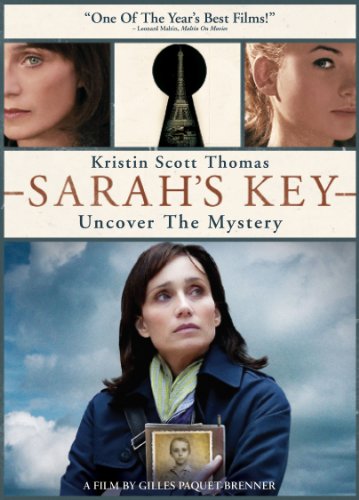
Julia Jarmond (Kristin Scott Thomas) is an American journalist living in Paris covering the anniversary of the 1942 Vel' d'Hiv Roundup, a horrific atrocity when occupied France bowed to the will of the Nazis and rounded up over 13,000 Jews to ship them off to concentration camps. As she investigates the story she discovers a dark secret in her French husband’s family directly connecting them to the event. The story is split between Julia’s modern day investigation and 1942 where it follows 10-year-old Sarah Starzynski (Melusine Mayance) as she deals with the horrors of the roundup.

Erle Stanley Gardner wrote crime fiction, and while many of his 100 or so works are unknown to most of us, he created a character that has become as identified with criminal lawyers as any other in fiction. It was in these crime novels that Perry Mason first faced a courtroom. He developed a style where he would investigate these terrible crimes his clients were on trial for. He would find the real killer, and in what has become a Hollywood cliché, reveal his findings in a crucial moment during the trial. While we may not remember the novels, we all remember the man in the persona of Raymond Burr.  Burr had a commanding presence on our screens and enjoyed a well deserved 11-year run as the clever lawyer. What makes this run so amazing is that the show followed pretty much the same pattern the entire time. We always know what’s going to happen, but we wait eagerly for that gotcha moment when Perry faces the witness on the stand. We know when he’s got the guy squarely in his sights, and we can’t sit still waiting for him to pull the trigger. OK, so maybe that’s a little over the top, but so was Perry Mason. From the moment you heard that distinctive theme, the stage was set. To say that Perry Mason defined the lawyer show for decades would be an understatement. Folks like Matlock and shows like The Practice are strikingly similar to Perry Mason. If you haven’t checked this show out, this is your chance. See where it all began.

Raymond Burr did not carry the show on his own. There was a very fine cast of supporting characters. The most famous has to be his faithful secretary Della Street, played by Barbara Hale. The two were inseparable. Perry had the help of a good private investigator in the Raymond Chandler style. William Hopper played the tough-as-nails Paul Drake. One of Orson Welles’ famous Mercury Theater Players took on the part of Police Lt. Tragg. Ray Collins starred in Citizen Kane as the political party boss Gettys. He was a fine example of top talent working in television.  Mason was often pitted against prosecutor Hamilton Burger, whose name too often reminded me of hamburgers. There wasn’t anything funny about Burger, however. He was a worthy opponent who drew the short straw most of the time because he was up against Perry Mason. The task was accomplished with a lot of style by William Talman, a one-time evangelistic preacher.