Family

“This family thinks they are better than us!”

If you think the wedding “rom com” has been done to death, Jumping the Broom won’t change your mind. It covers much the same ground you’ve seen again and again, but one cannot deny director T.D. Jakes has crafted a charming if clichéd film.

Brendan Fraser plays Mo, a man who has the special power of a “silver tongue” which means he has the ability to bring characters and elements from books into the real world by reading their stories out loud. There is a serious catch to this power. Someone from the real world must go into the book in exchange. Mo discovered this by accidentally reading his wife into a story called Inkheart while pulling three of its characters out. Nine years after this event, and with his daughter and a couple of heroic literary characters at his side, he finally tracks down a copy of the rare book to try and bring her back.

The mashing of literary references does not get its legs until the monstrous climax of the film. Until then, the adventure seems a bit light and lacking in the essential energy to gain our full interest. There are also issues with establishing the mood of the film. The disappearance of Mo's wife seems tragic at times, as indeed the loss of a loved one should be, but at other s\times it simply seems like a reference in their fantastic quest amongst outrageous characters of fiction. No character seems to get enough times to dwell on the uncanny, such as an author meeting one of his characters face to face, or the heartbreaking, such as the aforementioned disappearance.

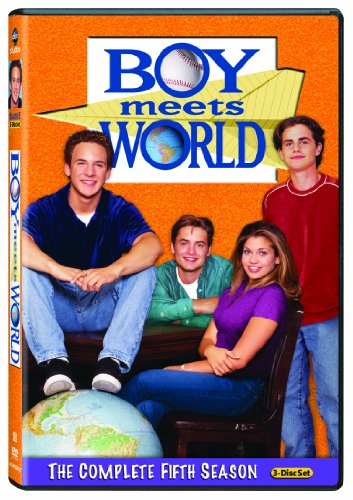
I suppose there is something to be said about shows where we literally watch the main characters grow up. This season of Boy Meets World sees Cory Matthews (played by Ben Savage) and his cohorts enter their final year of high school. In some fashion, this is the season where the boy really is about to “meet the world,” but perhaps that is just a little too much poetry smeared onto this season of family friendly prose.

If you can somehow crawl past the horrendous theme song and opening title sequence, you will witness an acceptable Disney comedy, filled with cheesy smiles, over-acting supporting cast, madcap scenarios that have no edge whatsoever, and hearty doses of family oriented life lessons.

Dennis Mitchell always means well when he wants to help out his parents, or good ol' Mr. Wilson, but he also just wants to have a good time. ¼ helpful young lad but ¾ mischief, Dennis made the leap from the beloved comic strip by Hank Ketchum to the small screen for four seasons.

Compensating for when ABC took over Leave it to Beaver from CBS, Dennis the Menace was the attempt to grab some audience back for CBS. Jay North is the titular Dennis, and does well to carry the spark of this character's “menacing” namesake. Each episode sees Dennis with the best of intentions, but always managing to create more damage than his help is worth. Along for the ride are his best friends Tommy and Joey (the latter seeming to be a strange mute boy), his rival Margaret, his parents played by Herbert Anderson and Gloria (who could not look closer to the original characters) and Joseph Kearns as the ever-frustrated Mr. Wilson.

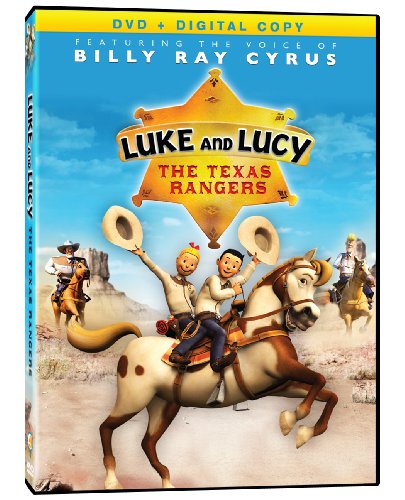
A Wild West overlord is plotting to shrink the world's population. This evil plot is running along smoothly until a shrunken Texas ranger escapes in a whiskey bottle and finds himself saved by a plucky sibling duo named Luke and Lucy, along with their gaggle of wacky friends. The group become honourary rangers and set out to battle evil.

The character design, and over the top sense of adventure, are reminiscent of the Tintin series as these characters are based on those that appeared in Belgian comics under the same Herge banner that Tintin shares. Sadly, the CGI animation takes most all the life out of them with rigid movements and very poor lip syncing. Of course, being originally produced in Dutch, one can forgive some of the mismatched dialogue-to-mouths, but some more work could have been done to smooth it out.

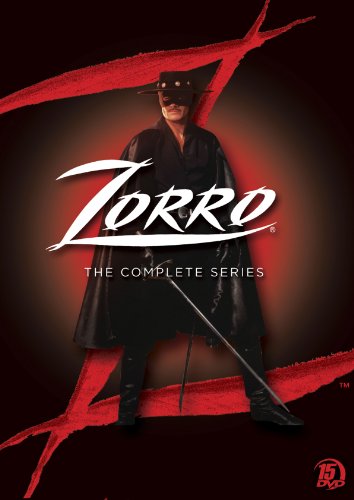
My teenage years were set firmly in the 80’s and early 90’s. As a result, I watched my fair share of cheesy television shows and loved every minute of it. Shows like Sledge Hammer, Silk Stalkings, and Alf. But alas, some shows even escaped my cheese-dar until well into my adult years. One such show is Zorro, yes that Duncan Regehr vehicle where he wore a mask and carved Z into various objects while wooing the ladies. How could I ever miss that one?


Since, I’m dealing with a box set that covers a ton of episodes, I will do my best to break this down season by season with major changes between them. To be honest, from what I’ve seen, the show’s story is the same from start to finish. Even though some of the actors do change, it’s still Duncan Regehr running around in a mask with a sword. Too frank you say? Ha, ha (in best evil guy’s laughing voice)!

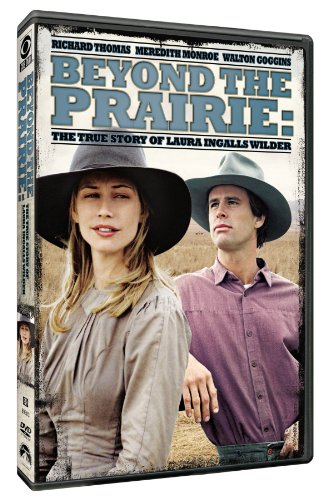
I have never watched Little House on the Prairie, so I admit to having no frame of reference when I approached this set, which actually contains two separate made for television movies: Beyond The Prairie: The True Story of Laura Ingalls Wilder, and Beyond The Prairie: The True Story of Laura Ingalls Wilder Continues. Now, since I’ve used up a large portion of my review space just mentioning the titles of these two films, I will try to be as succinct as possible. Suffice to say that, while I was aware of the show, all I really know about the lady is that she grew up on the prairies in a small house of some kind, and that she is beloved by a certain portion of the population. Also, if memory serves, she may or may not have been friends with NFL Hall of Famer Merlin Olsen.

The two films chronicle the life of Ingalls Wilder, from her days as a teenager growing into womanhood on the 19th century Dakota frontier to her eventual marriage to Almanzo Wilder and their emigration to Missouri. The films are quite authentic in their depiction of the harsh realities of frontier life, particularly the Dakota winters, and show death and loss as a constant danger, even when the focus is on wholesome family drama. Blizzards, hail storms, starvation, and disease are among the constant threats that loom over these characters, and the films do a pretty good job making these things real.

My dislike of romantic comedies has been well documented on this site time and time again. At times, I even try to enlist the help of my loving wife who doesn’t really care for them either but is willing to lend a hand. Unfortunately, my next three reviews will all involve the curse of the romantic comedy. So let’s take a look inside and see if we can last through this trilogy of terror.

Lane Daniels (played by Hilary Duff) is a fashion journalist in New York City in search of a guy. Scared yet? I mean it is Hilary Duff. I heard she once bit the head of an eyeliner pencil off and swallowed it whole. Lane’s best friend, Joanna (played by Amanda Walsh) tries to help but the main problem is that Lane has this insane checklist.

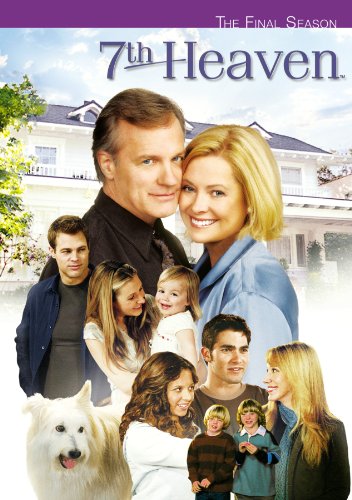
7th heaven reaches its 11th and final season of rampant political correctness and lessons of family togetherness through Christian love. Yes, that was a mildly passive aggressive summary of this show, but I feel sometimes one strong bias deserves another to challenge it. This show, the story of a very large family lead by a Minister (and don't deny it, he leads them) as they convey their socially and politically conservative Protestant Christian point of view of “real-life” situations.

To be a fair reviewer, I shall put aside my personal objections to critique how the show works just as a family drama for a moment. The 11th season is quite hard to get into as there are countless references and relationships that have been building up for a very long time. I'm not asking it to be like a Law and Order brand of storytelling, where a viewer can jump in at any episode to enjoy a fully encapsulated story, but this show becomes an undeniable challenge to watch if you are seeing it without any background knowledge of the characters and their previous stories.

Bryce and Juli first meet in the second grade. Juli is convinced that Bryce is walking around with her first kiss, while Bryce is not returning any sense of being similarly infatuated with Juli. As the years pass by, Bryce manages to keep her at bay, until things “flip” (as it were) and it is Juli who may be veering away from Bryce.

This will-they won't-they (probably will) romance is told by trading the point-of-view and narrator between Bryce and Juli. This tactic makes the story more interesting to take in, despite the potential tedium of having the entire story essentially being told twice. The audience is privy to the continuous compare and contrast happening between Bryce and Juli's thoughts and feelings and so we get a more immediate understand of who they are, and what they are motivated by.