Horror

"It's good to be back."

It’s the little things I supposed. When forced to confront the prospect of your own death, what will you do with the time you have left. Some fight against their own extinction. Some seek help from a higher power. While some cling to the past and seek comfort in their treasured memories. In a Quiet Place: Day One we see a bit of all three. While Day One marks the third installment in the Quiet Place franchise, it serves as the prequel for the series showcasing how the world went silent after sightless aliens with sharp hearing and impenetrable armor plating take over the planet and attack the human population. For me, this is a welcome addition to the franchise because while watching the first two films, one of my recurring thoughts was I would like to see how the world went quiet. Imagine my excitement when I this movie was announced. In my mind, I figured the prequel would continue to follow the Abbott family. However, Day One is comprised of a predominantly new cast, with the exception of Djimon Hounsou, who was introduced in the second film. While I was initially disappointed, I got over it quickly as new blood provides a new opportunity to expand the story rather than restricting yourself. Lupita Nyong'o, Joseph Quinn, and Alex Wolff represent our new additions to the franchise, and they don’t disappoint.

"I know what you're thinking. "Pain is coming. Will I take it like a man?" Well, let me put you at ease. You won't -- but none of them do. Men, women, children, they all weep, they all beg, they pass out, they piss themselves, they attempt negotiation. You wouldn't believe how many men I've seen lying right where you're lying right now, grown men with wives and children at home, offering all kinds of sexual gratification for a five-minute reprieve. It's pathetic."

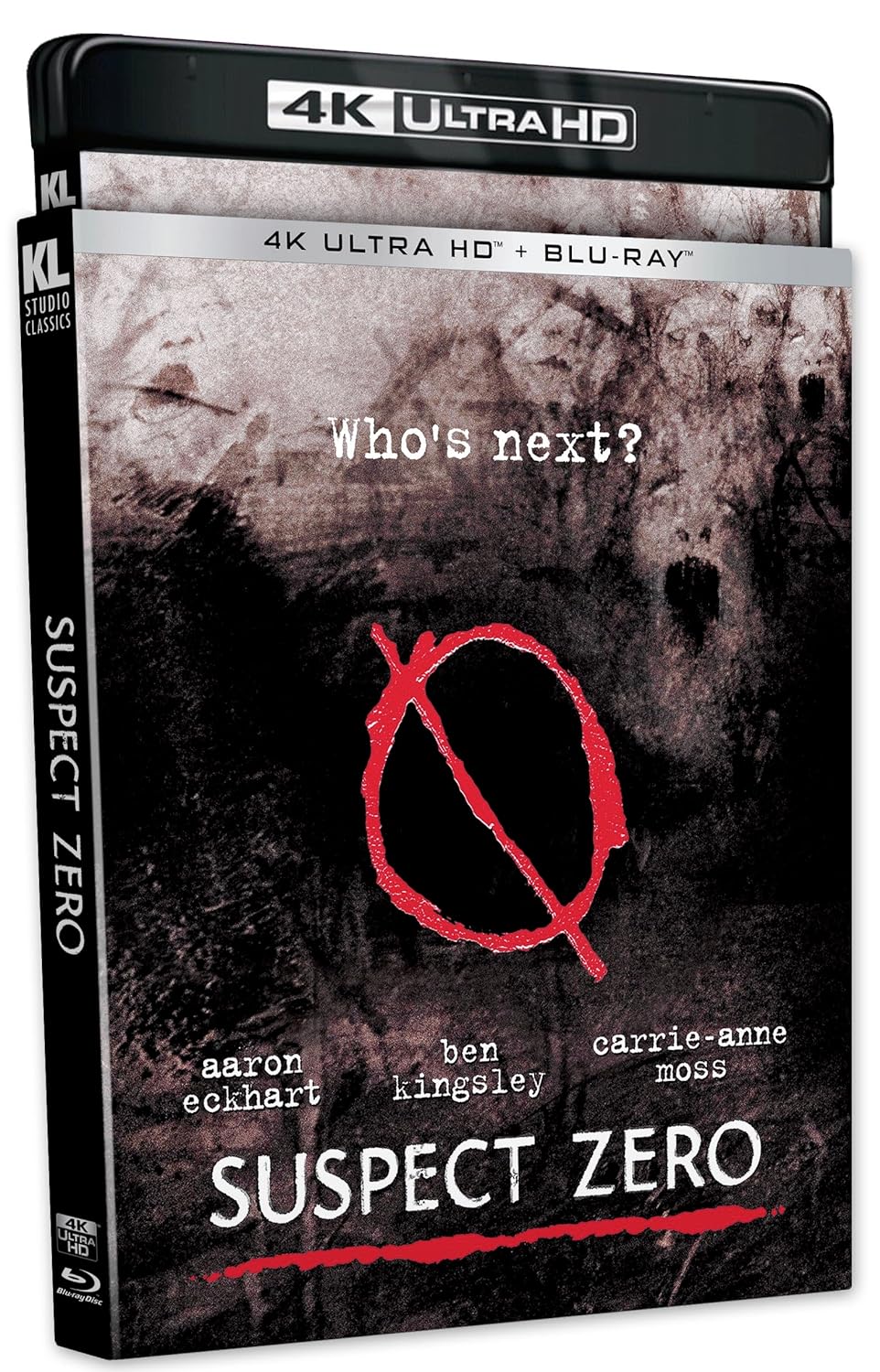
Suspect Zero follows the contradictory teacher/student relationship between serial killer Benjamin O’Ryan (Ben Kingsley) and FBI Agent-in-Pursuit Tom Mackelway (Aaron Eckhart, sporting as much chin as Bruce Campbell). O’Ryan is a tormented refugee of a government program to tap psychic powers for military intelligence, and Mackelway is a borderline-rogue agent, tormented by visions and headaches. Without letting slip any spoilers, the movie sees O’Ryan draw their paths together in pursuit of justice for himself, his victims, and Mackelway.

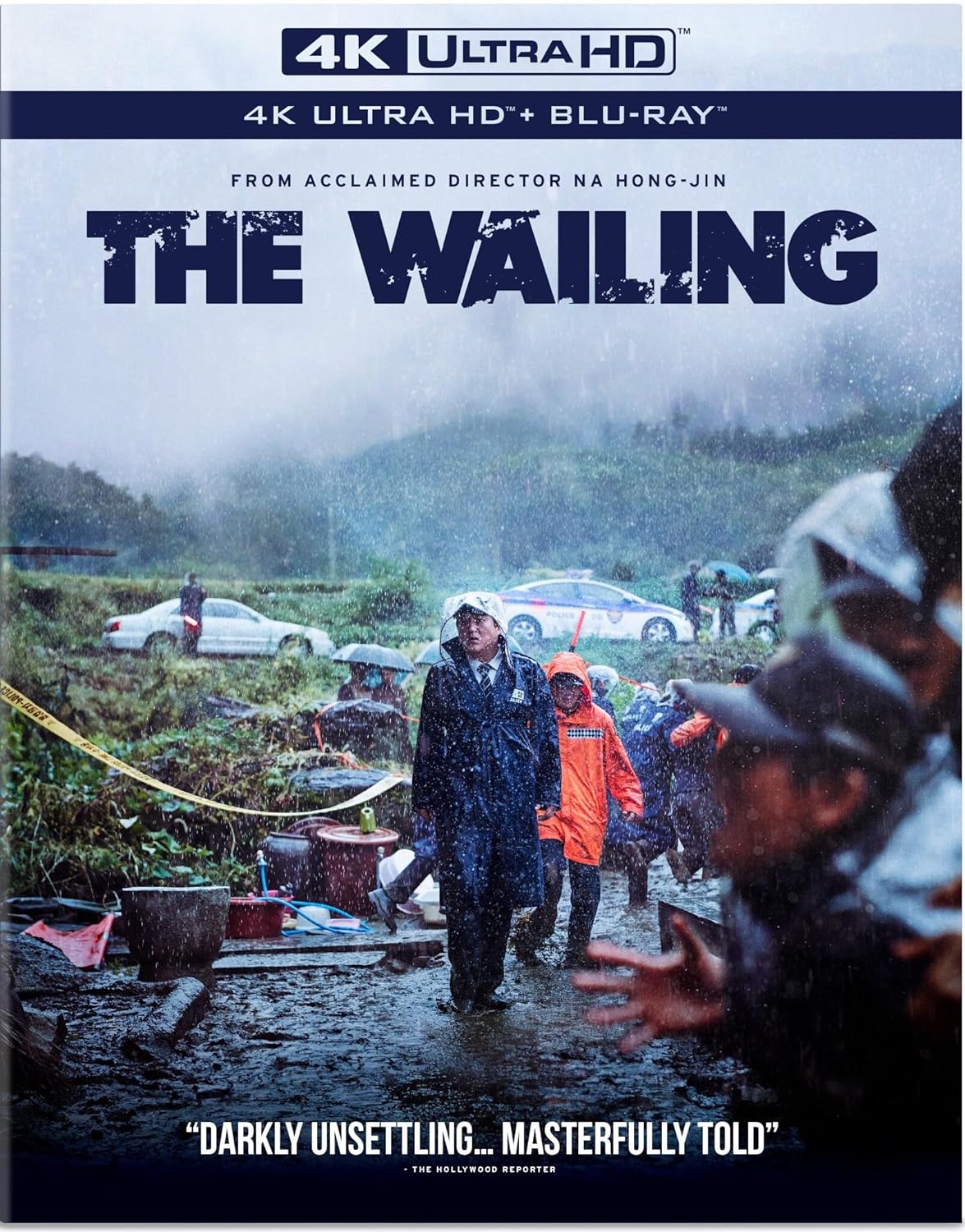
As I have mentioned numerous times, I am not a fan of horror movies.  In particular, my number one pet peeve is jump scares.  Now, for certain scary movies, I'll allow one good jump scare; it almost goes with the territory.  But if the director has to use one every fifteen minutes, my heart does not need that much of a workout, and I am going to avoid it very quickly.  This is mostly reserved for American movies, quite often on their fifth sequel.  However, Korean horror flicks know how not to use the jump scare and instead focus on making things as gruesome and disturbing as humanly possible.  Or inhumanly, perhaps.  Today, we take on a modern horror classic in the 2016 film, The Wailing as it makes its way on 4K UHD disc.  Let's take a look and see if the ol' ticker can handle this one.

We get a Bible passage to start out this movie, it's from Luke 24:37-39 and basically describes the resurrection of Jesus.  The important part of this passage is two fold, in that the people had doubts that he was resurrected and that he resurrected physically as opposed to as a spirit.  Let's continue.

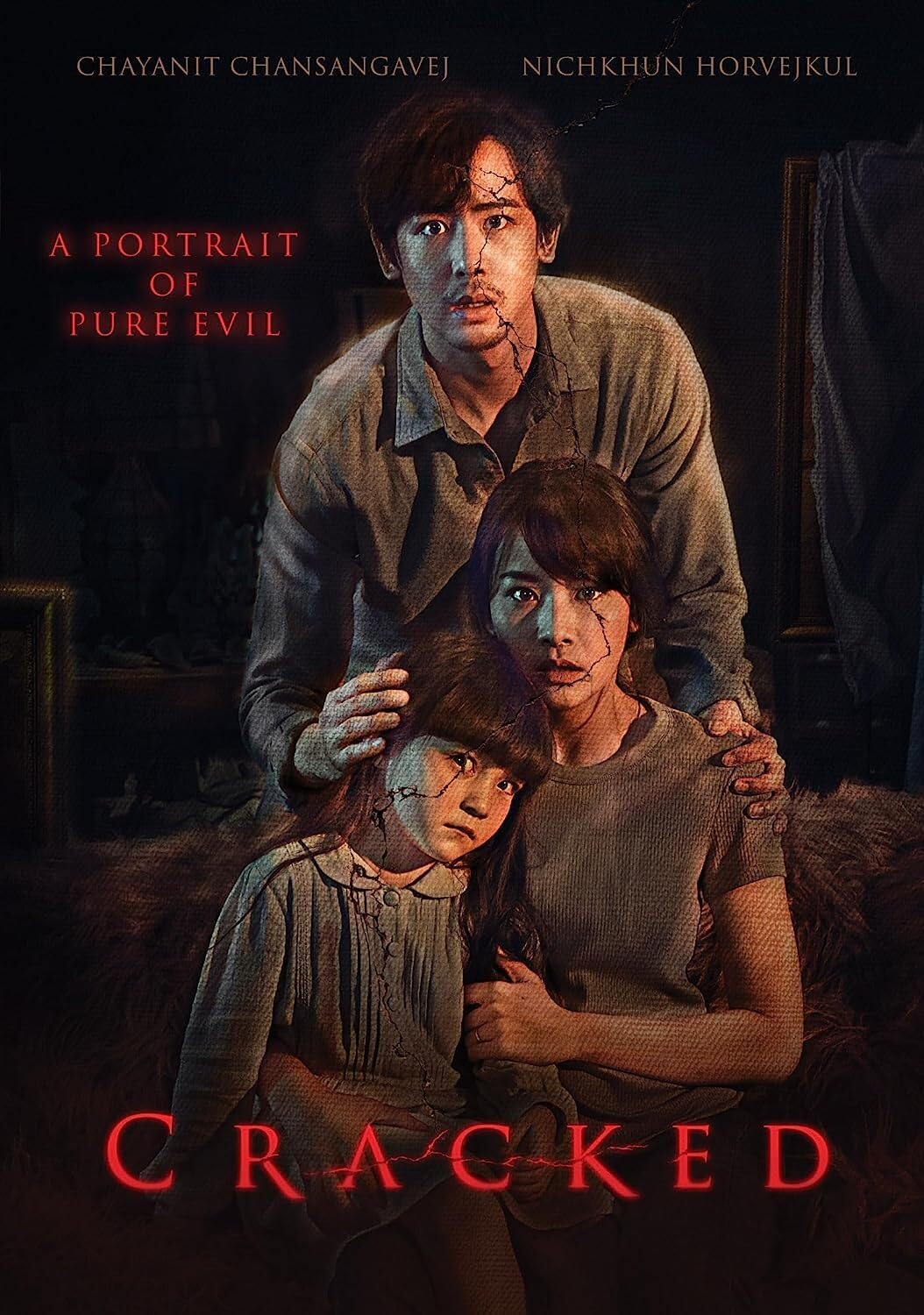
Death is unfortunately something that comes to us all.  It's not something we can prevent, even if we do all that is necessary to prolong it.  In the same breath, we can control to some degree what we can pass on to our family and loved ones, whether it be our spouse, children, both, or perhaps none at all.  Whether it be wealth, property, movie collection (son, you have no idea), or perhaps some sentimental trinkets, a simple will and responsible caretaker should be all you need in order to pass it on.  However, responsibility can sometimes be fleeting.  Today, we look at a movie called Cracked, where pieces of art are passed down from a father to a daughter with frightening results.  Let's take a look.

New York: a monorail train speeds by in the big city.  Ruja (played by Chayanit Chansangavej) is in her apartment with her daughter, Rachel (played by Nutthatcha Padovan).  Rachel is asleep, and Ruja is on the phone with an unknown party.  The mother is asking for money that she desperately needs.  At one point, the person on the phone obviously refuses, and we are also now aware that Rachel needs eye surgery, or else she will go blind.  The conversation ends with a click, and the phone goes dead.  Nearby, it appears that the daughter is awake and listening.  She asks her mother if she really is going to go blind.  Through the blurry child's eyes, the two embrace as the mother comforts her and tells her everything is going to be OK.

“Where the hell did you come from?”

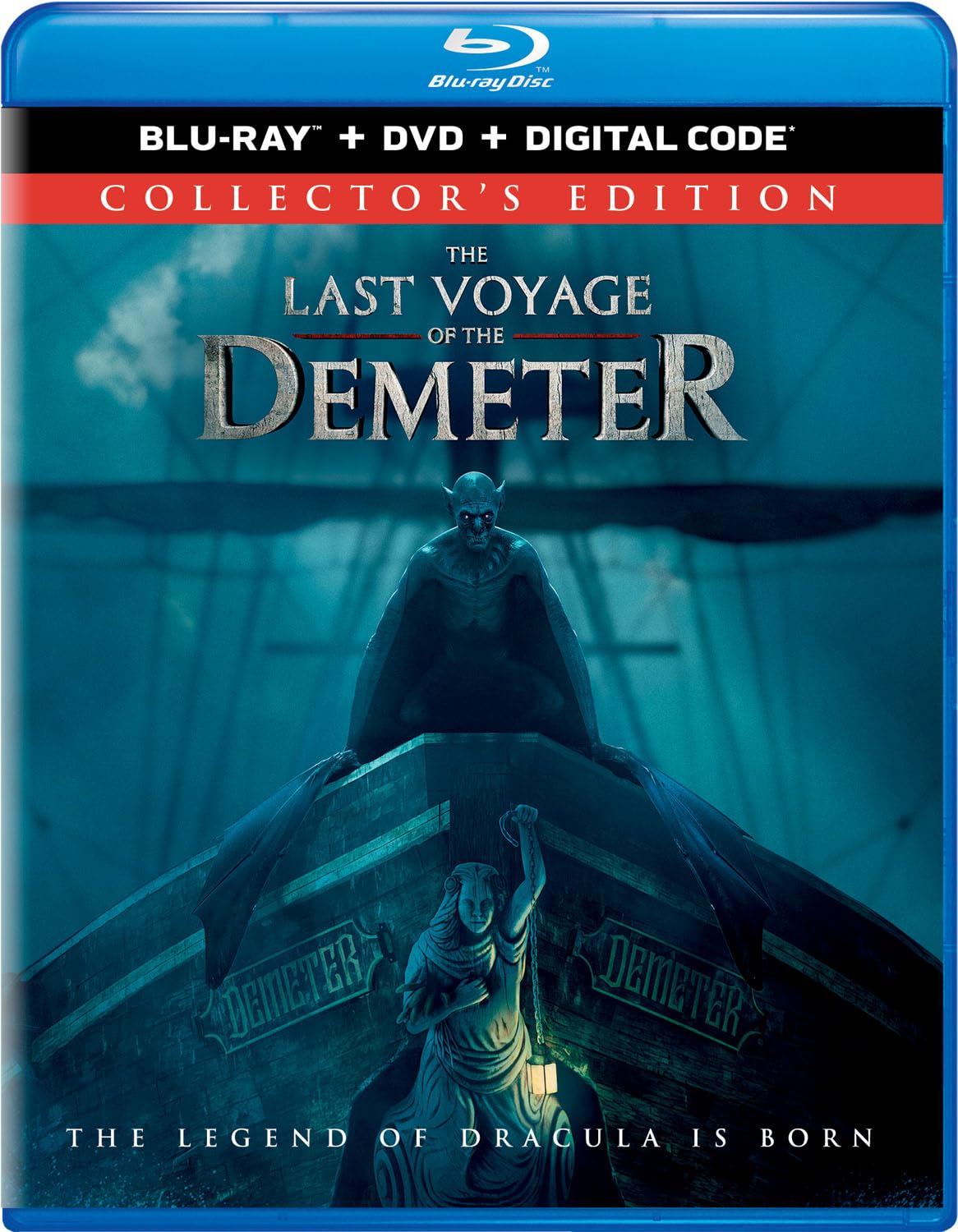
When you consider just how many films have been made about Bram Stoker’s novel Dracula, I’m surprised it has taken this long to get a film like The Last Voyage of the Demeter. I’m not a huge fan of the novel, but the chapter that centers around Dracula’s voyage from Carpathia to London is a section that I always enjoyed. It’s a chapter told through journal entries from the captain of the ship and how the crew is killed one by one by a mysterious menace aboard the ship. In the movies that have come before, this moment of the film is usually mentioned as an afterthought or simply gets a couple of minutes of screen time. So is this the fresh take on the beloved horror icon that cinema goers have been waiting for, or is this just a lame attempt to revive the vampire genre?

"I met him fifteen years ago. I was told there was nothing left. No reason, no conscience, no understanding, even the most rudimentary sense of life or death, good or evil, right or wrong. I met this six-year-old child, with this blank, pale, emotionless face and the blackest eyes ... the devil's eyes. I spent eight years trying to reach him, and then another seven trying to keep him locked up because I realized that what was living behind that boy's eyes was purely and simply ... evil."

Blumhouse and David Gordon Green recently finished a sequel/reboot of John Carpenter's Halloween with mixed results. He got Jamie Lee Curtis to return for all three films in the trilogy. Most of the various sequels and reboots did not include the original film's star, but Green was not the first one to get her to return to the role of Laurie Strode. To celebrate the 20th anniversary of the first film, Curtis returned to the role in the somewhat neglected. It was the seventh overall film in the franchise, and like the recent trilogy, it erased all of the various sequels and claimed to be a continuation of the original film. It produced a respectable $55 million on a $17 million budget and was the next final film in the series before Rob Zombie did his own reboot of the franchise that lasted for two films and finally led up to the David Gordon Green attempt to revisit and pretty much conclude the franchise with three more films. Curtis returned for Halloween Resurrections, which was a kind of meta/reality show take on the material, but Rob Zombie took it back to the beginning. Is that really the end of Michael Myers and company? I doubt it. There's still bank to be made from the franchise, and after a respectable few years, someone else will tackle the tale. Where they will start from is anyone's guess, but they could do worse than look at Halloween H2O: Twenty Years Later as a jumping-off point. I doubt anything like that is going to happen, but the franchise could certainly do worse,... and it has.

"Have you ever heard of exorcism? It's a stylized ritual in which rabbis or priests try to drive out the so-called invading spirit. It's pretty much discarded these days, except by the Catholics who keep it in the closet as a sort of embarrassment. It has worked, in fact, although not for the reason they think, of course. It was purely the force of suggestion. The victim's belief in possession helped cause it. And just in the same way, this belief in the power of exorcism can make it disappear." 

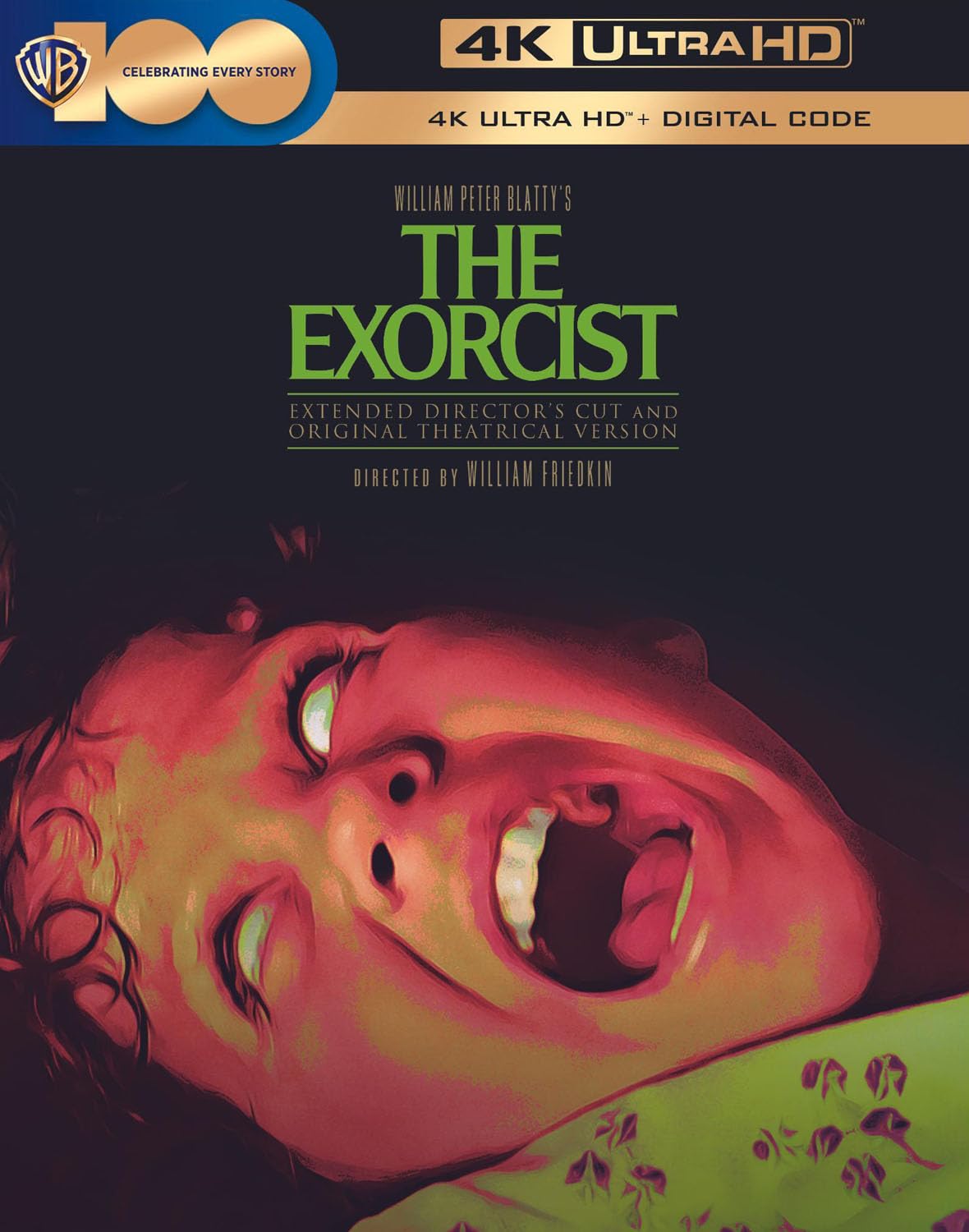
By now we've all heard of The Exorcist. The film was based on a best-selling novel by William Peter Blatty. Blatty himself based the story on a real exorcism of a young boy many years earlier. And that's where the true power of the film begins. The monsters of horror movies often allow us a sense of unreality that protects our inner selves from being truly terrified. Yes, they may frighten us, but it's fun to be frightened, isn't it? It's rare that a horror film touches on something inside of us and delivers an experience that is truly terrifying. It's arguable that The Exorcist has done this in a way that has rarely, if ever, been repeated in horror movie history. Whatever your religious beliefs might be, there is that little voice deep in our minds that fears what we call evil and can't deal with the possibility that we can be taken over by such evil. Devil. Demon. Mental illness. It doesn't matter. We're all afraid of losing control of who we are to some invading force within our minds. Within our very souls.

Korean horror has picked up in the last twenty years tenfold.  From films like Bedevilled and Thirst, they took on the revenge and vampire themes that a lot of classic horror films are built upon.  But honestly, I've been most impressed with films like The Wailing and Train to Busan.  The latter bred new life into the very tired zombie genre and made a darn watchable film, while The Wailing knew exactly what buttons to push when it comes to religion but then used that to make an interesting and thought-provoking film.  That's why when I saw that we had a copy of Seire, I knew I had to review it, even though I probably would be too scared to write about it for a few days.  I'm so glad I did.

According to the legend of samchil-il, 21 days after childbirth, the baby is vulnerable to bad luck, curses, and evil spirits.  One of the most popular of the methods to keep out those spirits is to wrap the home with rope to keep outsiders out.  No taboo is to be broken no matter how difficult it may be.  For if you do, then you will suffer a horrible fate.

Back in 2013 the remake for Evil Dead came out. I enjoyed the film, but it just didn’t feel right not having Bruce Campbell on the screen fighting off the deadites in that crazy cabin in the middle of the woods. But I could still appreciate the gore, and I felt the filmmakers did a decent job at capturing the tone of the franchise.  The film has kind of grown on me over the years. Then fans got hit with the Ash Vs. The Evil Dead series, which was three seasons of bliss that really did a fantastic job honoring the trilogy that Sam Raimi had created. Now in 2023 we have a new film, Evil Dead Rise, a film that ignores pretty much everything fans of the franchise have known and loved for 40 years.  It did great at the box office, but where does the film stand on its own and in relation to the legacy before it?

The film shifts its location from the middle of the woods to an apartment in the city. This was a nice, refreshing change in my opinion, kind of like how Scream decided to leave the small town of Woodsboro this year and move things to the Big Apple. The location shift simply opens up so many new possibilities, and when you consider the havoc that some deadites can bring to this new setting, it is something worth getting excited about. Instead of a group of friends, this time the film is centered on a family.  There’s the newly single mom of three, Ellie (Alyssa Sutherland), her youngest daughter, Kassie (Nell Fisher), and then the other two siblings, Bridget (Gabrielle Echols) and Danny (Morgan Davies). As an unexpected surprise to the family, they get a visit from Ellie’s sister, Beth (Lily Sullivan), who has to stepped away from her rock-star life after discovering that she is pregnant. There are other people who share the same floor as Ellie, but the film’s focus is on this family, and for the most part just this floor, which is one of my problems with the film. It offers so much potential with a bigger location, but chooses to isolate itself, which defeats the whole purpose of leaving the cabin.

"He was here before Christ, before civilization. He was king here! Rawhead, that's what they called him! Rawhead!"

Rawhead Rex started life as one of many stories in a young Clive Barker’s published collection called The Books Of Blood. As a story it has been hailed by the likes of Stephen King as one of the best horror stories ever written. I'm not sure I would go anywhere near that far, but there's little doubt it's a well-crafted horror tale. I read it years ago and recall that I was quite impressed. The movie version of the story is something else entirely. It fails on really one important element, and that's the design of Rawhead himself. It's one of the worst-looking film monsters I've ever seen. It's a cross between an ape and a clown without the colorful make-up, and the young actor that brought him to life did anything but. Still, there's some atmosphere to be found here, and a few good performances. It's one of those films where it might be so bad that it will always find something of a cult following. That's exactly what Kino Lorber Studio Classics is counting on with a UHD Blu-ray release in 4K. You heard that correctly.