Posted in: Disc Reviews by David Annandale on August 4th, 2011
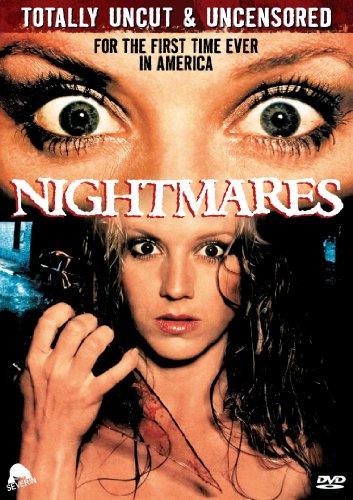
Having accidentally caused the death of her mother, Helen (Jenny Neumann) develops an unhealthy fixation with broken glass. Now an adult and an aspiring actress, she auditions for a role in an absurdist play. She gets the part, and also the attention of her handsome co-star. But then someone starts killing off the cast and crew of the play. Is it Helen?
It isn’t really venturing into spoiler territory to reveal that the answer to that question is “yes.” It is just one of the many odd aspects of this Australian slasher flick that the murders are staged in such a way (often, though not always, in first person) as to conceal the identity of the murderer, while the story makes it clear that there is only one person who could be responsible for the deaths. It then has the nerve to reveal Helen as the killer, right at the end of the film, as if this is some kind of surprise. Imagine if Halloween had concluded with the statement that “The murderer is... Michael Meyers!” and you have the idea. Meanwhile, the editing is frequently disorienting, with the 180-degree rule being violated on a number of occasions, and any sense of geography going right out the window (unless we really are supposed to believe that the critic’s home is an annex of the theatre itself). The storytelling is extremely choppy, with the film being broken up into short, barely developed scenes that have very little connective tissue between them. And as far as the plot itself goes, it’s a typical 1980 slasher in every way, just with Australian accents.
Now having said all that, the theatrical setting does add a measure of interest, and there are moments that call to mind Michele Soavi’s later Stagefright (1986). While the latter is by far the better movie, Nightmares (which was also, by coincidence, known as Stagefright) really comes alive in the rehearsal and performance scenes, with some genuinely witty barbs thrown out at the theatrical world, and some striking camera compositions tossed into the mix. So while this film will remain of interest primarily to fans of the 80s slasher movie, said fans will find just enough different here to make the film worth checking out.
Posted in: Disc Reviews by Gino Sassani on August 3rd, 2011
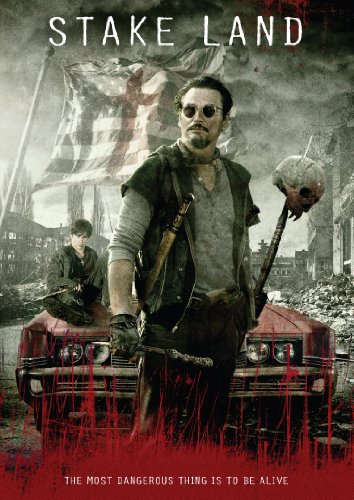
"As people flocked together for safety, the plague marched through their locked gates and they became death traps. When Washington fell it was over for America as we knew her. As government blew away, our great leaders ran for it, and hope was abandoned."
Posted in: Disc Reviews by Gino Sassani on August 3rd, 2011
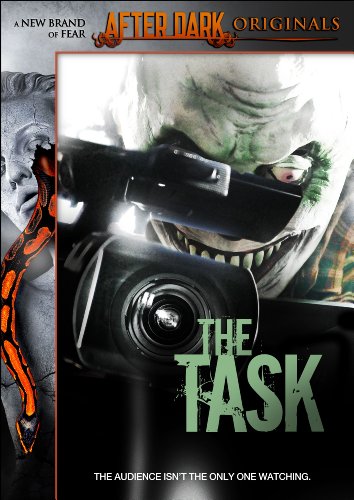
"One morning in 1940, the entire population of Friah, NH walked north up an unmarked trail into the wilderness. Some were later found frozen to death. Others were mysteriously slaughtered. Most, however, were never found."
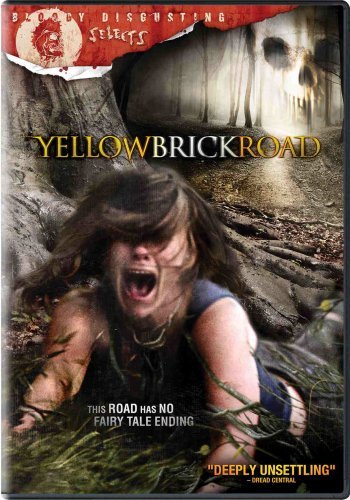
It's legends like these that usually mean we're about to embark on another Blair Witch journey into the woods in search of some deep dark secret. It means it's time to brace yourself for some "found" footage. It's going to be shaky and rough and leave your eyes or head (or both) hurting by the time the experience is over. Thankfully, co-directors Jesse Holland and Andy Mitton decided that they could tell the same kind of story without taxing the endurance of disorientation of their audience, at least not in a visual sense.
Posted in: Disc Reviews by David Annandale on August 1st, 2011
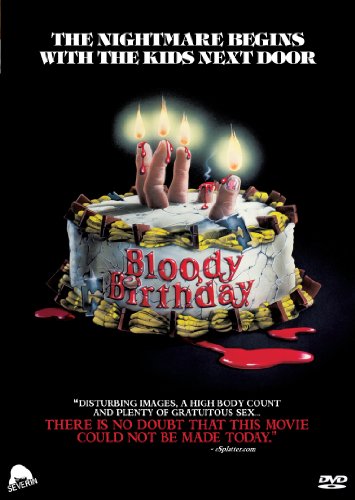
Three children are born at the moment of a total solar eclipse. On the even of their tenth birthday party, we discover that these kids, for astrological reasons, are complete sociopaths, and are having a merry time offing anyone in the community who even vaguely annoys them. The only ones who even gradually suspect that something is going on are high school senior Joyce (Lori Lethen) and her little brother Timmy (K. C. Martel). They soon become the target of the psycho kids’ wrath.
As slasher films flooded the screens in the early eighties, every conceivable minor variation was tried, while the rigid narrative formula was religiously observed. So if the variation wasn’t in the date (Halloween, Friday the 13th, New Year’s Evil, My Bloody Valentine, etc., etc., etc.), the change-up was in the the killer. And so here we have kids, though the elements remain otherwise familiar: prologue opening, young couples get naked and die, the Good Girl is the Final Girl, and so on. Though there is a bit of a nasty little punch in having the kids be murderous, this was hardly new in 1981 (The Bad Seed anyone?). The world of the film is a very difficult one to buy: the rash of murders has very little effect on the community, the junkyard features gassed-up and fully functional cars, astrology is apparently a for-credit subject at the high school, and everyone is very, very, very stupid. And while there is a certain demented pleasure in seeing tiny, WTF turns by the likes of Jose Ferrer (on-screen for maybe 30 seconds) and Susan Strasberg, this is a film that, in the final analysis, is nowhere as sick as it should be, unable to follow through on its own premise, as demonstrated by the singularly anti-climactic finale. Had this been an Italian or Spanish movie from the same era, I venture to think things would be a bit different.
Posted in: Disc Reviews by David Annandale on July 30th, 2011
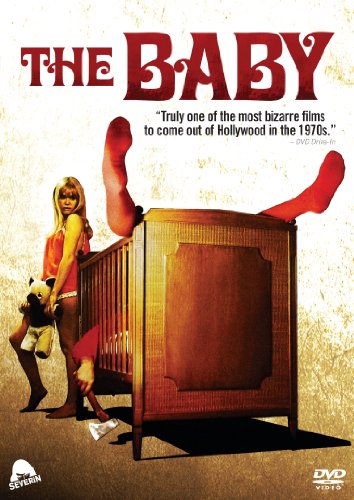
Ann Gentry (Anjanette Comer) is a social worker with a new case, one that she specifically sought. She has been assigned to the Wadsworth family. It consists of a terrifying matriarch (Ruth Roman), sexpot daughters Germaine (Marianna Hill) and Alba (Suzanne Zenor), and Baby (David Mooney, credited as David Manzy), a grown man with, apparently, the mental development of an infant. But Ann suspects Baby is capable of more, and that there is something fundamentally wrong going on at the Wadsworth residence. The Wadsworths, meanwhile, do not take kindly to Ann’s prying, and will stop at nothing to preserve their way of life.

Viewers lured by the promise of the film’s poster (Baby in crib, hatchet in hand) will no doubt be disappointed. This is not a body-count film, and there is very little that is overtly horrific for most of the movie. But make no mistake: this is a horror film. The horror is primarily conceptual, and the more we see of Baby’s life, the more we squirm. The performances are universally strong, and we buy into the characters, no matter how grotesque they are, and believe me, they are grotesque. The climax is exquisitely sick, as only the denouement of a movie made in 1972 can be, and is meticulously set up by everything that came before. This is a screwed-up movie, and I mean that as a term of extremely high praise. Absolutely not to be missed.
Posted in: Disc Reviews by M. W. Phillips on July 29th, 2011
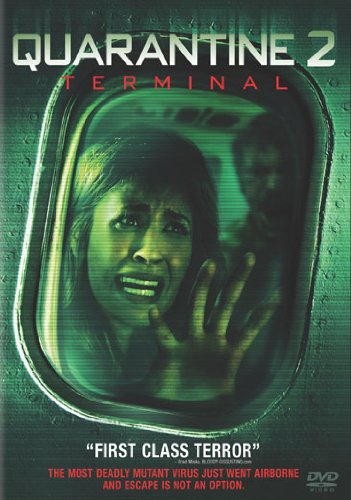
In 2007, writer-directors Jaume Balaguero and Paco Plaza created [REC], a truly frightening horror film. Considering their subject matter is so familiar to audiences it proved a major challenge not to fall into clichés. Somehow, against all odds, [REC] remained fresh by blending the elements so well… nasty contagion and fast zombies ala 28 Days Later captured in documentary-syle videography made famous by The Blair Witch Project. Add likable lead characters, natural dialog, horrific gore and scream-at-the-screen suspense; sprinkle in clues of a disturbing spiritual origin to the mysterious virus and you end up with one of the scariest and most effective additions to both the zombie and “found footage” horror sub-genres.
To appreciate the sequel, [REC]2, one should take the time to watch the first film, but if you haven’t, here is a brief spoiler filled synopsis of [REC]. A local Spanish TV journalist and her cameraman are embedded with a group of firefighters for the night as part of a human interest segment on their magazine news show. A routine call to an old apartment building on the outskirts of Madrid immediately leads to the team being sealed inside by a government quarantine trying to contain the origin of a ferocious viral pandemic. The news team chronicles the firefighters’ efforts to battle the frenzied, ravenous infected and escape the building, avoiding viral contamination or getting shot by government snipers.
Posted in: Disc Reviews by David Annandale on July 28th, 2011
The third BloodRayne film (and second with Nastassia Malthe in the title role) sees the titular dhampir slicing up Nazis, and so the chronology of the third film rejoins that of the first game. During a raid on a death camp train, Rayne accidentally infects a Commandant Michael Paré. Becoming a dhampir himself (a human/vampire hybrid), he and Mengele-figure Clint Howard (because who else are you going to cast as a Nazi scientist other than Clint Howard?) plan to use Rayne’s blood to grant Hitler immortality.
Vampires and Nazis notwithstanding, the important thing here is that this is yet another Uwe Boll film. So what exactly does that mean for you, the discriminating viewer? As regular visitors to this site might know, I have, in the past, actually praised some of Boll’s more recent efforts. I may well have destroyed whatever critical credibility I could lay claim to by being so impressed by Tunnel Rats, but damn it, it was good. Here, though, is yet more evidence that the Indefatigable One is not at his best when dealing with video game material. Also World War II. Opening an action movie about vampires with shots of Auschwitz-bound prisoners is not, methinks, in the best of taste. Furthermore, Boll’s decision to go with a washed-out, gritty feel does a disservice to his heroine. The world of the BloodRayne video games is a fantastic, exaggerated one, Gothic in every sense. It is a world of decadent costume balls, and villains headquartered in castles, and it is the cartoonish, occult-obsessed, iconographically berserk side of the Nazis that lends itself to the kind of stories we fine in the games, not to mention the look of the character. Rayne’s revealing costume, hardly practical, looks even sillier when placed in a context of grime, washed-out colours and snow.
Posted in: Disc Reviews by Gino Sassani on July 20th, 2011
"A picture's worth a thousand words."
James Wan first came to national attention when a short film that he made set the stage for one of the most successful horror franchises in recent years. That short, of course, was Saw, and after no less than 6 sequels that franchise appears to be over, at least for now. Wan has teamed with the writer that also helped to bring about the original Saw film, Leigh Whannell, to try and turn the horror world on its head once again. But, lightning just doesn't strike the same place twice, or does it?
Posted in: Disc Reviews by Gino Sassani on July 14th, 2011
"The Dead should never be woken."
Of course, we've learned that lesson countless times before. Stephen King might have been our best teacher with his chilling book Pet Sematary along with its not-as-successful films. Who can ever forget Fred Gwynne, beloved Herman Munster himself, uttering the line: "Sometimes dead is better"? We soon learn that while you might be able to return the dead from their graves, what comes back is usually not quite right somehow. In the end, instead of bringing life to the dead, these journeys usually bring a lot of dead to the living.
Posted in: Disc Reviews by Gino Sassani on July 14th, 2011
"In the winter of 1348 a knight of the Crusades returned to his homeland. He was tired in body and soul and hoped to live in peace the remainder of his days. But this was not to be."
The city of Villach has a problem. The plague has spread to its borders, and the affliction is spreading fast. The disease's arrival is timed to the arrival of a young girl (Foy) who was found to be wondering about the village. After some interrogation she confesses to being a witch and bringing the illness to the village. She must now be brought to the abbey where a holy book contains the words necessary to deal with the witch. Now they just have to get her to the abbey which is several days away from the village.