Posted in: Disc Reviews by M. W. Phillips on July 25th, 2011
“Give me a head with hair, long beautiful hair, shining gleaming steaming flaxen waxen. Give me it down to there, hair, shoulder length or longer, here, baby, there, mamma, everywhere, daddy, daddy hair! Flow it, show it, long as God can grow it, my hair!”
Born in the late 50s, I was a child of 60s and a teen in the 70s. I believed in the revolution. The Beatles and The Stones would lead the charge against the establishment. I grew my hair to mid back, stayed perpetually high, experimented sexually and washed infrequently. I used my selective service draft card to clean the seeds out of my pot. I was hippy and Hair was our manifesto. Now, I speak of the cult Broadway musical, Hair. The songs were prophecy of the future when the flower power movement finally conquered the squares. The lockstep Nixon youth, Wall Street plutocrats and pickled religious zealots would fall under the spell of free thinking and free love. Jupiter aligned with Mars. Peace would guide the planet and love would steer the stars. It was the dawning Age of Aquarius, man.

Posted in: Disc Reviews by David Annandale on July 6th, 2011
World War II has just ended, and the recently discharged Robert De Niro hits New York on the prowl for sex. He runs up against WAC Liza Minnelli, and the more she resists his advances, the more determined he becomes. There is more: he is a saxophonist, and she (of course) is a singer). So begins a tempestuous relationship between two artists whose enormous talents and equally enormous personalities mean they can neither live with nor without each other.
The idea of Martin Scorsese taking on the form of the classic musical is so bizarre that it had to happen, and here it is. Scorsese’s conceit is ingenious: all the conventions are there (the meet cute, the songs, the artificial sets and colors), but they collide with the naturalism of the performances and the emotions. A perfect case in point: wandering the streets at night, De Niro sees a sailor and his girl perform a dance together. It is a classic musical moment, but the only sound is that of a train passing. It is a scene of extraordinary beauty, grit, and cinematic truth. And it belongs in an extraordinary film.
Posted in: Disc Reviews by William O'Donnell on May 16th, 2011
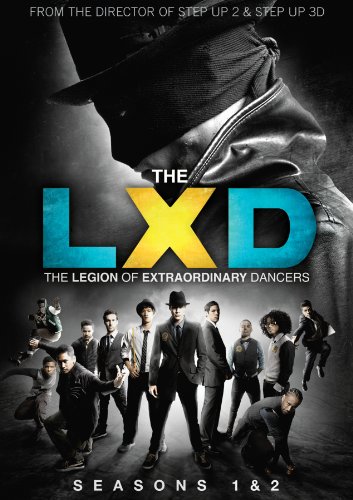
LXD is a two seasons of collected web shorts, originally appearing on 'Hulu.' A secret society is recruiting dancers and each short reveals prospects who demonstrate masterful performances of different, modern dance techniques.
At first glance, the concept seems to be a bit hammy and contrived. A random, elderly black man (Morgan Freeman must have been out of their price range) narrates in a almost broken hearted yet ever-wise tone, speaking in fortune cookie sayings with promises of mystical yet adventurous things to come. Thankfully, less time is spent on this and more time spent on profiling each dancing character.
Posted in: Disc Reviews by Archive Authors on April 12th, 2011
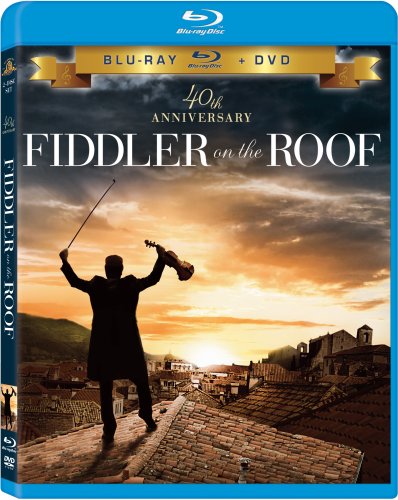
Adapted from the hit stage musical, Norman Jewison’s film version of Fiddler on the Roof has established itself as a classic over and over again since its release in 1971.
“He loves her. Love, it’s a new style… On the other hand, our old ways were once new, weren’t they?” I’ll hardly be the first to write it, but the reason Fiddler on the Roof, a story about Jewish people and their culture, is so popular, is that its themes have universal appeal. In fact, in a way it hardly matters that the characters are Jewish. As we learn from a famous anecdote, when the first Japanese production of the stage musical opened, the show’s creators traveled to Japan to meet the producer. He said to them, “I don’t understand, I don’t know how this piece can work so well in New York. It’s so Japanese!”
Posted in: Disc Reviews by Gino Sassani on January 6th, 2011
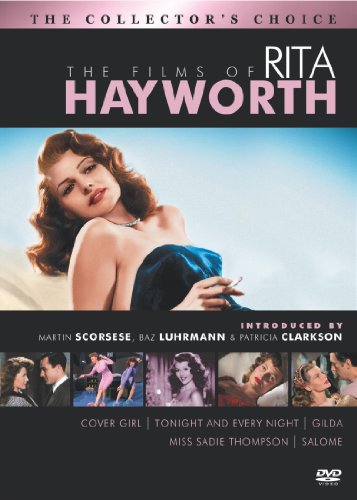
In one of Stephen King's most popular stories, at least of those translated into films, a prison inmate sits in his cell and dreams of escape. His fantasy is to escape into the welcoming arms of Rita Hayworth. While that particular element wasn't to be found in the film, it was important enough in the original story to warrant mention in the original title, which was Rita Hayworth And The Shawshank Redemption. It was a nod to the pin-up status that the actress had in early younger days. In my generation it was Farrah, but for most adolescent boys and World War II soldiers it was the red-headed come-hither smile of Rita Hayworth.
Hayworth first trained as a dancer. The instruction would certainly pay off in her film career where she would trade steps with some of the great dancers in cinema history including Fred Astaire. She was just a young teenager when she managed to be cast in Dante's Inferno and five other films that year. She left films at the peak of her popularity in a Grace Kelly-like marriage to foreign royalty. She wedded the Prince Aly Kahn, who would also die in a car accident, much as Kelly did. Fortunately for the movie-going public, Hayworth had divorced the prince 7 years earlier in 1953 and returned to the silver screen.
Posted in: Disc Reviews by David Annandale on November 24th, 2010
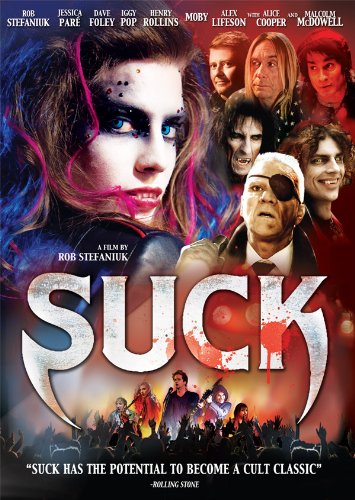
The Winners are anything but, being an undistinguished rock band playing to tiny, apathetic audiences in nowhere bars. Their time has not only passed, it never arrived. But just as they seem headed for the scrapheap, their bass player (Jessica Paré) is bitten by a vampire. Though her newly acquired taste for blood is a bit of an inconvenience, leading to some extremely messy murders to clean up, she now mesmerizes audiences, and the band catches fire. Leader Rob Stefaniuk is so desperate to catch a break that he is willing to turn a blind eye to just about anything. But complications loom, not least of which is Malcolm McDowell in full Van Helsing mode, heavily armed and sporting an eye patch.
“Suck has the potential to become a cult classic,” reads the blurb from Rolling Stone, and that might well turn out to be the case. But Suck also rather desperately wants to be a cult classic, and that desire can stand in the way of its becoming the genuine article. It pulls all the right moves – black humour, full musical numbers, rock star cameos, outrageous gore, Malcolm McDowell – but those moves feel just a bit too self-conscious. The songs are rather bland, and the humour is hit and miss – though to its credit, when the film is funny, it is very funny (Iggy Pop's deadpan turn is one highlight). The flashback scenes of McDowell's traumatic first vampire encounter are very well done, cleverly incorporating repurposed footage of a young McDowell. In the end, while not everything works here, what does work, works well enough to make this worth a rental.
Posted in: Disc Reviews by David Annandale on November 10th, 2010
Having made it through WWII, fellow soldiers Bing Crosby and Danny Kaye are now a song-and-dance team. Kaye is worried about the lack of romance in Crosby's life, but that problem seems likely to be resolved when sister act Rosemary Clooney and Ver-Ellen show up. These two pairs of entertainers must pool their talents in order to save the inn run by former general Dean Jagger from financial ruin.
The plot is, of course, very thin, a mere excuse on which to hang the sentiment and the songs. This is, of course, not the film which originated the title track – that was the earlier Holiday Inn (1942), which Crosby was teamed up with Fred Astaire. The holiday this time is strictly the Christmas one, and White Christmas goes its predecessor one or two better in terms of spectacle, thanks to Technicolor and VistaVision. The end result is not really the classic it self-evidently wants to be, but it and its cast are extremely likable.
Posted in: Disc Reviews by Gino Sassani on November 9th, 2010
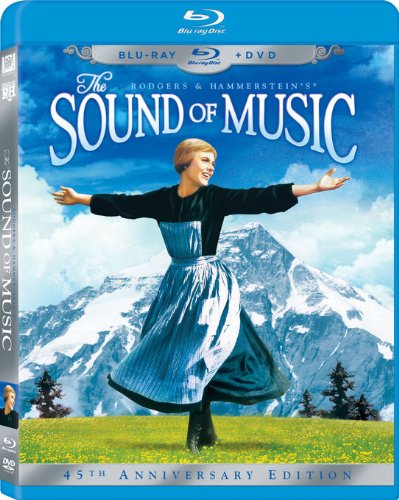
"The hills are alive with the sound of music..."
Posted in: Disc Reviews by Gino Sassani on November 9th, 2010
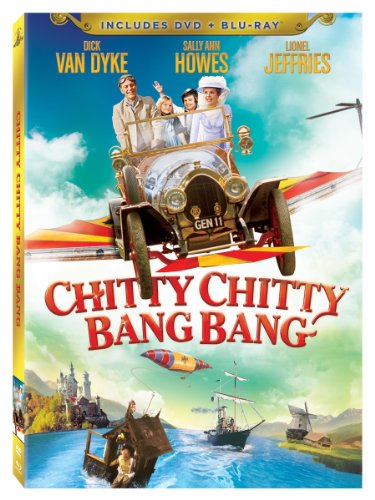
His name was Fleming, Ian Fleming, and he would go on to create the most famous spy in literary history. James Bond would actually be based on Fleming's own experience in Her Majesty's Secret Service. But Fleming had another side. It's hard to believe that the man who gave us such ubervillians as Dr. No and Goldfinger brought us one of the most enchanting children's stories of our time. Chitty Chitty Bang Bang's bond association doesn't end with its celebrated author. Albert "Cubby" Broccoli might have been just as instrumental for the success of Bond as Fleming himself. It was Broccoli who saw the potential and snapped up the rights to the spy series. He turned it into the famous Bond film series that still carries on the same traditions today, only at the hands of his daughter Barbara Broccoli. So it is only fitting somehow that Cubby would be the one to bring Fleming's children's story to life in movies, as well. The Bond associations don't end there. Director Ken Hughes brought us Casino Royale. The comic villain of the movie would be almost unrecognizably played by Gert Frobe, none other than Auric Goldfinger himself.
MGM has long been known for its epic musicals. The studio had a reputation for sparing no expense while delivering some of the most sweeping musical films known to mankind. Complete with complicated dance numbers and casts of thousands, the MGM grand-style musical was once something to behold. But Chitty Chitty Bang Bang wasn't really the model for these impressive spectacles at all. In fact, this movie follows more closely the Walt Disney model that it is one of the most misidentified films in the popular conscience. In a survey taken in the 1980's, only 1 out of 4 respondents correctly identified the film as an MGM production. The rest were confident that Uncle Walt and his Mouse House had given us the popular children's musical.
Posted in: Disc Reviews by Archive Authors on November 1st, 2010
WELCOME! TO THE MOULIN ROUGE! *tips her purple satin top hat with an amethyst topped cane* Come in, come in! Take off your cloaks and have a drink of Absinthe! So many lonely women here tonight that need a partner... to dance with of course! Hope you brought lots of cash, your dancing shows, and perhaps a nice big diamond for one of our infamous Diamond Dogs! What's that? Oh! Yes of course! I know, you came to see a show, and of course to see our lovely Satine! Well take a look see, here she comes! *cues "Diamonds Are A Girl's Best Friend" and the curtains pull open!*
The year is 1899, meet Christian (Ewan McGregor)a young, handsome, man who intends to be a writer. He moves from England to the Montmartre district in France to write about love. One problem, he has never been in love before, so how can he write about something he has never experienced? -crash!- A man falls through the ceiling of his room (Jacek Koman) and Henri de Toulouse-Lautrec (John Leguizamo) comes in through the door. A few heads pop around the hole in the floor, and they are discussing what to do about their narcoleptic friend who can't stay awake during the rehearsal for a play they are working on. Oh how they need a replacement, but where oh where are they going to find one? Christian is upstairs rehearsing with the group, and he comes up with some lines that blow their minds. They talk about introducing him to Satine, but decide that will wait till after they have some Absinthe!