Posted in: Disc Reviews by Gino Sassani on January 28th, 2009
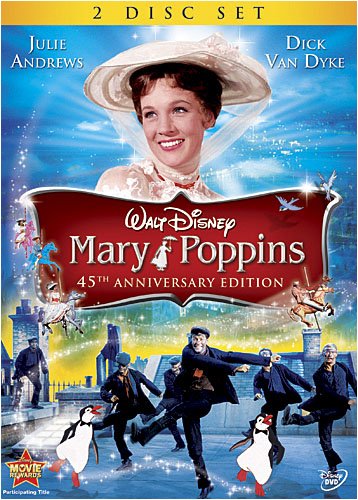
Mary Poppins was the subject of a series of books by P.L. Travers. Long before Harry Potter came on the scene, Mary was delighting children all over the world with her spectacular magical abilities. At the time Walt Disney was making a name for himself and his studio by bringing many of the children’s classics to the big screen. From fairy tales to Winnie The Pooh, the studio was providing the look and the soundtrack to the imaginative worlds already known and beloved by millions. It was a magnificent strategy, and it would pay off huge for the company. The problem with Mary Poppins was that it needed to be a live action film. Mary and her pals needed to appear as real people. The worlds themselves could be animated, of course, but Mary and Bert and the children had to be real. Walt insisted upon it. And so a painstaking effort was begun to bring the story to life on screen in a way no film had yet done before. The results were as magical as Mary herself and have captivated children of all ages ever since.
In the 1960’s Walt Disney was the center of some of the most groundbreaking f/x technology in Hollywood. Disney was that era’s Industrial Light & Magic. Even films not produced by the Mouse Factory went to their f/x wizards for their high end work. Films like Forbidden Planet made use of the Disney magic for a few of their trickier sequences. Mary Poppins is a wonderful example of the magic that Disney was capable of at the time. The film is a wonderful blend of live action and hand drawn animation work. The two worlds interface seamlessly even by today’s standards.
Posted in: Disc Reviews by Archive Authors on January 14th, 2009
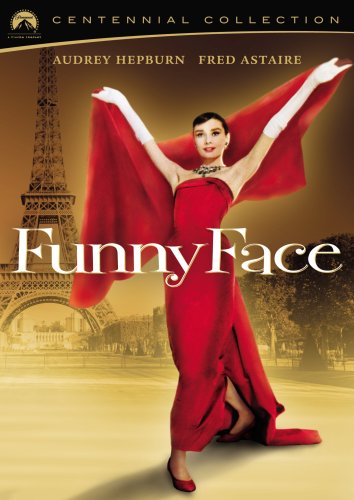
It’s hard being the bad guy, but sometimes you just don’t like a film that seemingly everyone else does. Such is the case for me with Funny Face, the classic Audrey Hepburn-Fred Astaire teaming that sees a bookish young lady go from the obscurity of her lonely library to the glitzy Paris lights as a high-profile fashion model. A little bit Cinderella and a whole lot of singing-and-dancing, Funny Face fails to engage with characters and story, relying solely on its lavish spectacle to do the trick. For legions of fans, it worked. For me, it didn’t. But like comedy, it’s all subjective, and if you’re in to fancy costumes, skilled choreography, arguably catchy music numbers, and healthy doses of nostalgia, then this one’s a no-brainer. But if story and deeply written characters are your things, sorry they don’t live here.
Astaire and Hepburn are a good pairing, and they work well together for each song-and-dance piece, but their love story gets very little chance to shine in between, and their normally solid acting abilities are buried in a heap of lifeless Broadway mini-productions that result, ultimately, in a showcase for all the wrong skills. When I watch a movie, I’ve got to be at the very least emotionally invested. If a film can engage my intelligence as well, that’s icing on the cake. Funny Face did neither. And as a fan of Ms. Hepburn’s work in Breakfast at Tiffany’s, believe me: no one’s more disappointed at that statement than me. The best thing about it is the overpowering, show-stealing performance of Kay Thompson as pushy magazine editor Maggie Preston. She dominates the camera whenever it’s on her. It’s just too bad our stars didn’t get that same chance to shine.
Posted in: Disc Reviews by David Annandale on September 26th, 2008
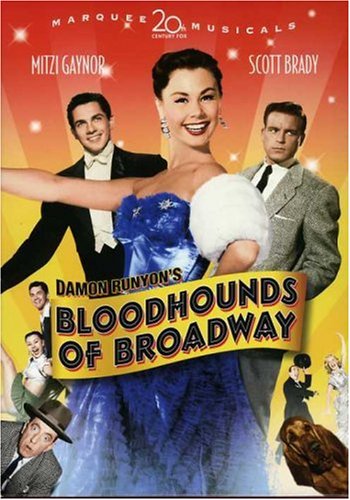
Damon Runyon’s stories would most famously make it into musical form in 1955 with Guys and Dolls. But in the meantime, this 1952 effort featured many of the same sorts of characters – wise-cracking-but-harmless gangsters and their glamorous molls. Here, Numbers Foster (Scott Brady) hightails it out of town to avoid a Congressional hearing, and on the way back, he picks up country songbird Emily Ann Stackerlee (Mitzi Gaynor), much to the displeasure of New York girlfriend Yvonne (Marguerite Chapman). Heavier on plot and lighter on numbers than some other musicals of the period, this is a jovial effort, but understandably in the shadow of its more famous cousin.
Audio
Posted in: Disc Reviews by David Annandale on September 19th, 2008
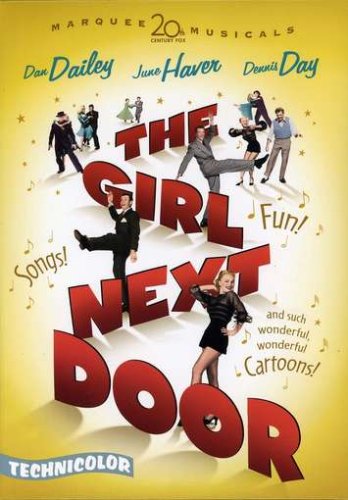
Star of song and stage Jeannie Laird (June Haver) returns from a triumphant tour to settle down in her new suburban home. Next door is widowed cartoonist Bill Carter (Dan Dailey), and sparks fly between the glamorous star and the low-key nice guy. The course of true love doesn’t run smoothly, however, due to Bill’s son Joe (Billy Gray, of The Day the Earth Stood Still), who doesn’t take kindly to the new woman in his father’s life.
Though the romance may play out as expected, it’s still interesting to see such domestic issues dealt with in the context of a musical. Meanwhile, spirited and imaginative song-and-dance routines are on order. An intriguing entry in the Marquee Musicals series.
Posted in: Disc Reviews by David Annandale on September 11th, 2008
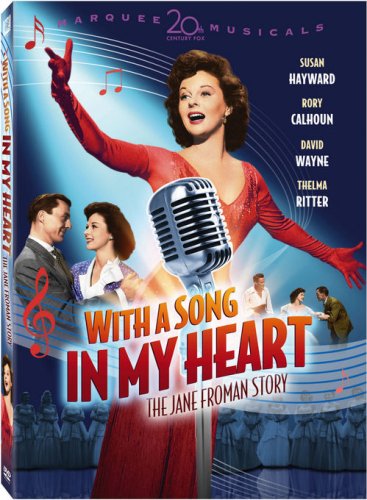
A mixture of biopic and musical, this vehicle stars Susan Hayward as Jane Froman, an incredibly popular singing star in the 40s who had to battle back from terrible wounds suffered in a plane crash after her first performance for American troops overseas during WWII. The film begins with Froman’s triumphant comeback, and flashes back to the events leading up to this. The pic is efficiently put together, and Hayward’s lip-synching (Froman dubbed in her own singing) is unusually convincing. But the crash itself is disappointingly undramatic.
Audio
Posted in: Disc Reviews by Gino Sassani on September 5th, 2008
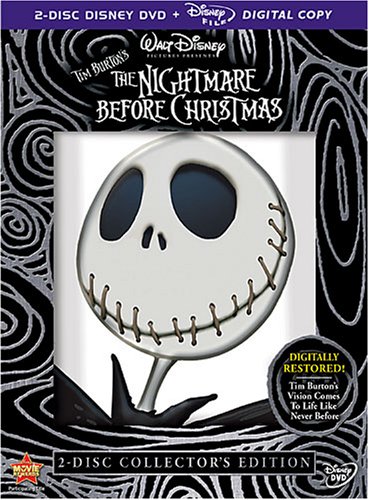
There has to be something wrong with anyone who doesn’t have at least a small soft spot in their hearts for Tim Burton’s A Nightmare Before Christmas. The film will assuredly earn its rightful place as a classic as more years roll by. The film just works on so many levels. Danny Elfman deserves as much credit as
Posted in: Disc Reviews by Archive Authors on August 8th, 2008
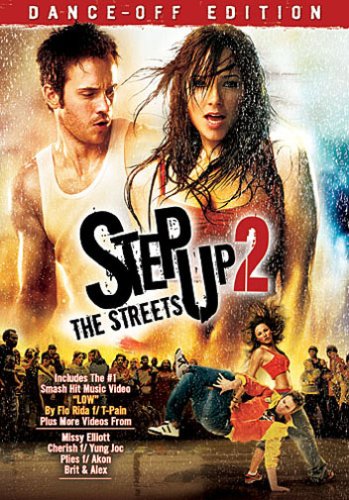
For as much as I might viscerally disagree with the creation of a film or its sequel, I lay much of the blame at you, the viewer and movie-going public. You created the furor around the Step Up series of films. You all went in droves to the first film when it was released in August 2006, when movies were winding down in the blockbuster season and thus helped it make $65 million domestically and more than $110 worldwide. It’s your fault that another film was inevitable, so in the down-turn of this past February, we got a second one. That one made about the same domestically, but made $30 million or so more and almost brought in $150 million worldwide. Count on the fact that another 90-minute film about teens dancing will be made and that the Step Up trilogy (I threw up in my mouth a little when writing that) will be complete.
Step Up 2 was written by Toni Ann Johnson (Mean Father) and Karen Barna, which begs the overall question of why TWO people needed to write a movie about dancing, but I digress. John Chu (When The Kids Are Away) directed. Andie is played by Briana Evigan, and if the name is familiar to you, she’s the daughter of Greg Evigan of BJ and the Bear fame. Briana does not look like a chimp, for the record. She decides to become friends with Chase (Robert Hoffman, She’s the Man) at a school the two go to in Maryland. They try to join an exclusive dance crew named the 410 and are rejected, so they start their own dance crew to go against the 410 in a dance competition. That’s the story, but the main focus is on the film and the dancing. The dancing carries the film from beginning to end and is peppered excessively throughout, and that’s what people cared for and what people saw.
Posted in: Disc Reviews by Archive Authors on June 17th, 2008
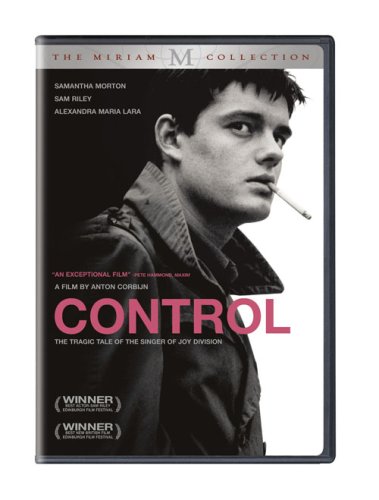
It’s nice when a movie lives up to its expectations and even surpasses them because it rarely seems to happen anymore. Such is the case with Anton Corbijn’s Ian Curtis bio-pic, Control.
I’ve been waiting to see Control for a long time. From the start, the film sounded interesting, since I am a huge fan of post-punk alternative rock music, the genre that Ian Curtis and Joy Division practically invented in the late 1970’s. But when I heard that long-time band collaborator and renowned music video director Anton Corbijn was directing the film, my anticipation rose to even higher levels.

Posted in: Disc Reviews by Gino Sassani on April 1st, 2008
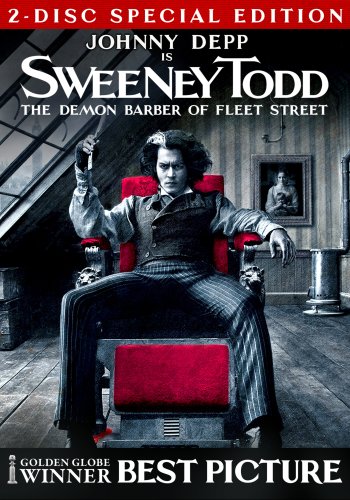
Tim Burton, Johnny Depp, Helena Bohnam Carter, and a 1970’s Broadway musical by Stephen Sondheim about a barber with a penchant for truly close, and rather bloody, shaves. With these kinds of ingredients you have a can’t miss recipe for Sweeney Todd, The Demon Barber Of Fleet Street. The finished product is a wickedly clever and most unusual movie experience. Tim Burton’s style blends so seamlessly with the dark humor of the original production. If I had any reservations going into the film it was the casting of
Posted in: Disc Reviews by Archive Authors on March 27th, 2008
From the Oscar ceremony, the only thing to speak of when it came to the quaint Irish charmer Once is that the girl was going to speak after the song "Falling Slowly" won the award for Best Original Song, and she was cut off, but she got a chance to thank everyone after the commercial, so points for trivia in case you stuck in there for that long (I know I didn't). For those who hadn't seen the film before that, they were certainly missing a slightly profound and moving experience.
Written and directed by John Carney, the film's lead characters are simply named "Guy" and "Girl". The guy is played by Glen Hansard, who is better known to some as singer for the Irish rock bank The Frames, and he and Carney were once bandmates in the early '90s. He's playing guitar on a street, making some additional money, when he runs into a woman who is curious by his playing. The woman, or "Girl" if you will, is played by Marketa Irglova, who wants to see him get what he wants, which is specifically a record deal in London. The guy takes her home to meet his Dad, who runs a vacuum cleaner repair shop, and she takes him home, to meet her mother and child. Her husband split awhile back. But the film is I think less about the relationship (although one could make the case of really really wanting to see one) and more about their creative similarities. She plays piano, and the two hit it off together creatively, and perform a song together that the guy had written early in the film. That creative synergy, and the feelings they share for it, speaks volumes for the rest of the film.