Musical

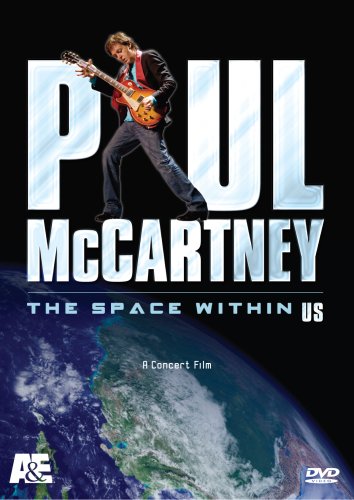
Paul McCartney is a great example of what Darwin meant by survival of the fittest. No one in the music business has learned to adapt and thrive like Paul McCartney. The term timeless has been applied so often to so many performers that it might have lost any meaning. Still, if anyone deserves that description, it is Paul McCartney. With The Beatles he helped define the 60’s and reinvent Rock and Roll. In the 1970’s and 80’s he continued the hits with Paul McCartney and Wings. When Wings finally disappeared into the midnight sky, McCartney was still at it as a solo artist. Certainly, McCartney albums are fewer and far longer between. Still, each new release is an exercise in quality. Even when I don’t care for a particular McCartney song, it’s easy to hear the work that went into each note.

The Space Within US is a wonderful showcase for this ageless Beatle. At 65 years of age, he doesn’t seem to show any of it. He might not be quite as energetic as he was, but all of the passion and energy is still in the music itself. McCartney gets to wake up the astronauts aboard the International Space Station with a cut from his latest CD. (Talk about being up in the nosebleed section.) Even though I live in Tampa which was the second stop of the tour, I missed the show. Turns out Paul missed a hole in the stage and fell straight through. Fortunately he was unharmed, and the show, as they say, went on. I did catch McCartney here during the Trip The Lights Fantastic Tour, and it was one of the best I’ve seen. Only Elton John has put on a better one that I’ve seen. This concert film catches the show with a huge number of cameras and wonderful sound. I do wish the documentary material wouldn’t interrupt the concert. At least give us the ability to watch the performance uninterrupted. Some of the inserts are nice trips down memory lane or touching interviews with Paul himself. Some of it horribly detracts from the music. Do I really care what Bill Clinton has to say about McCartney?

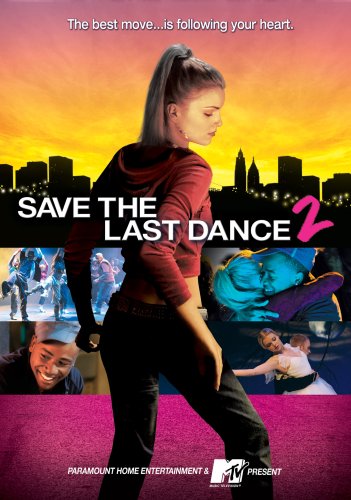
I never saw the original film, so I won’t be able to offer any insight on how this film might compare or continue the story set down by Save The Last Dance. What I can say for certain is that this direct to video release isn’t worth the 86 minutes it takes to watch it. The film begins with the first film’s Sarah (now Miko). In a video much like one provided for a dating service, she’s telling us how she feels about various things. These are her highlights and already I don’t care. She is apparently headed to Jullia...d, which seems to be a thread from the first film. There she is torn between her classical training and her passion for hip hop. The conflict presents itself even further in the unlikely pairing with Miles (Short). What follows is a romp in the world of hip hop dance music. If you are a fan of the genre, the music is really the only redeeming value in the entire film. Plot lines are introduced, dangled, or made to disappear completely and without resolution. Maybe it’s bad editing, but I simply couldn’t follow most of the subplots. The against all odds finale is unbelievable even by fantasy standards. None of the performers give us characters to care about. Even Jacqueline Bissett can’t salvage this film. Most of her performance seems to be mired in a “What the hell am I doing this film for?” attitude.Be warned. This film will leave a void in your life. An hour and a half you’ll never get back.

Video

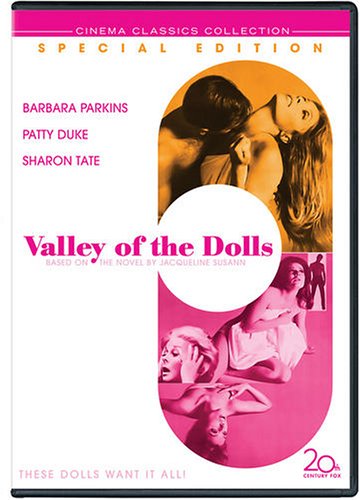
Valley of the Dolls is a musical that way way ahead of its time. Based on the novel by Jacqueline Susann, the film tells the story of three aspiring actresses and their attempts at becoming stars. Sure, this is an age old tale, but it had not been told as bluntly an honestly until now. The film starts Barbara Parkins, Patty Duke and Sharon Tate as the actresses in question. Audiences must have been shocked upon going to the theater, as they were much more used to rags to riches musicals such as A Star is Bo...n instead of the brutally honest vision that Dolls presented.

The actresses in this film are mean-spirited, nasty, drug-addicted women who will stop at nothing to get where they want to be, and they don't care what they have to do or who they have to step on to get there. As horrible as these women are, this Hollywood musical strips away all the glitz and glamor to bring the true story of what it takes to make it in show business. It is a groundbreaking film that was nominated for an Academy Award for its wonderful musical numbers. Both the beauty and the ugliness of the business are shown here, and the film completely took me by surprise.

The Producers has taken an almost cinematic storyline of its own. In 1967 Mel Brooks filmed this tale with one of his mainstays, Gene Wilder. The film was a modest success. It was as a Broadway production that this material reached a wide audience. The play has been a hit for decades now. It only seems inevitable that a new film would surface. This 2005 version of the story is closer to the stage production than the original film. There are quite a few more musical numbers, and that’s essentially where this film goes wrong. What works as a stage production will not necessarily work as a feature film. Everything about this movie is over the top except its heart. Nathan Lane and Matthew Broderick reprise their stage roles of Bialystock and Bloom with different results. Broderick appears to have gotten so comfortable with the role that he seems to be sleepwalking through it for the film. Lane, on the other hand, carries the film on his very broad shoulders. His mannerisms recall Lou Costello. His voice is actually quite remarkable and is the highlight of any of the numbers he’s in. The addition of Uma Thurman as a Swedish bombshell feels forced on so many levels, from her horrible accent to her mismatched chemistry with Broderick’s Bloom.

The 40 year old story still has potential that falls short in this film. Bialystock and Bloom are attempting to produce a Broadway flop. Why? Because if you can pull in enough investor cash and close after one day, you can walk away with millions of dollars. They set out to find the worst play and hire the bottom of the heap. What can go wrong? How can a pro-Nazi production called “Springtime For Hitler” not crash and burn on opening day? If it’s a Mel Brooks written plot, you can count on everything going wrong, and of course, the play becomes a hit. The film picks up a bit when the “Springtime For Hitler” show is finally underway. Still, the film is overlong at 2 hours and 15 minutes. Some of the numbers drag on pointlessly. The film was intended to bring the Broadway experience to the film’s audience, but it fails at almost every turn.

Synopsis

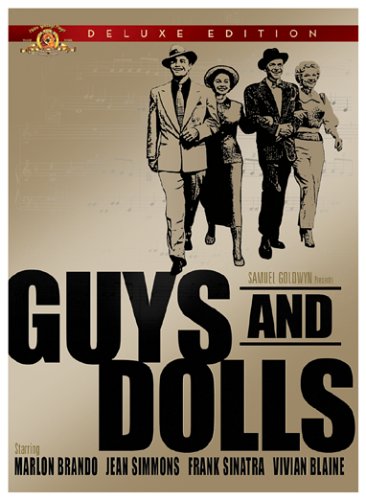
In a New York happily riddled in sin, Frank Sinatra is Nathan Detroit, who runs a notorious floating crap game. But since the cops are breathing down his neck, he is having trouble finding a location for his game. He finds one, but needs a thousand dollars cash to get the space. Enter Marlon Brando as Sky Masterson, gambler extraordinaire. Sinatra bets him a grand that he can’t seduce missionary Jean Simmons, and the romantic complications are on.

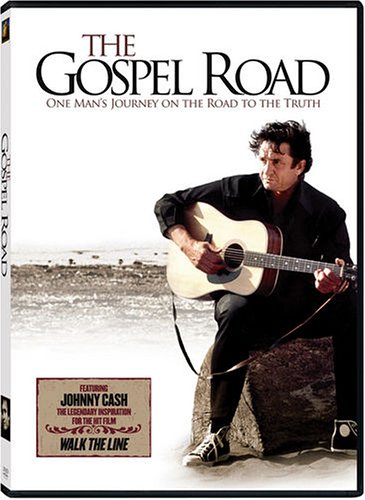
Johnny Cash’s dramatic road to Christianity is no secret to his fans and thanks to the recent biopic, Walk The Line, it’s no secret to the masses. Cash made this film, he explains, to show people why he is so drawn to the Passion of Christ. This is no doubt a sincere effort to bring this expression to life. The film is entirely shot in the Holy Land. The film is enhanced by the wonderful locations. Cash attempted to follow the actual path of Christ. There is no doubt that the care and conviction Cash felt is evide...t on the screen..

Gospel Road is basically the story of Christ’s life. Cash narrates the entire film which gives it more of the flavor of an educational effort. At times it feels like watching an A&E biography. When Cash isn’t speaking he’s singing. It is in the music that this film separates itself from the many Christian biopics out there. Unfortunately there really aren’t many complete songs. Instead he uses musical phrases to reinforce more powerful messages. The bad news is that the cast has a very difficult job. There is no real dialogue from the actors. The only notable exception is June Carter Cash, who plays Mary Magdalene. She has the only real speaking part in the film. While she does a good job I’m not sure it fits the message Cash was trying to convey. It seems strange that that role would be stronger than even Christ himself. The action takes place not on sets but rather out in the wilds of Israel. The style recalls the technique also used to great effect in Jesus Christ Superstar, coincidentally another musical depiction of The Passion..

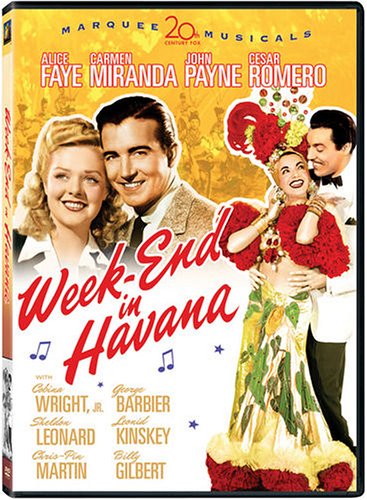
Week-End in Havana manages to entertain, but not by way of its musical numbers. For one, the songwriting is relatively lame and dated. Also, singing isn’t a forte for any of the performers. While Carmen Miranda certainly has a screen presence and a dynamic personality, her voice remains scratchy and flat – and she’s the best vocalist the film has to offer. But that doesn’t condemn it by any means. With films such as these that manage to function well as straight romance, the inclusion of musical numbers is mor... annoying than anything. Of course, without the numbers, Week-End would barely have cracked the one-hour running time mark. But at least all that remained would have been worthwhile. Once you do manage to cut through the padding of song-and-dance routines, the story provides a few nice surprises in the viewer’s journey. Instead of “will-they-or-won’t-they,” the film focuses on the question of “how will they?,” and it keeps things intriguing along that pathway.

John Payne plays leading man to Alicia Faye’s leading lady… but it’s not easy to tell this at first. Payne seems happy in his engagement, and Faye’s department store associate persona feels more than a little pathetic. She’s traveling to Havana alone, using Payne’s cruise liner company as her means of transportation. After an unforeseen occurrence ruins her trip, she plays hardball with the liner to get a free trip to Havana. But she won’t sign the waiver, which exonerates the company of any damages, until her vacation is in the bag, which means Payne has to come along for the ride. Contrived? Yes, but it’s also fun to see the complications that wait. Week-End in Havana is pure escapist fun in the nostalgic Jimmy Buffett sense of the words, and I’m sure no doubt influenced the great troubadour of beach and party tunes in his own professional journey.

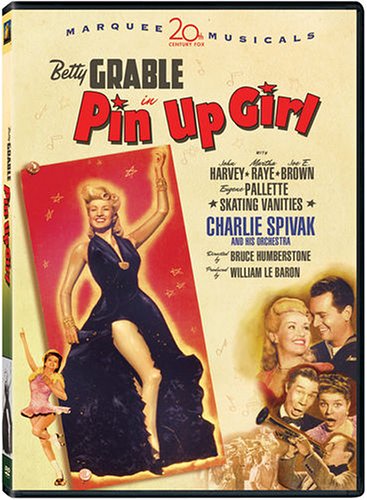
Betty Grable is best known for keeping the many, many GI’s thinking about their home country during World War II. She was mostly known for being a Pin-Up Girl during this time, and is also the star of the 1944 film Pin Up Girl. The film is part of Fox Home Entertainment’s Marquee Musicals and is pretty entertaining if you enjoy musicals or enjoy Betty Grable.

Betty Grable in Pin Up Girl is a pretty odd film overall, probably because of the four different writers the film had. The basic plot is... Lorry Jones (Grable) is the toast of the toast when it comes to gorgeous pin up girls in the USO. These girls sing, dance and provide conversation and TONS of goodies for the serving men in the armies. Lorry has one goal in being a pin up girl. Make every man as happy as she possibly can. This tends to make many of the men think there’re actually engaged to Lorry at one point.

Synopsis

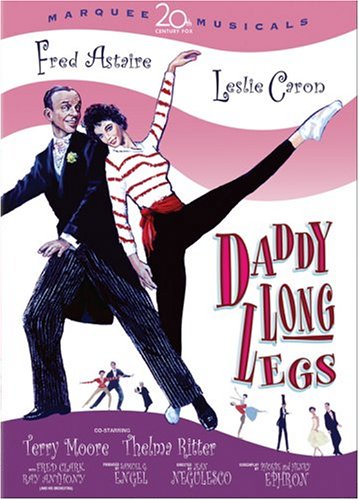
Fred Astaire plays wealthy businessman and inveterate bachelor. On trip to France, his car goes into a ditch. Seeking help in a nearby orphanage, he catches sight of the vivacious Leslie Caron. Captivated by her joie de vivre, he arranges for her to receive a full scholarship and education in the states, and watches from the safety of anonymity as she flourishes. But then, whoops, he begins to fall in love with her.

Synopsis

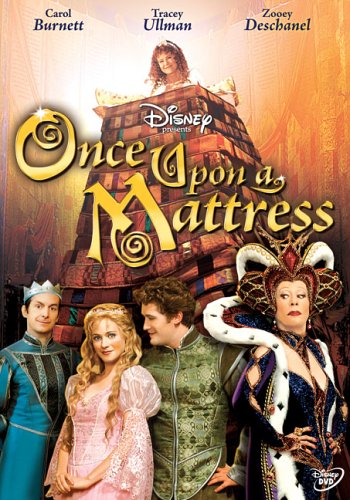
At first glance Once Upon a Mattress would appear to be a bit of a Disney cash grab, an often performed musical featuring a couple of aging comediennes, one of which had performed a role in the musical for decades.